MAIKONG-Professional iridology camera iriscope Manufacturer and supplier


Understanding 16 9 Iridology in Modern Digital Iris Practice

The phrase 16 9 iridology describes the application of modern 16:9 widescreen display and sensor standards to digital iris photography, rather than an official diagnostic doctrine or standalone clinical method. In practice, searchers encounter this term when configuring high-definition monitors and digital microscopes, or when reconciling modern 16:9 video feeds with classical circular iris maps. Iris evaluation serves strictly as an educational and wellness management discipline, providing non-invasive observational data regarding personal constitutional patterns without diagnosing medical illnesses.
Determining the practical application of wide-aspect iris imaging depends on optical sensor compatibility, monitor aspect calibration, and the structural design of the reference charts in use. Selecting the appropriate imaging ratio prevents optical stretching that could otherwise distort radial fibers, ciliary zones, or pupil borders during live assessments.
What Does the Term 16 9 Iridology Represent?
The term 16 9 iridology surfaces primarily within technical queries regarding digital wellness workstations, software user interfaces, and specialized optical cameras. Classical iridology, developed through historic European traditions and twentieth-century constitutional frameworks, never established a methodology termed “16 9.” Instead, contemporary practitioners frequently combine modern high-definition monitors operating in native 16:9 widescreen formats with specialized observation tools like a dedicated iridology camera.
A secondary origin for the phrase stems from user confusion surrounding iris chart geometry. Some educational systems divide the circular iris disc into 16 primary functional sectors or utilize 9 concentric structural rings to catalog reflex zones corresponding to various areas of the body. When searchers combine these numbers into a single phrase, it often creates the misconception that an official “16 9” technique exists.
Educational note: Iris assessment tools, software programs, and visual maps serve educational reference and constitutional wellness review only. They do not diagnose, treat, prevent, or cure physical diseases or replace conventional clinical examinations.
Clarifying this distinction enables wellness consultants, natural health educators, and integrative practitioners to focus on practical equipment functionality. Distinguishing between hardware aspect ratios and anatomical chart subdivisions prevents visual confusion and establishes clear boundaries for non-medical client sessions.

Even optical illumination reveals constitutional iris fiber patterns without geometric distortion.
Digital Display Ratios: 16:9 Widescreen Versus Classical 4:3 Iris Imaging
Modern video monitors and laptop screens almost universally display images in a 16:9 widescreen aspect ratio. Traditional optical laboratory cameras and early digital scopes captured data in a squarer 4:3 format, which naturally accommodates the circular morphology of the human iris. When 4:3 sensor data displays across a native 16:9 screen without appropriate software scaling, horizontal stretching can alter the perceived position of radial sectors and constitutional rings.
Modern iridology software solves this problem by maintaining the true circular pixel ratio of the eye while utilizing the remaining widescreen area for client records, reference charts, and comparative side-by-side analysis. Widescreen layouts allow a practitioner to view the left and right eyes simultaneously alongside historical records without closing active windows.
| Display format | Sensor geometry | Distortion risk | Practical workstation role |
| 16:9 Widescreen | Rectangular frame | Moderate stretching | Accommodates client database records, chart overlays, and dual-eye comparative views side by side. |
| 4:3 Standard | Square-format frame | Minimal alteration | Maintains circular integrity for standalone iris discs but leaves black borders on modern wide displays. |
| 1:1 Square | Centered crop | Zero distortion | Concentrates visual focus entirely on pupil margins, collarette dynamics, and peripheral iris zones. |
Choosing the correct display parameters requires verifying that capture software locks horizontal and vertical pixel scales at a strict 1:1 proportion. When pixel scaling remains locked, displaying the workspace across a 16:9 monitor enhances productivity without misrepresenting subtle fiber density, pigmentation spots, or pupillary contours.
Iris Chart Divisions: Evaluating 16 Sectors and 9 Concentric Zones
Another common source of queries about 16 9 iridology is the mathematical division of educational charts. Throughout the evolution of iris analysis, researchers structured charts to correlate specific radial sectors with metabolic and systemic functions across the body. Pioneering figures like Bernard Jensen mapped the iris into detailed reflex segments, prompting modern curriculum developers to organize iris topography into standardized geometric modules.
Certain training institutions introduce foundational interpretation by separating the 360-degree circular plane into 16 primary radial segments, each spanning 22.5 degrees. Concurrently, topographical models frequently divide the space between the pupillary border and the outer ciliary margin into concentric evaluation bands to differentiate internal digestive tracts from external lymphatic zones.
- Radial quadrants and sectors identify constitutional tendencies across specific anatomical reflex zones on the left and right sides of the body.
- Concentric inner bands focus on gastrointestinal tone, the stomach reflex area, and the autonomic nerve wreath.
- Intermediate concentric zones evaluate systemic structural tissues, glandular balances, and organ parenchymal density.
- Peripheral outer rings catalog the circulatory boundary, lymphatic networks, and outer skin elimination fields.
When studying these topological layouts, practitioners must remember that anatomical reflex charts represent conceptual wellness models rather than fixed histology. The presence of pigment variations or structural crypts does not provide medical proof of internal pathology, requiring clear educational communication during every wellness consultation.

Educational charts provide geometric reference frameworks for observing constitutional characteristics.
Hardware Configurations for High-Definition Iris Observation
Executing accurate iris assessments across widescreen monitors demands specialized optical hardware designed specifically for macro ophthalmic observation. General webcams or mobile phone lenses lack the focal control and color temperature stability necessary to illuminate fine stroma architecture evenly. High-performance digital iriscopes utilize dedicated hardware processing units and fixed focal lengths to produce consistent diagnostic-grade image clarity.
Standard professional iriscopes incorporate high-resolution sensors, such as 12.0-megapixel CCD hardware with custom DSP image processors, which retain structural definition across large 16:9 monitor panels. Fixed circular illumination arrays with balanced color temperature filters mitigate uneven corneal reflections that could otherwise obscure important sector markings.
Optical Stabilization
Integrated DSP image stabilization prevents motion blur during handheld capture routines, preserving crisp trabecular clarity.
Calibrated Lighting
Surrounding LED illumination elements with color temperature correction balance white balance and prevent glare across the pupil boundary.
Integrated Controls
Handle-mounted brightness dials, focus wheels, and single-button image pause mechanisms streamline client sessions directly through USB connections.
Equipment that operates directly from a computer USB bus removes the need for external power cords, facilitating clean desk arrangements in holistic clinics and educational classrooms. Interchangeable optical lenses, including standard 30X iris magnification optics, provide sufficient detail to examine the autonomic nerve wreath, collarette irregularities, and peripheral limbus rings with high clarity.
Software Compatibility, Multi-Language Features, and Data Protocols
Operating a modern iris imaging station requires software capable of executing smooth capture feeds, client profiling, and historical image comparisons. Well-engineered programs allow practitioners to import raw captures, align circular chart overlays, and generate customized nutritional wellness suggestions without altering original graphic proportions. Data management features also facilitate long-term tracking of personal vitality plans across longitudinal consultation series.
Software ecosystems vary significantly in their platform architecture, making verification of operating system support vital before investing in clinical equipment. The MAIKONG iris software platform, for example, provides native compatibility across modern computing environments while excluding mobile operating systems.
Supported Environments
- Windows XP, 2000, Vista, 7, 8, 10, and 11 across both 32-bit and 64-bit systems.
- Apple macOS environments spanning macOS 10.14 through macOS 15, including Apple silicon M1 through M5 architectures.
- Multilingual client interfaces supporting up to 17 global languages for international practice records.
Unsupported Platforms
- Android mobile and tablet operating environments are not compatible with direct USB capture drivers.
- Linux distributions and Unix platforms lack native compilation drivers for the proprietary DSP processor.
- Unverified legacy distributions labeled “206 Version 3.401” in historic supplier literature require factory confirmation prior to deployment.
Practical multi-language options facilitate seamless communication across varied international clinics. Verified platforms include translations for English, Spanish, French, German, Italian, Portuguese, Czech, Polish, Bulgarian, Russian, Korean, Japanese, Malaysian, Persian, and Chinese character sets.
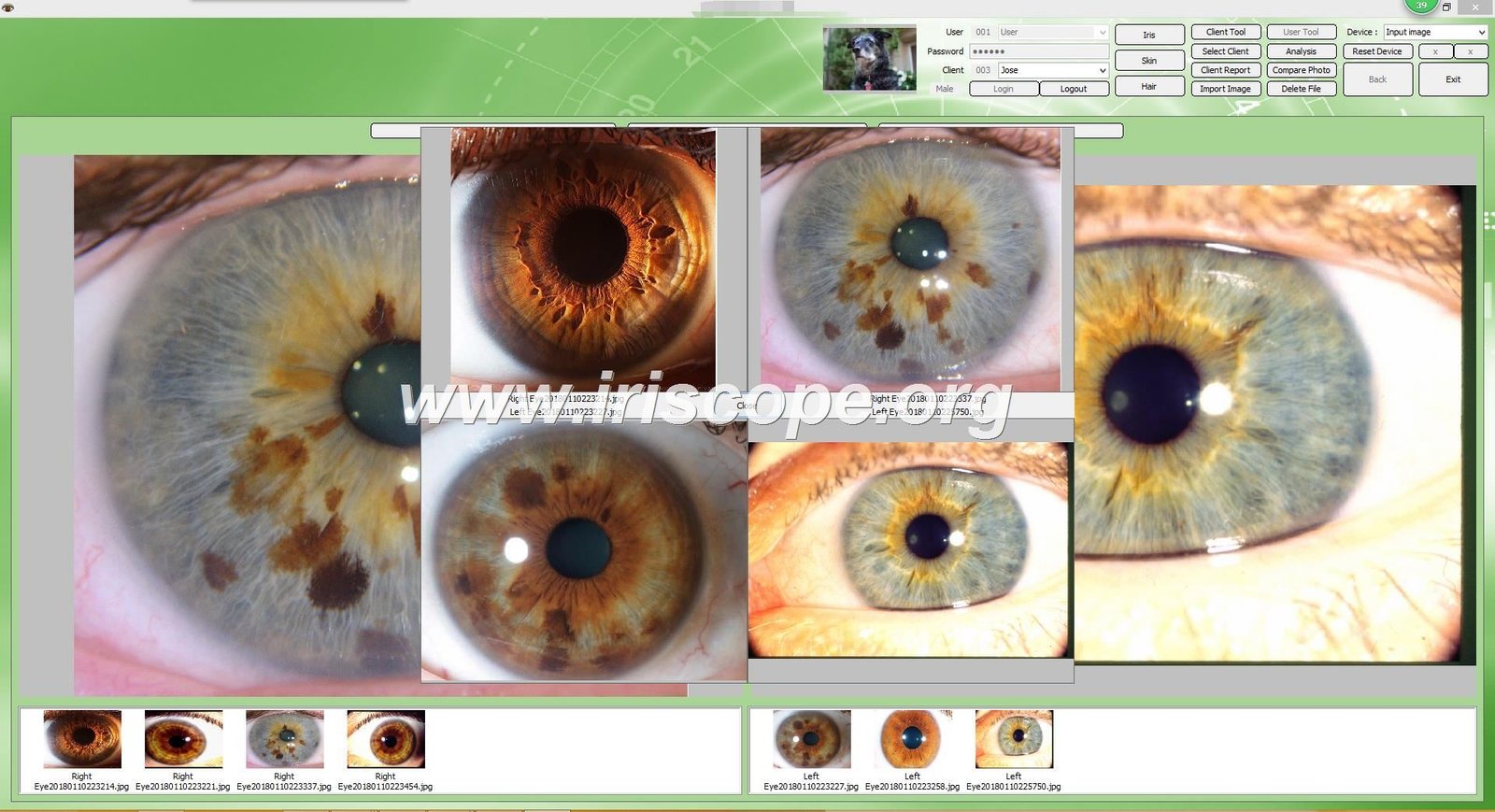
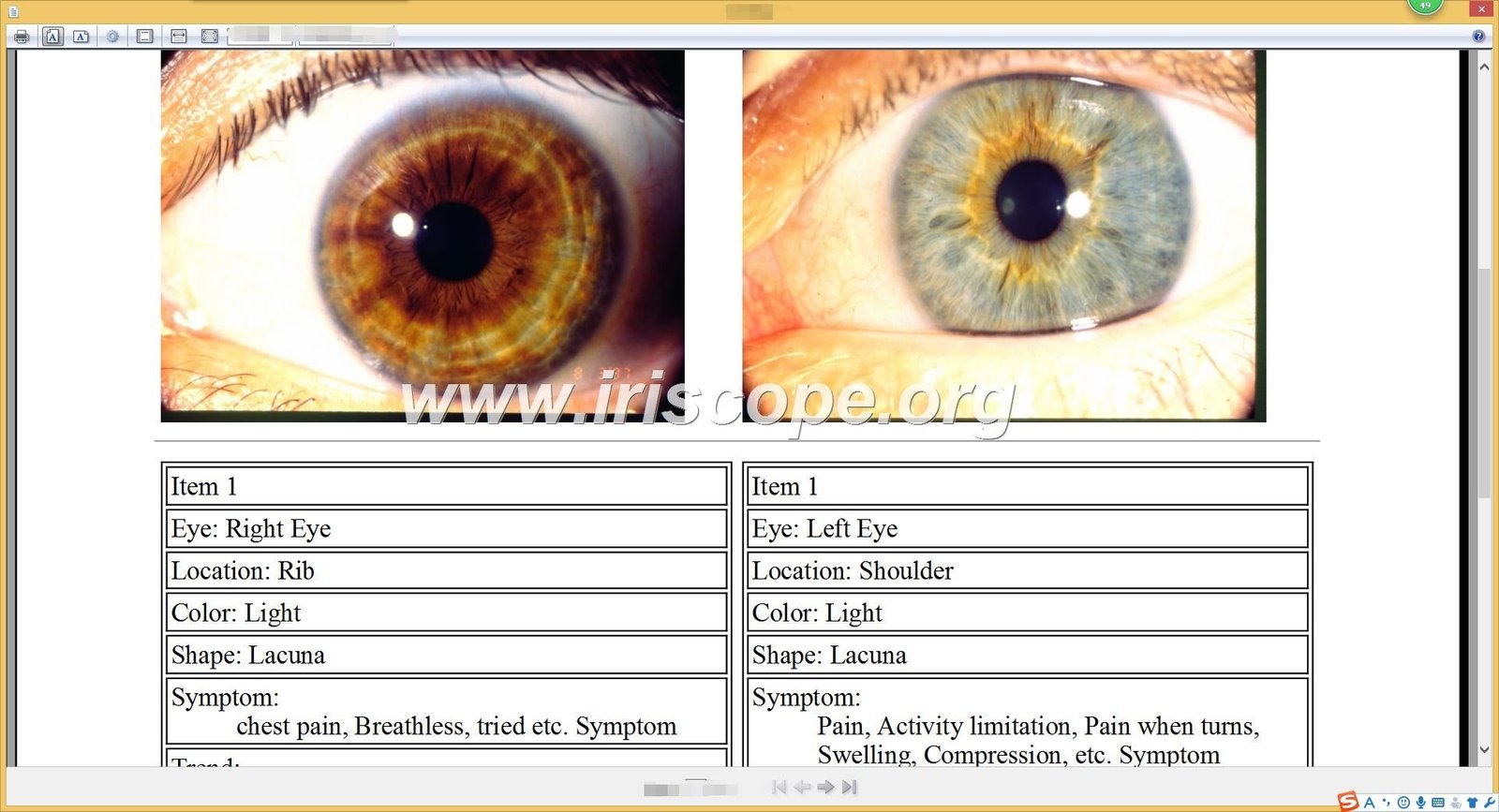
Modern software platforms support multi-language client tracking and side-by-side comparative reviews.
Verification Standards and Equipment Service Policies
Sourcing dependable equipment for wellness practices, direct supplement networks, or retail consultation spaces requires thorough due diligence regarding hardware origin and after-sales support. Equipment classified under Class I biochemical or visual analysis scopes provides standardized educational tools when paired with an official Iridology Chart and calibrated optics. Purchasers should always inspect manufacturer credentials, build quality, and factory support terms rather than relying on exaggerated marketing statements.
Electronic optical devices generally carry an expected service lifespan of 5 to 10 years when handled with appropriate lens care and routine dust protection. However, commercial warranty periods require careful review, as manufacturer literature occasionally contains conflicting terms, such as 1-year coverage in primary specifications alongside secondary references to 13-month periods.
Service policy notice: Warranty claims for electronic manufacturing defects require returning the device to the factory facility for technical evaluation. Prospective buyers should confirm active warranty durations, regional replacement procedures, and repair logistics directly with the manufacturer before final purchase.
Commercial practitioners establishing regional distribution channels or holistic clinics benefit from direct factory relationships that supply custom hardware branding, customized software logos, and bulk packaging options. Transparent documentation of specifications, driver versions, and physical accessories creates a reliable foundation for professional educational services.
Frequently Asked Questions About 16 9 Iridology
What does “16 9 iridology” mean?
The term typically refers to digital iris imaging displayed across standard 16:9 widescreen computer monitors, or represents a search query conflating 16 iris sectors and 9 concentric zones. It does not designate a unique, standalone clinical diagnosis system.
Is it a recognized iridology term or chart standard?
No, classical constitutional iridology does not contain an accredited clinical standard called “16 9.” Recognized chart traditions instead trace back to researchers such as Ignaz von Peczely, Nils Liljequist, and Bernard Jensen.
Could “16 9” refer to an image ratio, chart section, model number, software version, or a typing error?
Yes, the phrase most commonly originates as a reference to a 16:9 monitor aspect ratio, a combination of 16 radial sectors and 9 concentric chart rings, or a search typo for digital widescreen camera software. Reviewing the exact technical context clarifies which meaning applies.
How should a reader verify the intended meaning?
A reader should inspect whether the context relates to hardware display resolutions, software interface geometry, or educational chart divisions. Checking equipment manuals or curriculum outlines will confirm the precise technical specification.
Can iridology diagnose disease?
No, iridology cannot diagnose, treat, or cure medical diseases, and it does not replace examinations by licensed medical doctors. Iris assessment serves solely as an educational and wellness reference tool to observe constitutional tendencies.
What equipment is relevant if the reader is trying to document iris images?
Relevant equipment includes a dedicated digital iriscope with balanced LED illumination, a high-resolution CCD sensor, adjustable focus, and compatible software running on Windows or macOS. General smartphone cameras and standard webcams lack the macro focus control required for clear iris documentation.
Key Takeaways on Digital Iris Configurations
Understanding 16 9 iridology centers on recognizing digital display ratios and geometric chart layouts rather than searching for an elusive diagnostic secret. Modern high-resolution iriscopes and multi-platform software provide natural health professionals with clear, undistorted visual records to support lifestyle and educational consultations. Verifying optical hardware specifications, operating system compatibility, and factory service policies creates a dependable foundation for long-term practice.
Equip Your Practice with Professional Iris Imaging Systems
Explore dedicated digital iris cameras, certified charts, and multi-language software solutions for your wellness center or regional distribution business.
Address:Factory Building II, Jinshanlong Industrial Park, No.1, Xintang Village, Kratong Community, Fucheng Street, Longhua District shenzhen, 518000 GD,China
TEL:0086-0755-888-56563
Person to contact:Mark Luo
email:lucy@iriscope.org
Whatsapp/phone:0086-191-5490-1065
Copyright (c) 2004-2034 www.iriscope.org All Rights Reserved.