MAIKONG-Professional iridology camera iriscope Manufacturer and supplier


Aajonus Vonderplanitz Iridology: Concepts, Context, and Reality
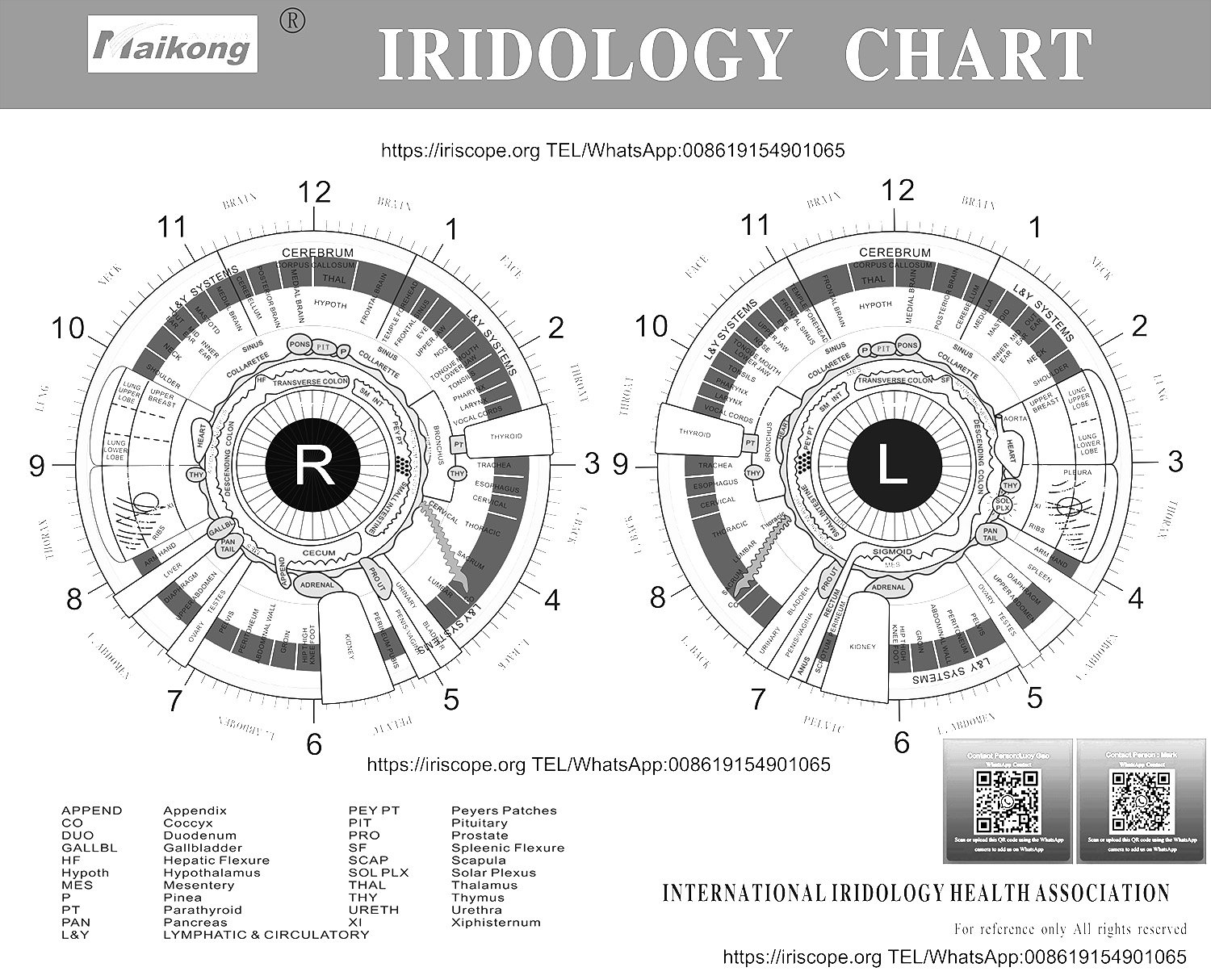
In alternative health history, aajonus vonderplanitz iridology refers to the late nutritionist’s informal use of iris observations to evaluate tissue condition and track dietary changes among followers of his raw-food Primal Diet. Aajonus Vonderplanitz did not establish an accredited school of ophthalmic science or formal clinical diagnostics, but rather drew upon twentieth-century constitutional iris evaluation to guide his dietary recommendations. His discussions linked visible iris fiber changes, lymphatic markings, and pigment spots to the body’s internal cleansing and nutritional assimilation.
Understanding this historical crossover requires separating anecdotal dietary beliefs from established iris observation traditions and verified medical facts. Observers examining his recorded lectures and books must distinguish between personal observational theories, standard constitutional iris assessment, and certified wellness evaluation practices.
Historical Background of Aajonus Vonderplanitz and Health Observations
Aajonus Vonderplanitz (1947–2013) gained prominence in alternative wellness circles through his advocacy of raw animal foods, unpasteurized dairy, and raw fats. Having dealt with severe health crises in his earlier years, he developed what he termed the Primal Diet, emphasizing uncooked meats, raw eggs, raw milk, and vegetable juices to promote natural detoxification and physical regeneration.
Throughout his lectures and consultations, Vonderplanitz regularly noted visible external markers of vitality, including skin complexion, tongue coatings, and iris structure. He frequently cited the work of twentieth-century American practitioners, particularly the nutritional and constitutional models popularized by Bernard Jensen Iridology, to reinforce his assertions regarding cellular toxicity and lymphatic stagnation.
While his nutritional theories challenged standard public health guidelines, his approach to the eye was strictly observational rather than an independent diagnostic discovery. He viewed the stroma of the iris as an interactive projection of genetic vitality and historical nutritional deposits.
Educational note: Historical records indicate that Aajonus Vonderplanitz used iris observation as an adjunctive educational gauge for digestive efficiency, not as a replacement for standard clinical pathology.

The Role of Iris Assessment in Vonderplanitz’s Teachings
Within his community consultations, Vonderplanitz utilized iris observation to encourage individuals to track subjective changes during their dietary transitions. He asserted that adopting nutrient-dense raw foods could gradually alter the appearance of iris fibers by clearing cellular waste and reducing internal mucus accumulations.
His specific claims often linked concentric rings and discolored rings in the eye to metabolic strain, nervous exhaustion, and mineral imbalances. When conducting an informal Iridology Reading, he focused on several recurring visual phenomena:
- Reflexive nerve rings, which he associated with autonomic stress, physical tension, and adrenal fatigue.
- Lymphatic rosary formations along the outer ciliary zone, which he interpreted as sluggish lymphatic filtration.
- Central pupil border irregularities, viewed in his protocols as indicators of poor stomach acid and compromised assimilation.
- Pigment shifts and dark spots, which he claimed represented accumulated medicinal residues, chemical exposures, or localized cellular distress.
It remains important to recognize that mainstream ophthalmic science views genetic stromal architecture and melanin distribution as relatively stable traits rather than rapid indicators of dietary cleansing. While Vonderplanitz reported visible clearing of eye discolorations among long-term adherents, such reports remain anecdotal observations rather than peer-reviewed clinical findings.
Verified Historical Claims Versus Unsubstantiated Assertions
Navigating the legacy of Vonderplanitz requires an objective appraisal of what can be documented from historical records versus assertions that lack systematic verification. Many online wellness discussions conflate his charismatic dietary claims with scientific facts.
The following comparative framework outlines what historical documentation confirms, what remains unverified, and how modern analytical standards classify these perspectives.
| Topic Dimension | Historical Record | Scientific Status | Practical Verification Outlook |
| Primary Methodology | Nutritional Counseling | Alternative Theory | Documented in his self-published volumes and recorded interviews. |
| Iris Chart System | Adapted Jensen Charts | Unvalidated Diagnostic | Relied on established charts rather than inventing a separate system. |
| Iris Color Changes | Anecdotal Patient Reports | Unsubstantiated Claim | No controlled optical photography trials exist to substantiate rapid color transformation. |
| Detoxification Markers | Lymphatic Stagnation Claims | Non-Clinical Theory | Eye patterns reflect genetic stroma and connective tissue variation rather than active toxin loads. |
When reviewing literature on aajonus vonderplanitz iridology, practitioners must distinguish between descriptive wellness folklore and measurable anatomical changes. A healthy skepticism allows researchers to evaluate his historical influence without accepting unverifiable clinical promises.

Comparing Vonderplanitz’s Approach to Classical Iridology
Classical iris analysis originated in nineteenth-century Europe through the works of Ignatz von Peczely and was later systematized in the United States into structured educational curricula. A standard Iridology Chart assigns specific sectors of the ciliary zone to distinct organs and body systems, providing a structural map for constitutional assessment.
Vonderplanitz diverged from formal constitutional analysts by focusing almost exclusively on his dietary paradigm. The following comparison highlights key differences between classical constitutional analysis and Vonderplanitz’s interpretive approach.
Classical Constitutional Analysis
- Utilizes systematic sector grids and standardized topographical templates.
- Focuses on inherent genetic strengths, tissue density, and familial tendencies.
- Emphasizes educational lifestyle awareness rather than claiming curative diet outcomes.
- Relies on structured training through established professional associations.
Vonderplanitz Observational View
- Interpreted iris marks primarily as transient metabolic toxicity.
- Assumed eye colors would dramatically lighten upon raw fat consumption.
- Tied specific markings directly to cooked food byproducts and heavy metals.
- Operated independently outside mainstream iridology licensing or certification bodies.
While classical analysts emphasize that the structural fibers of the eye remain largely consistent throughout adulthood, Vonderplanitz claimed that severe physical regeneration could visibly clear dark pigments. Modern optical imaging technology provides a useful way to track eye images objectively over time without making unsubstantiated healing claims.

Educational Scope and Health Management Considerations
Modern integrative wellness centers and functional longevity practices often explore constitutional eye assessment alongside lifestyle interventions such as detox protocols, anti-aging therapies, and nutrition plans. However, clear regulatory and professional boundaries must be maintained across all wellness disciplines.
Iris assessment cannot diagnose specific pathologies, identify microbial infections, or confirm medical conditions. Anyone exploring the nutritional writings of Vonderplanitz should recognize that self-treating acute or chronic illnesses based solely on eye markings carries significant health risks.
Health Disclaimer: All iris observation concepts, constitutional analyses, and historical dietary references are intended solely for personal health management, educational study, and historical reference. They do not replace professional medical diagnosis, laboratory testing, or standard clinical medical care.
Practitioners operating wellness centers or holistic nutrition practices should employ eye imaging purely as an educational visualization aid. Maintaining professional transparency builds trust and protects clients from misleading medical promises.
Modern Optical Tools and Iris Documentation in Wellness
During Vonderplanitz’s career, practitioners relied primarily on simple penlights and handheld magnifying loupes, which often introduced optical distortions and inconsistent lighting. Today, wellness consultants, nutritional therapists, and holistic educators utilize specialized digital imaging devices to capture consistent, high-resolution iris photographs for comparative wellness records.
As a specialized manufacturer, MAIKONG produces optical equipment designed specifically for educational iris visualization and practitioner record-keeping. The flagship MAIKONG iridology camera features high-definition optical clarity, balance-stabilized illumination, and calibrated digital image capture.
| Device Parameter | Hardware Specification | Functional Application |
| Sensor Resolution | 12.00 Mega Pixels | Delivers crisp digital clarity of stromal fibers. |
| Lighting Array | Circumferential LED Ring | Provides uniform shadow-free illumination across the pupil. |
| Sensor Architecture | High-Resolution CCD | Maintains balanced color temperature and true fiber tones. |
| Focus Control | Adjustable Focal Wheel | Permits fine optical adjustments for clear depth of field. |
| Design Lifespan | 5 to 10 Years | Built with durable electronic components for daily clinic use. |
| Factory Warranty | One Year Standard | Covers material and manufacturing defects via factory repair. |
Note regarding product terms: Sourced factory records contain both one-year and thirteen-month service references; current warranty terms must be confirmed directly with MAIKONG before purchase. These electronic inspection cameras are certified under CE standards and manufactured under ISO9000 quality systems for educational wellness imaging.


Digital Software Features and Compatibility for Wellness Practices
High-resolution digital optical capture requires robust database software to organize client records, store dated photographs, and facilitate visual education over time. MAIKONG has developed specialized proprietary Iridology Software designed to support holistic health practitioners, natural health centers, and educational training schools.
The software platform allows practitioners to manage client intake profiles, review comparative side-by-side photographic records, and generate customized lifestyle educational summaries without making medical diagnostic claims.
| System Platform | Supported Operating Systems | Unsupported Platforms |
| Microsoft Windows | Windows 2000, XP, Vista, 7, 8, 10, 11 (32-bit & 64-bit) | Not compatible with Windows RT or mobile phone OS. |
| Apple Mac | macOS Mojave, Catalina, Big Sur, Monterey, Ventura, Sonoma, Sequoia, M1-M5 | Not compatible with iOS or iPadOS devices. |
| Alternative Systems | No native Linux or Unix package currently provided | Linux, Unix, and Android operating systems are not supported. |
The MAIKONG software suite supports 17 global languages, including English, Spanish, French, German, Italian, Portuguese, Czech, Polish, Bulgarian, Russian, Korean, Malaysian, Persian, Japanese, Simplified Chinese, and Traditional Chinese. Certified wellness educators and health store retailers can also configure customized educational recommendations within the database system.
Frequently Asked Questions About Aajonus Vonderplanitz and Iridology
Did Aajonus Vonderplanitz create his own formal iridology chart?
Aajonus Vonderplanitz did not develop an original, peer-reviewed chart system. He adapted existing mid-twentieth-century American constitutional charts, particularly models derived from Bernard Jensen, to support his discussions on lymphatic congestion and dietary detoxification.
Can changes in the iris validate the benefits of the Primal Diet?
Scientific clinical studies do not substantiate claims that eating raw foods causes the iris stroma or eye color to change. While Vonderplanitz and his followers shared personal testimonials, constitutional eye patterns are genetically determined and remain relatively stable throughout adulthood.
Does iris analysis provide a clinical medical diagnosis?
Iris observation does not provide a medical diagnosis for any disease or pathology. Professional iridology is utilized in integrative health settings strictly as an educational assessment tool for constitutional tendencies and wellness management.
What computer operating systems support MAIKONG iridology software?
MAIKONG software operates on Microsoft Windows 2000, XP, Vista, 7, 8, 10, and 11 across 32-bit and 64-bit versions, as well as modern Apple macOS environments including M1 through M5 processors. Android, Linux, and Unix operating systems are not supported.
How does modern digital equipment compare to historical loupes?
Modern digital iriscopes utilize calibrated LED ring lighting and high-resolution CCD sensors to produce consistent, glare-free optical images. This standardized digital documentation eliminates the subjective shadow distortions that were common when using handheld flashlights.
Summary of Historical Insights and Wellness Inquiries
The historical intersection of aajonus vonderplanitz iridology reflects a unique era of nutritional experimentation where observational constitutional concepts met radical raw-food dietary theories. While Vonderplanitz’s claims regarding rapid eye clearing remain scientifically unproven, constitutional iris analysis continues to serve as an educational framework for personal wellness self-reflection. Practicing professionals seeking reliable visual documentation benefit most from standardized digital optical tools that respect established legal and educational boundaries.
Become a MAIKONG Regional Equipment Partner
MAIKONG supplies certified iris optical imaging equipment, specialized multilingual software, and OEM private-label solutions for distributors, clinics, and educational training schools across the United States. Connect directly with factory representatives to discuss bulk wholesale pricing and regional dealership opportunities.
Address:Factory Building II, Jinshanlong Industrial Park, No.1, Xintang Village, Kratong Community, Fucheng Street, Longhua District shenzhen, 518000 GD,China
TEL:0086-0755-888-56563
Person to contact:Mark Luo
email:lucy@iriscope.org
Whatsapp/phone:0086-191-5490-1065
Copyright (c) 2004-2034 www.iriscope.org All Rights Reserved.