Accredited Iridology Courses

Accredited iridology courses provide structured instruction in assessing tissue markings, pigment variations, and structural patterns within the iris for educational and holistic health evaluation. Legitimate programs operate through independent vocational boards, recognized holistic associations, or established wellness education providers, rather than self-issued commercial certificates. Prospective students must distinguish between institutional academic accreditation recognized by national education boards and specialized certification offered by non-governmental alternative wellness registries.
Selecting the appropriate learning path depends on personal career goals, state wellness regulations, and the transparency of the training organization. A verified curriculum establishes rigorous anatomical foundations, standardized constitutional models, and practical imaging techniques while maintaining clear boundaries regarding non-medical health observations.
Understanding Accreditation in Alternative Health Education
In the United States, formal academic accreditation is governed by agencies recognized by the United States Department of Education or the Council for Higher Education Accreditation. Most holistic assessment modalities, including iridology, fall outside mainstream academic degree accreditation and instead utilize programmatic approval through professional member associations.
When an institution advertises accredited iridology courses, the validation typically originates from alternative health registries or continuing education boards. Students should confirm whether the endorsing agency maintains an open, verifiable registry or simply operates as a marketing arm for the school itself.
True programmatic recognition requires an accrediting entity that operates independently from the school issuing the credential, with published standards, an active board of examiners, and formal grievance procedures.
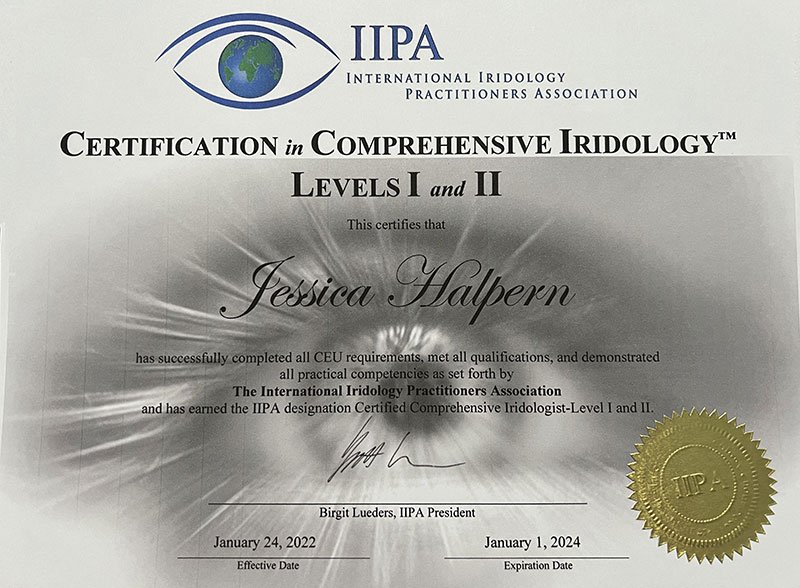
Verification of educational recognition begins with inspecting third-party registry standards and formal board oversight.
Deciphering Course Credentials: What Do the Labels Mean?
Training programs use varied terminology such as certified, accredited, approved, and licensed, which carry distinct operational meanings. Understanding these distinctions protects learners from investing time and financial resources into unrecognized documentation.
A completion certificate confirms attendance, whereas formal certification demands passing standardized examinations and demonstrating practical competence. The following table highlights the essential operational distinctions between common credential types in holistic wellness training.
| Credential Type |
Issuing Entity |
Primary Purpose |
Operational Scope |
| Accredited Course |
Independent Board |
Quality Standard |
Evaluates curriculum depth and institutional operational compliance through external review. |
| Certified Practitioner |
Professional Body |
Competency Proof |
Confirms an individual passed written evaluations and practical tissue observation tests. |
| Approved Provider |
Continuing Ed Body |
Credit Hours |
Enables licensed practitioners to maintain current credentials via non-academic credits. |
| Completion Award |
Private School |
Attendance Record |
Verifies only that a participant finished the designated instructional modules. |
Prospective learners can explore foundational requirements through the recognized Iridology Certification educational pathways before committing to advanced study programs.

Standardized credential structures evaluate theoretical knowledge alongside practical evaluation techniques.
Primary Educational Routes for Iridology Training
Aspiring practitioners in North America select from several educational structures based on prior healthcare experience and target professional goals. Some students pursue standalone diplomas, while others integrate iris assessment within broader naturopathic or nutritional programs.
Structured Training pathways range from independent private vocational academies to integrative functional wellness colleges. Each model presents specific curricular advantages depending on whether practical lab sessions occur online or through in-person mentorship.
- Independent vocational academies focusing exclusively on comprehensive European and American iris analysis traditions.
- Naturopathic and herbal medicine colleges that incorporate ocular assessment modules into holistic practitioner diplomas.
- Professional member associations providing standardized testing syllabi alongside third-party examination boards.
- Continuing education platforms serving licensed acupuncturists, chiropractors, and massage therapists seeking ancillary wellness evaluation skills.

Distance-learning models combine interactive digital theory lectures with hands-on optical evaluation practice.
Step-by-Step Framework to Verify Course Claims
Prospective students should never accept generic promotional claims of international accreditation without thorough due diligence. Verifying institutional standing prevents unexpected rejection when seeking professional liability insurance or affiliate board recognition.
Evaluating an academy requires systematic verification of legal incorporation, syllabus transparency, and practical testing protocols. The following sequence establishes a reliable verification workflow for prospective students.
- Identify the exact legal name of the accrediting entity and confirm its physical headquarters location.
- Search the independent accrediting organization’s public online directory to confirm the school holds active, good-standing status.
- Verify whether accreditation applies to the comprehensive institution or merely represents continuing education approval for a single module.
- Inspect instructor backgrounds to confirm legitimate credentials, practical experience, and active participation in recognized holistic associations.
- Examine refund policies, exam proctoring procedures, grading rubrics, and formal student dispute resolution mechanisms.
- Contact professional liability insurance underwriters to determine whether credentials from the chosen school satisfy practitioner coverage prerequisites.

Careful cross-referencing of directory listings ensures institutional accountability before enrollment fees are paid.
Evaluating Academic and Practical Curriculum Standards
A rigorous syllabus must balance theoretical iris history with modern constitutional assessment frameworks. Programs should incorporate comprehensive study of tissue resilience, autonomic nerve wreath variations, and pigment distribution patterns.
Responsible training institutions emphasize that markings demonstrate inherited constitutional tendencies rather than specific disease states. Utilizing an accurate Iridology Chart serves as the bedrock for mapping anatomical reference zones without overstepping medical boundaries.
Foundational Eye Anatomy
Covers cellular layers of the stroma, anterior border layer dynamics, pupil margins, and autonomic nervous system topography.
Constitutional Typologies
Explores lymphatic, neurogenic, biliary, and hematogenic constitutions along with specific structural diatheses and inherited predispositions.
Ethics and Scope of Practice
Instructs students on regulatory terminology, disclaimer administration, non-medical language standards, and client record security protocols.

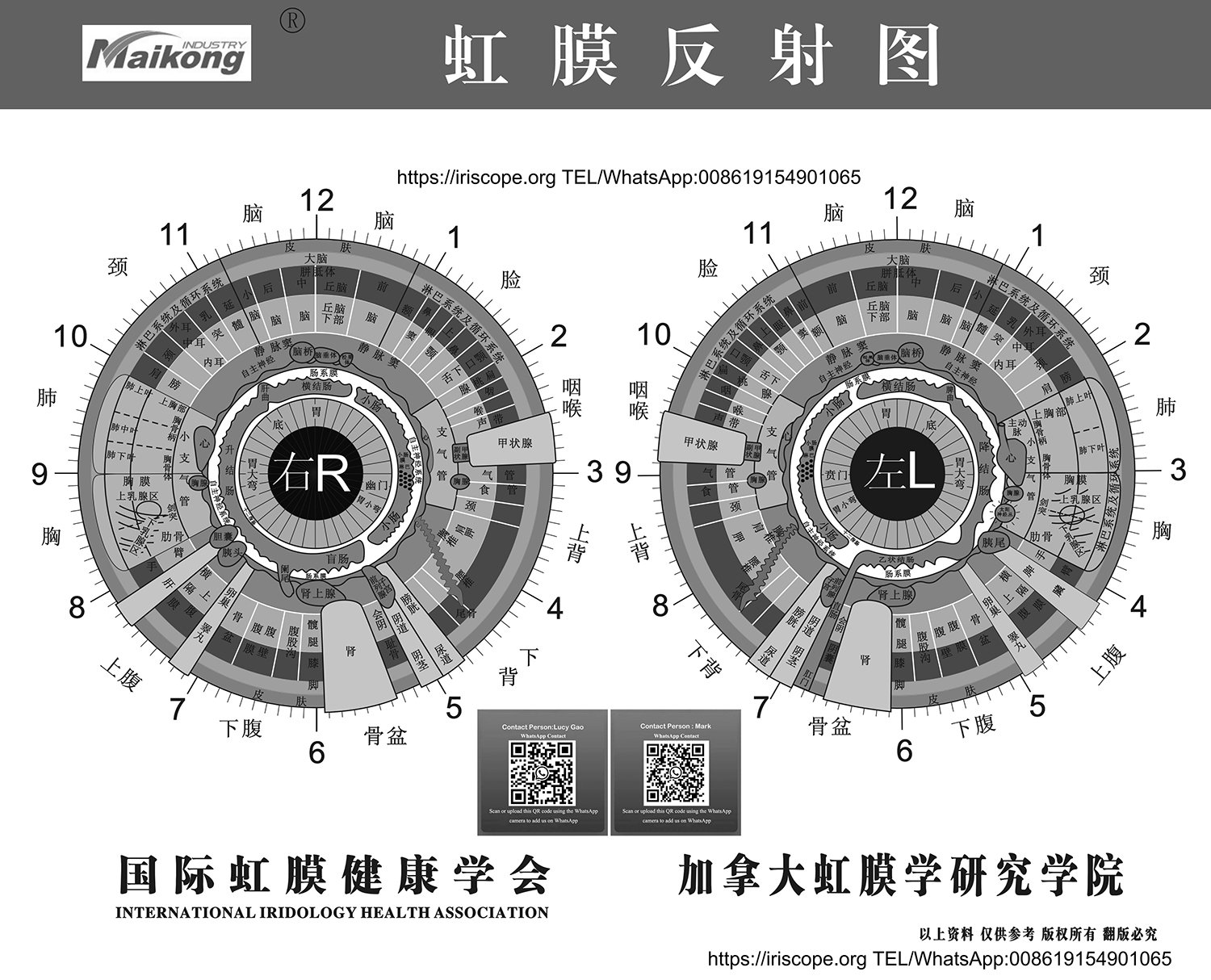
Comprehensive instructional programs balance detailed ocular structural mapping with strict legal and ethical client protocols.
Practical Classroom Tools and Imaging Hardware Standards
Modern education has advanced beyond simple penlights and handheld magnifying lenses into specialized digital imaging technology. Classroom instruction relies heavily on clear optical capture to teach subtle fiber separations, crypts, and vascular distributions accurately.
Training academies frequently integrate a specialized iridology camera within laboratory environments to facilitate real-time group analysis. High-resolution sensors and balanced multi-angle illumination eliminate corneal glare that might otherwise obscure important iris landmarks during clinical demonstrations.
Classroom demonstration devices must provide true optical clarity, stable white balance, and adjustable LED illumination to prevent pupil constriction and optical artifact distortion during student practice.

Specialized digital imaging instruments allow students to capture clear reference photographs without corneal reflection artifacts.
Educational Software Requirements and Platform Compatibility
Educational laboratories require dependable software systems to catalog student records, overlay grid maps, and manage comparative case studies over time. High-quality platforms enable educators to demonstrate structural changes and constitutional markers side-by-side.
The development of specialized Iridology Software has evolved significantly over the past two decades, transitioning from basic manual comparisons to multi-platform compatibility and cloud backup capabilities. The historical progression below highlights key technological milestones in software design.
| Release Year |
Software Version |
Key Milestone |
Platform Scope |
| 2004 |
Initial Release |
Basic manual iris image cataloging |
Early operating systems |
| 2008 |
Version 3.04 |
Multilingual user interface integration |
Windows XP, 2000 |
| 2014 |
Version 3.15 |
Multi-user databases and cloud backup |
Windows Vista, 7, 8 |
| 2018 |
Version 3.18 |
Apple macOS platform compatibility |
macOS 10.14 and later |
| 2026 |
Maikong 2026 |
Enhanced texture rendering and wireless transfer |
Windows 10, 11, macOS |
Classrooms operating diverse computer labs should verify hardware driver compatibility across operating systems. Current MAIKONG software systems support Windows XP through Windows 11 as well as Apple macOS, but do not operate on Linux, Android, or Unix environments.
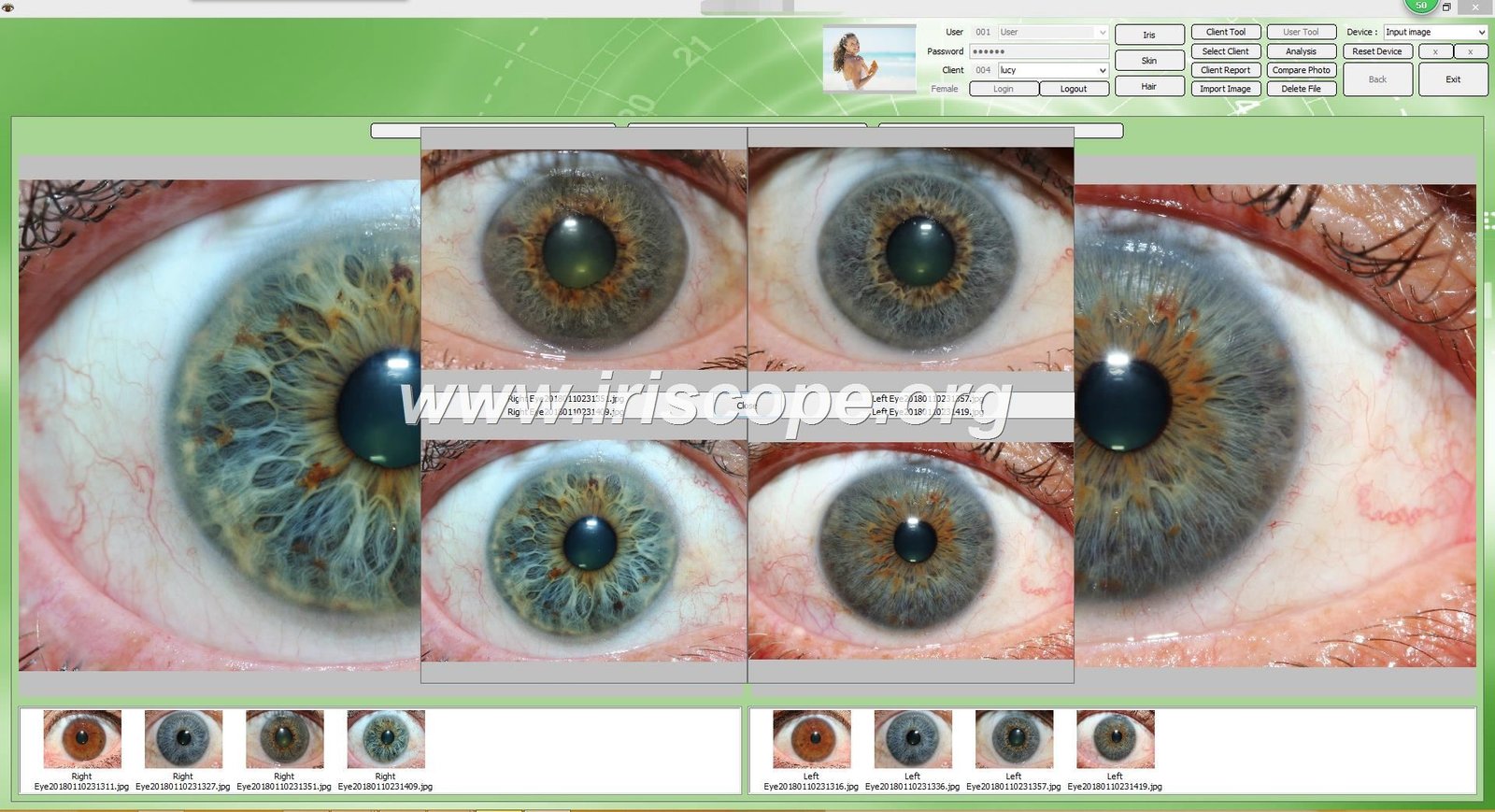
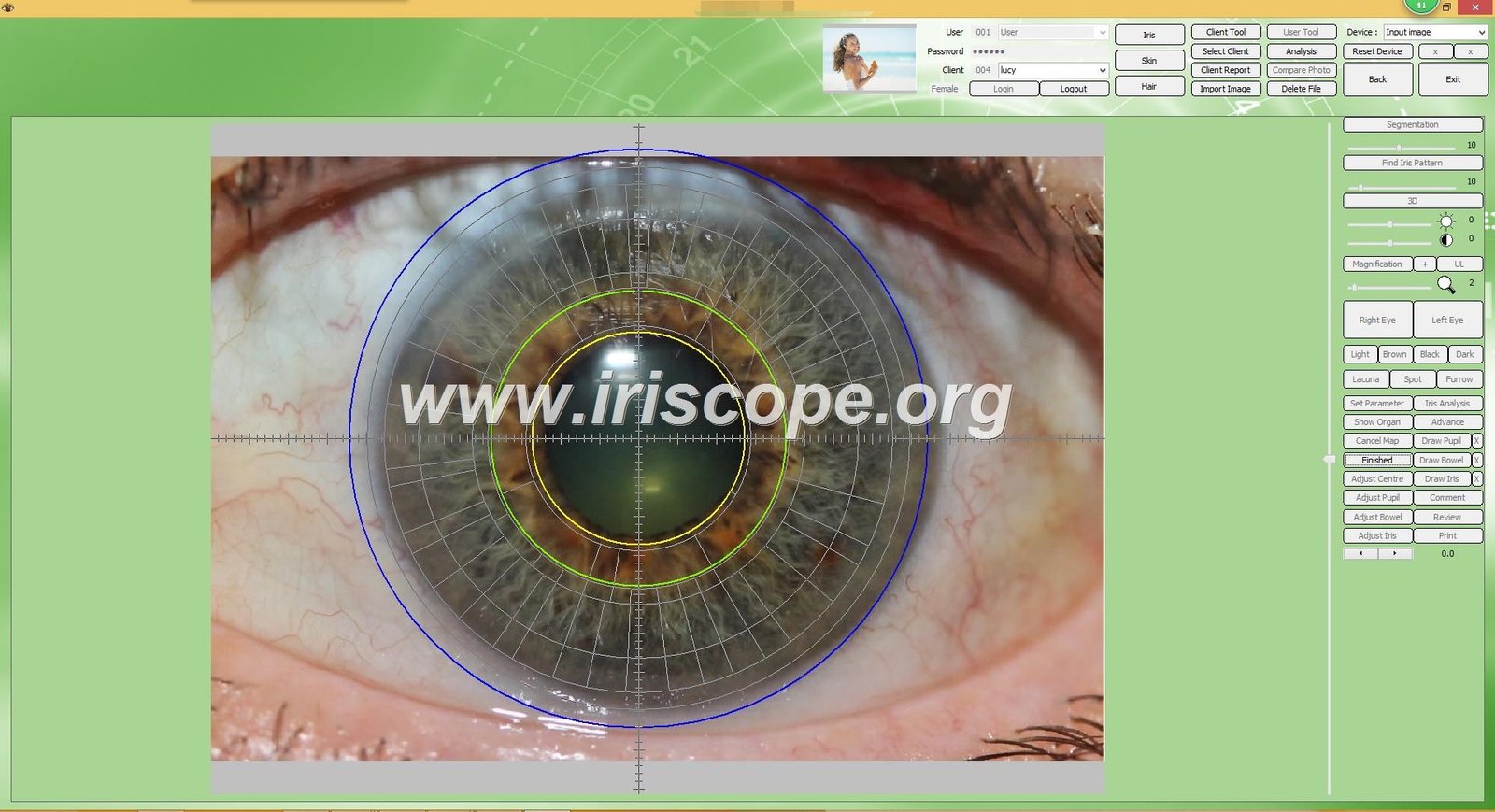
Advanced educational software provides comparative viewing tools and secure database management across modern computer environments.
Hardware Standards for Demonstration and Student Labs
Institutions outfitting physical classrooms require durable demonstration hardware capable of withstanding continuous student handling. Optical systems must deliver consistent color balance and detailed resolution to support rigorous morphological evaluations.
Standard professional teaching equipment, such as an optical iriscope, incorporates specialized circular illumination and high-grade coated lenses. Below are the verified manufacturer specifications for demonstration equipment utilized across educational wellness environments.
| Specification |
Technical Parameter |
Educational Benefit |
Maintenance Requirement |
| Sensor Type |
12.0 Megapixels CCD |
High-resolution micro-fiber visualization |
Keep lens capped when not active. |
| Illumination |
Surround LED array |
Even lighting across anterior surface |
Check connection cables periodically. |
| Optics |
30X Iris Coated Lens |
Minimizes chromatic aberration during labs |
Clean exclusively with optical cloths. |
| Interface |
USB Connectivity |
Direct computer power without external plugs |
Verify USB port power stability. |
| Service Life |
5 to 10 Years |
Durable investment for teaching labs |
Factory repair via return shipment. |
Demonstration cameras generally include a standard one-year factory warranty covering non-accidental material and manufacturing malfunctions. Institutions should verify specific warranty documentation in their purchase agreements, as commercial terms and service requirements may vary based on deployment volume.
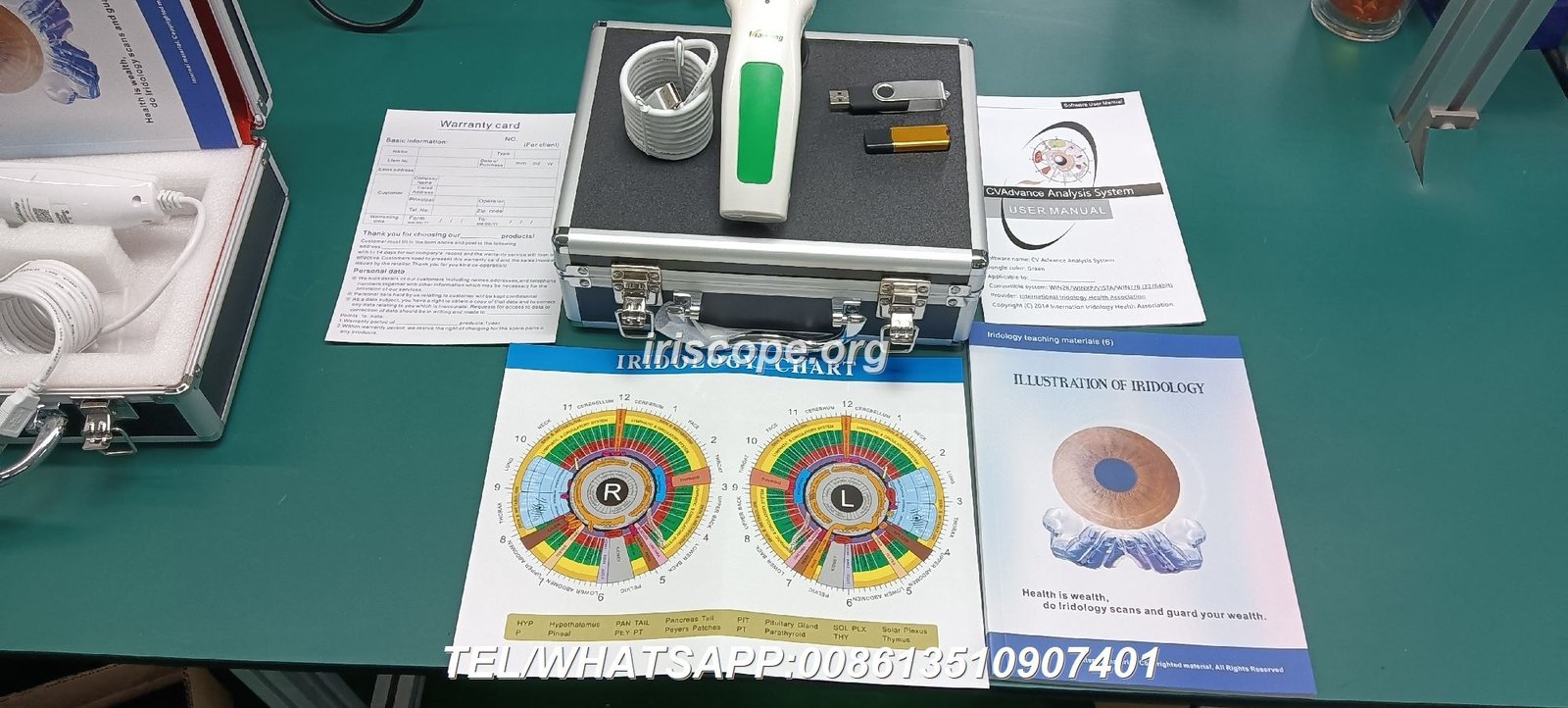
Protective storage cases and regular optical care support prolonged equipment reliability in demanding institutional settings.
Scope of Practice, Wellness Contexts, and Health Disclaimers
A central pillar of any reputable iridology training program is the strict adherence to professional wellness boundaries. The modality of Iridology represents a non-invasive educational assessment method that evaluates structural tissue vitality, not a medical diagnostic technique.
Practitioners frequently operate within integrative functional wellness centers alongside longevity, anti-aging, detox, and ozone modalities. Regardless of the setting, iris evaluation must never be marketed as a substitute for standard clinical laboratory testing, medical physical examinations, or physician consultations.
Iris analysis and associated software reports provide holistic wellness education and health-management reference only; they cannot diagnose, treat, prevent, or cure any medical disease.

Written disclaimers clarify that constitutional iris assessments function exclusively as educational lifestyle guidance.
Red Flags and Unresolved Questions in Course Marketing
Aggressive internet marketing in the complementary health sector often blurs the line between commercial certificate sales and rigorous educational training. Students frequently encounter vague trust seals and bold promises of international recognition that lack substantive legal backing.
Before transferring tuition funds, learners must identify warning signs that indicate substandard curriculum delivery or unverified accreditation claims. Comparing questionable marketing tactics against verified institutional qualities reveals critical differences in program integrity.
Substandard Course Signals
- Vague claims of worldwide government accreditation without naming specific regulatory departments.
- Guarantees that course completion confers legal medical diagnostic authority or insurance billing rights.
- Curricula lacking practical image interpretation assessments or structured instructor oversight.
- Pressure to purchase expensive proprietary supplements or specific hardware bundles to graduate.
Verified Educational Standards
- Transparent publication of syllabus hours, faculty credentials, and specific association registry affiliations.
- Clear, prominent disclaimers establishing the educational and non-medical boundaries of the training.
- Proctored examinations covering theoretical anatomy, constitutional diatheses, and ethical protocols.
- Independent choice of demonstration equipment and open software platform support for student practice.

Scrutinizing curriculum details and faculty credentials shields students from commercial certificate mills.
Frequently Asked Questions
Are iridology courses accredited by the US Department of Education?
No, standard iridology courses are not accredited by the United States Department of Education or regional academic higher-education commissions. Instead, legitimate programs receive approval through independent holistic health registries, natural health associations, or professional vocational training boards.
Can completing an iridology course allow me to diagnose medical conditions?
No, iridology training does not grant medical diagnostic authority or license graduates to diagnose, prescribe, or treat diseases. The practice serves exclusively as an educational wellness assessment to evaluate constitutional tendencies and tissue strengths.
Do I need to purchase specialized imaging equipment before enrolling in a course?
Most beginning courses do not require high-end imaging cameras during initial theoretical lectures, though introductory optical tools like a 5x or 10x magnifying loupe are helpful. Advanced clinical and practical assessment modules typically require access to a calibrated digital iriscope for case study submissions.
How can I verify if an iridology training school is legitimate?
Contact the independent holistic board or professional iridology association cited on the school’s website to confirm active institutional membership. Review student grievance policies, inspect instructor credentials, and ensure the curriculum adheres to established legal and non-medical health observation boundaries.
Can I take iridology certification courses entirely online?
Yes, many reputable holistic academies offer fully digital distance-learning programs covering theoretical modules and digital chart interpretation. However, students must complete practical image analysis case studies and pass proctored examinations to achieve recognized professional certification.
Choosing a Verified Educational Foundation
Selecting among accredited iridology courses requires thorough diligence regarding third-party oversight, curriculum transparency, and ethical practitioner boundaries. By verifying registry standings, understanding legal scopes of practice, and prioritizing sound constitutional assessment techniques, aspiring professionals can build meaningful expertise in holistic health education.
Equip Your Classroom or Practice with Professional Technology
Training schools, educators, and wellness clinic operators seeking reliable optical imaging demonstration equipment and multilingual software systems can collaborate directly with factory engineers.


