علم القزحية تشخيص القزحية- لقد أذهلت القزحية البشرية - ذلك الجزء الملون من عينك - ممارسي الطب البديل لعدة قرون. علم القزحية، المعروف أيضًا باسم تشخيص القزحية، هو ممارسة فحص القزحية لتحديد المشكلات الصحية المحتملة في جميع أنحاء الجسم. يعتقد المؤيدون أن كل منطقة من القزحية تتوافق مع أعضاء وأنظمة الجسم المحددة، مع احتمال أن تشير التغيرات في أنماط القزحية إلى مشاكل صحية كامنة قبل ظهور الأعراض في مكان آخر. في حين أن الطب التقليدي لا يزال متشككًا، فإن علم القزحية يستمر في اكتساب شعبية بين أولئك الذين يبحثون عن أساليب شاملة لتقييم الصحة. يستكشف هذا المقال المبادئ والأساليب والخلافات المحيطة بهذه التقنية التشخيصية المثيرة للاهتمام.

مقدمة في تشخيص الطب البديل
تقدم طرق التشخيص البديلة مثل علم القزحية أساليب مختلفة لتقييم الصحة
يشمل الطب البديل مجموعة واسعة من تقنيات التشخيص التي تختلف عن الأساليب الطبية التقليدية. تركز هذه الأساليب غالبًا على تحديد الاختلالات أو المشكلات الصحية المحتملة قبل أن تظهر كأعراض سريرية. بدءًا من تشخيص النبض في الطب الصيني التقليدي وحتى تقييم دوشا الأيورفيدا، تشترك هذه الممارسات في فلسفة شاملة تنظر إلى الجسم كنظام مترابط.
علم القزحية تشخيص القزحية-يعد علم القزحية من بين طرق التشخيص البديلة كتقنية تستخدم الفحص البصري بدلاً من الإجراءات الغازية. يعتقد الممارسون أن القزحية بمثابة “رسم خريطة” من الجسم، حيث يتوافق كل قسم مع أعضاء وأنظمة مختلفة. ومن خلال تحليل التغيرات في أنماط القزحية وألوانها وعلاماتها، يهدف علماء القزحية إلى تحديد المجالات المثيرة للقلق ونقاط الضعف الصحية المحتملة.
على عكس الاختبارات التشخيصية التقليدية التي تستهدف حالات معينة، يدعي علم القزحية أنه يقدم نظرة شاملة عن الحالة الصحية للشخص وميوله الدستورية. يتوافق هذا النهج مع الفلسفة الوقائية الشائعة في العديد من الأنظمة الصحية البديلة.
تاريخ علم القزحية: أصول القرن التاسع عشر
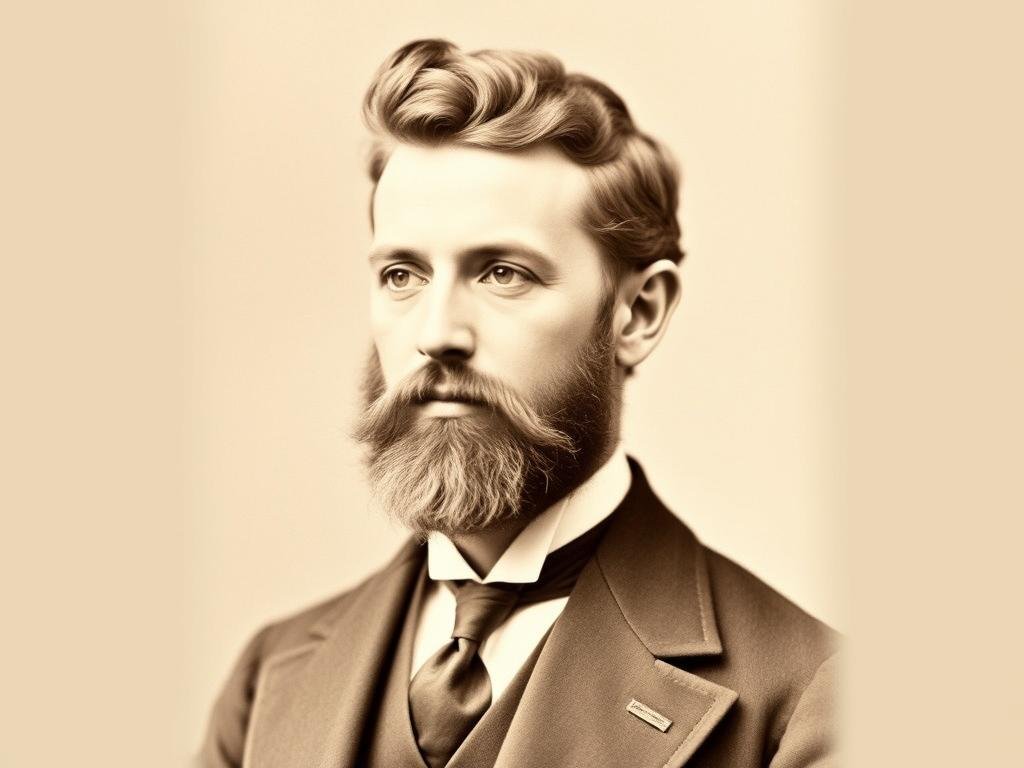
ويُنسب إلى إجناز فون بيكزيلي الفضل على نطاق واسع باعتباره أب علم القزحية الحديث
في حين يدعي بعض المؤيدين أن أشكال فحص القزحية كانت موجودة في مصر القديمة والصين والهند منذ أكثر من 3000 عام، فإن علم القزحية الحديث يعود بجذوره إلى أوروبا في القرن التاسع عشر. تُنسب هذه الممارسة في الغالب إلى الطبيب المجري إجناز فون بيكزيلي، الذي طور نظرياته في ستينيات القرن التاسع عشر.
وفقًا للروايات الشائعة، بدأ اهتمام فون بيكزيلي في مرحلة الطفولة عندما لاحظ ظهور خط داكن في قزحية البومة بعد أن أصيب الطائر بكسر في ساقه. قادته هذه الملاحظة إلى افتراض وجود صلة بين علامات القزحية والصدمات الجسدية أو المرض. كطبيب، قام لاحقًا بتوسيع هذه النظرية من خلال دراسة مرضاه’ القزحية وارتباط الأنماط بحالتها الصحية المعروفة.
في عام 1881، نشر فون بيكزيلي أول مخطط لقزحية العين يرسم مناطق القزحية لأعضاء وأنظمة معينة في الجسم. في نفس الوقت تقريبًا، طور المعالج المثلي السويدي نيلز ليلجيكويست بشكل مستقل نظريات مماثلة بعد ملاحظة التغيرات في قزحية عينه بعد تناول الدواء بالكينين واليود.
انتشرت هذه الممارسة في جميع أنحاء أوروبا في أوائل القرن العشرين، مع مساهمات كبيرة من الممارسين الألمان مثل القس إيمانويل فيلكه. في الولايات المتحدة، اكتسب علم القزحية شهرة في الخمسينيات من القرن الماضي من خلال عمل برنارد جنسن، وهو معالج تقويم العظام الذي قام بتحسين مخططات القزحية وروج لهذه الممارسة كجزء من أساليب العلاج الطبيعي.
المبادئ الأساسية لعلم القزحية

تشكل الأنماط المعقدة للقزحية البشرية أساس تحليل القزحية
يعتمد علم القزحية على العديد من المبادئ الأساسية التي توجه الممارسين في تحليلاتهم. إن فهم هذه المفاهيم يوفر نظرة ثاقبة حول كيفية تعامل علماء القزحية مع تشخيص القزحية:
القزحية باعتبارها Micromap
علم القزحية تشخيص القزحية - المبدأ الأساسي في علم القزحية هو أن القزحية تعمل كخريطة مفصلة للجسم بأكمله. يُعتقد أن كل منطقة من القزحية تتوافق مع أعضاء وغدد وأنظمة معينة في الجسم. يتبع هذا التخطيط ترتيبًا منطقيًا، حيث تمثل المناطق الرأس في أعلى القزحية وتلك التي تمثل القدمين في الأسفل.
التقييم الدستوري
يعتقد علماء القزحية أن البنية الأساسية للقزحية ولونها يكشفان عن الاستعداد الوراثي للشخص ونقاط القوة والضعف الكامنة فيه. يُعتقد أن هذه العوامل الدستورية تشير إلى أنظمة الجسم التي قد تحتاج إلى دعم إضافي أو أكثر عرضة لمشاكل صحية محددة.
العلاقة الانعكاسية
وفقا لنظرية علم القزحية، تتصل القزحية بجميع أنسجة الجسم من خلال الجهاز العصبي وتعرض التغيرات استجابة لظروف الأنسجة. من المفترض أن تسمح هذه العلاقة الانعكاسية للقزحية بأن تكون بمثابة مؤشر للتغيرات التي تحدث في جميع أنحاء الجسم.
تراكم السموم
يعتقد العديد من علماء القزحية أن العلامات المحددة في القزحية تشير إلى تراكم السموم أو النفايات في أنسجة الجسم المقابلة. قد تظهر هذه العلامات على شكل تغيرات في اللون أو بقع أو تغيرات هيكلية في ألياف القزحية.
تشكل هذه المبادئ الأساس النظري لممارسة علم القزحية، على الرغم من أنه من المهم ملاحظة أنه لم يتم التحقق من صحتها من خلال الأبحاث الطبية التقليدية.
رسم خرائط القزحية: ارتباطات الأعضاء
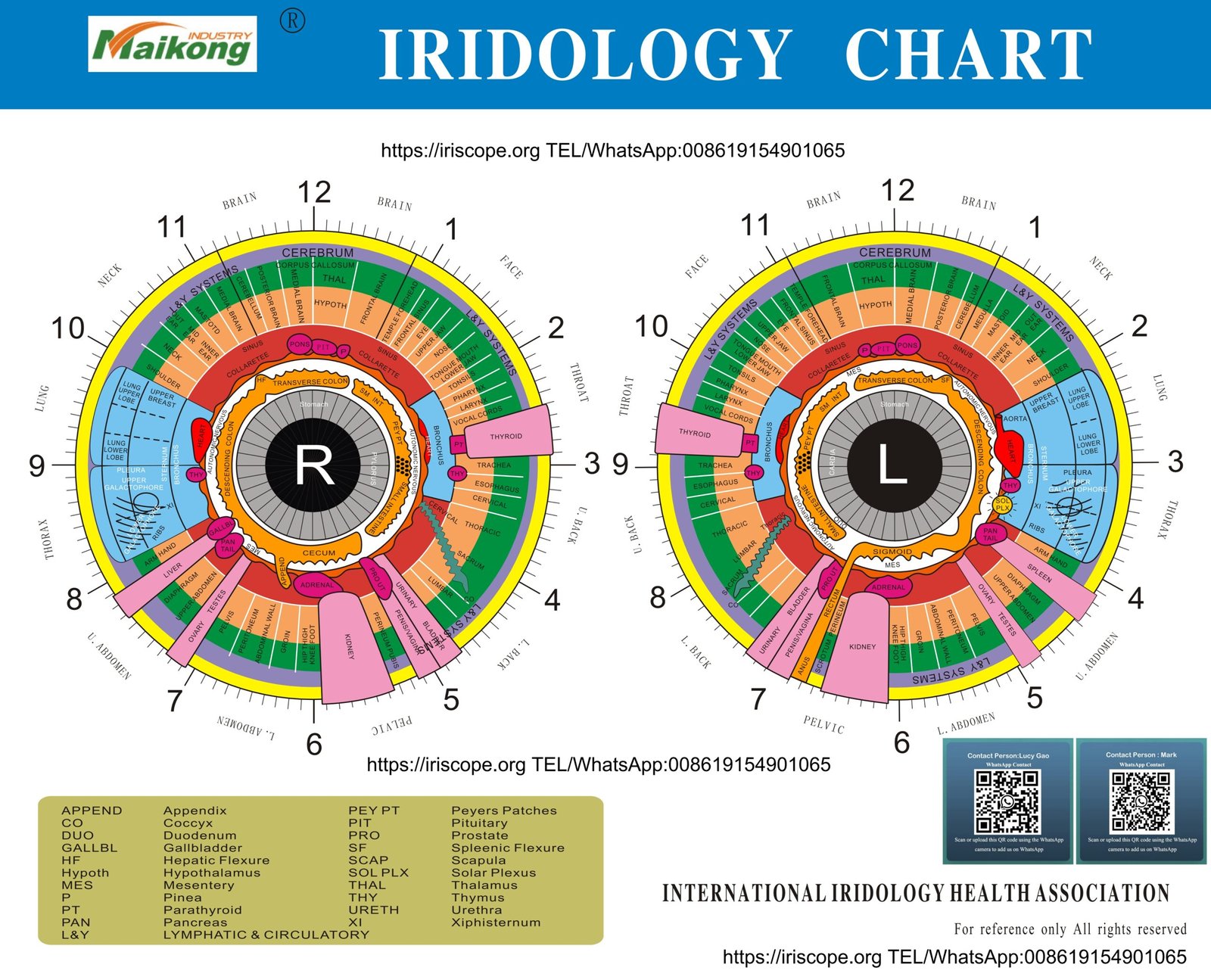
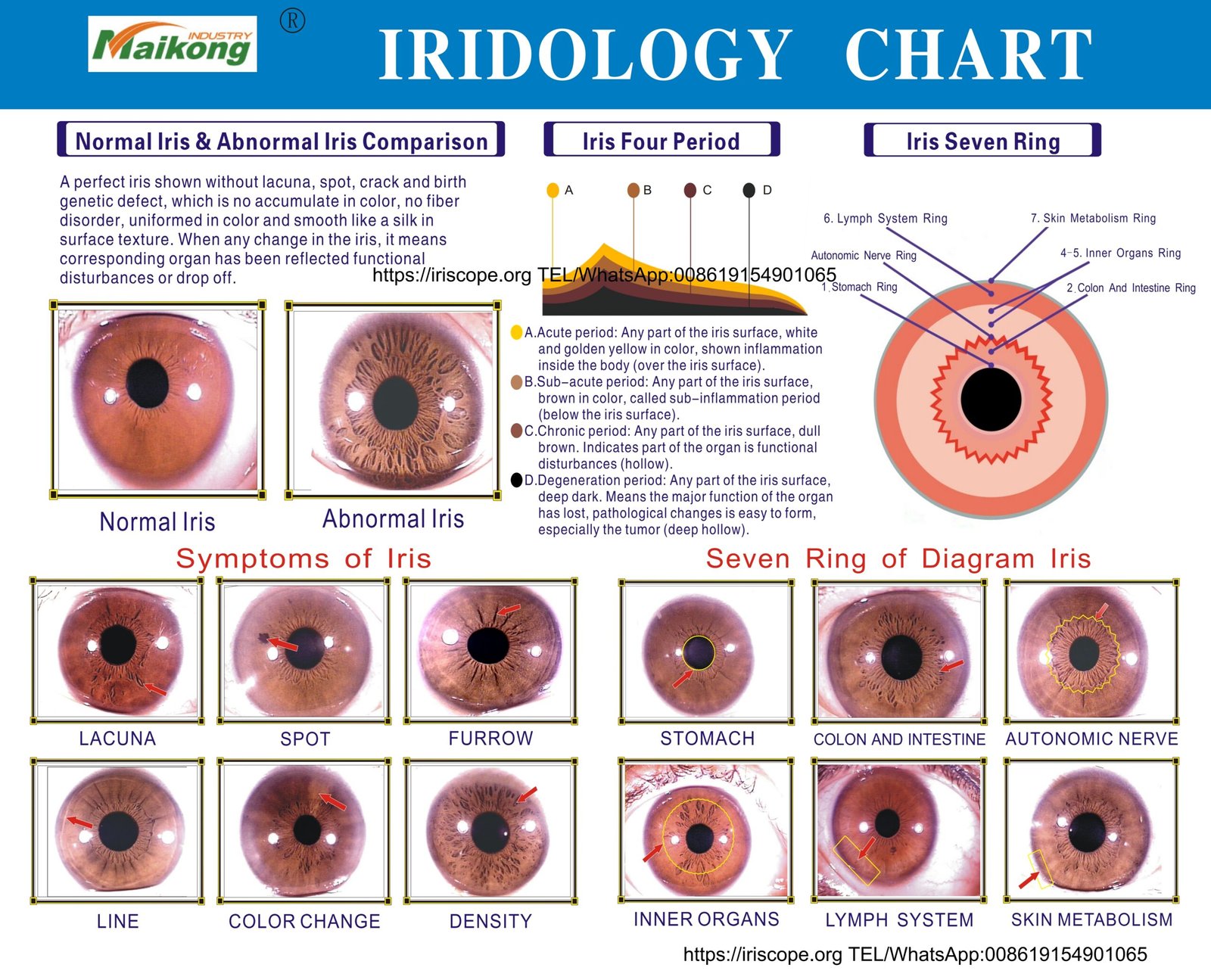
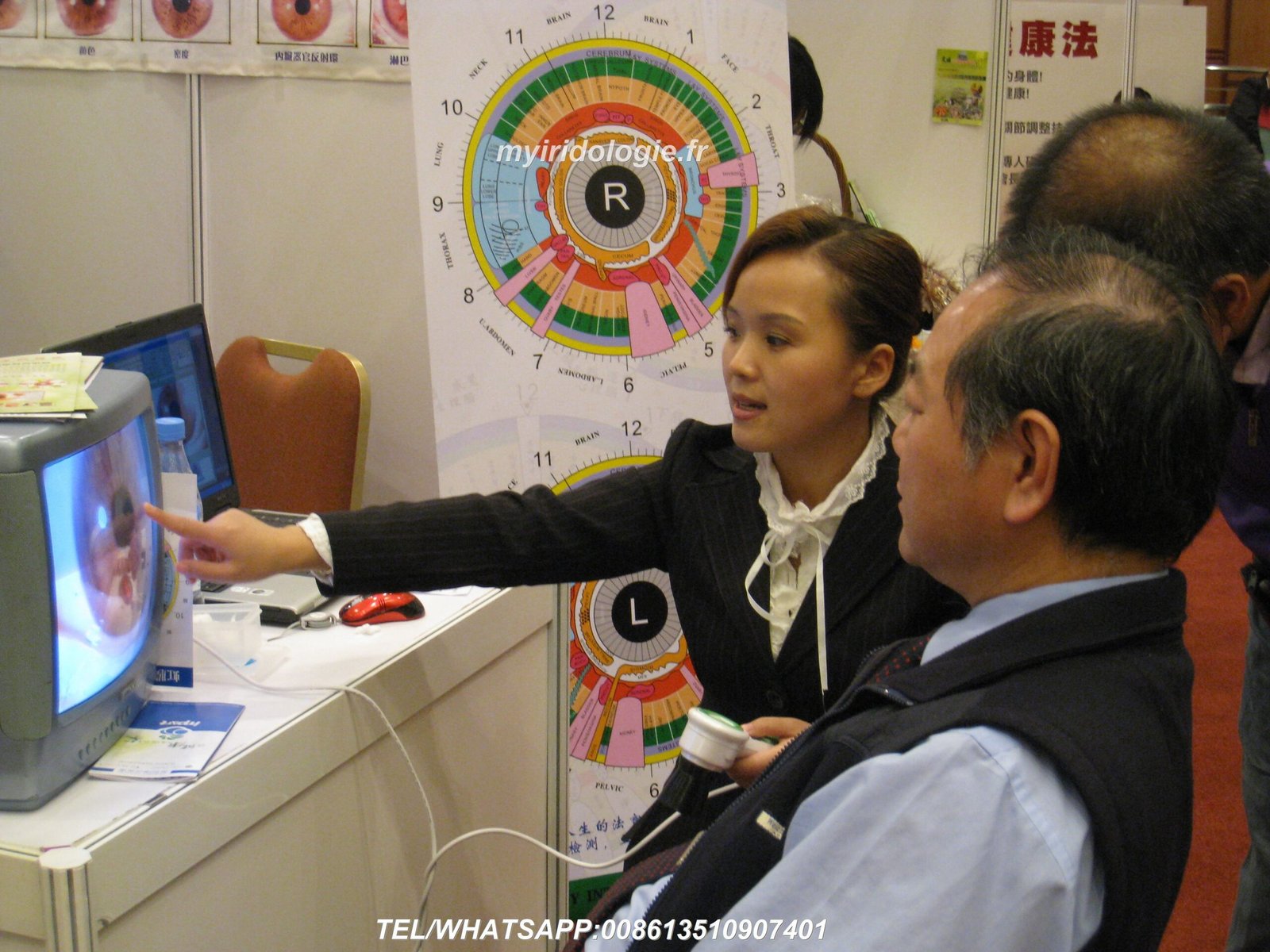
مخطط علم القزحية يرسم مناطق محددة للقزحية لأعضاء وأنظمة الجسم المقابلة
مخطط علم القزحية هو الأداة الأساسية التي يستخدمها الممارسون لتفسير علامات القزحية. تقسم هذه المخططات القزحية إلى ما يقرب من 80-90 منطقة، كل منها يتوافق مع أجزاء مختلفة من الجسم. على الرغم من وجود إصدارات مختلفة، إلا أن معظمها يتبع مبادئ تنظيمية مماثلة:
تنظيم الرسم البياني الأساسي
تنقسم القزحية عادة مثل وجه الساعة، مع مناطق مرتبة في حلقات متحدة المركز. ويُعتقد أن القزحية اليمنى تتوافق مع الجانب الأيمن من الجسم، بينما تعكس القزحية اليسرى الجانب الأيسر. يتبع المخطط بشكل عام هذا الترتيب:
- منطقة الحدقة (الحلقة الداخلية): يرتبط بالأعضاء الهضمية والجهاز العصبي اللاإرادي
- المنطقة الهدبية (الحلقة الوسطى): يرتبط بالعضلات والدورة الدموية والجهاز اللمفاوي
- المنطقة المحيطية (الحلقة الخارجية): متصل بالجلد والأطراف والهياكل العظمية
رسم الخرائط الاتجاهية
تتبع معظم مخططات علم القزحية الارتباطات الاتجاهية حيث:
- الجزء العلوي من القزحية (وضع الساعة 12) يتوافق مع الرأس والدماغ
- أما الجانب الأيمن (الساعة 3) فيتعلق بأعضاء مثل الكبد والمرارة
- الجزء السفلي (الساعة 6) يتصل بالأطراف السفلية وأعضاء الحوض
- الجانب الأيسر (الساعة 9) يتصل بالقلب والطحال
تشخيص القزحية - يستخدم الممارسون هذه المخططات لتحديد أنظمة الجسم التي قد تتأثر بناءً على مكان ظهور العلامات في القزحية. على سبيل المثال، قد يتم تفسير البقعة الداكنة في موضع الساعة 3 في القزحية اليمنى على أنها تشير إلى إجهاد الكبد أو خلل وظيفي.
كيف يتم إجراء تحليل القزحية

غالبًا ما تستخدم فحوصات علم القزحية الحديثة كاميرات متخصصة ومعدات تكبير
يتضمن تحليل القزحية عدة خطوات وتقنيات يستخدمها الممارسون لفحص وتفسير الأنماط في عيون الشخص:
أدوات الفحص
يستخدم علماء القزحية المعاصرون أدوات مختلفة لإجراء فحوصاتهم:
- بينلايت: للإضاءة الأساسية للقزحية
- عدسة مكبرة: لمراقبة التفاصيل الدقيقة والعلامات الدقيقة
- كاميرا علم القزحية: معدات متخصصة تلتقط صورًا عالية الدقة للقزحية
- برامج التحليل الرقمي: البرامج التي تعمل على تحسين وتحليل صور القزحية
عملية الفحص
تتبع جلسة علم القزحية النموذجية الخطوات التالية:
- التاريخ الصحي: يبدأ الممارس بأخذ تاريخ صحي مفصل لفهم الظروف والمخاوف الحالية.
- فحص القزحية: يقوم أخصائي القزحية بفحص كلا القزحيتين تحت إضاءة جيدة، وغالباً ما يلتقط صوراً لتحليل مفصل.
- تحديد النمط: يحدد الممارس العلامات والألوان والميزات الهيكلية المختلفة في القزحية.
- مقارنة الرسم البياني: تتم مقارنة هذه الملاحظات مع مخطط علم القزحية لتحديد أجهزة الجسم التي قد تتأثر.
- تقدير: يقدم أخصائي القزحية تقييماً لنقاط الضعف الصحية المحتملة بناءً على ملاحظاته.
ما الذي يبحث عنه علماء القزحية
أثناء الفحص، يهتم علماء القزحية بالعديد من الميزات الرئيسية:
- لون القزحية: ويعتقد أن اللون الأساسي (الأزرق، البني، المختلط) يشير إلى النوع الدستوري
- هيكل الألياف: من المفترض أن يكشف نمط وكثافة ألياف القزحية عن الاستعداد الوراثي
- الآفات والعلامات: Dark spots, white areas, or lines that may indicate specific health issues
- Rings and zones: Circular patterns that might suggest chronic conditions or stress responses
- Pigmentation changes: Variations in color that could indicate inflammation or toxin accumulation
Purported Health Insights from Iris Patterns

Patterns claimed to indicate digestive system issues

Patterns claimed to indicate circulatory system problems
Iridologists claim to identify numerous health conditions and tendencies through iris analysis. While these claims lack scientific validation, the following are commonly cited insights that practitioners believe can be gleaned from iris patterns:
Commonly Identified Conditions
| ميزة القزحية |
موقع |
Purported Health Indication |
| Ring around iris (Sodium Ring) |
Outer edge of iris |
ارتفاع ضغط الدم، احتباس الملح، إجهاد القلب والأوعية الدموية |
| بقع بنية |
منطقة الكبد (القزحية اليمنى) |
خلل في وظائف الكبد، وتراكم السموم |
| غيوم بيضاء |
منطقة الرئة |
ضعف الجهاز التنفسي، وتراكم المخاط |
| خطوط شعاعية |
المنطقة المعوية |
مشاكل في الجهاز الهضمي، واحتمالية الإصابة بالقولون العصبي |
| بقع داكنة |
منطقة الكلى |
إجهاد الكلى أو اختلال وظائفها |
التقييم الدستوري
بعيدًا عن شروط محددة، يعتقد علماء القزحية أن بإمكانهم تحديد النوع البنيوي للشخص بناءً على لون القزحية وبنيتها:
- النوع اللمفاوي (القزحية الزرقاء): من المحتمل أن يكون أكثر عرضة لمشاكل الجهاز اللمفاوي والجهاز التنفسي
- النوع الدموي (القزحية البنية): قد يكون لديه ميول نحو أمراض الدم والكبد
- نوع مختلط: يُظهر خصائص الأنواع الدستورية المتعددة ذات الميول الصحية المتنوعة
مؤشرات الإجهاد والالتهابات
يبحث علماء القزحية أيضًا عن علامات الإجهاد العام والالتهابات في جميع أنحاء الجسم:
- حلقات التوتر البيضاء: Circular patterns believed to indicate nervous system tension
- تلون صفراء: Potentially suggesting inflammation in corresponding organs
- Darkened areas: Possibly indicating chronic stress in specific body systems
Case Study Examples: Hypothetical Scenarios
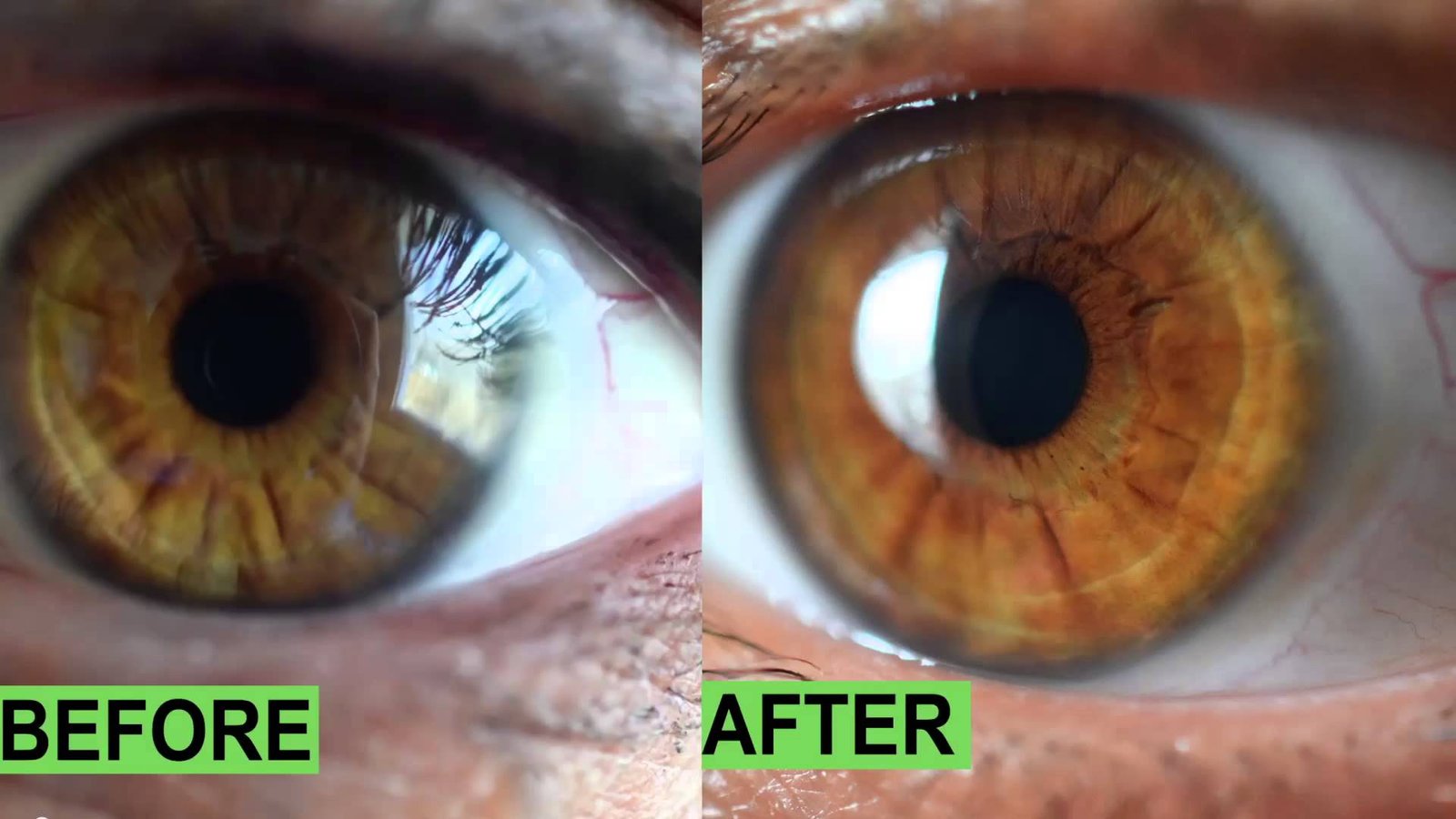
Hypothetical before/after comparison showing iris changes following lifestyle modifications
To illustrate how iridologists apply their principles in practice, consider these hypothetical case studies. Note that these examples are provided for educational purposes only and do not constitute medical evidence or advice.
Case Study 1: Digestive Issues
ملف العميل: 42-year-old female with chronic bloating, irregular bowel movements, and fatigue
Iris Observations: The iridologist noted dark radial lines in the intestinal zone (around 6 o’clock position) of both irises, along with white markings in the stomach area.
تفسير: These patterns were interpreted as indicating potential digestive weakness, particularly in the intestinal tract, with possible inflammation in the stomach lining.
التوصيات: The practitioner suggested dietary modifications (eliminating potential irritants like gluten and dairy), digestive herbs, and stress reduction techniques.
Hypothetical Outcome: After implementing dietary changes and stress management, the client reported improvement in symptoms. A follow-up iris examination purportedly showed reduced inflammation markers.
Case Study 2: Stress and Adrenal Fatigue
ملف العميل: 35-year-old male with chronic fatigue, sleep disturbances, and difficulty managing stress
Iris Observations: The iridologist identified pronounced white stress rings in both irises and darkening in the adrenal gland zone.
تفسير: These features were interpreted as indicating chronic stress affecting the adrenal glands, potentially leading to adrenal fatigue.
التوصيات: The practitioner suggested adaptogenic herbs, B-complex vitamins, improved sleep hygiene, and stress management techniques.
Hypothetical Outcome: After three months, the client reported improved energy and stress resilience. The iridologist claimed that follow-up examination showed reduced stress indicators in the iris.
ملاحظة مهمة: These case studies are hypothetical examples of how iridology might be applied in practice. They do not constitute scientific evidence for the effectiveness of iridology as a diagnostic method. Always consult with qualified healthcare providers for medical diagnosis and treatment.
Modern Applications in Holistic Health

Modern holistic health centers often incorporate iridology alongside other complementary practices
Despite scientific skepticism, iridology continues to be practiced in various holistic health settings. Here’s how it’s typically applied in contemporary alternative health practices:
التكامل مع الطرائق الأخرى
Modern practitioners rarely use iridology in isolation. Instead, it’s commonly integrated with other holistic approaches:
- Naturopathy: Many naturopathic physicians include iridology as one component of their assessment toolkit
- Herbalism: Herbalists may use iris analysis to help determine which herbal remedies might be most beneficial
- الاستشارات الغذائية: Some nutritionists incorporate iridology to identify potential nutritional deficiencies or digestive weaknesses
- Traditional Chinese Medicine: Some TCM practitioners combine iris analysis with traditional diagnostic methods like pulse and tongue diagnosis
التقدم التكنولوجي
Modern iridology has embraced technological innovations:
- Digital iridology: High-resolution cameras and specialized software allow for detailed iris photography and analysis
- Computerized assessment: Some systems use algorithms to identify and interpret iris markings
- Remote consultations: Digital technology enables practitioners to analyze iris photographs sent electronically
Preventative Approach
Contemporary iridologists typically emphasize prevention rather than diagnosis:
- Identifying constitutional tendencies that may predispose individuals to certain health issues
- Suggesting lifestyle modifications to support potentially vulnerable body systems
- Monitoring changes over time to assess the impact of health interventions
While modern applications have evolved with technology, it’s important to note that the fundamental principles remain largely unchanged from the 19th-century origins of the practice.
Scientific Acceptance and Controversies
Scientific research has examined the validity of iridology’s diagnostic claims
The scientific community has extensively examined iridology’s claims, and the consensus among medical researchers and healthcare organizations is largely skeptical. Understanding both sides of this debate is important for anyone considering iridology.
Arguments from Supporters
- قصص نجاح قصصية من الممارسين والعملاء
- The non-invasive nature of the examination
- Potential value as a complementary assessment tool
- Some small studies suggesting correlations between iris features and certain conditions
- The holistic perspective it provides on health assessment
الانتقادات العلمية
- Lack of anatomical or physiological mechanism to explain how internal organs would affect iris appearance
- Multiple controlled studies failing to demonstrate diagnostic accuracy
- Inconsistent results between different iridologists examining the same iris
- Potential for delayed proper medical diagnosis if relying on iridology
- Absence of standardized training or regulation in many regions
Key Research Findings
Several scientific studies have evaluated iridology’s diagnostic claims:
- A 1979 study published in the Journal of the American Medical Association found that iridologists could not accurately detect gallbladder disease by examining photographs of irises.
- A 2000 systematic review published in the Archives of Ophthalmology concluded that “iridology is not supported by scientific evidence” after analyzing all available controlled trials.
- Multiple studies have shown that when different iridologists examine the same iris, they often reach different conclusions about the person’s health status.
Position of Medical Organizations
Major medical and scientific organizations generally do not recognize iridology as a valid diagnostic method:
- The American Academy of Ophthalmology does not endorse iridology
- The American Medical Association considers iridology to be unsupported by scientific evidence
- Most medical schools do not include iridology in their curricula
“The physical basis for iridological diagnosis has never been established scientifically… controlled studies have shown that iridology has no value as a diagnostic tool.”
— Stephen Barrett, MD, Quackwatch
Safety Recommendations for Readers

A balanced approach includes consulting both conventional and complementary practitioners
If you’re interested in exploring iridology, consider these safety recommendations to ensure you make informed decisions about your health:
Guidelines for Safe Exploration of Iridology
- Don’t delay conventional medical care: Never substitute iridology for proper medical diagnosis and treatment of serious symptoms or conditions.
- Choose qualified practitioners: If you decide to consult an iridologist, look for someone with formal training and certification from a recognized organization.
- Maintain skepticism: Approach claims critically and be wary of practitioners who make definitive diagnoses or promise cures based solely on iris examination.
- Consider it complementary: View iridology as a potentially interesting complement to conventional healthcare rather than a replacement.
- Discuss with your doctor: Inform your primary healthcare provider about any alternative practices you’re exploring.
- Watch for red flags: Be cautious of practitioners who discourage conventional medical care, sell expensive proprietary supplements, or make extravagant claims.
When to Seek Conventional Medical Care
Always consult a licensed healthcare provider promptly if you experience:
- Severe or persistent pain
- Unexplained weight loss
- Difficulty breathing
- Changes in vision or eye appearance
- Persistent fever
- Any symptoms that concern you
Interested in Learning More About Holistic Health Approaches?
While iridology remains controversial, many people find value in exploring various complementary health practices. If you’re curious about holistic approaches to wellness, consider consulting with qualified practitioners who can provide balanced information.
Find Certified Holistic Health Practitioners
Conclusion: Balancing Curiosity with Critical Thinking
Iridology iris diagnosis presents an intriguing concept—that our eyes might reveal insights about our overall health. While practitioners and supporters believe in its value as an assessment tool, the scientific community remains unconvinced due to lack of empirical evidence and biological plausibility.
As with many alternative health practices, the most balanced approach may be one of open-minded skepticism. There’s little harm in exploring iridology as a complementary practice if it interests you, provided you maintain realistic expectations and continue to rely on conventional medicine for diagnosis and treatment of health problems.
Whether you view iridology as a fascinating holistic assessment tool or an unproven pseudoscience, the decision to incorporate it into your health journey is personal. By staying informed about both perspectives and prioritizing evidence-based care, you can make choices that best support your overall wellbeing.


