L'héritage de Bernard Jensen’s Iridology Eye Map
Dr. Bernard Jensen (1908-2001) dedicated over 50 years to refining the science and practice of iridology. After recovering from his own health challenges using natural approaches, he became fascinated with how the body reveals its condition through the eyes. His journey began after studying under notable figures including Victor Rocine, who introduced him to natural healing principles.
What distinguished Jensen’s approach was his systematic documentation of iris signs. Through examining over 350,000 eyes throughout his career, he meticulously correlated iris patterns with health conditions, gradually developing what would become the most comprehensive iridology chart system in Western medicine.
“The iris reveals changing conditions of every part and organ of the body. Through various marks, signs, and discolorations in the iris, nature reveals inherited weaknesses and strengths.”
– Dr Bernard Jensen
Jensen established several nature cure sanitariums in California where he treated thousands of patients with chronic conditions. During this extensive clinical work, he documented the correlation between iris patterns and health outcomes, publishing his findings in numerous books including “La science et la pratique de l'iridologie” et “Iridology Simplified.”
Découvrez l'équipement professionnel d'iridologie
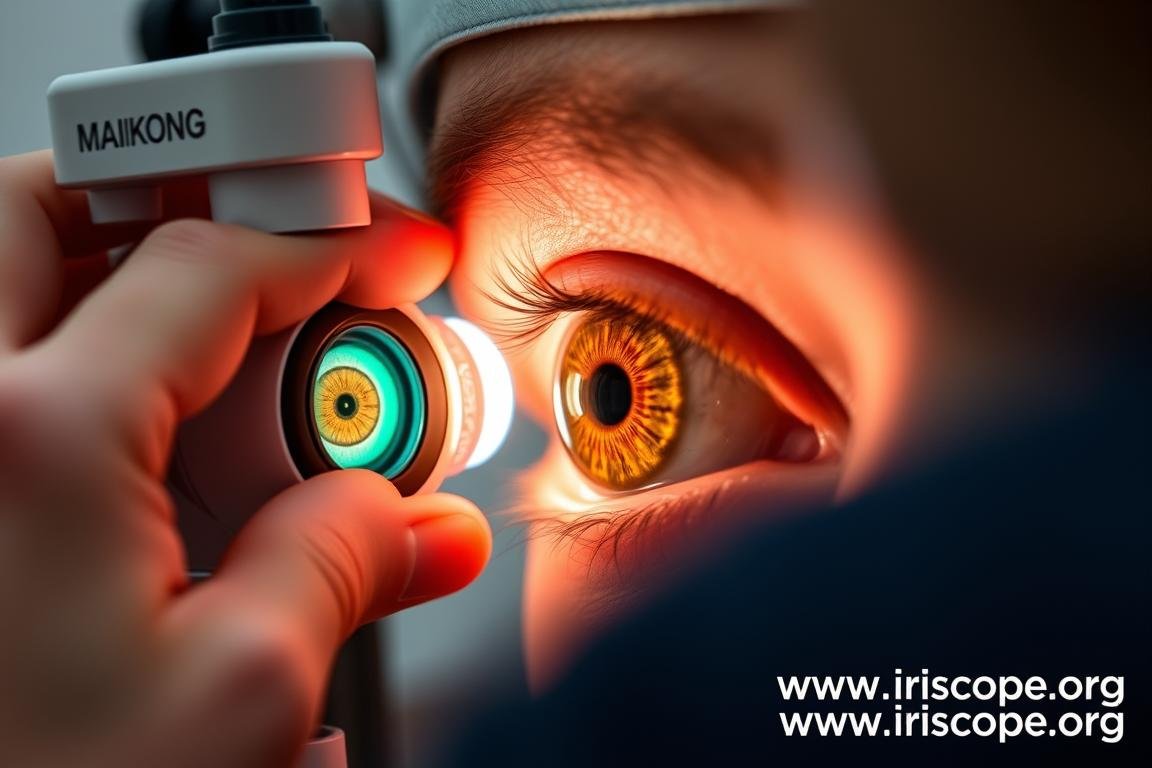
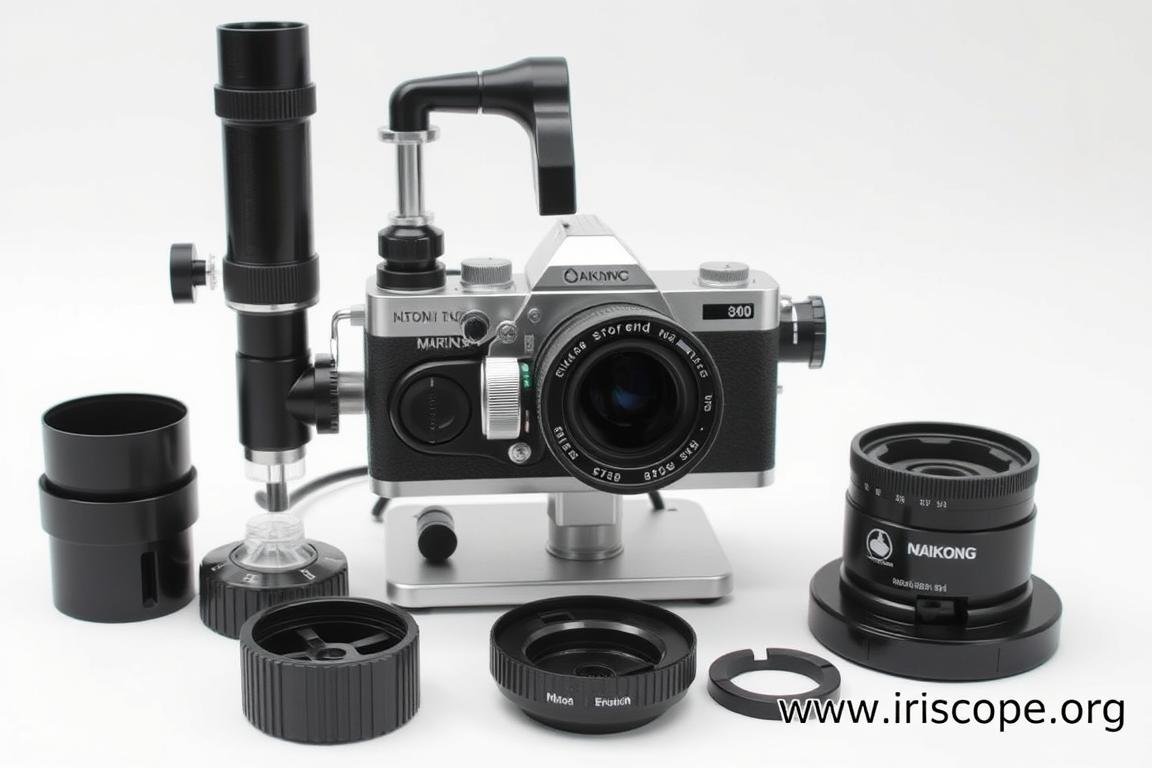
MAIKONG offers state-of-the-art iridology cameras and software based on Bernard Jensen’s methodology with over 20 years of R&D experience.
Découvrez notre équipement
Comprendre la structure du Bernard Jensen Iridology Eye Map

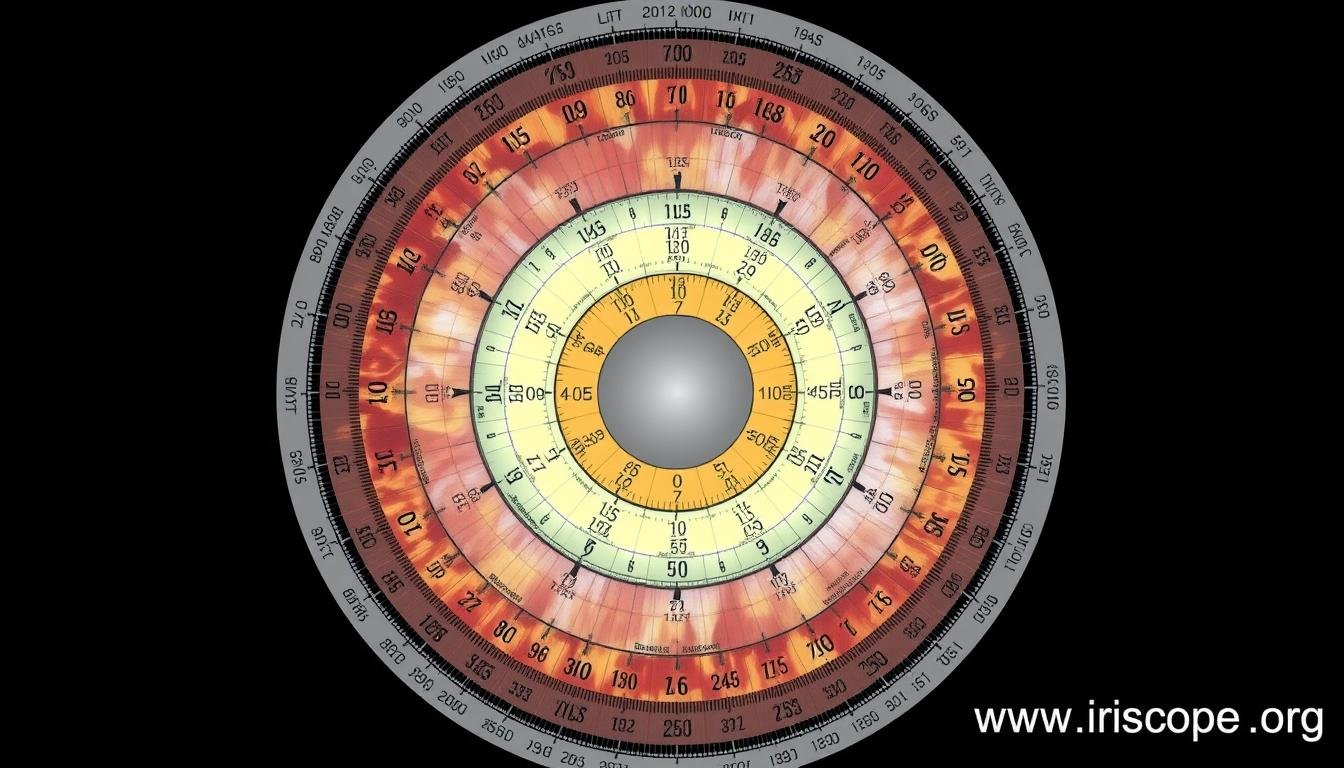
Le Bernard Jensen Iridology Eye Map is organized as a circular chart that divides the iris into zones corresponding to different organs and body systems. This systematic arrangement maps the entire body onto the iris in a logical and comprehensive way. Understanding this organization is fundamental to applying iridology in practice.
The Zonal Approach of Jensen’s Eye Map
Jensen’s map divides the iris into seven concentric zones radiating from the pupil to the outer edge of the iris. Each zone represents different body systems:
- Zone 1 (zone de l'estomac) : La zone entourant immédiatement la pupille, représentant la fonction digestive
- Zone 2 (zone intestinale) : Représentant le petit et le gros intestin
- Zone 3 (Zone Nutritive) : Relatif aux processus métaboliques et nutritionnels
- Zone 4 (zone de sang) : Correspondant à la circulation et à la qualité du sang
- Zone 5 (zone musculaire) : Représenter les tissus musculaires et leur fonction
- Zone 6 (zone squelettique) : Correspondant aux os et à la structure du squelette
- Zone 7 (zone cutanée) : La zone la plus externe représentant la peau et l'élimination
The Clock Face Division in Jensen’s System
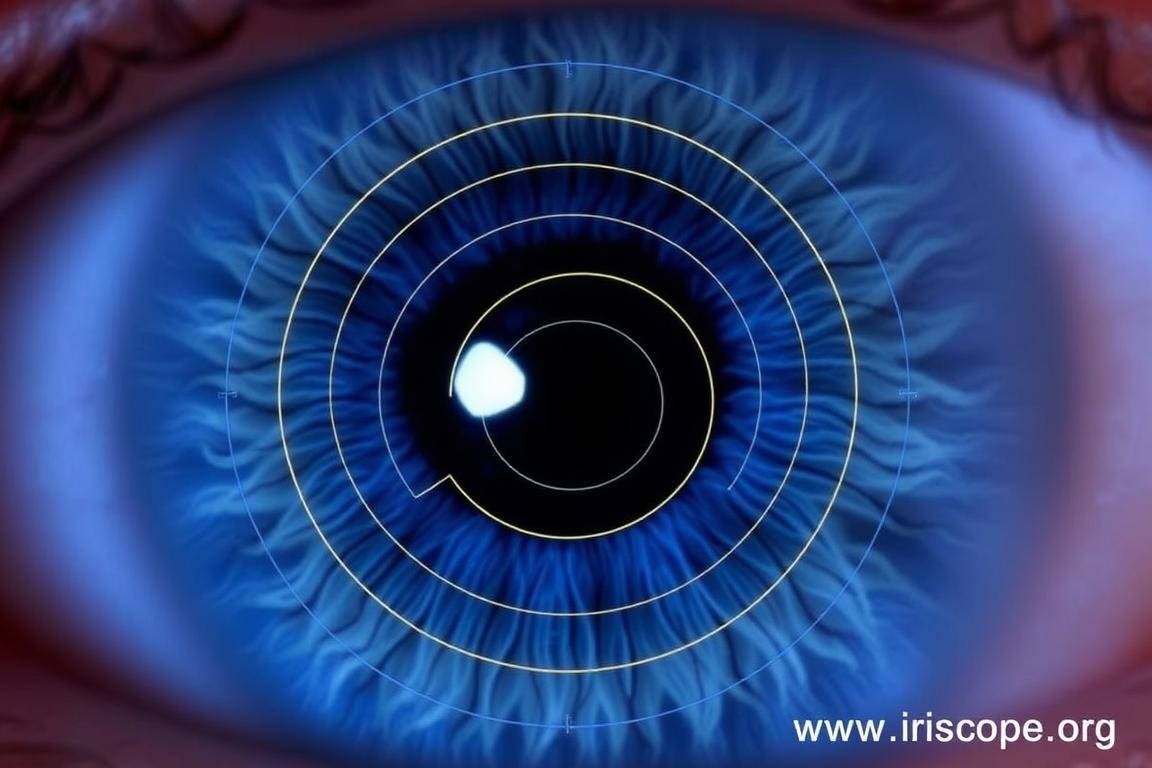
Beyond the concentric zones, Jensen further divided the iris using a clock face analogy. This division creates specific sections that correspond to particular organs and body regions. This approach allows practitioners to precisely locate areas of concern within the iris.
Saviez-vous? Bernard Jensen’s eye map is unique in its detailed subdivision of major zones into more specific regions, allowing for precise identification of potential health concerns.
The Right Eye in the Bernard Jensen Iridology Eye Map

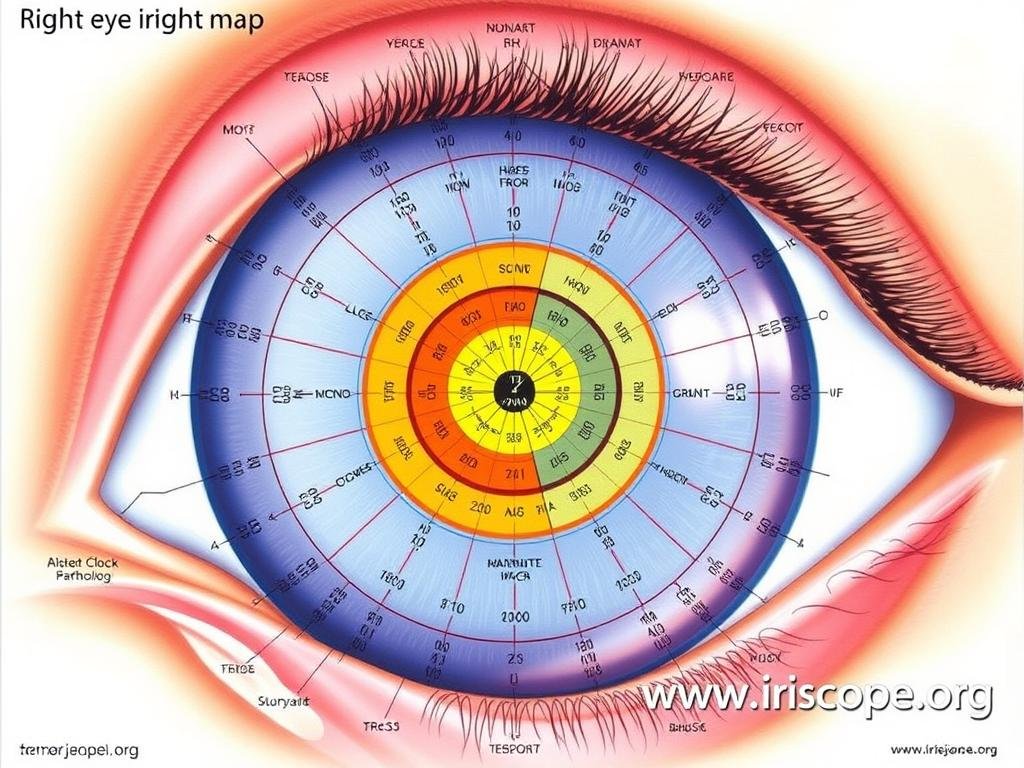
In Jensen’s system, the right iris primarily reflects the right side of the body. Understanding the specific organ correspondences for each clock position is essential for accurate iris analysis.
| Position d'horloge (œil droit) |
Corresponding Organ/System |
Indicateurs de santé |
Potential Concerns |
| 12 heures |
Cerveau droit (psychologique) |
Mental clarity, cognitive function |
Stress, anxiety, mental fatigue |
| 1 à 2 heures |
Visage/cou droit |
Skin health, tension in neck |
Headaches, jaw tension, sinus issues |
| 2-3 heures |
Gorge droite |
Fonction respiratoire et de la gorge |
Thyroid imbalance, throat irritation |
| 3-4 heures |
Haut droit du dos |
Spinal health, shoulder muscles |
Upper back tension, shoulder pain |
| 4-5 heures |
Ventre droit |
Fonction digestive, production d'acide |
Indigestion, stomach ulcers |
| 5-6 heures |
Région pelvienne droite |
Organes reproducteurs, système urinaire |
Prostate issues, urinary infections |
| 6-7 heures |
Bas du dos/jambes droit |
Musculoskeletal health, circulation |
Sciatica, leg cramps, lower back pain |
| 7-8 heures |
Rein droit |
Kidney function, fluid balance |
Kidney stones, dehydration |
| 8 à 9 heures |
Poumon droit |
Santé respiratoire, capacité pulmonaire |
Asthma, bronchitis, breathing issues |
| 9 h à 10 heures |
Coeur droit |
Cardiovascular health |
Heart function, circulation issues |
| 10-11 heures |
Organes digestifs droits |
Liver, gallbladder function |
Liver congestion, digestive issues |
| 11-12 heures |
Pancréas/rate droit |
Blood sugar regulation, immunity |
Diabetes, immune system weakness |
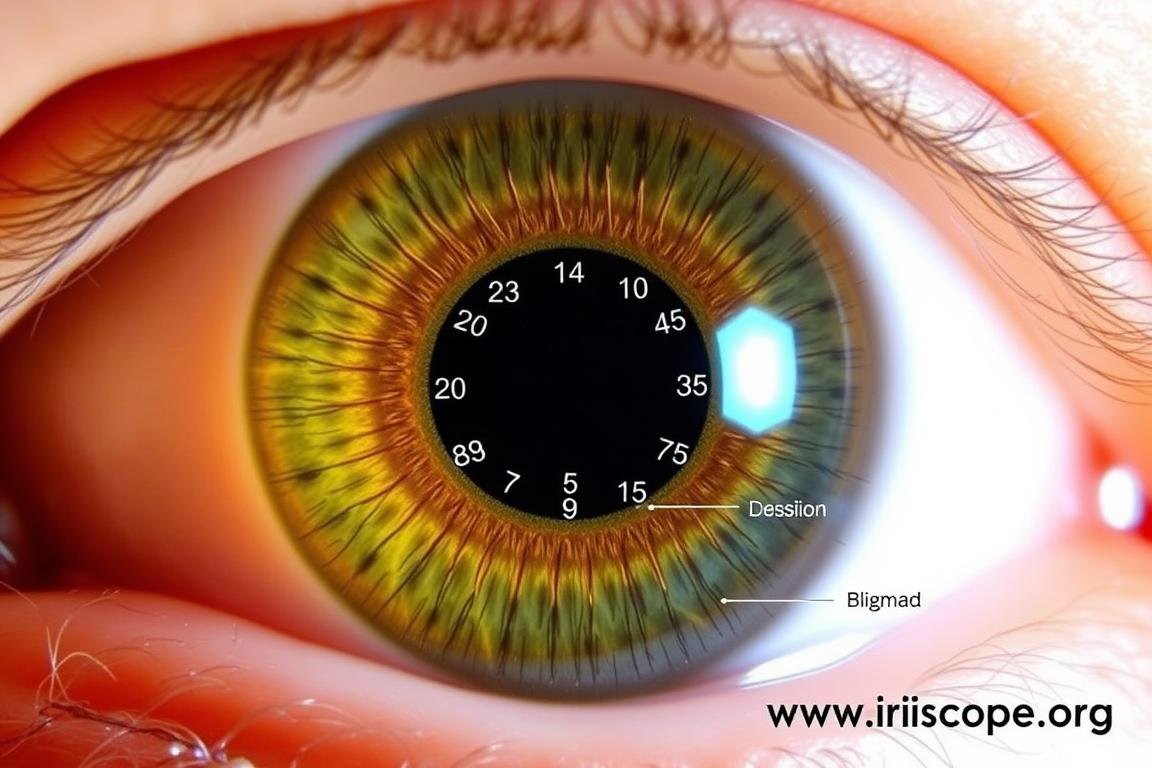
Ce système de cartographie détaillé permet aux praticiens de corréler des marques spécifiques de l’iris avec des organes ou des systèmes particuliers, créant ainsi une image complète de l’état du corps selon les principes de l’iridologie.
The Left Eye in the Bernard Jensen Iridology Eye Map
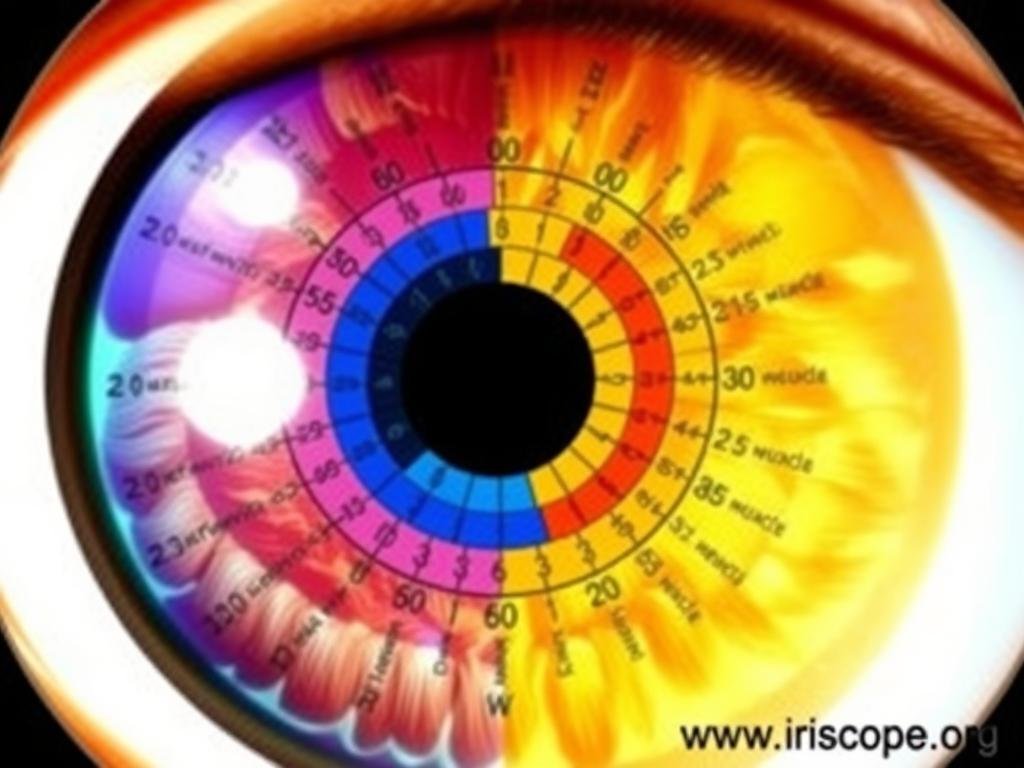
In Jensen’s system, the left iris primarily reflects the left side of the body. The mapping follows a similar pattern to the right eye but corresponds to organs and systems on the left side.
| Position d'horloge (œil gauche) |
Corresponding Organ/System |
Indicateurs de santé |
Potential Concerns |
| 12 heures |
Cerveau gauche (psychologique) |
Emotional state, mental health |
Depression, anxiety, emotional imbalance |
| 1 à 2 heures |
Left neck |
Lymphatic drainage, neck mobility |
Neck stiffness, lymphatic congestion |
| 2-3 heures |
Poumon gauche |
Respiratory function, oxygen exchange |
Respiratory infections, reduced capacity |
| 3-4 heures |
Left thorax |
Chest and upper back structure |
Thoracic spine issues, rib dysfunction |
| 4-5 heures |
Left upper abdomen |
Stomach, spleen function |
Digestive issues, spleen congestion |
| 5-6 heures |
Abdomen inférieur gauche |
Small intestine, colon function |
Intestinal inflammation, absorption issues |
| 6-7 heures |
Left pelvic |
Reproductive organs, elimination |
Menstrual issues, elimination problems |
| 7-8 heures |
Left lower back |
Lumbar spine, sacrum function |
Lower back pain, sacroiliac issues |
| 8 à 9 heures |
Haut du dos gauche |
Spine, shoulder blade area |
Upper back tension, shoulder issues |
| 9 h à 10 heures |
Gorge gauche |
Throat, thyroid function |
Thyroid imbalance, throat irritation |
| 10-11 heures |
Left face |
Facial nerve function, sinuses |
Sinus congestion, facial tension |
| 11-12 heures |
Left cerebrum |
Brain function, cognitive abilities |
Memory issues, cognitive stress |
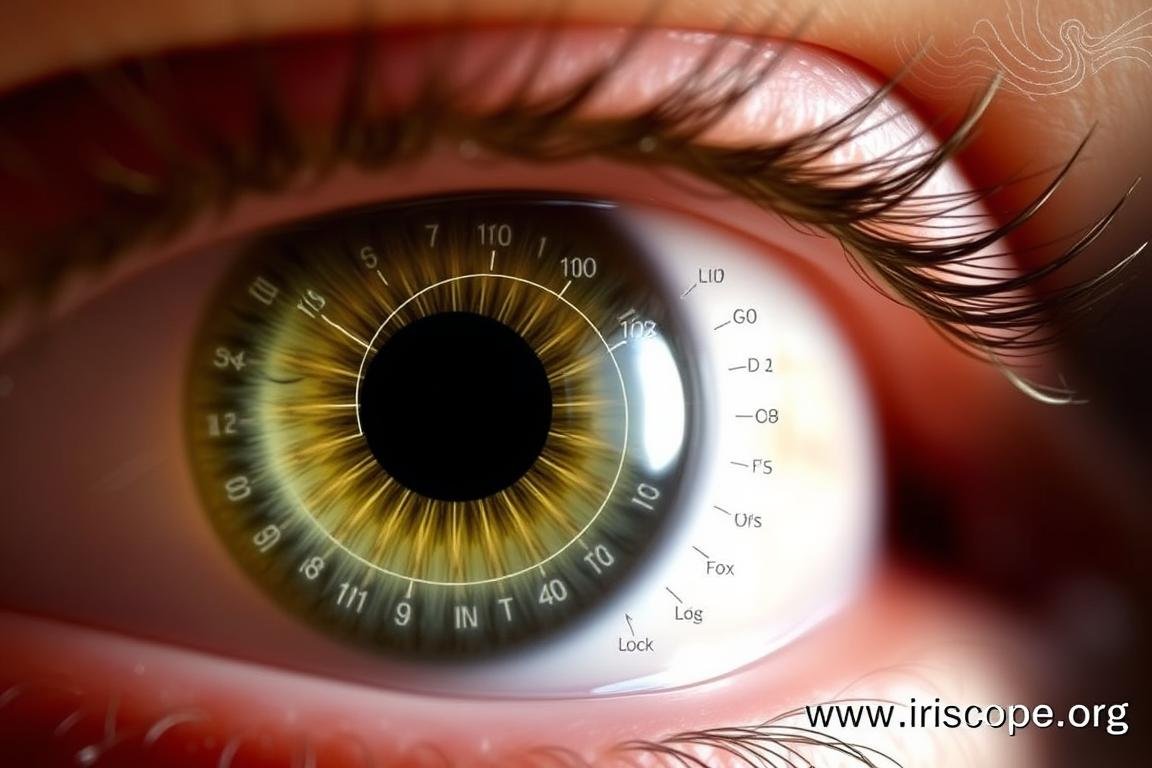
Interpreting Iris Signs Using the Bernard Jensen Iridology Eye Map
Bernard Jensen identified numerous iris signs that indicate different health conditions. His detailed classification system helps practitioners recognize patterns that may suggest imbalances or weaknesses in specific body areas.
Key Iris Markings in Jensen’s Eye Map
Signes structurels
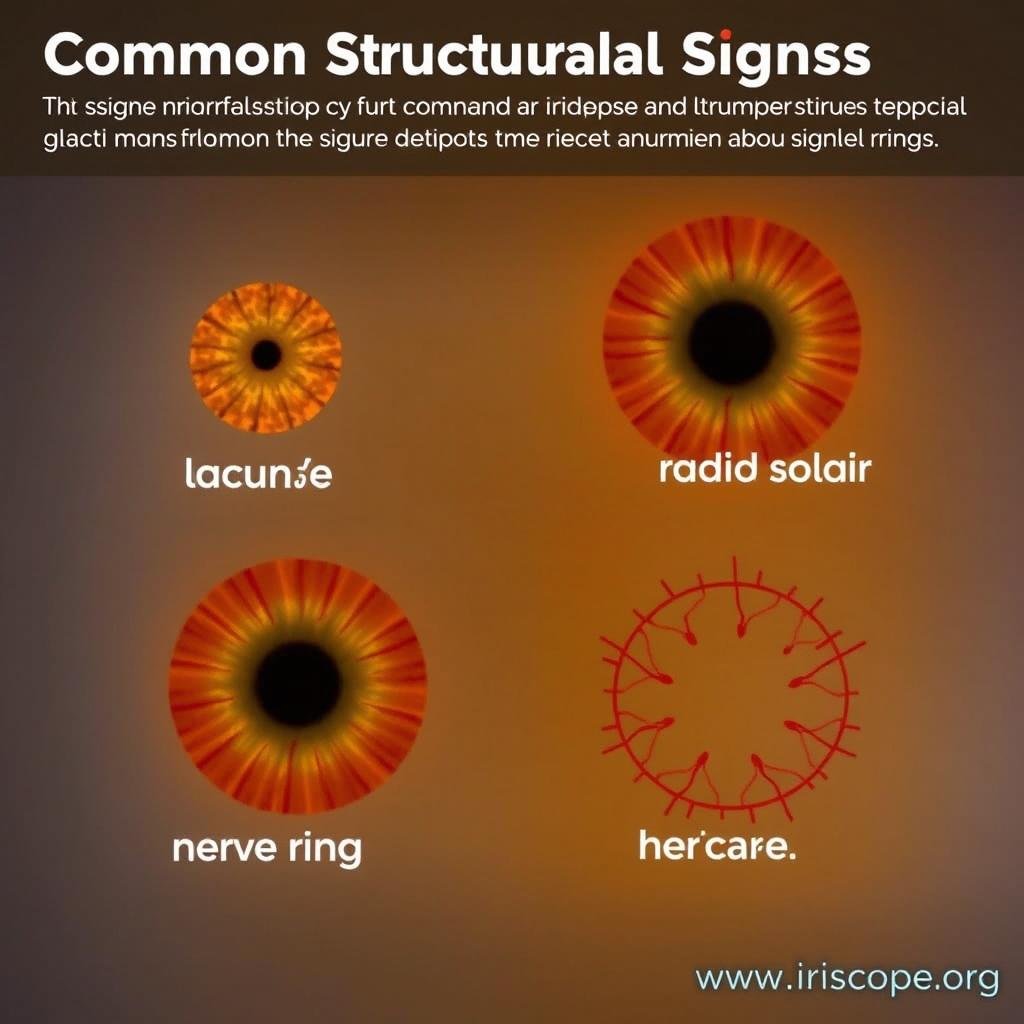
- Lacunes : Zones sombres fermées indiquant des lésions tissulaires
- Cryptes : Espaces ouverts dans la structure fibreuse de l'iris
- Rayons solaires : Lignes en forme de rayons rayonnant vers l'extérieur
- Anneaux nerveux : Lignes circulaires indiquant une tension nerveuse
Signes de couleur
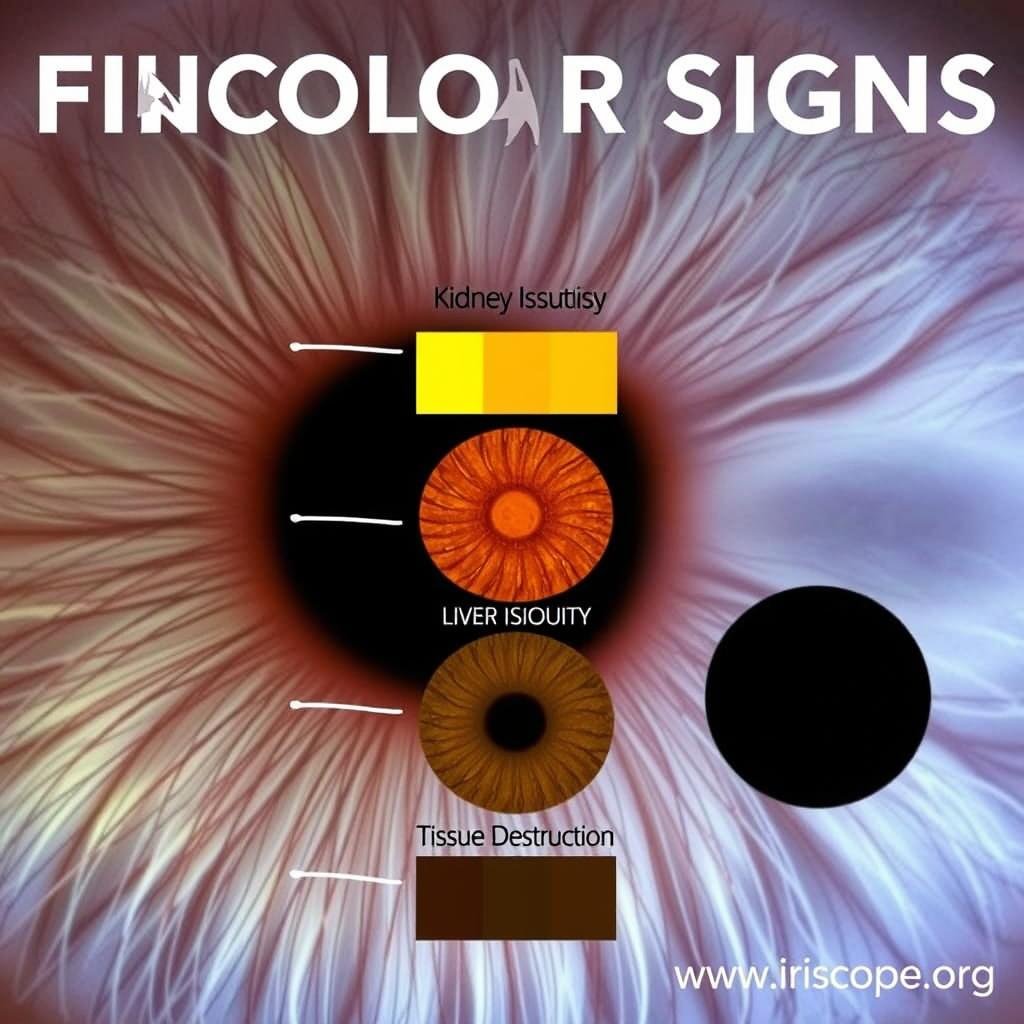
- Blanc: Inflammation ou activité aiguë
- Jaune: Atteinte rénale ou urinaire
- Orange: Problèmes de foie ou de vésicule biliaire
- Brun: Déséquilibre ou toxicité hépatique
- Noir: Destruction tissulaire sévère
Signes des élèves

- Pupille aplatie : Stress possible du système nerveux
- Pupille dilatée : Fatigue ou épuisement surrénalien
- Pupille restreinte : Irritation ou stimulation
- Flare pupillaire : Faiblesse du système digestif
Jensen emphasized that these signs should not be interpreted in isolation but as part of a comprehensive assessment. He taught that the iris reveals constitutional strengths and weaknesses rather than providing specific disease diagnoses. This holistic approach aligns with his broader philosophy of treating the whole person rather than just symptoms.
Important: Bernard Jensen stressed that iridology is not meant to diagnose specific diseases but rather to identify areas of weakness or strength in the body. It should be used as part of a comprehensive health assessment approach.
The Four Levels of Tissue Change in Jensen’s System

| Niveau |
Signe de l'iris |
Interprétation |
| Aigu |
Fibres blanches, signes d'inflammation |
Inflammation active, condition de combat corporel |
| Subaiguë |
Zones gris-blanc |
Inflammation chronique, moins active |
| Chronique |
Marquages plus sombres, lésions |
Dommages ou faiblesses tissulaires à long terme |
| Dégénératif |
Lésions noires, lacunes fermées |
Destruction des tissus, échec de l'organe |
Améliorez votre pratique de l'iridologie
MAIKONG offers professional iridology cameras and software designed to accurately capture and analyze iris signs according to Bernard Jensen’s methodology.
View Our Equipment
Applications pratiques du Bernard Jensen Iridology Eye Map
The Bernard Jensen iridology eye map serves as more than just a diagnostic tool—it provides a framework for understanding the body’s interconnected systems and guiding holistic health approaches.

How Practitioners Apply Jensen’s Eye Map Today
Modern practitioners use Bernard Jensen’s eye map in several key ways:
- Évaluation constitutionnelle : Identifier les forces et les faiblesses inhérentes aux systèmes corporels
- Conseils préventifs : Proposer des mesures de soutien aux zones potentiellement vulnérables
- Planification nutritionnelle : Développer des protocoles nutritionnels ciblés basés sur les indications de l'iris
- Suivi des progrès : Suivre les changements dans les configurations de l'iris au fil du temps à mesure que la santé s'améliore
- Éducation des clients : Utiliser la nature visuelle de l'iridologie pour aider les clients à comprendre leur santé
Case Example: Using Jensen’s Eye Map in Practice
“When I first examined Sarah’s iris, I noticed distinct lacunae in the intestinal zone at approximately 7 o’clock in her right iris. Following Bernard Jensen’s eye map, this indicated potential weakness in the ileocecal valve area. After discussing her symptoms of periodic digestive discomfort, we developed a targeted nutritional protocol. Six months later, not only had her symptoms improved, but the iris markings had become less pronounced—exactly as Dr. Jensen’s work predicted.”
— Dr Elizabeth Chen, praticienne en iridologie
This case exemplifies how Jensen’s detailed mapping system continues to guide practitioners in developing personalized health protocols based on iris analysis.
How accurate is Bernard Jensen’s iridology eye map for health assessment?
Jensen’s eye map is best viewed as a tool for identifying potential areas of weakness or imbalance rather than diagnosing specific diseases. Its accuracy depends on the practitioner’s skill and experience in interpretation. Many practitioners report valuable insights when used as part of a comprehensive health assessment approach.
How does Bernard Jensen’s eye map differ from other iridology systems?
Jensen’s eye map is more detailed and systematically organized than many other systems. While European iridology charts (particularly German systems) may use different zone mappings, Jensen’s American approach is distinguished by its comprehensive organ mapping and practical clinical application focus.
Can I learn to use Bernard Jensen’s iridology eye map on my own?
Bien que les livres de Jensen fournissent d’excellentes informations, la bonne application de son système d’iridologie nécessite généralement une formation formelle. Les nuances de l'interprétation de l'iris s'apprennent mieux grâce à des instructions guidées par des praticiens expérimentés qui peuvent démontrer une technique et une interprétation appropriées.
Modern Technology and the Bernard Jensen Iridology Eye Map
While Bernard Jensen’s original eye map remains foundational, technology has enhanced how practitioners apply his methodology in modern practice.
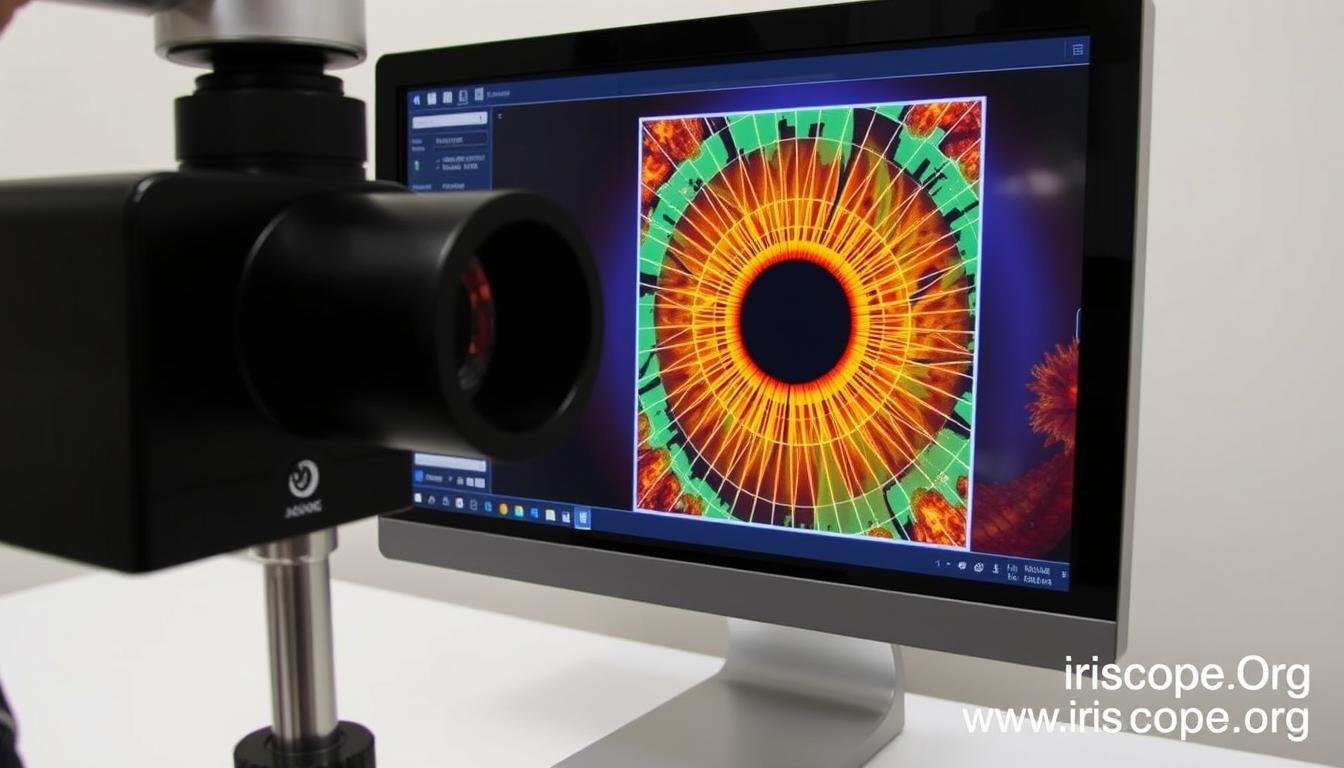
Digital Enhancements to Jensen’s Methodology
Imagerie haute résolution
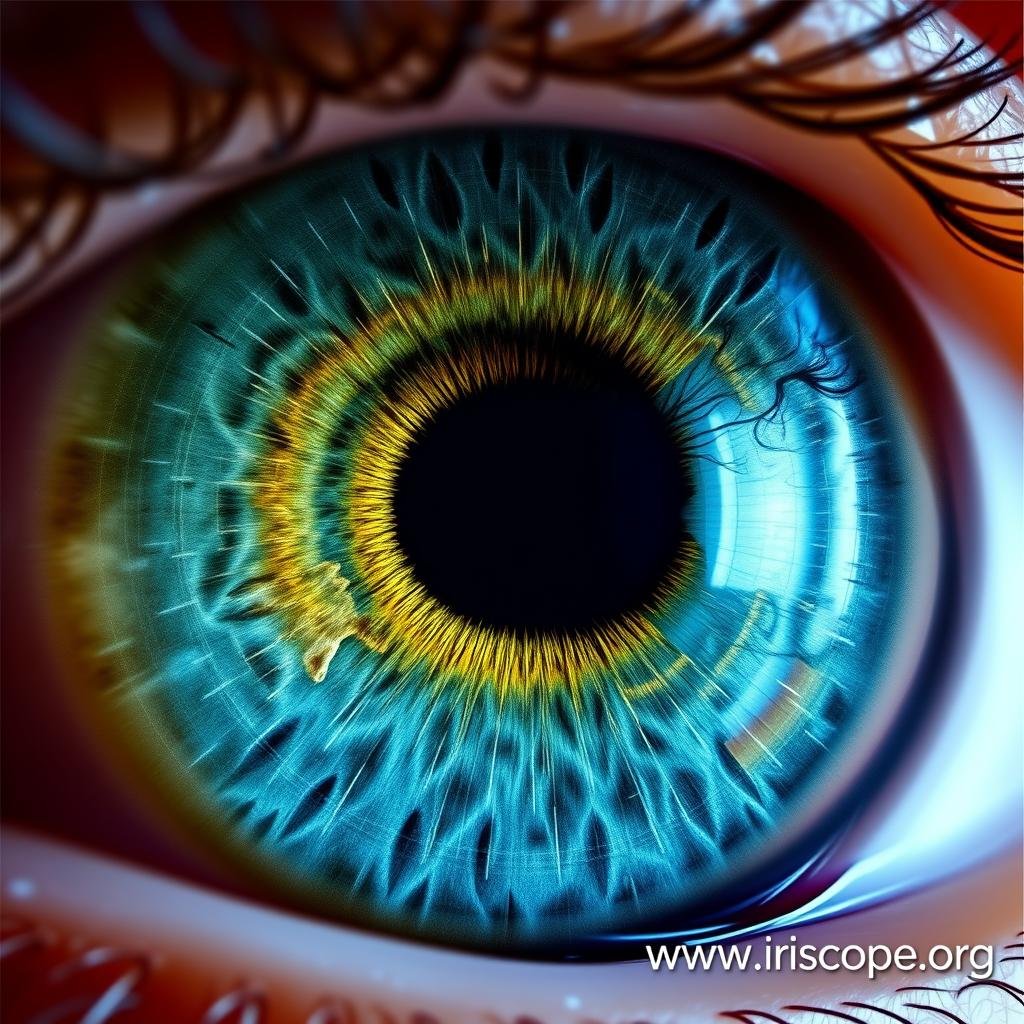
Modern digital cameras capture iris details invisible to the naked eye, allowing for more precise application of Jensen’s mapping system.
Analyse logicielle
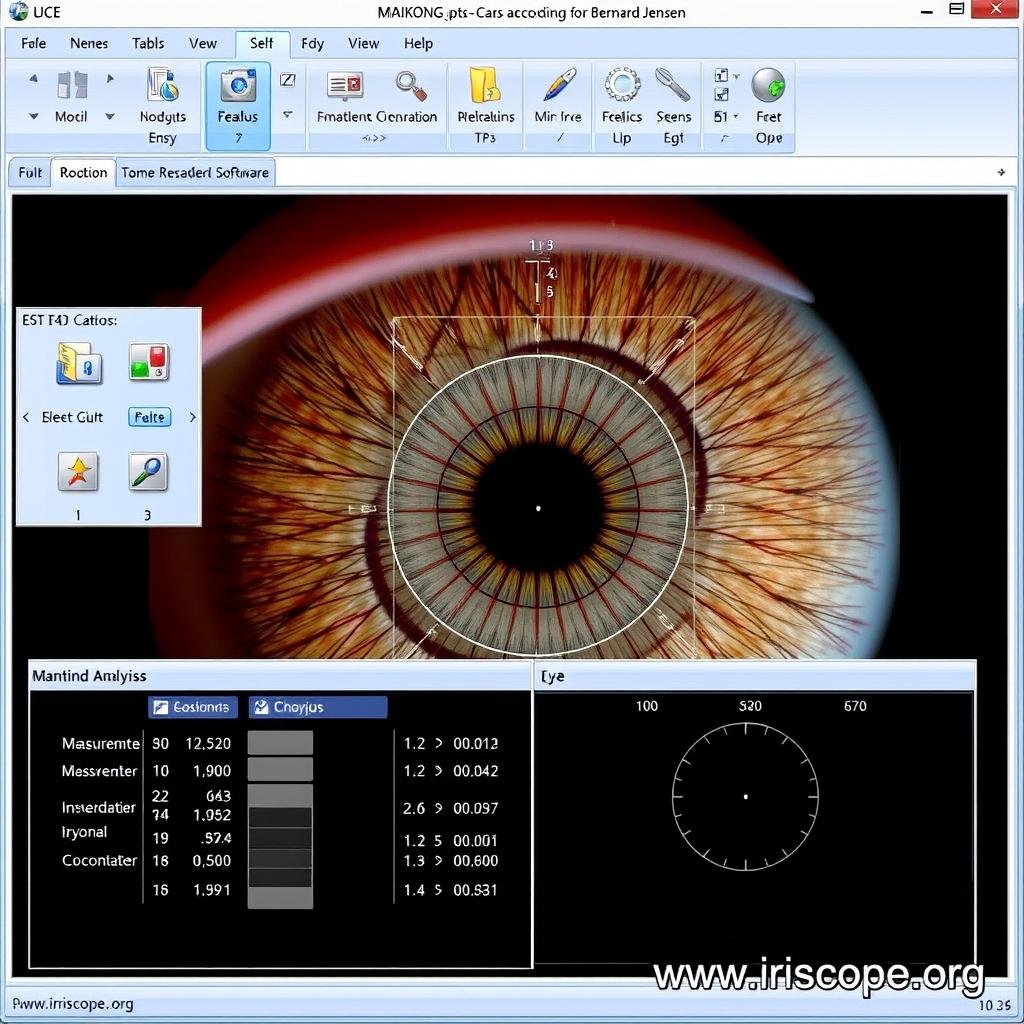
Specialized software can overlay Jensen’s eye map onto digital iris photos, helping practitioners identify and document findings more accurately.
Analyse comparative
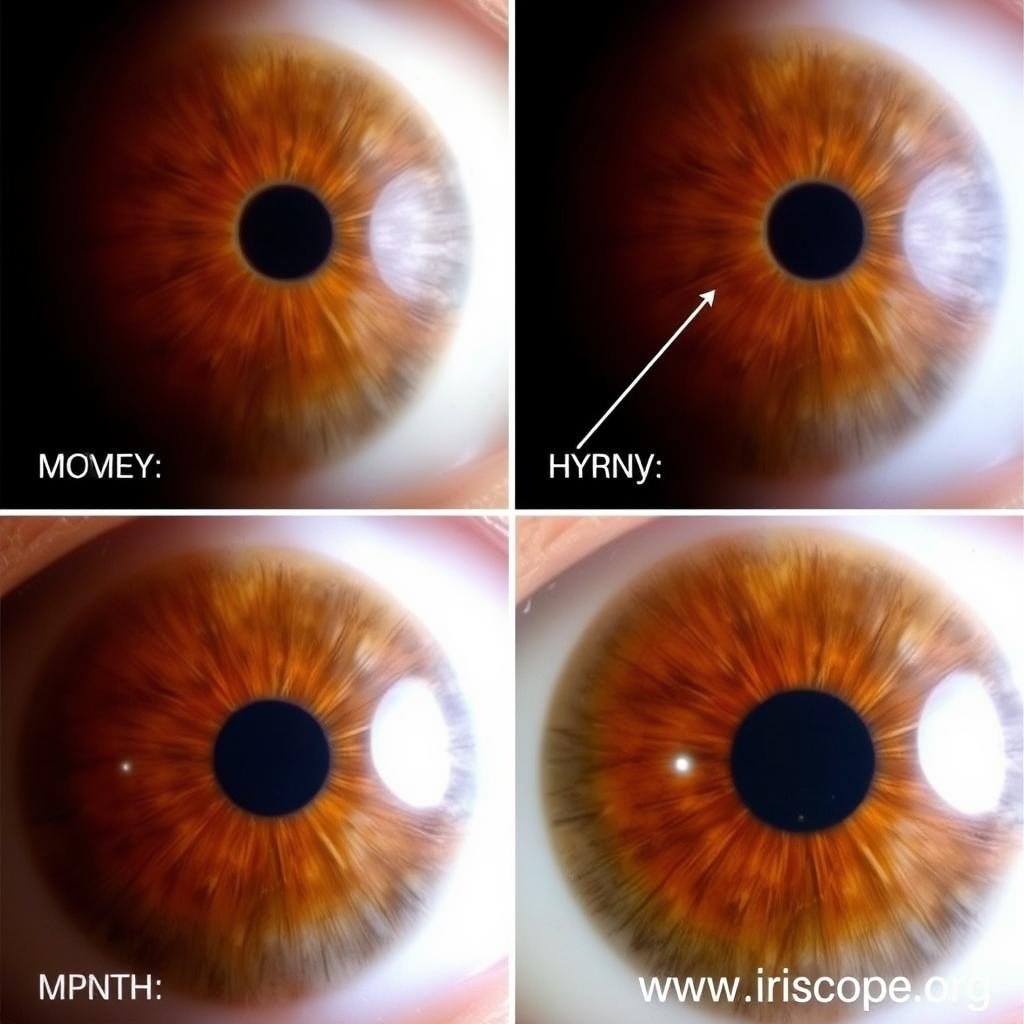
Digital records allow practitioners to track subtle changes in iris patterns over time, providing objective evidence of health improvements.
Saviez-vous? Bernard Jensen documented over 1,000 iris photographs throughout his career, creating one of the most extensive iridology research collections of his time. Today’s digital technology allows practitioners to build even more comprehensive databases.
MAIKONG’s Advanced Iridology Equipment
At MAIKONG, we’ve combined over 20 years of R&D experience with Bernard Jensen’s proven methodology to create state-of-the-art iridology equipment that enhances the practitioner’s ability to apply Jensen’s eye map with precision.
Professional Iridology Cameras
- High-resolution imaging for detailed iris analysis
- Ergonomic design for practitioner and client comfort
- Adjustable magnification to capture subtle iris details
- LED illumination that doesn’t cause pupil contraction
- Durable construction for clinical longevity
Logiciel complet d'iridologie
- Jensen’s eye map overlay for precise analysis
- Client database for tracking changes over time
- Fonctionnalités de reporting personnalisables
- Educational resources for practitioners
- Mises à jour régulières intégrant les dernières recherches
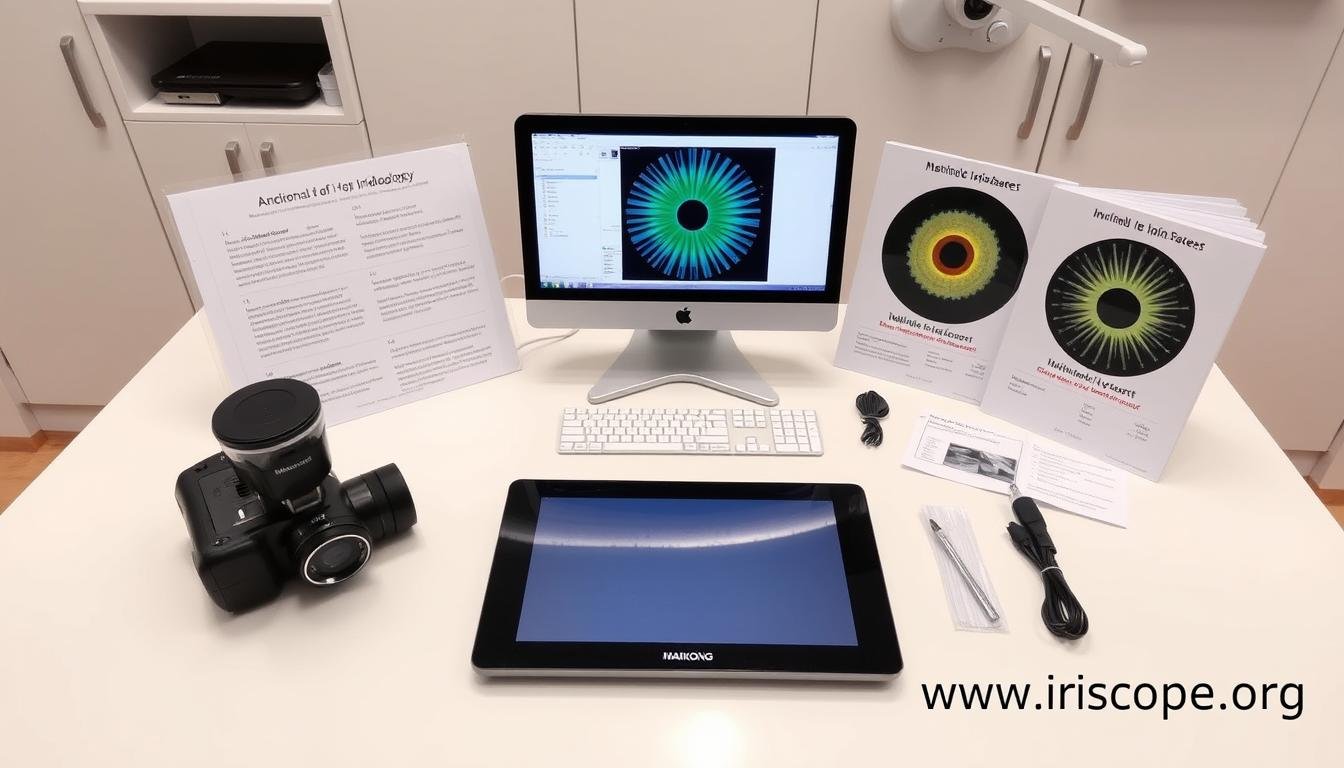
Experience MAIKONG’s Professional Iridology Systems
Our equipment combines Bernard Jensen’s proven methodology with cutting-edge technology for accurate iris analysis.
Contactez-nous sur WhatsApp
Scientific Perspectives on the Bernard Jensen Iridology Eye Map
The scientific community has varying perspectives on iridology as developed by Bernard Jensen. While conventional medicine has been skeptical of some claims, research continues to explore potential correlations between iris patterns and health conditions.
Preuves à l'appui
- Certaines études montrent des corrélations entre les modèles d'iris et les prédispositions génétiques
- La recherche sur la structure de l'iris en tant que biomarqueur potentiel continue de se développer
- L'expérience clinique des praticiens rapporte des résultats positifs
- Sa nature non invasive en fait un outil d'évaluation complémentaire sûr
- Growing interest in integrative approaches to health assessment
Limites
- Études contrôlées à grande échelle limitées validant tous les aspects de l'iridologie
- La variation dans l’interprétation des praticiens peut affecter la cohérence
- Non destiné à remplacer le diagnostic médical conventionnel
- Certaines corrélations peuvent être fortuites plutôt que causales
- Need for standardized training and certification
Bernard Jensen himself acknowledged that iridology should be used as part of a comprehensive health assessment rather than as a standalone diagnostic tool. This balanced perspective continues to guide responsible practitioners who use his methodology.
“The most valuable aspect of Jensen’s work was his systematic approach to documenting correlations between iris signs and health conditions. While more research is needed, his methodical documentation provides a foundation for further scientific investigation.”
— Dr. Michael Roberts, Integrative Medicine Researcher
Resources for Learning the Bernard Jensen Iridology Eye Map
For those interested in learning more about Bernard Jensen’s iridology system, several valuable resources are available:
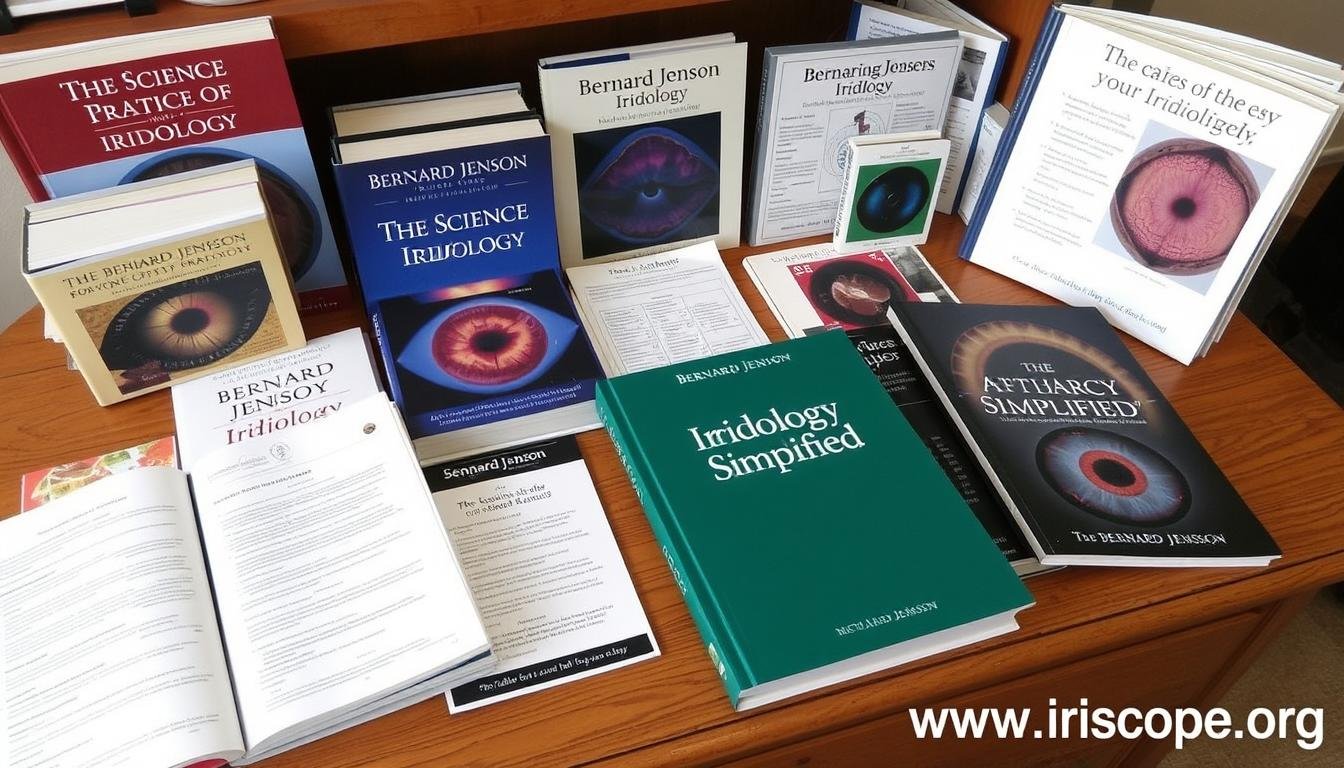
Livres essentiels
- La science et la pratique de l'iridologie – Jensen’s foundational text
- Iridologie simplifiée – An accessible introduction to his system
- Iridologie: la science et la pratique des arts de la guérison – Advanced concepts
- Guide du Dr Jensen pour de meilleurs soins intestinaux – Complementary health approaches
Programmes de formation
- Cours certifiants internationaux Bernard Jensen
- Programmes de l'Association internationale des praticiens en iridologie
- Cours en ligne basés sur la méthodologie de Jensen
- Ateliers offerts par des instructeurs certifiés de la méthode Jensen
Outils et équipement
- Caméras à iris professionnelles
- Cartes d'iridologie Jensen imprimées
- Logiciel d'analyse numérique
- Équipement de grossissement
- Documents de référence et études de cas
Complete Iridology Solutions from MAIKONG
We offer comprehensive iridology equipment, software, charts, and educational resources based on Bernard Jensen’s methodology.
Practical Guide to Using the Bernard Jensen Iridology Eye Map
For practitioners and students looking to apply Bernard Jensen’s iridology eye map in practice, following a systematic approach ensures accurate and consistent results.
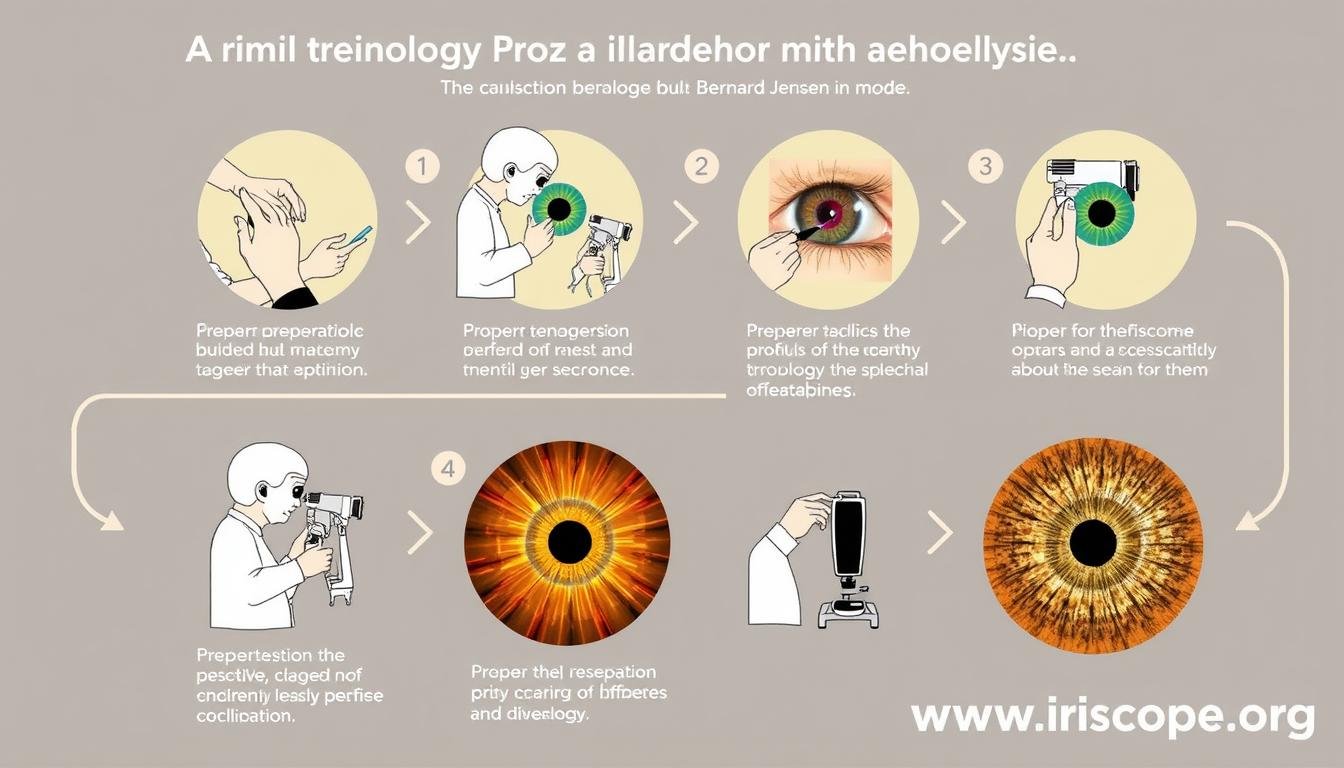
Step-by-Step Examination Process
- Éclairage approprié : Ensure consistent, natural lighting that doesn’t cause pupil contraction
- Client Positioning: Position the client comfortably with head stabilized
- Equipment Setup: Prepare your iridology camera or magnification device
- Capture Images: Take clear photographs of both the left and right iris
- Apply Jensen’s Map: Overlay or reference Jensen’s eye map for analysis
- Document Findings: Record all observations systematically
- Correlate with Health History: Connect iris signs with client’s health concerns
- Develop Recommendations: Create a holistic plan based on findings
- Follow-Up Assessment: Track changes over time with subsequent examinations
Essential Equipment for Applying Jensen’s Methodology
To properly apply Bernard Jensen’s iridology eye map, practitioners need reliable equipment that provides clear, detailed views of the iris. MAIKONG’s professional iridology systems include:
- Caméras d'iridologie haute résolution with proper magnification
- Specialized software with Jensen’s eye map overlay
- Printed reference charts for consultation during analysis
- Documentation tools for recording and tracking findings
- Educational resources for continuous learning and reference
Remarque importante: While iridology can provide valuable insights into potential health patterns, it should always be used as part of a comprehensive health assessment approach. Bernard Jensen emphasized that iridology is not meant to diagnose specific diseases but rather to identify constitutional strengths and weaknesses.
Études de cas utilisant le Bernard Jensen Iridology Eye Map
The following case studies demonstrate how practitioners apply Bernard Jensen’s iridology eye map in real-world clinical settings to identify potential health patterns and develop personalized protocols.
Étude de cas 1 : Évaluation du système digestif

Profil du client: 42-year-old female with chronic digestive complaints
Observations de l'iris: Using Jensen’s eye map, the practitioner identified distinct lacunae in the intestinal zone (Zone 2) at approximately 6-7 o’clock in the right iris, corresponding to the ileocecal valve area.
Approche: Based on these findings, a nutritional protocol focusing on gut healing and inflammation reduction was implemented.
Résultat: After six months, follow-up iris analysis showed reduced intensity of the markings, correlating with significant improvement in digestive symptoms.
Case Study 2: Stress Response Patterns
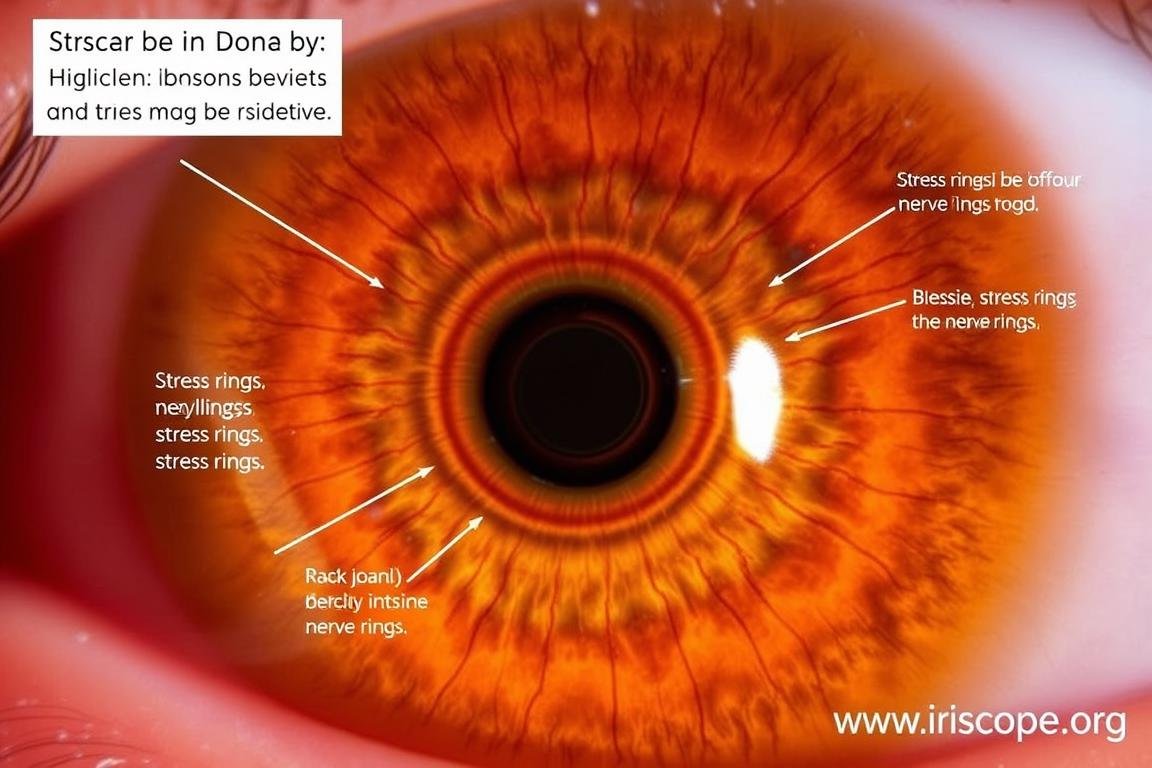
Profil du client: 35-year-old male with chronic fatigue and sleep disturbances
Observations de l'iris: Jensen’s eye map helped identify multiple nerve rings (stress rings) throughout both irises, with particular concentration in Zones 4-5.
Approche: A comprehensive stress management protocol was developed, including adaptogenic herbs, lifestyle modifications, and relaxation techniques.
Résultat: Three-month follow-up showed reduced prominence of nerve rings and significant improvement in energy levels and sleep quality.
“What makes Bernard Jensen’s iridology eye map so valuable in clinical practice is its systematic approach to correlating iris signs with body systems. This allows practitioners to develop targeted, personalized protocols that address the root causes of health imbalances rather than just treating symptoms.”
— Dr. James Wilson, Holistic Health Practitioner
Enhance Your Iridology Practice with MAIKONG
Our professional iridology equipment and software are designed to help you apply Bernard Jensen’s methodology with precision and confidence.
Demander une consultation
The Enduring Legacy of the Bernard Jensen Iridology Eye Map
The iridology eye map developed by Bernard Jensen represents one of the most significant contributions to natural health assessment in the 20th century. Through meticulous observation and documentation, Jensen created a system that continues to guide practitioners in understanding the complex relationship between iris patterns and bodily health.

While debates about iridology’s scientific standing continue, there’s no denying the impact of Bernard Jensen’s work in advancing holistic approaches to health assessment. His emphasis on treating the whole person rather than isolated symptoms aligns with contemporary integrative medicine principles.
For those interested in exploring this fascinating field, Bernard Jensen’s eye map provides a structured, comprehensive framework that has stood the test of time. Whether you’re a health practitioner seeking additional assessment tools or an individual interested in holistic health approaches, the Jensen iridology system offers valuable insights into the body’s intricate interconnections as revealed through the window of the eyes.
Discover MAIKONG’s Professional Iridology Solutions
With over 20 years of experience, MAIKONG provides state-of-the-art iridology equipment based on Bernard Jensen’s proven methodology.