L’occhio umano affascina scienziati, medici e filosofi da millenni. Questo straordinario organo sensoriale, con le sue strutture intricate e la profonda connessione con il cervello, rappresenta uno degli argomenti più affascinanti della storia della medicina. Dalle antiche civiltà’ comprensione rudimentale delle tecnologie di imaging avanzate di oggi, il studio degli occhi rivela la continua ricerca dell’umanità per comprendere la vista e curare i disturbi oculari.
Questa esplorazione completa traccia come la nostra comprensione dell'occhio si è evoluta attraverso le civiltà e le epoche, evidenziando scoperte cruciali che hanno rivoluzionato l'oftalmologia e la scienza della vista. Unisciti a noi in questo viaggio nel tempo mentre esaminiamo come studio degli occhi ha plasmato la nostra comprensione della percezione umana e delle cure mediche avanzate.
L'Antico Studio degli occhi: Dall'Egitto alla Grecia
Il primo documentato studio degli occhi risale all'antico Egitto intorno al 2500 a.C. Il papiro Edwin Smith e il papiro Ebers contengono alcune delle prime testimonianze scritte di patologie e trattamenti per gli occhi. I medici egiziani riconobbero varie malattie degli occhi e svilupparono rimedi utilizzando minerali, piante e prodotti animali. Crearono anche strumenti specializzati per gli esami oculistici, dimostrando una comprensione sofisticata della salute oculare per il loro tempo.
L'occhio di Horus: simbolismo nella prima medicina oculistica
L'Occhio di Horus, un potente simbolo dell'antico Egitto, rappresentava protezione, potere reale e buona salute. Queste immagini iconiche influenzarono le prime pratiche mediche e riflettevano il significato culturale degli occhi nella società egiziana. Sacerdoti e medici invocavano spesso questo simbolo durante i rituali di guarigione legati ai disturbi della vista, creando un'intrigante miscela di spiritualità e pratica medica primitiva nel mondo. studio degli occhi.
Contributi greci alla comprensione oculare
Gli antichi greci fecero avanzare significativamente il studio degli occhi attraverso osservazioni più sistematiche e quadri teorici. Ippocrate (460-370 a.C.), il padre della medicina, descrisse varie patologie oculari e i relativi trattamenti. Aristotele (384-322 a.C.) condusse studi dettagliati sull'anatomia dell'occhio e propose teorie sulla visione, suggerendo che gli oggetti emessi “forme” che è entrato nell'occhio.
Successivamente, il medico greco Galeno (129-216 d.C.) sviluppò descrizioni anatomiche più accurate dell'occhio, identificando strutture come la retina, la cornea, l'iride e il cristallino. Sebbene alcune delle sue teorie fossero errate, il suo lavoro costituì il fondamento della comprensione oculare per oltre un millennio.
Progressi medievali nel Studio degli occhi

Mentre l’Europa viveva il Medioevo, il mondo islamico preservava e ampliava la conoscenza greca e romana. Il periodo medievale vide notevoli progressi nel studio degli occhi attraverso i contributi di studiosi islamici che hanno tradotto, preservato e ampliato le opere classiche.
Ibn al-Haytham e la rivoluzione nella scienza ottica
Ibn al-Haytham (965-1040 d.C.), conosciuto in Occidente come Alhazen, rivoluzionò il mondo studio degli occhi con il suo rivoluzionario “Libro di ottica.” He rejected the Greek emission theory of vision and correctly proposed that vision occurs when light reflects from objects and enters the eye. His experiments with light, reflection, and refraction established the foundation for modern optical science.
Al-Haytham also provided detailed descriptions of eye anatomy, including the first accurate depiction of the optical system. His work represented a crucial shift from philosophical speculation to empirical investigation in the studio degli occhi.
Contributions of Other Islamic Scholars
Other notable Islamic physicians advanced ocular medicine during this period. Ali ibn Isa (940-1010 CE) wrote the “Memorandum Book for Oculists,” describing over 130 eye diseases and their treatments. Ammar ibn Ali al-Mawsili invented the hollow needle for cataract surgery, a revolutionary technique that improved upon earlier methods.
These medieval Islamic contributions preserved classical knowledge and significantly expanded the understanding of eye anatomy, function, and treatment, bridging ancient knowledge to the Renaissance period.
The Renaissance: Revolutionizing the Studio degli occhi
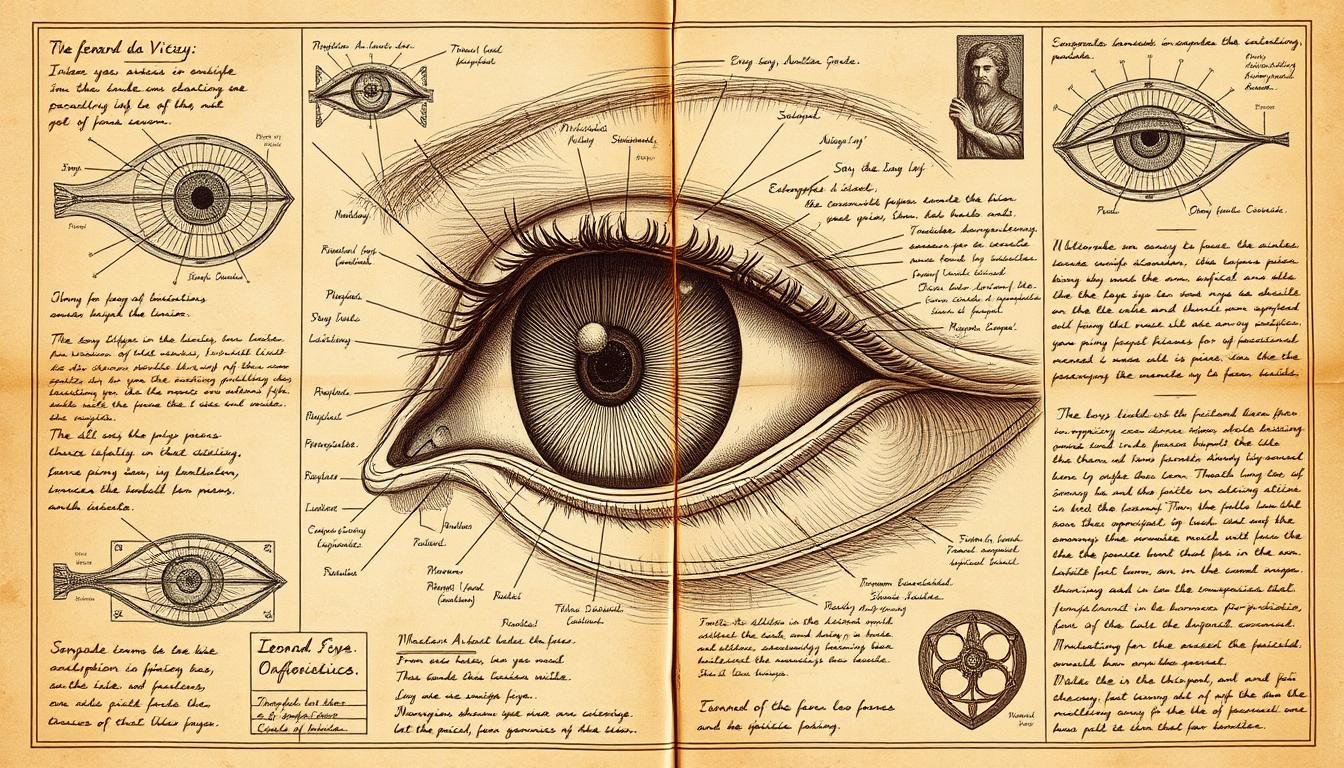
The Renaissance period (14th-17th centuries) marked a transformative era in the studio degli occhi. The revival of classical learning combined with new approaches to scientific inquiry led to unprecedented advances in understanding ocular anatomy and function.
Leonardo da Vinci’s Ocular Investigations
Leonardo da Vinci (1452-1519) made remarkable contributions to the studio degli occhi through his detailed anatomical drawings and experiments. His investigations into the camera obscura helped him understand how images form on the retina. Da Vinci’s notebooks contain precise illustrations of ocular structures and theories about accommodation, the pupillary light reflex, and binocular vision.
Vesalius and Anatomical Revolution
Andreas Vesalius (1514-1564) challenged Galenic traditions with his groundbreaking work “De Humani Corporis Fabrica,” which included detailed anatomical studies of the eye based on human dissections. His accurate depictions corrected many longstanding misconceptions and established a new standard for anatomical illustration in the studio degli occhi.
The Invention of Eyeglasses and Early Optical Instruments
The Renaissance period saw practical applications of optical knowledge with the refinement of eyeglasses, first invented in the late 13th century. By the 16th century, various lens types were available to correct different vision problems. These developments reflected growing understanding of refractive errors and the optical properties of the eye.
The invention of the microscope by Dutch spectacle makers in the late 16th century would later enable unprecedented examination of ocular microstructures, opening new frontiers in the studio degli occhi.
Deepen Your Historical Knowledge
Access our comprehensive timeline of eye study advancements from ancient times to the present day.
Download Complete Timeline
The Enlightenment Era: Scientific Method in the Studio degli occhi
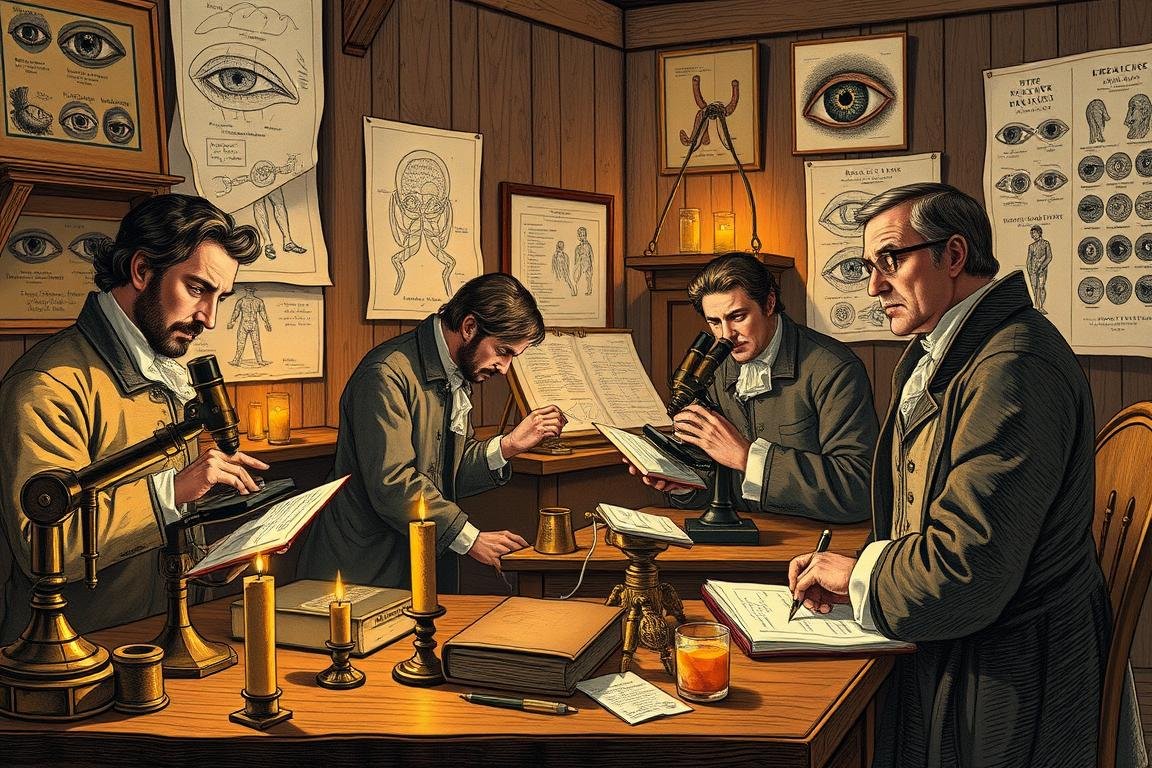
The 17th and 18th centuries brought systematic application of the scientific method to the studio degli occhi. This period saw fundamental discoveries about the nature of light, vision, and ocular anatomy that formed the foundation of modern ophthalmology.
Kepler’s Optical Breakthrough
Johannes Kepler (1571-1630) made a crucial breakthrough in understanding vision by correctly describing how the eye forms an inverted image on the retina. His work “Ad Vitellionem Paralipomena” (1604) explained accommodation and provided the first accurate model of the optical system of the eye, representing a pivotal moment in the studio degli occhi.
Microscopic Revelations of Eye Structure
Antoni van Leeuwenhoek (1632-1723) and others used improved microscopes to examine eye tissues in unprecedented detail. These investigations revealed previously invisible structures and cell types, dramatically expanding knowledge of ocular microanatomy and laying groundwork for future histological studies.
In 1722, Antonie van Leeuwenhoek provided the first description of the lens fibers, while in 1741, Nicolas Le Cat described the retinal blood vessels, adding crucial details to the growing body of knowledge in the studio degli occhi.
Early Theories of Color Vision
Isaac Newton’s experiments with prisms demonstrated that white light comprises a spectrum of colors. His work “Opticks” (1704) influenced early theories of color vision and perception. Later, Thomas Young (1773-1829) proposed the trichromatic theory of color vision, suggesting three types of color receptors in the eye—a remarkably accurate insight that would be confirmed much later.
Modern Scientific Studio degli occhi: 19th to 21st Century
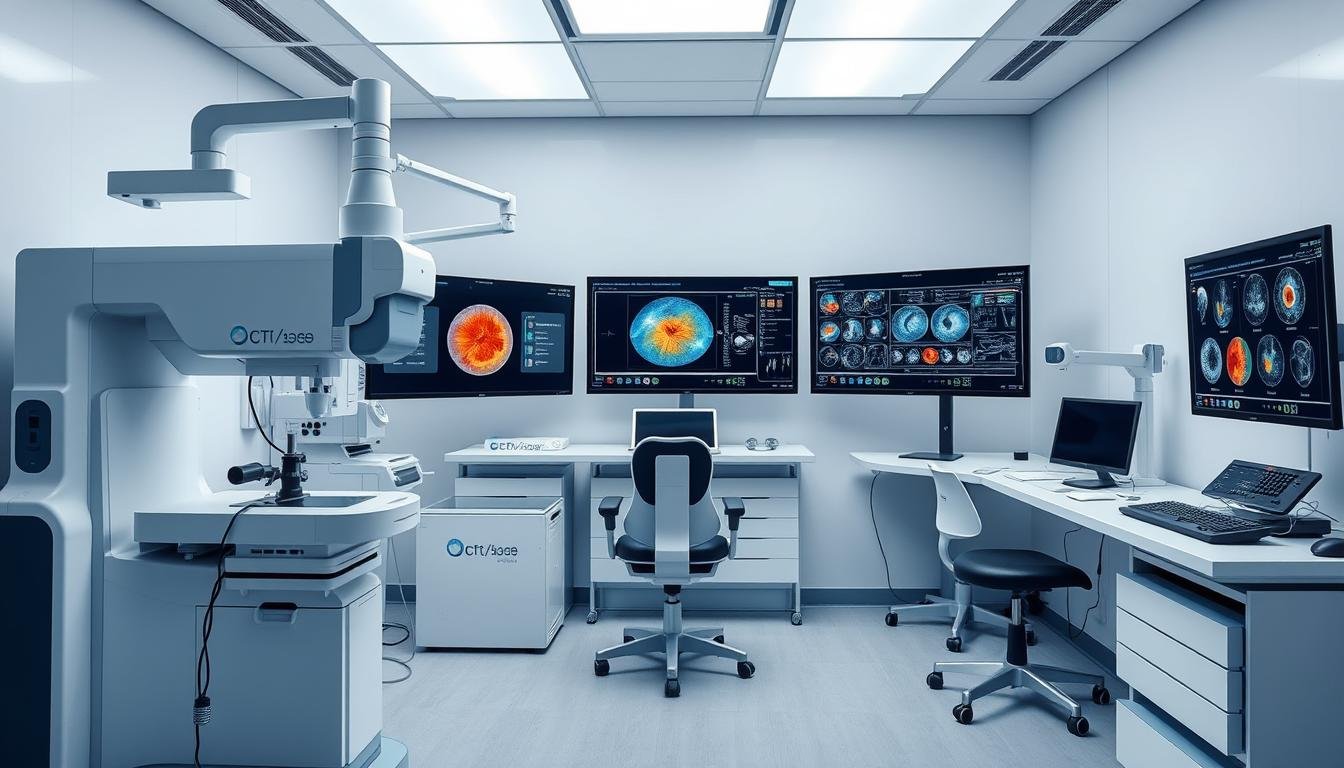
The 19th century marked the beginning of modern ophthalmology, with unprecedented advances in the studio degli occhi through new technologies, research methodologies, and clinical approaches. This era established ophthalmology as a distinct medical specialty and laid the groundwork for today’s understanding of vision science.
Hermann von Helmholtz and the Studio degli occhi
Hermann von Helmholtz (1821-1894) made revolutionary contributions to the studio degli occhi with his invention of the ophthalmoscope in 1851, allowing physicians to examine the living retina for the first time. His three-volume “Handbook of Physiological Optics” established the foundation for modern vision science, covering topics from the physics of light to color perception and binocular vision.
Helmholtz also refined the understanding of accommodation, showing how the lens changes shape to focus on objects at different distances. His work exemplified the integration of physics, physiology, and medicine in advancing the studio degli occhi.
Cellular and Molecular Understanding
The late 19th and early 20th centuries saw rapid advances in understanding the cellular and later molecular basis of eye function. Santiago Ramón y Cajal’s detailed studies of retinal neurons in the 1890s revealed the complex neural architecture of the visual system. The discovery of rhodopsin by Franz Boll and Willy Kühne in 1876-1878 began to explain the biochemical basis of light detection.
George Wald’s Nobel Prize-winning work in the 1930s-1950s elucidated the role of vitamin A in vision and the molecular mechanisms of photoreception, representing a quantum leap in the studio degli occhi at the biochemical level.
Optical Technologies in the Studio degli occhi
The 20th century witnessed an explosion of technologies that transformed the studio degli occhi. The slit lamp biomicroscope, developed by Allvar Gullstrand in the early 1900s, enabled detailed examination of ocular structures. Fluorescein angiography, introduced in the 1960s, allowed visualization of retinal blood flow. Optical coherence tomography, developed in the 1990s, provided unprecedented cross-sectional imaging of retinal layers.
These technologies, along with advances in laser surgery, genetic testing, and computational modeling, have revolutionized both research and clinical practice in ophthalmology, enabling earlier diagnosis and more effective treatments for eye conditions.
Expand Your Knowledge
Register for our upcoming webinar on the latest advancements in ophthalmological techniques and research.
Register for Webinar
Contemporary Approaches to the Studio degli occhi

Quello di oggi studio degli occhi integrates multiple scientific disciplines, from genetics and molecular biology to artificial intelligence and bioengineering. This interdisciplinary approach has accelerated understanding of ocular function and disease while opening new frontiers in treatment and vision enhancement.
Genetic and Molecular Revolution
The mapping of the human genome has transformed the studio degli occhi by identifying genes associated with various eye conditions. Researchers have discovered hundreds of genes linked to disorders like retinitis pigmentosa, glaucoma, and age-related macular degeneration. This genetic understanding has enabled new diagnostic approaches and targeted therapies.
CRISPR gene editing technology represents one of the most promising frontiers, with clinical trials underway for genetic eye diseases previously considered untreatable. These advances exemplify how molecular techniques have revolutionized the studio degli occhi and treatment possibilities.
Artificial Intelligence and Big Data
Artificial intelligence has emerged as a powerful tool in the studio degli occhi. Machine learning algorithms can now analyze retinal images to detect conditions like diabetic retinopathy with accuracy rivaling human specialists. These systems process vast datasets to identify subtle patterns invisible to the human observer.
Big data approaches integrate clinical, genetic, and imaging information to develop predictive models for disease progression and treatment response. These computational methods are transforming both research methodologies and clinical practice in ophthalmology.
Regenerative Medicine and Bioengineering
Stem cell therapies represent a revolutionary approach in the studio degli occhi, with the potential to replace damaged tissues. Clinical trials using retinal pigment epithelium derived from stem cells have shown promising results for conditions like age-related macular degeneration.
Bioengineered corneas, 3D-printed ocular tissues, and artificial retinas exemplify how engineering approaches are creating new possibilities for restoring vision. These technologies bridge fundamental research and clinical application, demonstrating the increasingly translational nature of modern eye research.
“The eye is the window not only to the soul but to our overall health. Modern research has revealed how ocular biomarkers can predict systemic conditions, making the studio degli occhi more relevant than ever to preventive medicine and personalized healthcare.”
– Dr. Emily Chen, Vision Research Institute
The Continuing Evolution of Eye Research

IL studio degli occhi has evolved from ancient observations to today’s molecular and digital investigations, yet it remains a field of continuous discovery. Each era has built upon previous knowledge while introducing revolutionary new concepts and technologies. This historical progression demonstrates how scientific understanding advances through both incremental improvements and paradigm-shifting breakthroughs.
Looking forward, emerging technologies like optogenetics, quantum imaging, and nanotechnology promise to further transform the studio degli occhi. The integration of virtual reality, augmented reality, and brain-computer interfaces may redefine our understanding of vision beyond the traditional boundaries of ocular function.
As we continue this journey of discovery, the studio degli occhi remains a testament to human curiosity and ingenuity—a field where ancient wisdom and cutting-edge science converge to illuminate one of our most precious senses.
Continue Your Exploration
Access our comprehensive library of resources on eye anatomy, function, and the latest research developments.
Explore Our Resource Library
Additional Resources for Eye Research
Historical Archives
Access digitized historical texts and illustrations documenting the evolution of the studio degli occhi across civilizations.
Browse Archives
Educational Materials
Download teaching resources, visual aids, and lecture notes on ocular anatomy, physiology, and historical developments.
Download Materials
Opportunità di ricerca
Discover funding opportunities, collaborative projects, and career paths in contemporary eye research and clinical practice.
Explore Opportunities


