Iridology-Sodium Rings, Lymphatic Dysfunction, and Systemic Implications
8.3 Iridology- Circulatory System: Zones, Lymphatics, and Clinical Correlations
8.3 Iridology-The circulatory system, a cornerstone of human physiology, encompasses both vascular and lymphatic networks, each playing distinct yet interconnected roles in maintaining homeostasis. Within iridology, specific iris zones reflect systemic circulation status, with the sixth zone (or “inel”) serving as a critical indicator of microcirculatory efficiency.
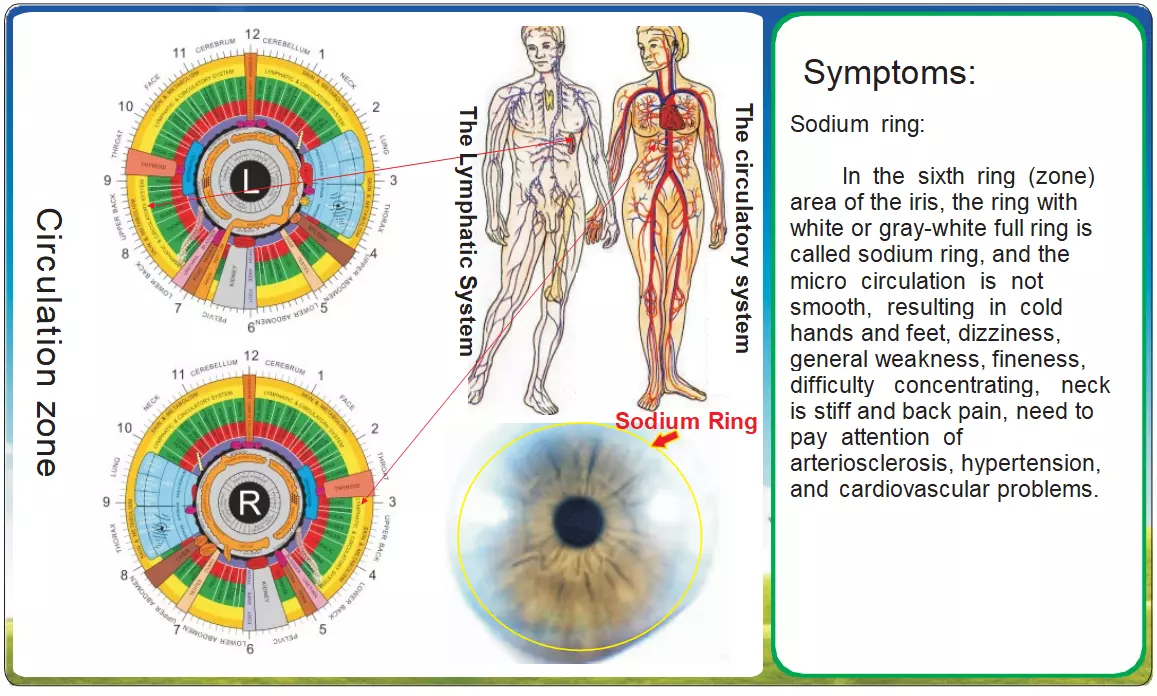
Circulation Zones in the Iris
The iris is anatomically divided into concentric zones, each correlating with different bodily systems. The sixth zone, often termed the “sodium ring,” manifests as a complete or partial ring of white or gray-white discoloration. This hallmark sign suggests microcirculația afectată, which may stem from vascular stiffness, oxidative stress, or metabolic imbalances.
The Lymphatic System’s Role
While the circulatory system delivers oxygen and nutrients, the lymphatic system manages immune surveillance and fluid balance. Dysfunction here may compound circulatory issues, exacerbating symptoms like edem localizat sau inflamație cronică. Notably, lymphatic stagnation often parallels venous insufficiency, further stressing the need for integrated diagnostics.
The Circulatory System: Clinical Symptoms and Risks
A sodium ring in the iris signals systemic microcirculatory disturbances, frequently presenting with:
- Cold extremities din cauza perfuziei periferice slabe.
- Amețeli și oboseală from reduced cerebral blood flow.
- Rigiditatea gâtului și dureri de spate, linked to vertebral artery insufficiency or muscular hypoxia. These symptoms warrant vigilance for arterioscleroză, hipertensiune arterială și boli cardiovasculare, as chronic microcirculatory deficits may precede overt pathology.
Analiza comparativă a sistemelor
| Aspect |
Sistemul circulator |
Sistemul limfatic |
| Funcția primară |
Livrarea de oxigen/nutrienți prin vasele de sânge |
Sprijin imunitar, drenaj lichid |
| Indicator iris |
Inel de sodiu (zona a 6-a) |
Rarely visualized directly in iris |
| Simptome cheie |
Cold hands/feet, dizziness, hypertension |
Umflare, infecții recurente |
| Riscuri patologice |
Ateroscleroză, accident vascular cerebral |
Limfedem, inflamație cronică |
Expanded Insights
- Microcirculation and Organ Health: The sodium ring’s presence often correlates with endothelial dysfunction, a precursor to systemic vascular disease. Studies suggest interventions like antioxidant supplementation (e.g., flavonoids) may improve capillary integrity.
- Lymph-Circulatory Crosstalk: Poor lymphatic drainage can exacerbate venous congestion, creating a vicious cycle. Manual therapies (e.g., lymphatic massage) and hydration are empirically supported adjuncts.
- Diagnostic Integration: While iridologie offers preliminary clues, confirmatory tests like Doppler ultrasound sau capillaroscopy are essential for definitive diagnosis.
Concluzie
The iris’s sixth zone serves as a non-invasive mirror of circulatory health, with the sodium ring acting as a sentinel for underlying dysfunction. Bridging iridologie with conventional diagnostics enables early intervention, potentially mitigating progression to severe cardiovascular or lymphatic disease. Future research should explore mechanistic links between iris signs and molecular biomarkers.


