Camera de iridologie mai Profesională Producătorul și furnizorul iriscope Producător și furnizor


What Is Irisology?

The intricate patterns of the human iris are central to irisology analysis
Irisology is the study of the iris, the colored part of the eye, to detect information about a person’s systemic health. Practitioners of irisology, known as iridologists, believe that each organ in the human body corresponds to a specific area in the iris. They examine the iris for various markings, patterns, and color changes that may indicate inflammation, accumulation of toxins, or other health issues in corresponding body parts.
According to irisology theory, the iris contains thousands of nerve endings connected to various tissues throughout the body via the brain and nervous system. These connections supposedly cause the iris to develop specific characteristics that reflect the condition of different organs and systems. Iridologists claim they can identify past health problems, current conditions, and even potential future health concerns by analyzing these iris patterns.
The practice is based on the premise that the iris is like a map of the body, with each section representing different organs and body systems. For example, the top section might correspond to the brain, while the lower sections might represent the digestive system or lower extremities.
Interested in Eye Health?
Before exploring alternative practices like irisology, consider consulting with a qualified eye care professional who can provide comprehensive eye examinations and evidence-based advice.
The History of Irisology

Dr. Ignaz von Peczely, considered the father of modern irisology
The origins of irisology can be traced back thousands of years, with some claiming that aspects of iris examination were practiced in ancient Egypt, China, and India. However, modern irisology as we know it today began to take shape in the 19th century.
The first documented mention of iris diagnosis appears in Cromatica medicala, published in 1665 by Philippus Meyeus. He claimed to observe changes in the iris as a result of healing and believed he could identify health issues through the iris even before physical symptoms appeared elsewhere in the body.
However, Dr. Ignaz von Peczely, a 19th-century Hungarian physician, is widely recognized as the founding father of modern irisology. According to popular accounts, as a child, von Peczely noticed a dark streak in the iris of an owl after the bird suffered a broken leg. This observation led him to hypothesize a connection between iris markings and physical injuries or conditions.
Von Peczely later developed this theory during his medical practice, creating the first known iris chart mapping various body regions to specific areas of the iris. He published his findings in the book Discoveries in the Field of Natural Science and Medicine: Instruction in the Study of Diagnosis from the Eye in 1881.
Around the same time, a Swedish homeopath named Nils Liljequist independently developed similar theories after observing changes in his own iris following medical treatments. He published an atlas of iris diagnosis in 1893, contributing significantly to the field.
In the 20th century, irisology gained popularity in the United States largely through the work of Bernard Jensen, an American chiropractor who began teaching his own method of iris analysis in the 1950s. Jensen created a comprehensive iris chart that is still widely used by many iridologists today.
How Irisology Works

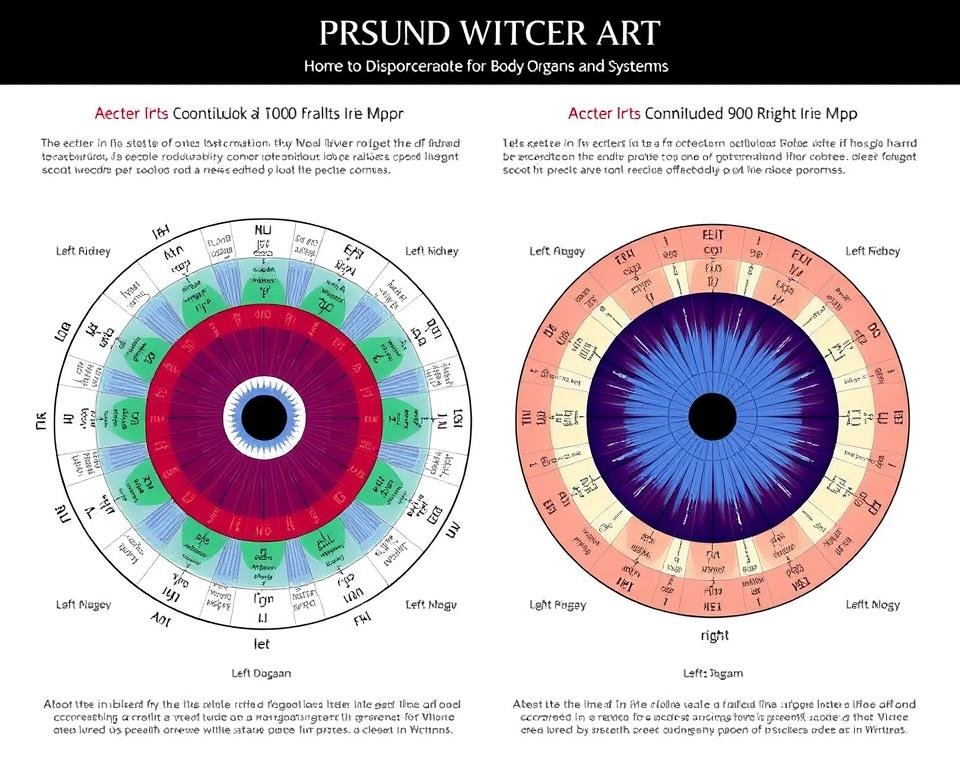
Irisology chart mapping iris regions to corresponding body systems
Procesul de examinare
Iridologists typically use specialized equipment to examine the iris, including:
- Magnifying glasses or loupes
- Penlight or specialized lighting
- Digital cameras with macro lenses
- Iris microscopes (iridoscopes)
- Computer software for iris analysis
During an examination, the iridologist carefully studies both irises, looking for specific signs such as:
- Variațiile de culoare și schimbările de pigmentare
- Pete întunecate sau pete
- White or light-colored areas
- Rings or circles around the iris
- Fiber structure and patterns
- Tissue density and irregularities
Iris Chart and Interpretation
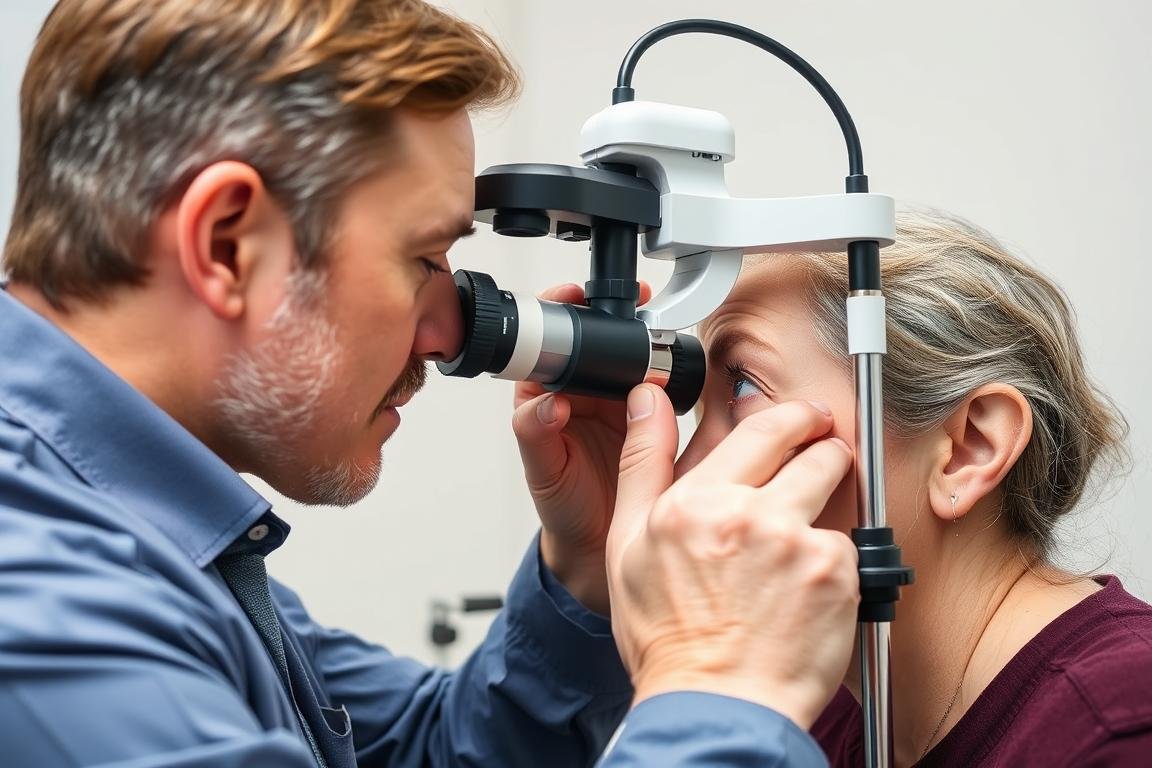
Un iridolog care examinează irisul unui pacient folosind echipamente specializate
The foundation of irisology practice is the iris chart, which divides the iris into approximately 80-90 zones, each corresponding to a different part of the human body. The chart typically follows a clock-like arrangement, with the pupil at the center.
According to irisology theory:
- Irisul stâng corespunde cu partea stângă a corpului
- Irisul drept corespunde cu partea dreaptă a corpului
- Irisul este împărțit în zone concentrice reprezentând diferite sisteme ale corpului
- The innermost zone (closest to the pupil) represents digestive organs
- The middle zone represents circulation and muscle systems
- The outer zone represents skin, bones, and lymphatic system
Iridologists believe that various markings in these zones can indicate specific health conditions:
Common Iris Signs
- Dark spots: Potentially indicating damaged or underactive tissues
- White areas: Possibly showing inflammation or overactivity
- Rings around the iris: May suggest stress or tension
- Color changes: Could indicate chemical imbalances or toxin accumulation
Conditions Claimed to Be Identified
- Tulburări digestive
- Inflamație în tot corpul
- Acumularea de toxine
- Deficiențe nutriționale
- Stress levels and nervous system function
- Congestionarea sistemului limfatic
It’s important to note that iridologists do not claim to diagnose specific diseases but rather identify areas of weakness, inflammation, or toxin buildup that may contribute to health problems. They often recommend dietary changes, herbal supplements, or lifestyle modifications based on their findings.
Scientific Perspective on Irisology
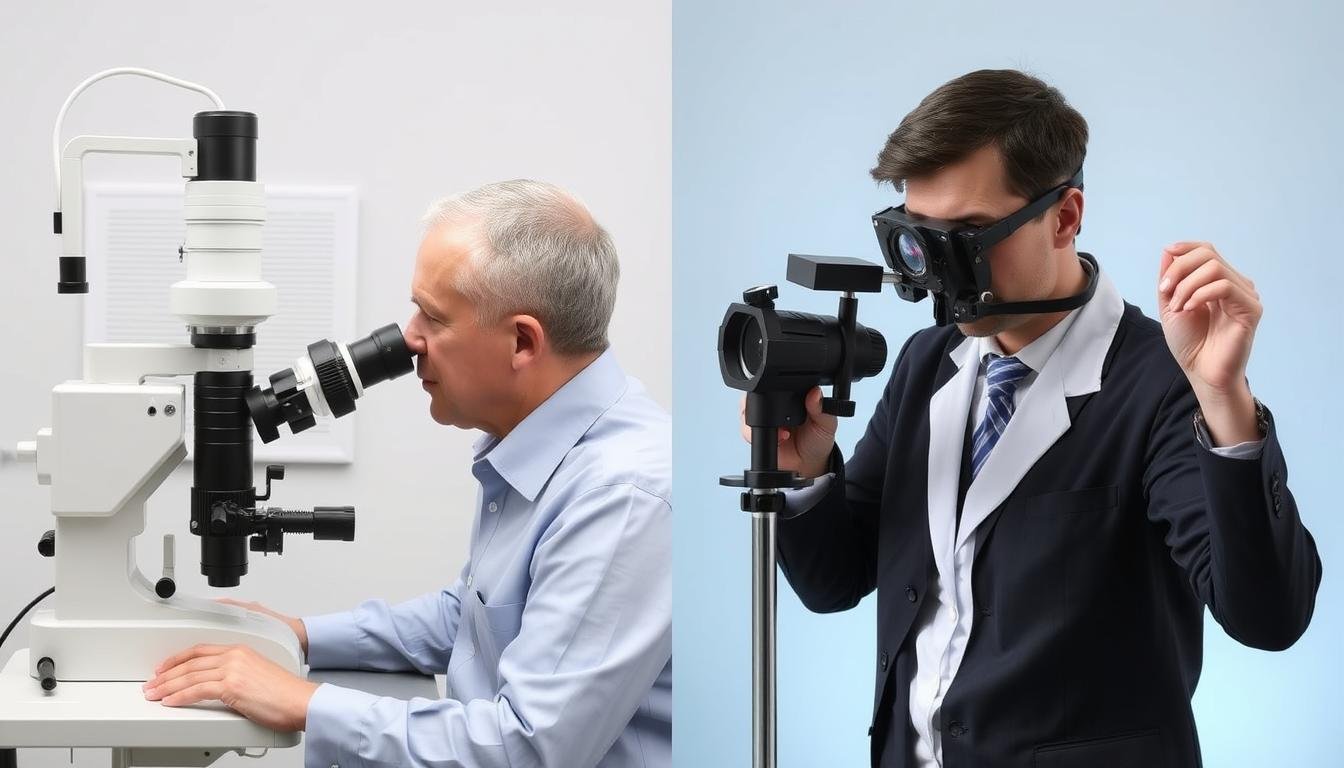
Conventional ophthalmology examination (left) versus irisology analysis (right)
The conventional medical community and scientific research have generally not supported the claims made by irisology practitioners. Several studies have examined the validity of irisology as a diagnostic tool, with most finding insufficient evidence to support its effectiveness.
Cercetări și Studii
O revizuire sistematică publicată în 1999 în jurnal Cercetare complementară Med examined four case-control studies on irisology. The researchers concluded that the diagnostic value of irisology was not supported by scientific evaluations.
Another study published in 2000 in the Arhivele Oftalmologiei found that iridology had no clinical or diagnostic value. The researchers stated: “Iridology has shown to be of little benefit to anyone. Patients and therapists should be discouraged from utilizing iridology since it has the potential to cause personal and financial harm.”
More recent studies have similarly failed to find evidence supporting irisology’s diagnostic claims. A 2015 review in the Journal of Alternative and Complementary Medicine found no reliable evidence that iridologists can identify patients with specific diseases.
Arguments Supporting Irisology
- Non-invasive approach to health assessment
- May encourage people to be more proactive about their health
- Some anecdotal success stories from practitioners and clients
- Could potentially identify general areas of weakness or stress
- May complement other holistic health approaches
Critici științifice
- Lack of controlled scientific studies supporting its effectiveness
- No known physiological mechanism to explain how internal organs would affect iris appearance
- Modelele irisului sunt determinate în mare măsură de genetică și rămân stabile de -a lungul vieții
- Potential for misdiagnosis or delayed proper medical treatment
- Rezultate inconsistente între iridologi diferiți care examinează același iris
One of the main scientific criticisms of irisology is that the iris structure is primarily determined by genetics and, apart from certain eye conditions or injuries, remains largely unchanged throughout a person’s life. This contradicts the fundamental premise of irisology that the iris continuously changes to reflect the health status of various body organs.
Additionally, there is no known physiological mechanism that would explain how internal organs could influence the appearance of the iris in the specific, mapped way that iridology claims.
Irisology vs. Conventional Ophthalmology

Conventional ophthalmological examination using modern medical equipment
While irisology focuses on examining the iris to determine overall health conditions throughout the body, conventional ophthalmology is a medical specialty focused on the diagnosis and treatment of eye disorders and diseases. It’s important to understand the key differences between these approaches:
| Aspect | Irisology | Conventional Ophthalmology |
| Primary focus | Using iris patterns to assess overall body health | Diagnosing and treating eye conditions and diseases |
| Practitioner qualifications | Variază mult; Fără cerințe medicale standardizate | Medical doctors with specialized training (MD or DO) |
| Scientific basis | Limited scientific evidence; not accepted by mainstream medicine | Evidence-based practice supported by scientific research |
| Diagnostic approach | Observing iris patterns and relating them to body systems | Comprehensive eye exams using specialized equipment |
| Recomandări de tratament | Often lifestyle, dietary changes, and supplements | Medical treatments, surgery, corrective lenses as needed |
It’s worth noting that conventional ophthalmologists do recognize that some systemic health conditions can manifest with visible changes in the eye. For example, diabetes can cause retinopathy, hypertension can lead to visible changes in blood vessels, and certain autoimmune conditions may cause inflammation in the eye. However, these observations are based on established physiological mechanisms and scientific evidence, rather than the mapped correspondences proposed by irisology.
While irisology examines only the iris, comprehensive ophthalmological examinations assess multiple structures of the eye, including the cornea, lens, retina, optic nerve, and surrounding tissues, providing a more complete picture of eye health and potentially detecting signs of systemic conditions that genuinely affect the eye.
Practical Applications of Irisology
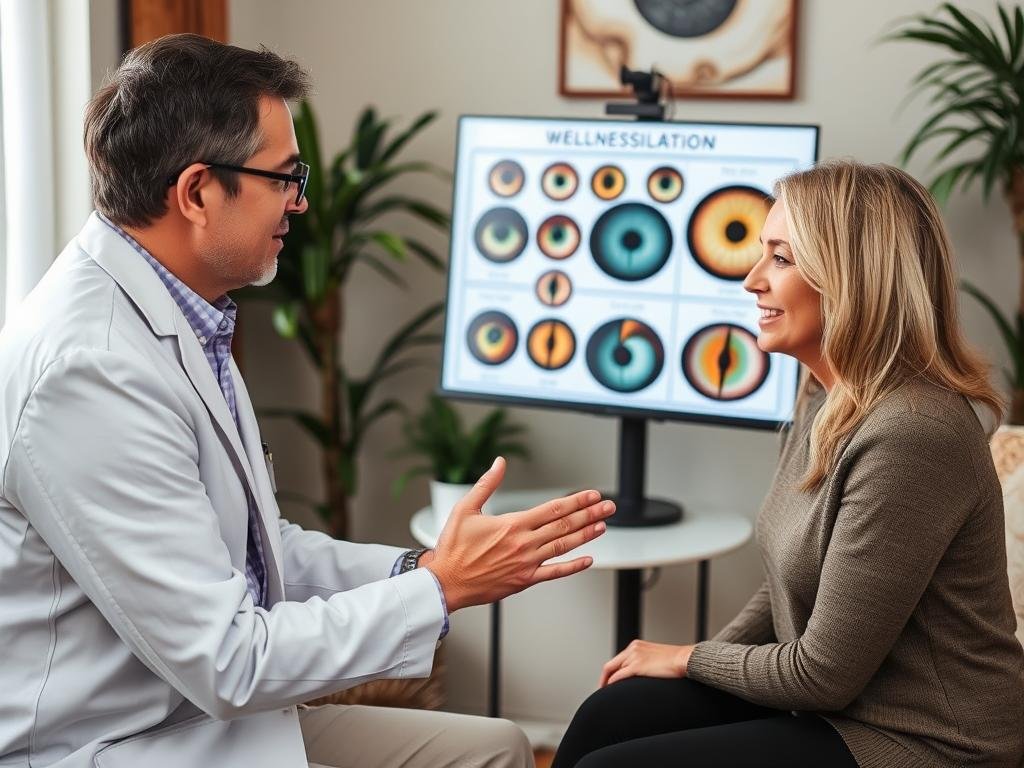
An iridology consultation focusing on holistic health recommendations
Despite the lack of scientific validation, irisology continues to be practiced in many parts of the world as part of complementary and alternative medicine. Proponents suggest several practical applications:
Evaluarea holistică a sănătății
Iridologists often view their practice as a tool for holistic health assessment rather than disease diagnosis. They may use iris analysis to:
- Identify potential areas of weakness or constitutional predispositions
- Detect signs of inflammation or toxin accumulation
- Assess overall vitality and stress levels
- Monitor changes in health over time
Îndrumări de sănătate preventivă
Based on their observations, iridologists typically provide recommendations focused on prevention and wellness:
- Dietary modifications to support specific body systems
- Herbal supplements targeted to individual needs
- Detoxification protocols
- Stress management techniques
- Lifestyle adjustments to support overall health
Complementary Approach

Integration of irisology with other holistic health approaches
Many practitioners view irisology as one component of a broader holistic approach to health, often using it alongside:
- Nutritional counseling
- Herbal medicine
- Homeopatie
- Medicina traditionala chineza
- Naturopatie
It’s important to emphasize that irisology should not replace conventional medical diagnosis and treatment. Responsible practitioners typically encourage clients to maintain regular check-ups with their primary healthcare providers and to seek appropriate medical care for specific symptoms or conditions.
Notă importantă: If you’re considering irisology, it’s advisable to use it as a complementary approach alongside conventional medical care, not as a replacement. Always consult with qualified healthcare professionals about any health concerns or before making significant changes to your health regimen.
Frequently Asked Questions About Irisology
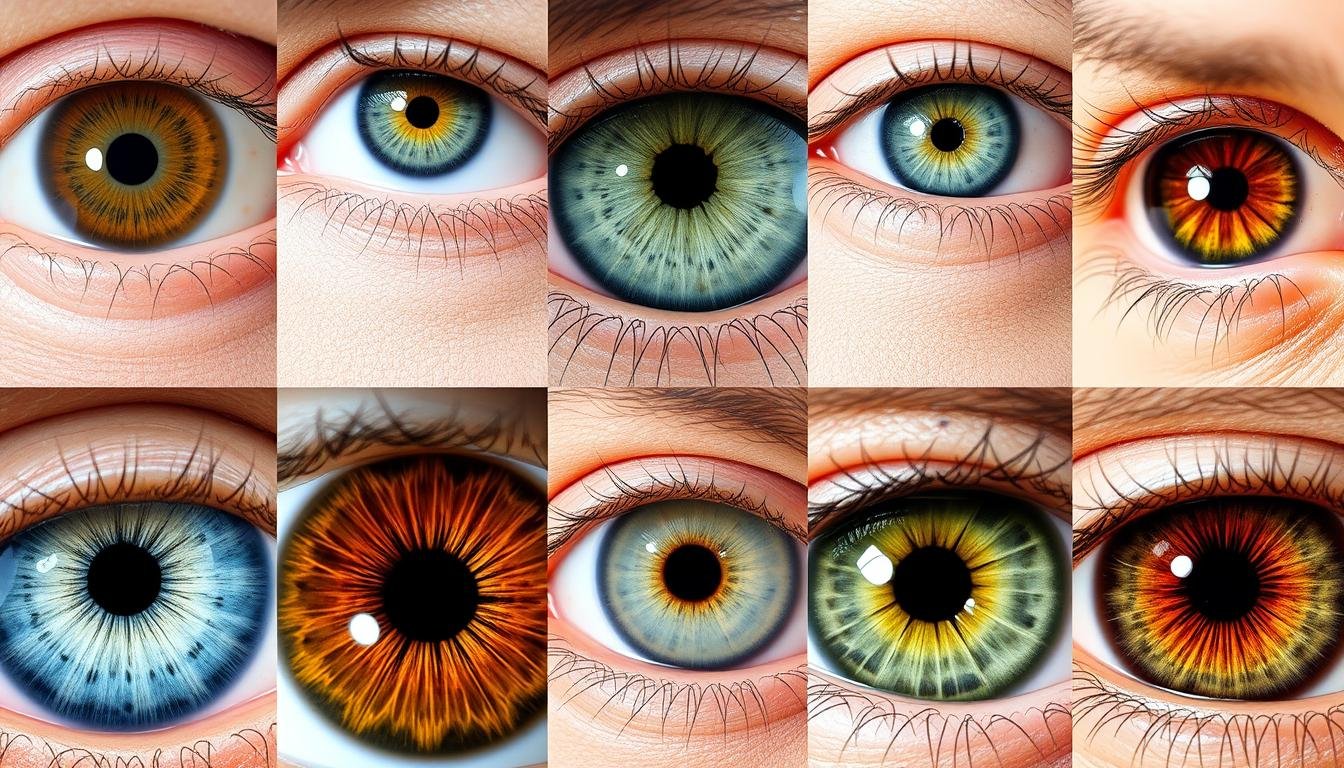
Diverse iris patterns and colors examined in irisology practice
Is irisology the same as iridology?
Yes, irisology and iridology refer to the same practice. Both terms describe the study of the iris to assess health conditions. The terms are used interchangeably, though “iridologie” is more commonly used in scientific literature and general discourse.
How long does an irisology examination take?
A typical irisology session lasts between 30 minutes to an hour. The practitioner will examine both irises using specialized equipment, compare findings to iris charts, and discuss observations and recommendations with the client.
Can irisology diagnose specific diseases?
Most reputable iridologists do not claim to diagnose specific diseases. Instead, they identify areas of potential weakness, inflammation, or toxin accumulation that might contribute to health issues. Irisology is generally presented as a tool for assessing overall health patterns rather than diagnosing specific medical conditions.
Is there any scientific evidence supporting irisology?
The majority of scientific studies have not found evidence supporting irisology’s diagnostic claims. Multiple controlled studies have concluded that iridology practitioners cannot reliably identify people with specific diseases by examining their irises. The practice is not recognized by mainstream medical science.
Are there any risks associated with irisology?
The examination itself is non-invasive and generally safe. However, potential risks include misdiagnosis, false reassurance about serious conditions, or delays in seeking appropriate medical care. There’s also the possibility of unnecessary treatments or supplements based on inaccurate assessments.
Conclusion: The Place of Irisology in Health and Wellness

Making informed health decisions by considering multiple perspectives
Irisology represents an intriguing approach to health assessment that continues to attract interest despite limited scientific support. While the practice has a long history and dedicated practitioners worldwide, it remains outside mainstream medicine due to insufficient evidence validating its core claims.
For those interested in exploring irisology, it’s advisable to approach it with an informed perspective:
- Consider it a complementary tool rather than a primary diagnostic method
- Păstrați controale regulate cu furnizorii de asistență medicală calificați
- Discuss any irisology findings with your primary care physician
- Be cautious of practitioners making definitive disease diagnoses or promising cures
- Research the qualifications and approach of any iridologist you consult
The human body is complex, and our understanding of health and disease continues to evolve. While conventional medicine offers evidence-based approaches to diagnosis and treatment, many people find value in exploring complementary perspectives that consider the whole person. The key is to make informed choices that support your overall health and well-being.
Prioritize Your Eye Health
Whether you’re curious about alternative approaches like irisology or seeking conventional eye care, regular comprehensive eye examinations are essential for maintaining vision health and detecting potential issues early.
Address:Factory Building II, Jinshanlong Industrial Park, No.1, Xintang Village, Kratong Community, Fucheng Street, Longhua District shenzhen, 518000 GD,China
TEL:0086-0755-888-56563
Person to contact:Mark Luo
email:lucy@iriscope.org
Whatsapp/phone:0086-191-5490-1065
Copyright (c) 2004-2024 www.iriscope.org All Rights Reserved.