Maikong-Professional Irodology Camera Camera Iriscope المصنعة والمورد


ما هو دراسة العيون؟ نظرة شاملة
ال دراسة العيون يشمل تخصصات متعددة بما في ذلك طب العيون، وقياس البصر، وعلم الأعصاب البصري. يدرس هذا المجال كل شيء بدءًا من الهياكل الفيزيائية للعين وحتى كيفية عمل الرؤية وعلاج الحالات المرتبطة بالعين.
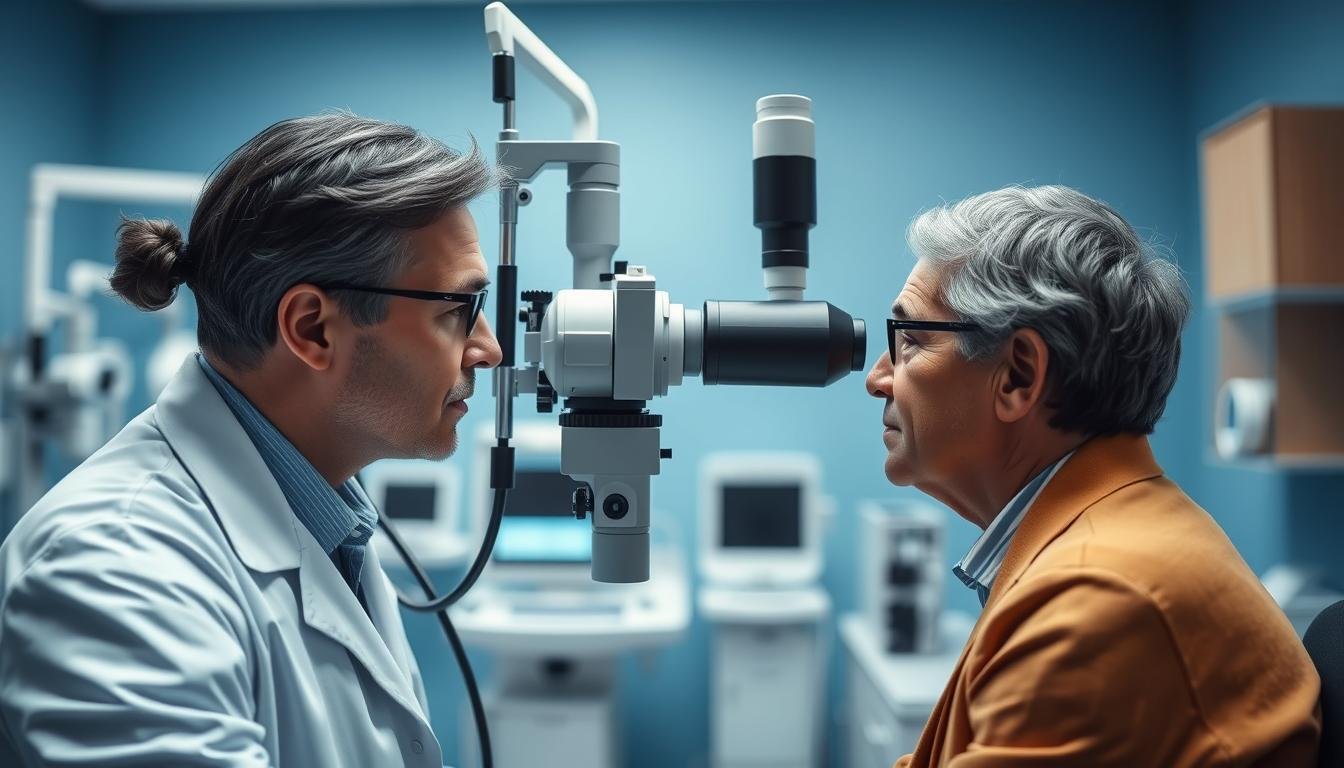
يقوم طبيب العيون بإجراء فحص شامل للعين
أطباء العيون هم أطباء متخصصون في رعاية العين والبصر. ويخضعون لتدريب مكثف، بما في ذلك أربع سنوات من كلية الطب وأربع سنوات إضافية على الأقل من التدريب المتخصص. فاحصي البصر، على الرغم من أنهم ليسوا أطباء، هم متخصصون في رعاية العيون ويقدمون الرعاية الأولية للرؤية، بما في ذلك اختبار البصر وتصحيحه. أخصائيو البصريات هم فنيون يقومون بتصميم عدسات وإطارات النظارات والعدسات اللاصقة وغيرها من الأجهزة والتحقق منها وملاءمتها لتصحيح البصر.
تشعر بالقلق إزاء صحة عينيك؟
تعتبر فحوصات العين المنتظمة ضرورية للحفاظ على الرؤية الجيدة والكشف عن المشاكل المحتملة في وقت مبكر. يستطيع المتخصصون لدينا تقديم رعاية شاملة للعيون مصممة خصيصًا لتلبية احتياجاتك.
المكونات الرئيسية في دراسة العيون: من القرنية إلى الشبكية
فهم تشريح العين أمر أساسي ل دراسة العيون. العين البشرية هي عضو معقد يضم العديد من الأجزاء المترابطة التي تعمل معًا لتوفير الرؤية.
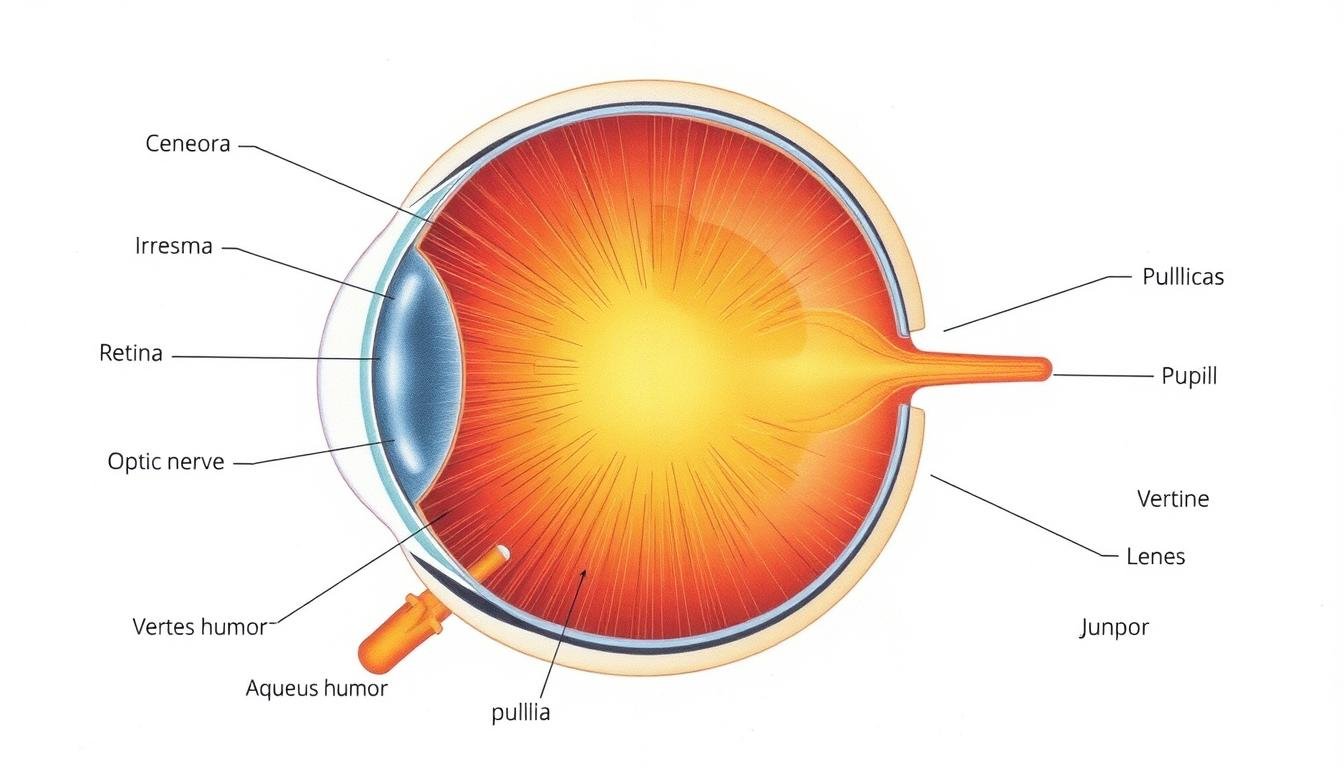
مقطع عرضي للعين البشرية يُظهر الهياكل التشريحية الرئيسية
هياكل العين الخارجية في دراسة العيون
الهياكل الخارجية تحمي العين وتساعد على توجيه الضوء إلى شبكية العين:
- القرنية: السطح الشفاف على شكل قبة والذي يغطي الجزء الأمامي من العين. وهي بمثابة النافذة، حيث تسمح للضوء بالدخول مع حماية العين من الغبار والجراثيم.
- الصلبة: الجزء الأبيض من العين الذي يشكل الجدار الخارجي للعين ويساعد في الحفاظ على شكلها.
- الملتحمة: نسيج رقيق وشفاف يغطي الصلبة ويبطن الجزء الداخلي من الجفون.
- قزحية: الجزء الملون من العين الذي يتحكم في حجم حدقة العين، وينظم كمية الضوء التي تدخل.
- تلميذ: الدائرة السوداء الموجودة في وسط القزحية والتي يتغير حجمها للتحكم في كمية الضوء التي تصل إلى شبكية العين.
هياكل العين الداخلية
تقوم المكونات الداخلية بتركيز الضوء وتحويله إلى إشارات كهربائية:
- عدسة: تقع خلف القزحية، وتركز الضوء على شبكية العين. يغير شكله ليساعدك على التركيز على الأشياء الموجودة على مسافات مختلفة.
- الفكاهة المائية: سائل شفاف يملأ الفراغ بين القرنية والقزحية، ويوفر العناصر الغذائية ويحافظ على ضغط العين.
- الفكاهة الزجاجية: مادة شفافة هلامية تملأ الفراغ الموجود بين العدسة والشبكية، مما يساعد العين على الحفاظ على شكلها.
- شبكية العين: الطبقة الحساسة للضوء الموجودة في الجزء الخلفي من العين تحتوي على خلايا مستقبلة للضوء (عصي ومخاريط) تعمل على تحويل الضوء إلى إشارات كهربائية.
- البقعة: منطقة صغيرة في وسط الشبكية مسؤولة عن الرؤية المركزية ورؤية التفاصيل الدقيقة.
- النقرة: انخفاض صغير في وسط البقعة يوفر رؤية حادة.
- العصب البصري: يحمل المعلومات البصرية من شبكية العين إلى الدماغ.
كيف تعمل الرؤية: العلم وراء الرؤية دراسة العيون
الرؤية هي عملية معقدة تبدأ عندما يدخل الضوء إلى العين وتنتهي عندما يقوم دماغك بتفسير ما تراه.
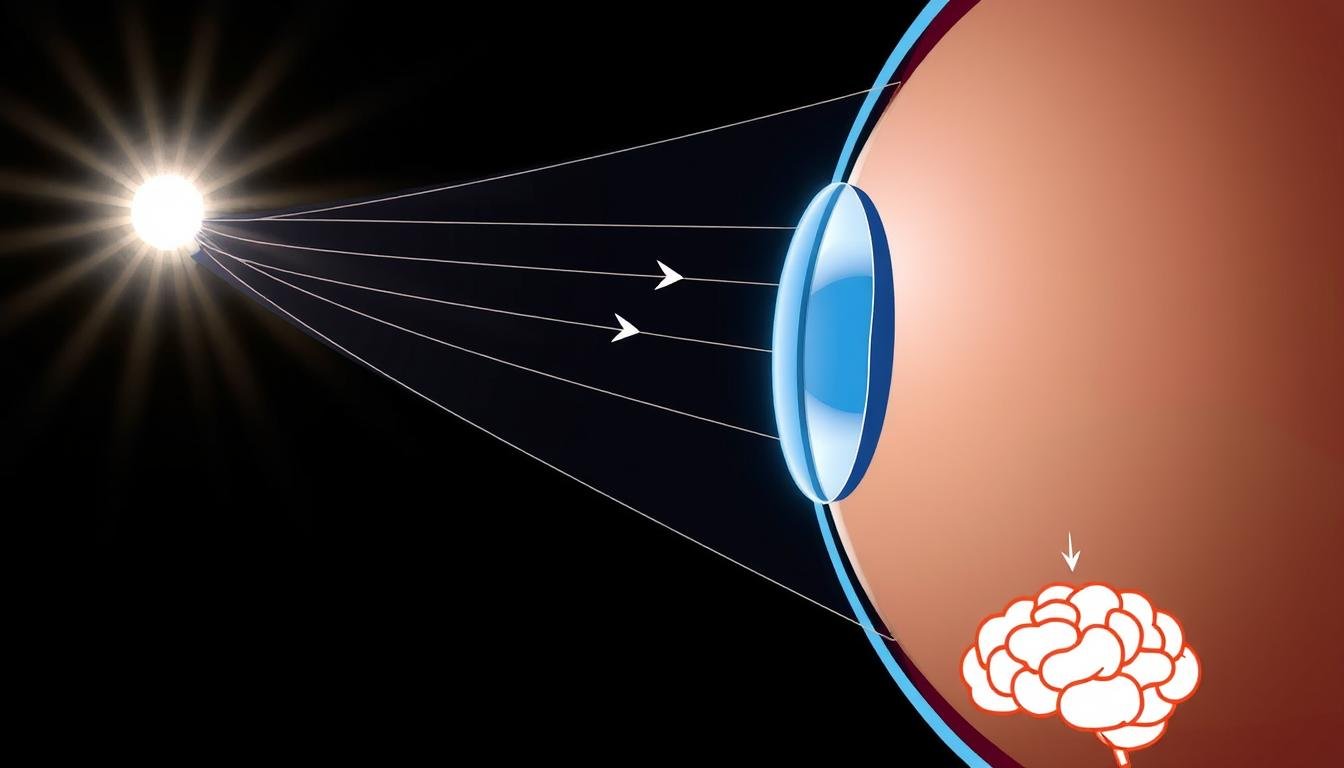
مسار الضوء من خلال العين والمعالجة البصرية في الدماغ
المسار البصري
وإليك كيفية عمل العملية:
- يدخل الضوء إلى العين من خلال القرنية، التي تحني (تكسر) الضوء.
- يمر الضوء عبر الخلط المائي والبؤبؤ، الذي يضبط حجمه للتحكم في كمية الضوء الداخلة.
- ثم يمر الضوء عبر العدسة، مما يؤدي إلى تركيزه بشكل أكبر.
- وبعد المرور عبر الخلط الزجاجي، يصل الضوء إلى الشبكية.
- تقوم الخلايا المستقبلة للضوء في شبكية العين (العصي والمخاريط) بتحويل الضوء إلى إشارات كهربائية.
- تنتقل هذه الإشارات عبر العصب البصري إلى الدماغ.
- يقوم الدماغ بمعالجة هذه الإشارات في القشرة البصرية، مما يخلق الصور التي تراها.
“العين جوهرة الجسد، ونافذة الروح، ومرآة العالم.” – هذا المثل القديم يعكس كيف دراسة العيون تم تقديره عبر تاريخ البشرية لأسباب طبية وفلسفية.
العصي والمخاريط: المستقبلات الضوئية
تحتوي شبكية العين على نوعين من الخلايا المستقبلة للضوء:
قضبان
- حوالي 120 مليون في كل عين
- مسؤول عن الرؤية في ظروف الإضاءة المنخفضة
- توفير الرؤية المحيطية
- لا يمكن الكشف عن اللون
المخاريط
- حوالي 6-7 مليون في كل عين
- تعمل بشكل أفضل في الضوء الساطع
- توفير رؤية الألوان والتفاصيل
- يتركز في البقعة وخاصة النقرة
تجربة مشاكل الرؤية؟
إذا كنت تعاني من تغيرات في رؤيتك، فمن المهم استشارة أخصائي العناية بالعيون. الكشف المبكر عن مشاكل الرؤية يمكن أن يمنع المزيد من المضاعفات.
محطات تاريخية في دراسة العيون
ال دراسة العيون لقد تطورت بشكل ملحوظ عبر التاريخ، مع العديد من الإنجازات التي ساهمت في تطوير فهمنا للبصر وصحة العين.
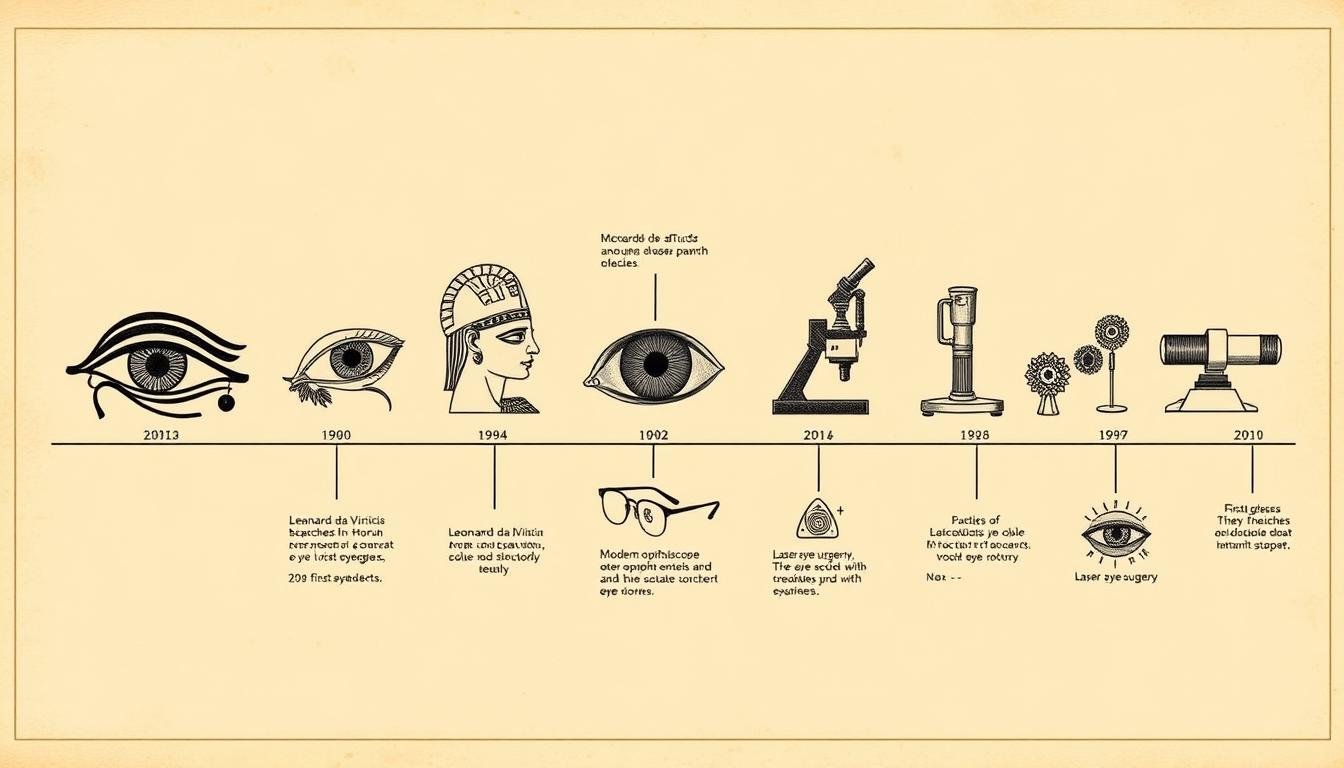
الجدول الزمني للتطورات الرئيسية في طب العيون عبر التاريخ
البدايات القديمة
أقدم السجلات ل دراسة العيون تعود إلى الحضارات القديمة:
- 2000-3000 قبل الميلاد: وقد وثّق المصريون القدماء أمراض العيون وعلاجاتها في بردية إيبرس.
- 500-300 قبل الميلاد: وصف أبقراط وأطباء يونانيون آخرون أمراض العيون المختلفة واقترحوا علاجات.
- القرن الأول الميلادي: Roman physician Aulus Cornelius Celsus detailed cataract surgery techniques.
Renaissance to Modern Era
Significant advancements occurred during and after the Renaissance:
- 1286: The first eyeglasses were invented in Italy.
- 1500s: Leonardo da Vinci studied the anatomy of the eye and proposed theories about vision.
- 1851: Hermann von Helmholtz invented the ophthalmoscope, allowing doctors to examine the retina.
- 1905: Eduard Zirm performed the first successful corneal transplant.
- 1949: Harold Ridley implanted the first intraocular lens during cataract surgery.
- 1961: The first laser treatment for retinal conditions was developed.
- 1987: The first excimer laser refractive surgery was performed.
Modern Technologies Revolutionizing the دراسة العيون
اليوم دراسة العيون benefits from cutting-edge technologies that allow for more precise diagnosis and treatment of eye conditions.

Advanced diagnostic imaging technology used in modern ophthalmology
Diagnostic Technologies
These technologies have transformed how eye specialists examine and diagnose eye conditions:
- Optical Coherence Tomography (OCT): Provides cross-sectional images of the retina with microscopic detail.
- Digital Retinal Photography: Captures detailed images of the retina to document eye health and track changes over time.
- Corneal Topography: Maps the surface curvature of the cornea to diagnose conditions and assist in contact lens fitting.
- Visual Field Testing: Measures peripheral vision to detect vision loss from glaucoma and other conditions.
- Wavefront Analysis: Measures how light travels through the eye to detect subtle vision abnormalities.
Treatment Technologies
Advanced technologies have also revolutionized eye treatments:
- Laser Surgery: Used for various procedures including LASIK for vision correction and treatments for glaucoma and retinal conditions.
- Femtosecond Laser: Creates precise incisions for cataract surgery and corneal transplants.
- Intraocular Lenses (IOLs): Advanced lens implants that can correct vision after cataract removal.
- Anti-VEGF Therapy: Injectable medications that treat wet macular degeneration and diabetic retinopathy.
- Gene Therapy: Emerging treatments for inherited retinal diseases.
هل أنت مهتم بخيارات العناية بالعيون المتقدمة؟
Modern eye care technologies can address a wide range of vision problems and eye conditions. Consult with a specialist to learn which options might be right for you.
Common Eye Conditions in the دراسة العيون
ال دراسة العيون includes understanding various conditions that can affect vision and eye health.

Comparison of a healthy eye versus eyes affected by common conditions
الأخطاء الانكسارية
These common vision problems occur when the eye cannot focus light correctly:
قصر النظر (قصر النظر)
Distant objects appear blurry while close objects remain clear. Occurs when the eyeball is too long or the cornea is too curved.
مد البصر (طول النظر)
Close objects appear blurry while distant objects may be clearer. Occurs when the eyeball is too short or the cornea is too flat.
الاستجماتيزم
Blurred or distorted vision at all distances due to irregular curvature of the cornea or lens.
Age-Related Eye Conditions
Several eye conditions become more common as people age:
- طول النظر الشيخوخي: Age-related loss of near vision, typically beginning around age 40.
- Cataracts: Clouding of the eye’s lens, causing blurry vision and increased sensitivity to glare.
- Glaucoma: A group of eye conditions that damage the optic nerve, often due to increased pressure in the eye.
- Age-Related Macular Degeneration (AMD): Deterioration of the macula, affecting central vision.
- Dry Eye: Insufficient tear production or poor tear quality, causing discomfort and potential vision problems.
Other Common Eye Conditions
ال دراسة العيون also encompasses these conditions:
- Diabetic Retinopathy: Damage to blood vessels in the retina due to diabetes.
- Retinal Detachment: Separation of the retina from the back of the eye, requiring immediate treatment.
- Amblyopia (Lazy Eye): Reduced vision in one eye due to abnormal visual development in childhood.
- Strabismus: Misalignment of the eyes, where they point in different directions.
- Conjunctivitis (Pink Eye): Inflammation of the conjunctiva, often due to infection or allergies.
Warning Signs: Seek immediate medical attention if you experience sudden vision loss, eye pain, double vision, flashes of light, or a sudden increase in floaters. These could indicate serious conditions requiring prompt treatment.
Eye Care and Prevention in the دراسة العيون
Maintaining good eye health is a crucial aspect of the دراسة العيون. Preventive care can help preserve vision and detect problems early.

Proper eye protection is essential during activities that pose risks to eye safety
ممارسات العناية بالعيون الأساسية
These habits can help maintain healthy eyes throughout your life:
- Regular Eye Exams: Adults should have comprehensive eye exams every 1-2 years, or more frequently if recommended by an eye care professional.
- Proper Nutrition: Eat a diet rich in fruits and vegetables, especially dark leafy greens like spinach and kale. Omega-3 fatty acids, found in fish like salmon, can also benefit eye health.
- Protect Your Eyes: Wear sunglasses that block 99-100% of UVA and UVB radiation when outdoors. Use appropriate eye protection during hazardous activities.
- Rest Your Eyes: Follow the 20-20-20 rule when using digital devices: Every 20 minutes, look at something 20 feet away for 20 seconds.
- Quit Smoking: Smoking increases the risk of cataracts, macular degeneration, and optic nerve damage.
- Control Chronic Conditions: Manage conditions like diabetes and hypertension, which can affect eye health.

Foods rich in nutrients that support eye health
When to See an Eye Care Professional
Schedule an appointment if you experience any of these symptoms:
- Decreased vision, even if temporary
- Eye pain or increased sensitivity to light
- New floaters (spots) or flashes in your vision
- Redness or swelling of the eye or eyelid
- Double vision
- Distortion or waviness in your vision
- Halos around lights
- Frequent headaches or eye strain
حماية رؤيتك للحياة
Regular eye examinations are essential for maintaining healthy vision and detecting potential problems before they affect your sight.
Career Paths in the دراسة العيون
ال دراسة العيون offers diverse career opportunities for those interested in vision and eye health.

Various eye care professionals working together in a modern eye clinic
Professional Roles in Eye Care
These specialists play different but complementary roles in eye care:
| احترافي | التعليم مطلوب | Primary Responsibilities | Can Prescribe Medication | Can Perform Surgery |
| طبيب عيون | Medical school (MD) + 4+ years residency | Complete eye care, diagnosis and treatment of eye diseases, eye surgery | نعم | نعم |
| طبيب العيون | Doctor of Optometry (OD), 4 years after bachelor’s | Vision tests, prescribe corrective lenses, diagnose eye conditions | Limited (varies by state) | No (minor procedures in some states) |
| أخصائي بصريات | 1-2 years training/certification | Fit and dispense eyeglasses and contact lenses | لا | لا |
| Ophthalmic Technician | Certificate or associate degree | Assist ophthalmologists, perform preliminary tests | لا | لا |
| Vision Researcher | PhD or MD/PhD | Conduct research on eye diseases and treatments | Depends on credentials | Depends on credentials |
Ophthalmology Subspecialties
Ophthalmologists can further specialize in specific areas:
- Cornea and External Disease: Focus on conditions affecting the cornea, conjunctiva, and eyelids.
- Glaucoma: Specialize in preventing and treating glaucoma.
- Neuro-ophthalmology: Study disorders of the optic nerve and visual pathways.
- Oculoplastics: Perform reconstructive and cosmetic surgery around the eyes.
- Pediatric Ophthalmology: Specialize in children’s eye conditions.
- شبكية العين: Focus on diseases affecting the retina, including diabetic retinopathy and macular degeneration.
- Uveitis and Ocular Immunology: Treat inflammatory eye diseases.
الأسئلة المتداولة حول دراسة العيون
Here are answers to common questions about eye health and vision care.

Regular eye examinations are an important part of preventive eye care
How often should I have my eyes examined?
For adults with no symptoms or risk factors for eye disease, the American Academy of Ophthalmology recommends a comprehensive eye exam every 1-2 years for those over 65, and every 2-4 years for those aged 40-54. People with diabetes, high blood pressure, or a family history of eye disease may need more frequent exams. Children should have their first comprehensive eye exam at 6 months, another at age 3, and again before starting school.
Can eye exercises improve my vision?
Eye exercises cannot correct refractive errors like nearsightedness, farsightedness, or astigmatism. However, certain exercises may help with eye strain and can be beneficial for specific conditions like convergence insufficiency (difficulty focusing both eyes together for near work). Always consult with an eye care professional before starting any eye exercise program.
Is it true that carrots improve eyesight?
Carrots are rich in vitamin A, which is essential for good vision. However, eating carrots won’t improve your vision if you already have adequate vitamin A in your diet. A balanced diet with a variety of fruits and vegetables provides the nutrients necessary for eye health, including vitamins A, C, and E, zinc, lutein, zeaxanthin, and omega-3 fatty acids.
Can reading in dim light damage my eyes?
Reading in dim light does not damage your eyes permanently, but it can cause temporary eye strain and fatigue. Symptoms may include dry eyes, blurred vision, headaches, and difficulty concentrating. To reduce eye strain, ensure adequate lighting when reading or doing close work.
What is the difference between an ophthalmologist, optometrist, and optician?
An ophthalmologist is a medical doctor (MD) who specializes in eye care, can diagnose and treat all eye diseases, perform surgery, and prescribe medications. An optometrist has a Doctor of Optometry (OD) degree, can perform eye exams, prescribe corrective lenses, diagnose certain eye conditions, and in some states, prescribe medications for some eye diseases. An optician is trained to design, verify, and fit eyeglass lenses and frames, contact lenses, and other devices to correct eyesight, but does not diagnose or treat eye conditions.
Have More Questions About Your Eye Health?
Our eye care specialists are here to answer your questions and provide personalized care for your vision needs.
Conclusion: The Importance of the دراسة العيون
ال دراسة العيون is a fascinating and vital field that continues to evolve with new research and technologies. Understanding how your eyes work and taking proper care of them is essential for maintaining good vision throughout your life.
From the intricate anatomy of the eye to the complex process of vision, from historical developments to cutting-edge treatments, the field of ophthalmology offers valuable insights into one of our most precious senses. By staying informed about eye health and seeking regular professional care, you can protect your vision and address any concerns before they become serious problems.
Remember that your eyes are not just windows to the world—they can also provide important clues about your overall health. Many systemic conditions, such as diabetes, hypertension, and autoimmune disorders, can manifest with eye symptoms. This makes regular eye examinations an important part of your overall healthcare routine.

Maintaining good eye health contributes to quality of life at all ages
Take the First Step Toward Better Eye Health
Whether you’re experiencing vision changes or simply due for a check-up, our eye care professionals are ready to help you maintain healthy vision for life.
Address:Factory Building II, Jinshanlong Industrial Park, No.1, Xintang Village, Kratong Community, Fucheng Street, Longhua District shenzhen, 518000 GD,China
TEL:0086-0755-888-56563
Person to contact:Mark Luo
email:lucy@iriscope.org
Whatsapp/phone:0086-191-5490-1065
Copyright (c) 2004-2024 www.iriscope.org All Rights Reserved.