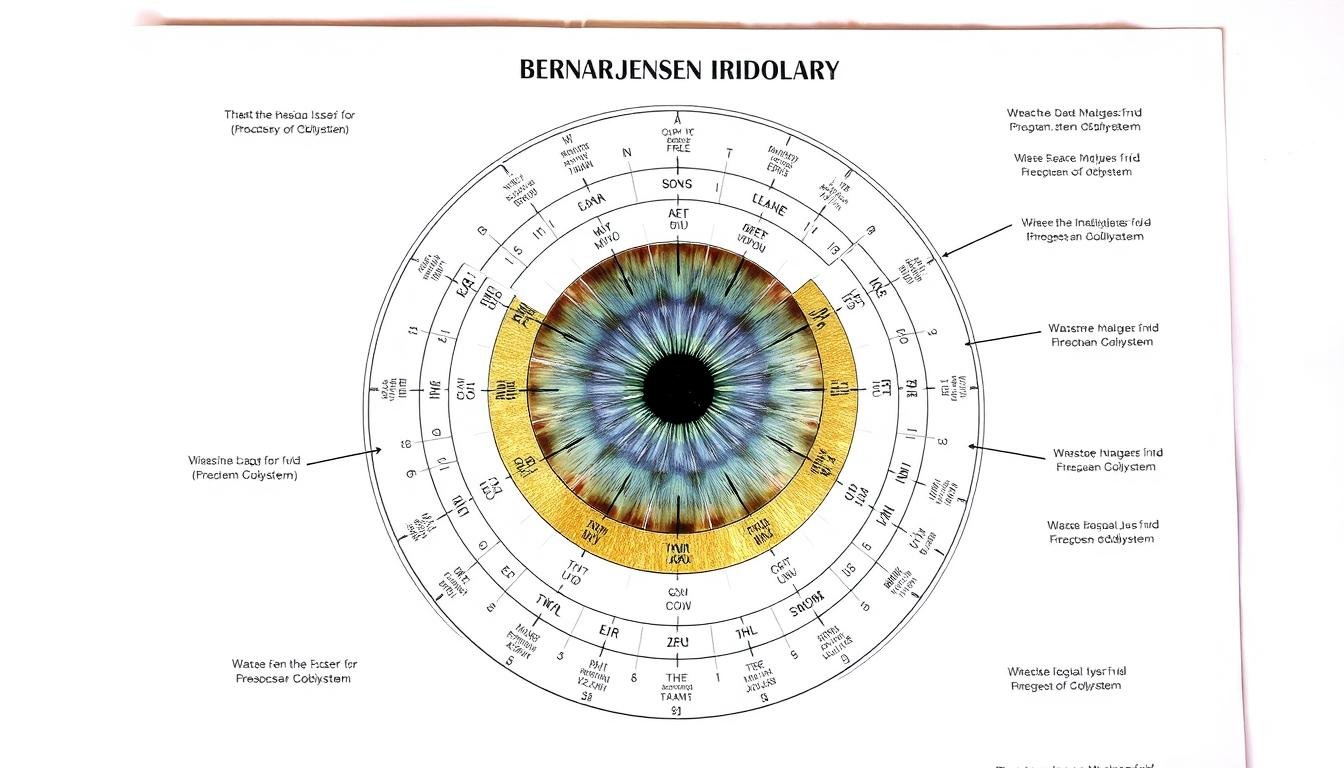
Bernard Jensen iridology chart-L'iridologia, lo studio dei modelli dell'iride e la loro correlazione con le condizioni di salute, è stata praticata per secoli. Tra i pionieri in questo campo, il Dr. Bernard Jensen si distingue per i suoi significativi contributi all'iridologia moderna. Le sue dettagliate carte dell'iride sono diventate strumenti fondamentali per i professionisti di tutto il mondo che le utilizzano per valutare le condizioni di salute attraverso l'esame dell'iride. Questa guida completa esplora l'approccio rivoluzionario di Jensen all'iridologia, analizzando la struttura della sua carta e spiegando come interpretare i segni dell'iride secondo la sua metodologia.

L’eredità del Dr. Bernard Jensen in Iridologia
Bernard Jensen (1908-2001) è stato un chiropratico americano che ha dedicato oltre 50 anni alla ricerca e allo sviluppo dell'iridologia come strumento diagnostico. Negli anni ’50, Jensen iniziò a insegnare i suoi metodi negli Stati Uniti, facendo avanzare significativamente la popolarità e la credibilità del campo all’interno dei circoli della medicina alternativa.
L’approccio di Jensen era unico perché combinava i concetti tradizionali dell’iridologia europea con le sue osservazioni cliniche su migliaia di pazienti. Il suo lavoro è culminato nella creazione di mappe dettagliate dell'iride che mappavano aree specifiche dell'iride ai corrispondenti organi e sistemi del corpo.
A differenza dei professionisti precedenti, Jensen ha sottolineato l’importanza dell’esposizione alle tossine nella valutazione della salute e ha sostenuto gli alimenti naturali come disintossicanti. Il suo approccio olistico collegava l'analisi dell'iride alla nutrizione, rendendo la sua metodologia particolarmente attraente per coloro che erano interessati alle pratiche di salute naturale.
Jensen è autore di numerosi libri sull'iridologia, tra cui “La scienza e la pratica dell'iridologia” E “Iridologia semplificata,” che rimangono testi influenti nel campo oggi. La sua dedizione nel documentare i cambiamenti del tessuto dell'iride e nel correlarli con le condizioni di salute ha creato un approccio sistematico che i professionisti seguono ancora.
Struttura e zone della tabella iridologica di Bernard Jensen
IL Grafico iridologico di Bernard Jensen divide l'iride in circa 80-90 zone attraverso un sistema di mappatura a 360 gradi. Ogni zona corrisponde a specifici organi, ghiandole o sistemi corporei. Comprendere questa struttura è essenziale per un'accurata interpretazione dell'iride.
Il sistema di mappatura a 360 gradi
La carta di Jensen utilizza un approccio basato sul quadrante di un orologio per mappare l’iride. La carta è orientata con il naso alla posizione 3 per l'occhio destro e 9 per l'occhio sinistro. Questo orientamento crea una mappatura speculare tra i due occhi.
La tabella divide l'iride in anelli concentrici che si irradiano dalla pupilla al bordo esterno. Questi anelli rappresentano diversi sistemi corporei, con le aree più vicine alla pupilla generalmente corrispondenti agli organi digestivi e quelle vicine al bordo esterno relative alla pelle, ai vasi linfatici e alle estremità.

Zone principali e loro correlazioni
La tabella di Jensen identifica diverse zone critiche su cui i professionisti si concentrano durante l'analisi:
- Il sistema digestivo forma un anello interno attorno alla pupilla
- Il sistema linfatico appare nella zona centrale dell'iride
- La pelle, che rappresenta il confine di eliminazione, forma l'anello esterno
- Il sistema nervoso si irradia dal centro come i raggi di una ruota
- Organi specifici hanno posizioni designate (ad esempio, il cuore a ore 2-3 nell'occhio sinistro)
Carta iridologica di Bernard Jensen: la carta di Jensen è unica nella sua suddivisione dettagliata di queste zone principali in regioni più specifiche, consentendo l'identificazione precisa di potenziali problemi di salute.

Grafico Iridologico Occhio Destro - Grafico Iridologico – Occhio Destro
occhio destro riflette lato destro corpo.
| Posizione dell'orologio (occhio destro) |
Corrisponde all'organo/sistema |
Dettagli |
| 1 in punto - 2 in punto |
Volto destro |
Corrisponde agli organi riproduttivi di sinistra, includono utero, ovaie (femmina) o testicoli (maschile). |
| 2 in punto - 3 |
Gola destra
|
L'anello riflette la salute delle articolazioni sinistre, incluse ginocchia, fianchi, gomiti e spalle. |
| 3 - 4 in punto |
Parte superiore destra della schiena
|
Corrisponde alla colonna vertebrale, alla salute della colonna vertebrale, all’allineamento e alla flessibilità. |
| 4 in punto - 5 in punto |
Vescica destra |
Anello riflette la vescica e il sistema urinario destro. |
| 5 - 6 in punto |
PELVICO destro |
Anello presenta il colon sinistro, l'intestino tenue e la salute dell'apparato digerente. |
| 6 in punto - 7 |
A destra INFERIORE ADDOME
|
L'anello riflette il rene sinistro, si concentra sulla filtrazione, sulla disintossicazione e sull'equilibrio dei liquidi. |
| 7 - 8 in punto |
A destra ADDOME SUPERIORE
|
L'anello riflette lo stomaco e gli organi digestivi sul lato sinistro. |
| 8 in punto - 9 |
TORACE destro |
Corrisponde al lato sinistro del fegato, responsabile della disintossicazione e della produzione della bile. |
| 9 in punto - 10 |
POLMONE destro |
L'anello presenta il cuore sinistro, influenza la salute cardiovascolare e la circolazione. |
| 10 - 11 |
COLLO destro |
L'anello riflette il polmone sinistro, la salute respiratoria e la funzione respiratoria. |
| 11: 12 |
Cervello destro
|
Corrisponde all'emisfero sinistro del cervello, alla salute mentale e alle funzioni cognitive. |
| 12 - 1 in punto |
Cervello destro
|
Corrisponde all'emisfero sinistro del cervello, alla salute mentale e alle funzioni cognitive. |
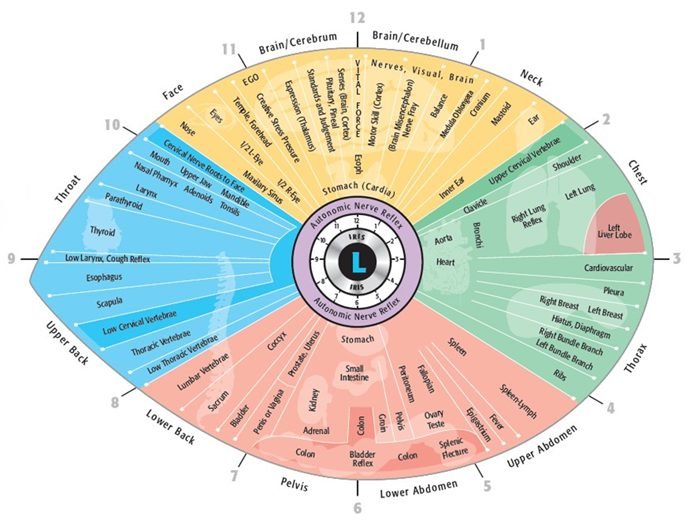
Grafico IRIDOLOGIA Sinistra Eye - Chart Iridology - Sinistra Eye
occhio sinistro riflette lato sinistro corpo.
| Posizione dell'orologio (occhio sinistro) |
Corrisponde all'organo/sistema |
Dettagli |
| 1 in punto - 2 in punto |
Collo sinistro
|
Corrisponde agli organi riproduttivi a destra, includono utero, ovaie (femmine) o testicoli (maschio). |
| 2 in punto - 3 |
Sinistro |
Ringflects Health Right Joins, includono ginocchia, fianchi, gomiti e spalle. |
| 3 - 4 in punto |
Ha lasciato il torace |
Corrisponde a colonna vertebrale, salute spinale, allineamento e flessibilità sul lato destro. |
| 4 in punto - 5 in punto |
Addome superiore sinistro
|
Ringects vescica e sistema urinario sul lato sinistro. |
| 5 - 6 in punto |
Addome inferiore sinistro
|
Ringpresenti a destra del colon, dell'intestino tenue e della salute digestiva. |
| 6 in punto - 7 |
Sinistro pelvico
|
Ringects rene destro, focalizzato su filtrazione, disintossicazione e bilanciamento dei fluidi. |
| 7 - 8 in punto |
Sinistra la parte bassa della schiena
|
Ringetta lo stomaco e gli organi digestivi sul lato destro. |
| 8 in punto - 9 |
La parte superiore della parte superiore sinistra
|
Corrisponde al fegato laterale destro, alla disintossicazione responsabile e alla produzione biliare. |
| 9 in punto - 10 |
La gola sinistra
|
Ringpresents Heart Right Heart, influisce sulla salute e la circolazione cardiovascolare. |
| 10 - 11 |
Faccia sinistra |
Ringetta il polmone destro, la salute respiratoria e la funzione Brea. |
| 11: 12 |
Cerebrum sinistro |
Corrisponde al cervello dell'emisfero destro, alla salute mentale e alle funzioni cognitive. |
| 12 - 1 in punto |
Cerebrum sinistro |
Corrisponde al cervello dell'emisfero destro, alla salute mentale e alle funzioni cognitive. |
- Occhio destro: L'anello riflette Lato destro corpo (ad es. Giusto rene, Giusto polmone, Giusto organi riproduttivi, ecc.).
- Occhio sinistro: L'anello riflette Lato sinistro corpo (ad es. Sinistra rene, Sinistra polmone, Sinistra organi riproduttivi, ecc.).
Ottieni la tua guida gratuita per le zone di iridologia di base
Scarica la nostra versione semplificata delle zone iridologiche di Bernard Jensen per iniziare a imparare come identificare le aree chiave dell'iride.
Scarica Guida gratuita
Interpreting Iris Markings According to Jensen’s System
Bernard Jensen’s methodology for interpreting iris markings is based on the premise that the iris reveals both acute and chronic conditions through specific signs. Understanding these markings is crucial for accurate iridology assessment.
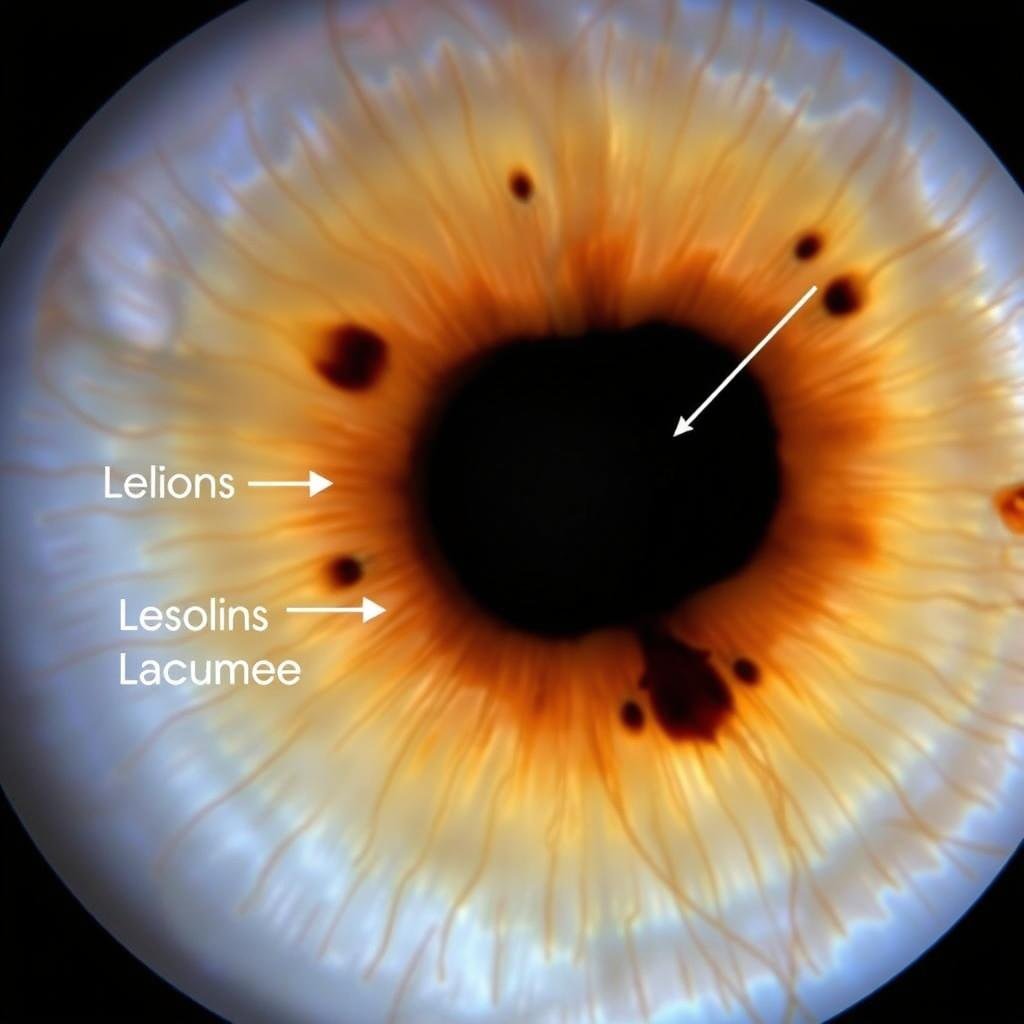
Lesions and Lacunae
These appear as dark spots or openings in the iris fiber structure. According to Jensen, they indicate tissue damage or inherent weaknesses in corresponding organs. The depth and darkness of lesions suggest the severity of the condition.
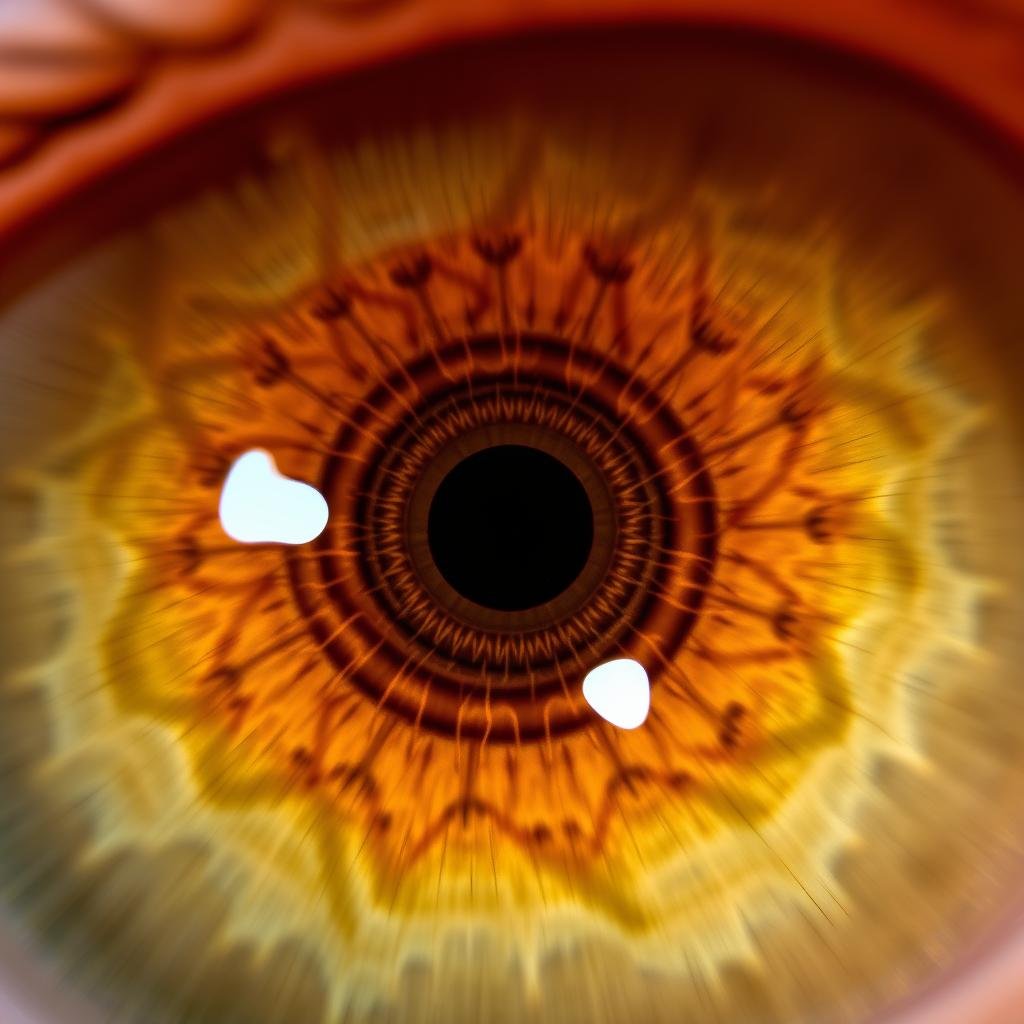
Rings and Zones
Contraction rings appear as circular arcs or complete circles in the iris. Jensen interpreted these as signs of tension or stress in the nervous system. The location of these rings indicates which body systems are affected by this tension.
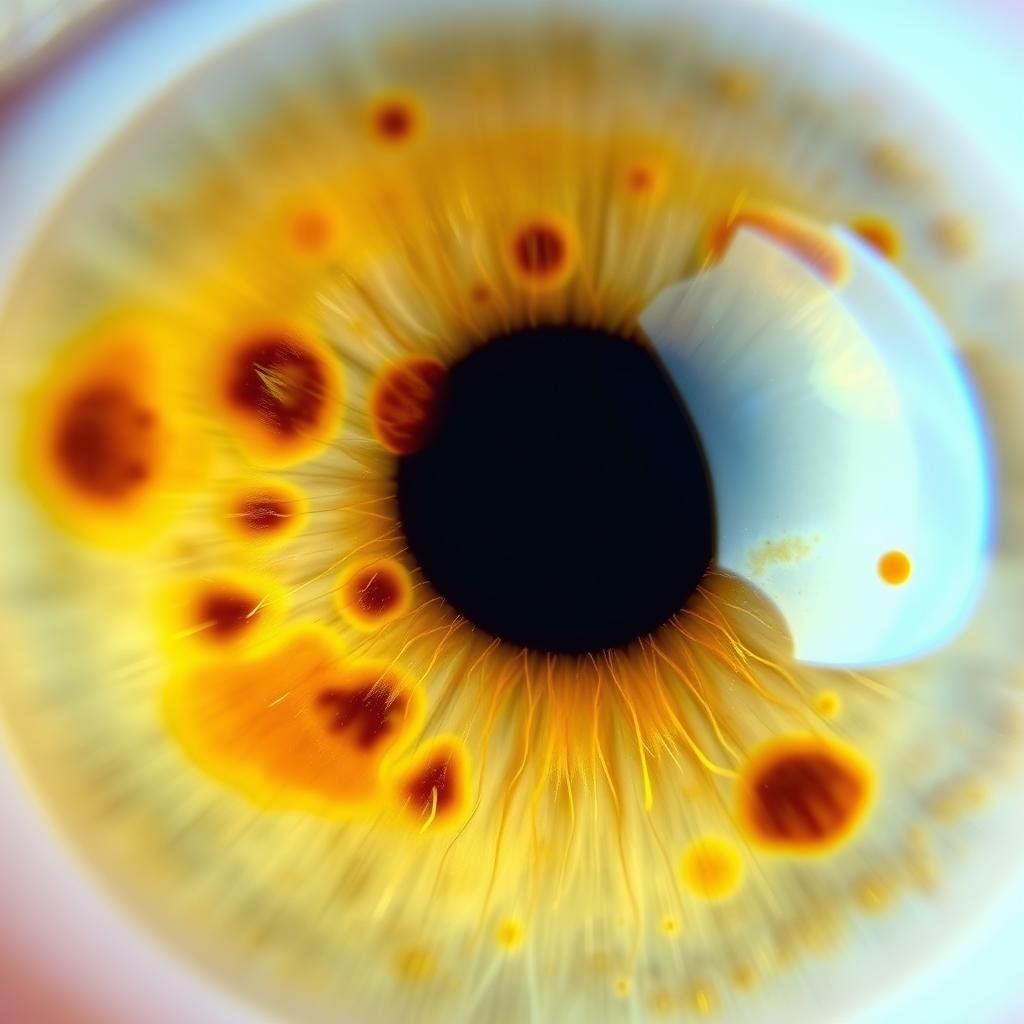
Pigmentation and Colors
Jensen’s system places significant importance on iris coloration. Yellow areas may indicate kidney or urinary issues, while brown spots might suggest liver or spleen involvement. White indicates inflammation or acute activity in the corresponding organ.
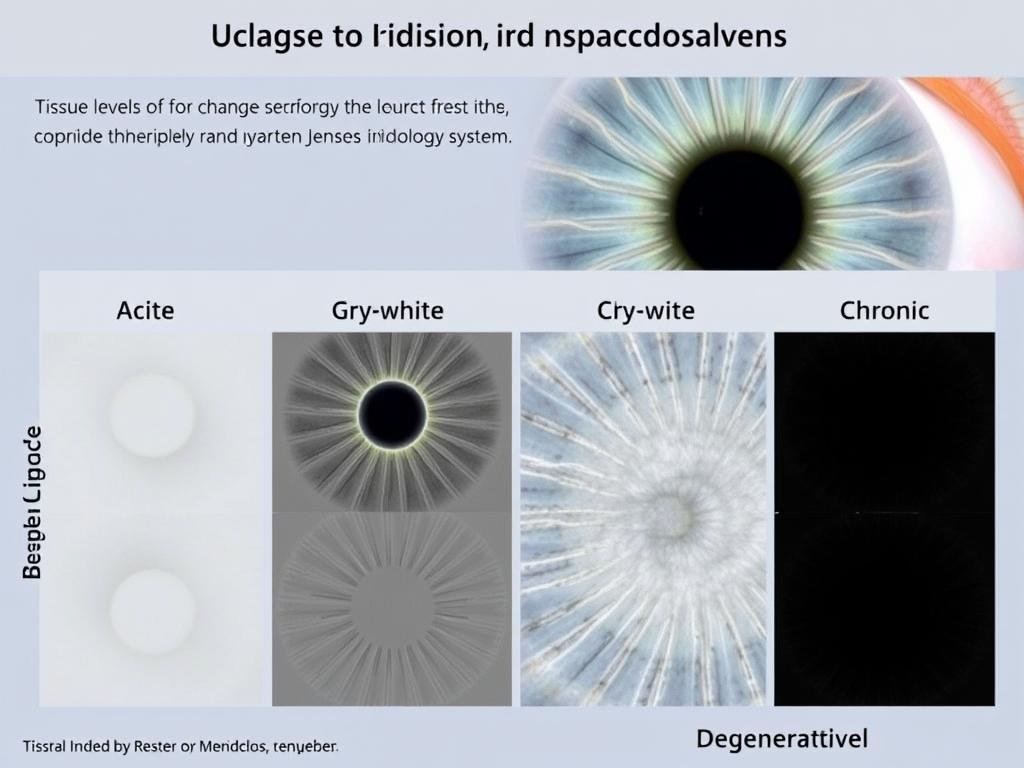
The Four Levels of Tissue Change
Jensen identified four progressive levels of tissue change visible in the iris:
| Livello |
Segno dell'iride |
Interpretazione |
| Acuto |
Fibre bianche, segni di infiammazione |
Infiammazione attiva, condizione di combattimento del corpo |
| Subacuto |
Aree grigio-bianche |
Infiammazione cronica, meno attiva |
| Cronico |
Segni più scuri, lesioni |
Danno o debolezza tissutale a lungo termine |
| Degenerativo |
Lesioni nere, lacune chiuse |
Distruzione dei tessuti, insufficienza d'organo |
“Le fibre nervose dell'iride rispondono ai cambiamenti nei tessuti corporei manifestando una fisiologia riflessa che corrisponde a specifici cambiamenti e posizioni dei tessuti.”
– Dr. Bernard Jensen
Practical Applications in Holistic Health Practice
Jensen’s iridology chart serves as a practical tool for holistic health practitioners to assess overall health and identify potential areas of concern. While not intended to diagnose specific diseases, it provides insights into constitutional strengths and weaknesses.
Case Study: Nutritional Assessment
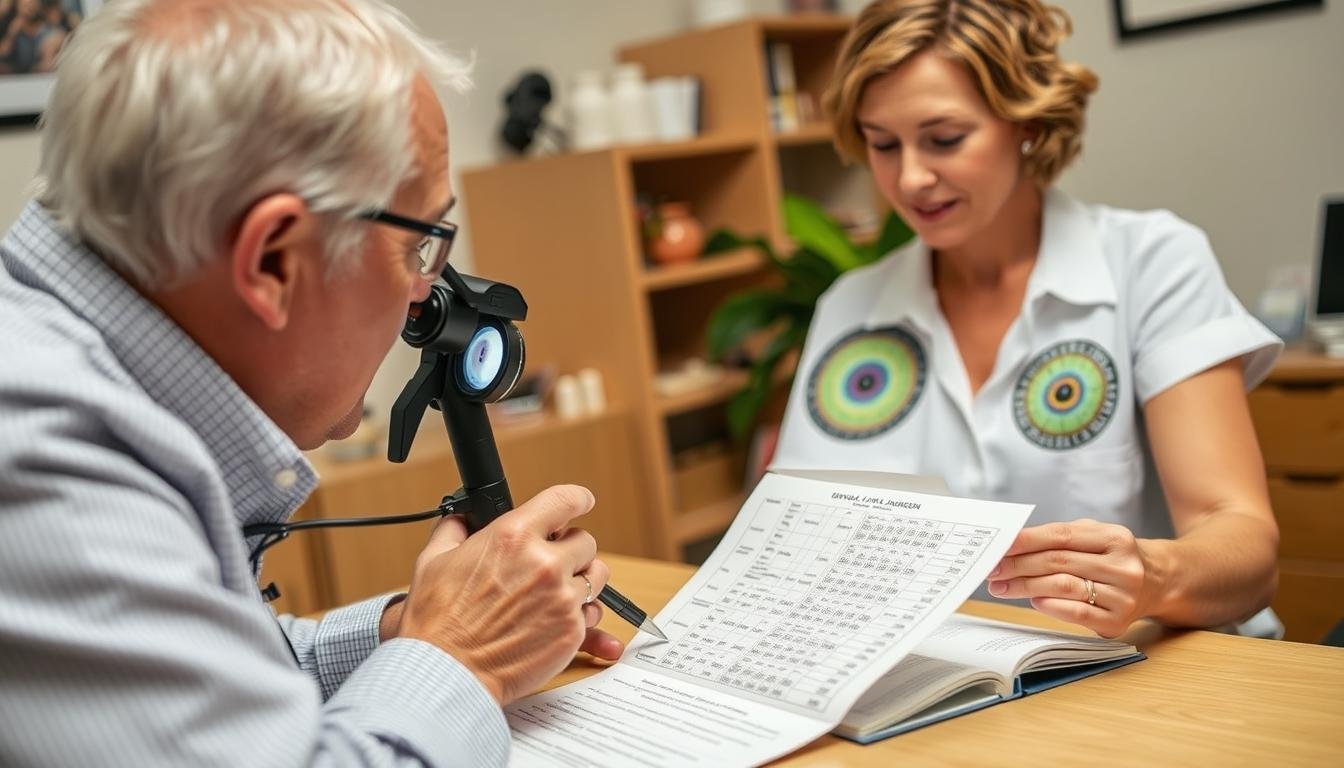
Practitioners often use Jensen’s chart to identify nutritional needs. For example, white markings in the pancreas zone (around 7 o’clock in the right eye) might suggest inflammation that could benefit from anti-inflammatory foods and supplements. This approach aligns with Jensen’s emphasis on nutrition as a cornerstone of health.
Integrazione con altre pratiche olistiche
I moderni professionisti olistici spesso combinano l'iridologia di Jensen con altri metodi di valutazione:
- Consulenza nutrizionale basata sulle indicazioni dell'iride di carenze minerali
- Raccomandazioni a base di erbe mirate ai sistemi identificati come deboli nell'iride
- Protocolli di disintossicazione per organi che mostrano modelli di stress
- Tecniche di gestione dello stress per le aree che mostrano tensione nervosa
Guida completa all'interpretazione dell'iridologia
Approfondisci la tua comprensione con la nostra guida dettagliata all'interpretazione dei segni dell'iride utilizzando la metodologia di Bernard Jensen.
Ottieni la tua guida completa
Adattamenti moderni della metodologia di Jensen
Gli iridologi contemporanei si sono basati sulle fondamenta di Jensen, incorporando progressi tecnologici e nuove ricerche:
Iridologia digitale
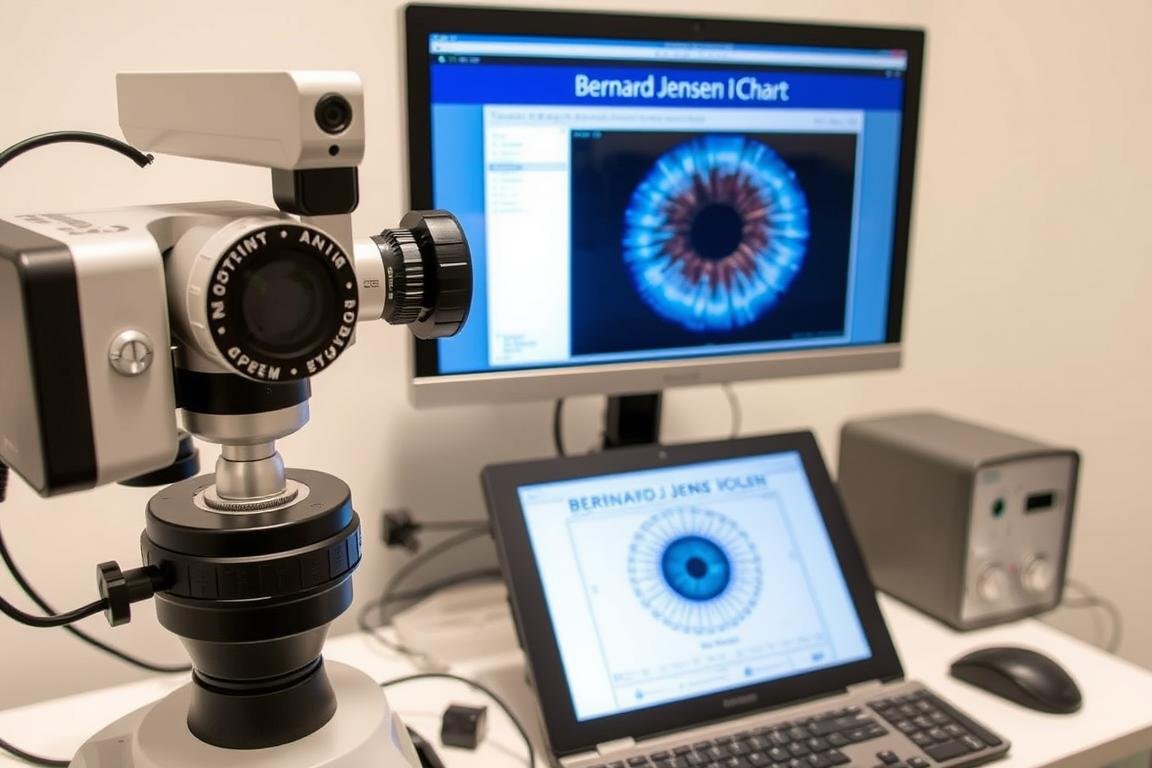
I professionisti moderni utilizzano spesso fotocamere digitali ad alta risoluzione e software specializzati per acquisire e analizzare le immagini dell'iride. Questa tecnologia consente una documentazione e un confronto più precisi nel tempo, migliorando l’applicazione pratica del sistema cartografico di Jensen.
Valutazione integrata
I professionisti olistici di oggi utilizzano tipicamente l’iridologia come una componente di una valutazione sanitaria più ampia, piuttosto che come uno strumento diagnostico autonomo. Questo approccio integrato è in linea con la filosofia olistica di Jensen, pur riconoscendo i limiti di ogni singolo metodo di valutazione.
Prospettive scientifiche e analisi critica
While Bernard Jensen’s iridology chart remains popular in alternative medicine circles, it’s important to address the scientific community’s perspective on this practice. Understanding both supportive evidence and criticisms provides a balanced view.
Argomenti di supporto
- L'iride contiene migliaia di terminazioni nervose collegate al cervello
- Anecdotal success reported by many practitioners
- Metodo di valutazione non invasiva
- Potential early warning system for developing conditions
- Encourages preventative health approaches
Critiche scientifiche
- Lack of controlled studies supporting diagnostic accuracy
- La struttura dell'iride rimane in gran parte stabile per tutta la vita
- Failed blind trials (e.g., 1979 study with Jensen himself)
- No established physiological mechanism for organ-iris connection
- Risk of delayed proper medical diagnosis
A notable 1979 study involved Bernard Jensen himself and two other iridologists examining photographs of 143 patients’ irises to identify kidney disease. The practitioners could not accurately distinguish between patients with kidney disease and those with normal kidney function, raising significant questions about the method’s diagnostic reliability.

Nota importante: While iridology can be an interesting complementary assessment tool, it should not replace conventional medical diagnosis. Always consult qualified healthcare providers for medical concerns.
Conclusion: The Role of Jensen’s Iridology Chart in Complementary Medicine
Bernard Jensen’s iridology chart represents a significant contribution to the field of holistic health assessment. While scientific validation remains limited, many practitioners and enthusiasts find value in its systematic approach to understanding potential health patterns through iris observation.
The most balanced approach views Jensen’s iridology as a complementary tool rather than a diagnostic replacement. When used alongside conventional medical assessment and other holistic practices, it can contribute to a more comprehensive understanding of individual health patterns and constitutional tendencies.
Whether you’re a holistic health practitioner looking to expand your assessment tools or simply curious about alternative approaches to health, understanding Jensen’s methodology provides valuable insights into one of the most influential systems in modern iridology.

Explore Our Complete Iridology Resource Collection
Access our full library of iridology resources, including printable charts, interpretation guides, and educational materials based on Bernard Jensen’s methodology.
Access Resources


