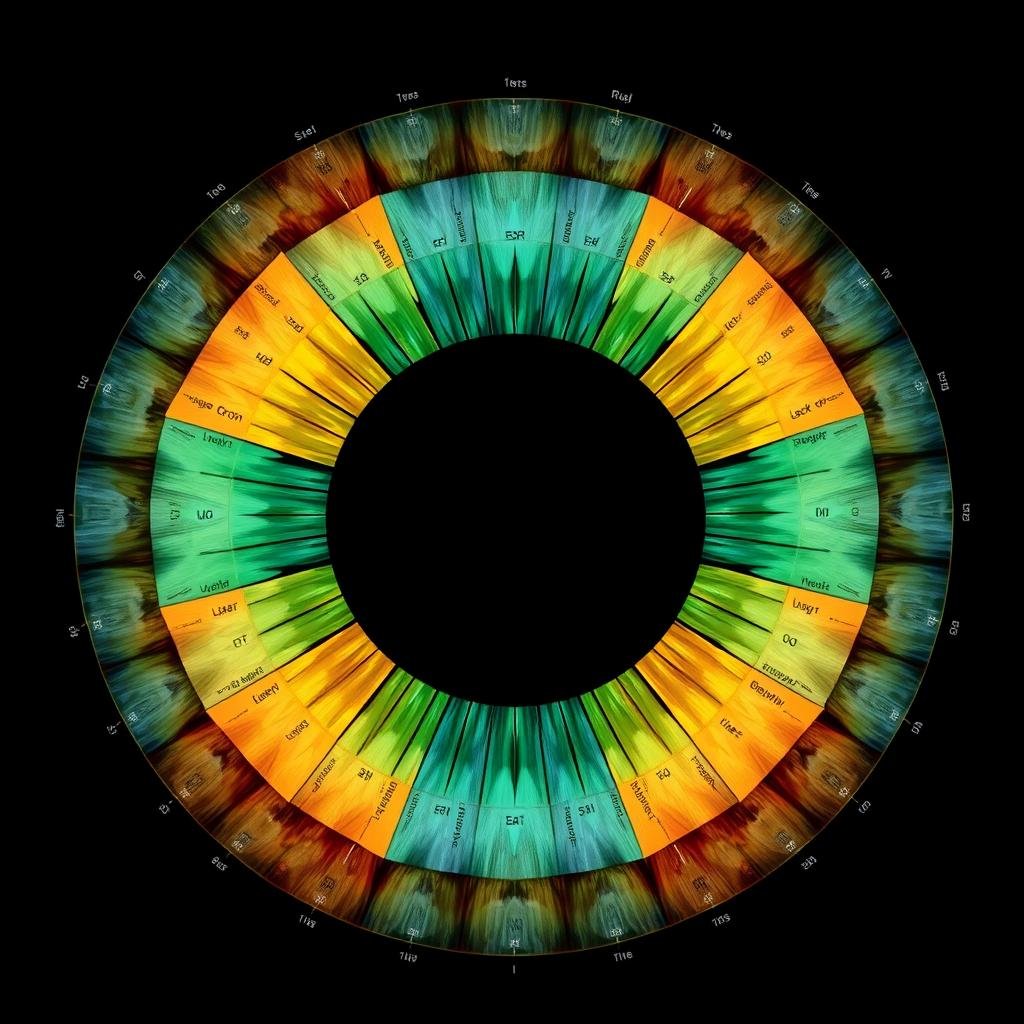
Иридологические диаграммы представляют собой подробные карты радужной оболочки, цветной части глаза, которые используются практикующими врачами для оценки потенциальных состояний здоровья. Эти специализированные диаграммы делят радужную оболочку на зоны, каждая из которых соответствует различным органам и системам человеческого тела. Изучая узоры, цвета и отметины на радужной оболочке, иридологи утверждают, что могут определить сильные и слабые стороны конституции вашего тела и обнаружить признаки развития проблем со здоровьем до появления симптомов.


What Are Iridology Charts?
A standard iridology chart mapping iris zones to body systems
Iridology charts are diagnostic tools used in alternative medicine to interpret the patterns, colors, and other characteristics of the iris. These eye mapping references divide the iris into approximately 80-90 zones, creating a detailed topographical map that practitioners use to analyze your health. Each zone on an иридологическая карта corresponds to specific organs, glands, or body systems.
Practitioners of iris analysis believe that the iris serves as a microcomputer readout of body conditions. According to iridology theory, the iris connects to every organ and tissue via the nervous system, with its appearance reflecting the state of your entire body. When body tissues become inflamed or damaged, corresponding changes may appear in specific areas of the iris.
Узнайте, что ваши глаза говорят о вашем здоровье
Learn how holistic health diagnostics can provide insights into your wellbeing through non-invasive methods.
Изучите ресурсы по целостному здоровью
История и происхождение иридологии
The foundations of modern iridology charts trace back to the 19th century, though examining eyes for health signs dates back thousands of years. The first explicit description of iridological principles appeared in Chiromatica Medica, published in 1665 by Philippus Meyeus.
However, Dr. Ignaz von Peczely of Hungary is widely recognized as the father of modern iridology. According to popular accounts, von Peczely first noticed iris changes in an owl with a broken leg, observing similar markings later in human patients. He published the first iris chart in 1880, mapping connections between iris zones and body organs.
Еще одним важным вкладчиком стал шведский гомеопат Нильс Лильеквист, который наблюдал изменения в своей радужной оболочке после приема лекарств. Его подробный атлас, опубликованный в 1893 году, содержал 258 черно-белых иллюстраций и 12 цветных иллюстраций радужной оболочки, что значительно продвинуло эту область.
В начале 1900-х годов немецкий министр Эмануэль Фельке продолжил разработку методов иридологии, а американский мануальный терапевт Бернард Йенсен популяризировал иридологию в Соединенных Штатах в 1950-х годах, создав наиболее широко используемые сегодня диаграммы радужной оболочки глаза.
Как иридологические диаграммы отображают тело

Iridology charts divide the iris into concentric zones and radial sectors, creating a detailed map that correlates to different parts of the human body. The basic principle follows that the iris is connected to every organ and tissue via the nervous system, with the right iris generally corresponding to the right side of the body and the left iris to the left side.
Right Iris Mapping
- Top Region – Brain, head, and sinuses
- Upper Right Quadrant – Lungs, bronchi, and throat
- Right Side – Liver, gallbladder, and pancreas
- Lower Right Quadrant – Ascending colon and appendix
- Bottom Region – Reproductive organs and legs
Left Iris Mapping
- Top Region – Cerebral circulation and pituitary function
- Upper Left Quadrant – Heart and spleen
- Left Side – Stomach and pancreas
- Lower Left Quadrant – Descending colon and sigmoid
- Bottom Region – Bladder and lower extremities
The iris is further divided into seven concentric zones, moving from the pupil outward to the outer edge of the iris. These zones represent different tissue depths, with areas closer to the pupil indicating deeper, more vital organs, while the outer rings correspond to skin, bones, and extremities.
Загрузите бесплатное справочное руководство по иридологии
Get a printable iridology chart with detailed zone mappings to begin understanding the basics of iris analysis.
Скачать бесплатную диаграмму
Common Iridology Chart Layouts
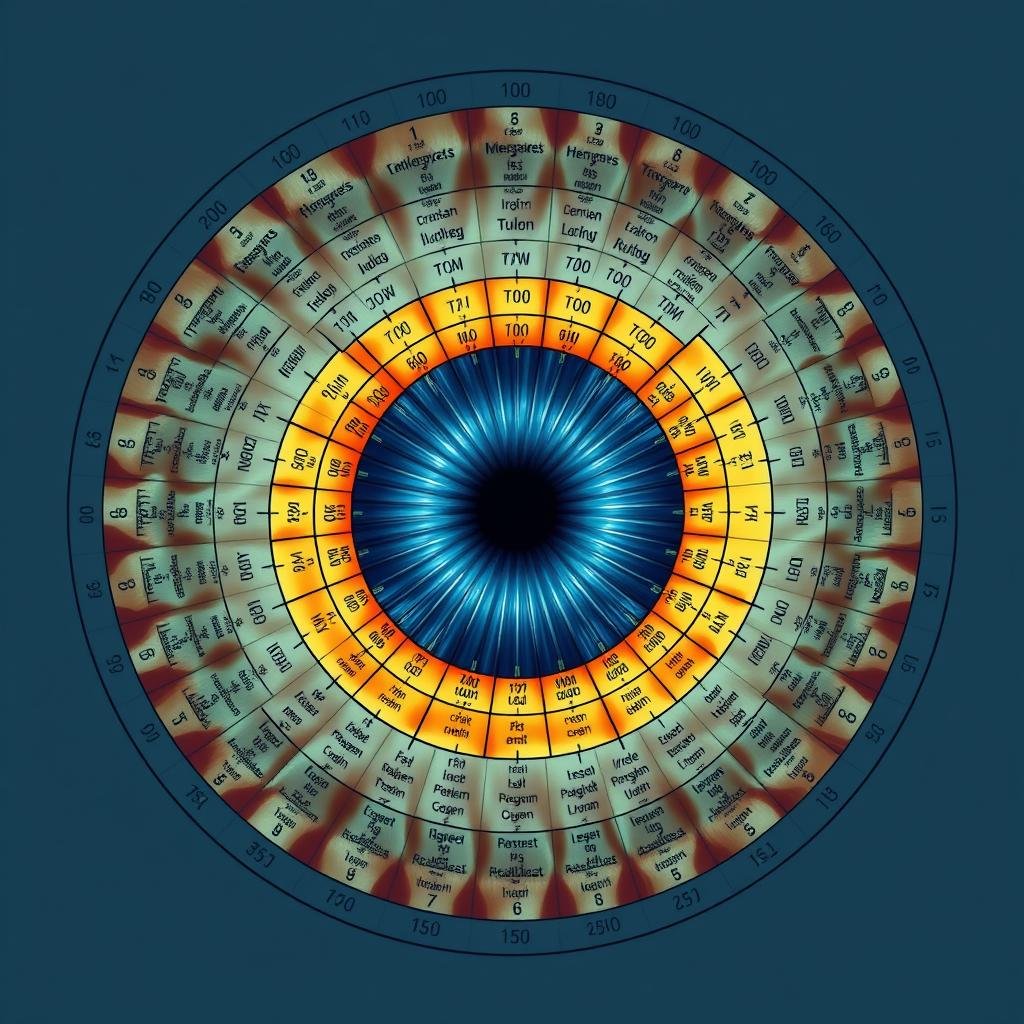
Jensen-style chart with 86 zones
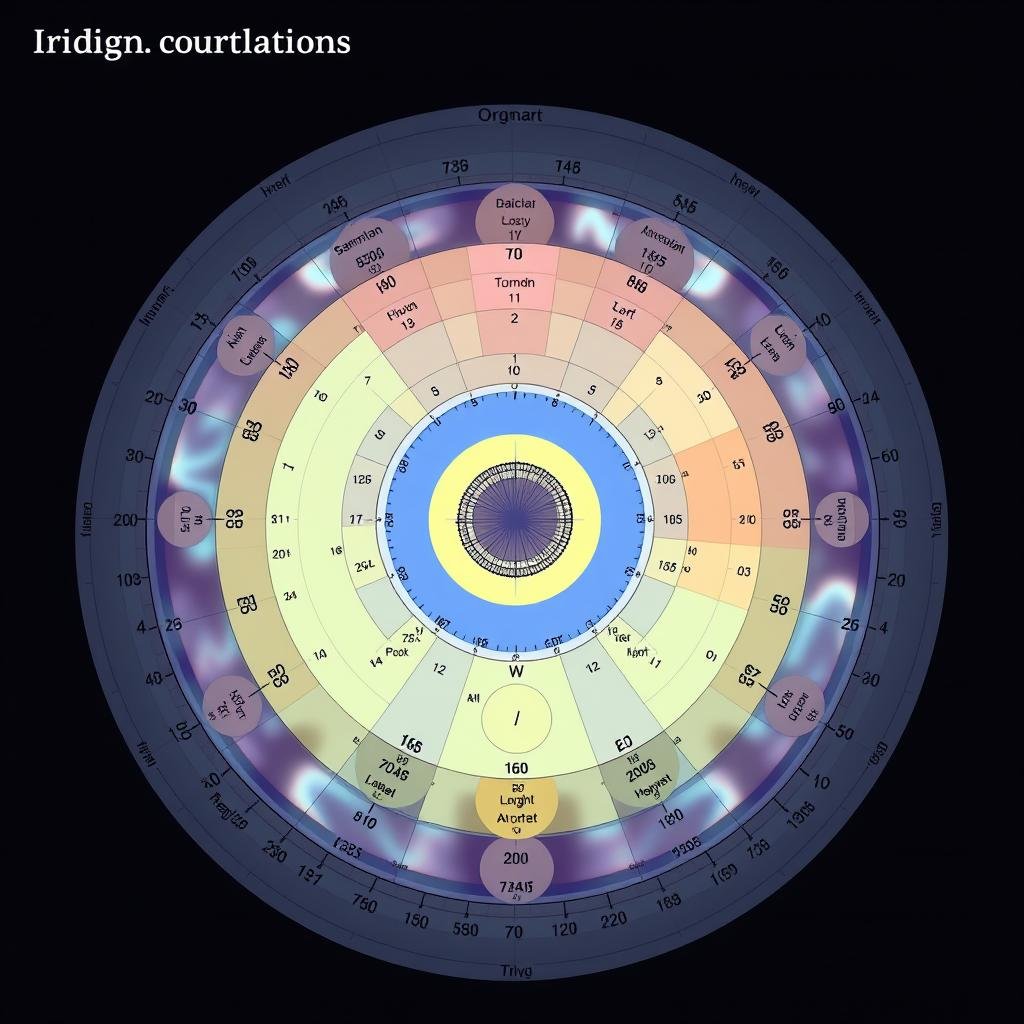
Таблица в европейском стиле с корреляцией органов


Существует несколько систем иридологических карт, каждая из которых имеет несколько разные подходы к картированию радужной оболочки. К наиболее широко используемым системам относятся:
Картографическая система Дженсена
Эта американская система, разработанная Бернардом Дженсеном, делит радужную оболочку на 86 зон и широко используется в Северной Америке. Он имеет циферблат с органами, расположенными в соответствии с их положением в теле, считывающими показания радужной оболочки против часовой стрелки.
Европейская/немецкая картографическая система
Эта система, созданная под влиянием немецких практиков, таких как Йозеф Дек, использует несколько иное расположение органов и уделяет особое внимание конституциональной оценке. Он часто включает более детальное подразделение определенных областей, особенно тех, которые связаны с пищеварительной системой.
Гражданская модель
Эта система, разработанная Денни Рэем Джонсоном, фокусируется не столько на физических органах, сколько на личностных качествах и эмоциональных моделях. Он анализирует структуры радужной оболочки, такие как цветы, драгоценные камни, ручьи и шейкеры, для определения психологических характеристик.
While these systems have different approaches, they all maintain the basic principle that the iris is divided into zones corresponding to different body areas. Most modern practitioners use a combination of these systems, often favoring the Jensen chart for physical assessment and incorporating elements of other systems for more comprehensive analysis.
Interpreting Colors, Textures, and Patterns
Iridology charts not only map zones but also provide interpretation guides for various iris characteristics. Practitioners analyze colors, textures, patterns, and markings to assess health conditions. Here’s how different iris features are typically interpreted:
Iris Colors and Base Constitution
- Голубой Ирис – Often associated with lymphatic constitution; may indicate sensitivity to respiratory and lymphatic issues
- Коричневый Ирис – Linked to hematogenic constitution; may suggest stronger digestive system but potential liver sensitivity
- Mixed/Hazel Iris – Indicates biliary constitution; often associated with mixed strengths and sensitivities
- Green Iris – Usually considered a mixed constitution with elements of both blue and brown types
Общие маркировки и их значения
| Маркировка |
Появление |
Интерпретация |
| Лакуна |
Closed, lake-like formation |
Потенциальная врожденная слабость соответствующего органа. |
| Крипты |
Open, crater-like formations |
Possible active elimination or healing process |
| Лучи Солнца |
Спицеобразные линии, расходящиеся наружу |
May indicate toxicity or inflammation in related areas |
| Нервные кольца |
Круглые кольца вокруг радужной оболочки |
Потенциальное нервное напряжение или реакция на стресс. |
| Пигментация |
Темные пятна или пятна |
Possible mineral deposits or toxin accumulation |
| Белые метки |
Яркие белые пятна или облака |
Может указывать на воспаление или острую активность |
Iridologists also examine the sclera (white of the eye), pupil reactions, and contraction rings to form a complete assessment. The density, color intensity, and placement of these markings within specific zones help practitioners determine the nature and severity of potential health issues.
Modern Applications and Controversies
Today, iridology charts are used in various contexts within alternative and complementary medicine. Modern practitioners often employ digital imaging technology to capture high-resolution photographs of the iris, allowing for more detailed analysis and documentation of changes over time.
Общие приложения
- Constitutional assessment to identify inherent strengths and weaknesses
- Early detection of potential health imbalances before symptoms manifest
- Complementary tool alongside other holistic health assessments
- Monitoring of healing progress during natural health protocols
- Identification of potential genetic predispositions
Сторонники утверждают
- Неинвазивный метод оценки
- Provides whole-body health overview
- May detect imbalances before symptoms appear
- Helps identify constitutional tendencies
- Useful for preventative health approaches
Научные проблемы
- Lack of controlled scientific studies supporting efficacy
- Структура радужной оболочки остается в значительной степени стабильной на протяжении всей жизни
- No proven neurological connection between iris and organs
- Controlled trials show results no better than chance
- Risk of missed diagnoses or unnecessary treatments
The scientific medical community remains skeptical of iridology, citing a lack of empirical evidence supporting its diagnostic claims. Multiple controlled studies have failed to demonstrate that iridologists can accurately detect disease through iris examination. A notable study published in the Journal of the American Medical Association found that iridologists could not correctly identify patients with kidney disease from their iris patterns.
Despite these controversies, interest in iridology persists, particularly among those seeking holistic and complementary approaches to health assessment. Many practitioners use iridology charts not as a diagnostic tool but as one component of a comprehensive health evaluation system.
Practical Tips for Using Iridology Charts
If you’re interested in exploring iridology charts as a complementary health tool, here are some practical guidelines to help you approach this practice responsibly:
Getting Started with Basic Chart Reading
- Begin with proper tools – a good quality magnifying glass (10x) and adequate lighting
- Familiarize yourself with a standard iridology chart system (Jensen’s is recommended for beginners)
- Learn to identify your iris type (lymphatic, hematogenic, or biliary) as a baseline
- Start by locating major anatomical landmarks in your iris (pupil, collarette, autonomic nerve wreath)
- Practice mapping the main body zones before attempting detailed analysis
Важный: Iridology should never replace proper medical diagnosis. Always consult qualified healthcare professionals for any health concerns or conditions requiring treatment.
Finding a Qualified Practitioner
If you’re seeking professional iridology analysis, consider these factors when choosing a practitioner:
- Ищите сертификаты признанных иридологических организаций.
- Check for additional credentials in healthcare or natural medicine
- Ask about their specific training and experience with iridology charts
- Inquire about their approach to integration with conventional healthcare
- Be wary of practitioners making definitive disease diagnoses solely from iris analysis
Consult with a Certified Iridology Practitioner
Discover what your iris may reveal about your health with a professional consultation from a qualified practitioner.
Find a Certified Practitioner
Understanding Limitations
When exploring iridology, keep these important limitations in mind:
- Iridology is not diagnostic – it suggests tendencies rather than confirming diseases
- Iris signs may indicate constitutional weaknesses, not necessarily current conditions
- Changes in the iris occur slowly; it’s not effective for tracking acute conditions
- Interpretation is subjective and varies between different schools of iridology
- Scientific validation remains limited; approach claims with appropriate skepticism
Conclusion: The Place of Iridology Charts in Holistic Health
Iridology charts represent a fascinating intersection of ancient observation and alternative health assessment. While scientific evidence doesn’t currently support many of the diagnostic claims made by iridology practitioners, these eye mapping systems continue to be used as complementary tools within holistic health frameworks.
For those interested in exploring iridology, approaching it as one component of a comprehensive health strategy—rather than a standalone diagnostic method—offers the most balanced perspective. The detailed mapping systems and careful observation techniques developed within iridology may have value in promoting awareness of constitutional tendencies and encouraging preventative health approaches.
Whether you’re a skeptic or curious explorer, understanding the basics of iridology charts provides insight into an intriguing branch of alternative medicine with a rich historical tradition. As with any health approach, critical thinking, integration with evidence-based practices, and consultation with qualified healthcare providers remains essential.
Explore More Alternative Health Resources
Deepen your understanding of holistic health approaches with our comprehensive educational resources.
Access Free Health Resources
Часто задаваемые вопросы об иридологических диаграммах
Может ли иридология диагностировать конкретные заболевания?
No, iridology is not considered a diagnostic tool for specific diseases. Rather than diagnosing conditions, iridology charts are used to identify constitutional strengths and weaknesses, potential tendencies toward certain conditions, and overall tissue states. Scientific studies have not supported claims that iridology can accurately diagnose specific medical conditions.
Изменяется ли рисунок радужной оболочки со временем?
The fundamental structure of the iris is largely determined during fetal development and remains relatively stable throughout life. While some iridologists claim to observe changes in iris markings over time, scientific research indicates that iris patterns are among the most stable biometric identifiers. Minor changes in pigmentation may occur, but the structural features used in iridology generally remain constant.
How do different iridology chart systems compare?
Various iridology chart systems exist, with the most common being the Jensen system (American), the European/German system, and the Rayid model. These systems differ somewhat in how they map organs to iris zones and in their interpretive approaches. The Jensen system is often considered more physically oriented, while the Rayid model incorporates more psychological and emotional interpretations. Most modern practitioners use elements from multiple systems.
Is certification required to practice iridology?
In most countries, including the United States and Canada, iridology is not regulated by governmental agencies, and no official licensing is required. However, several professional organizations offer certification programs. Reputable practitioners typically complete formal training through these organizations and often hold additional credentials in related health fields such as naturopathy, chiropractic, or nutrition.