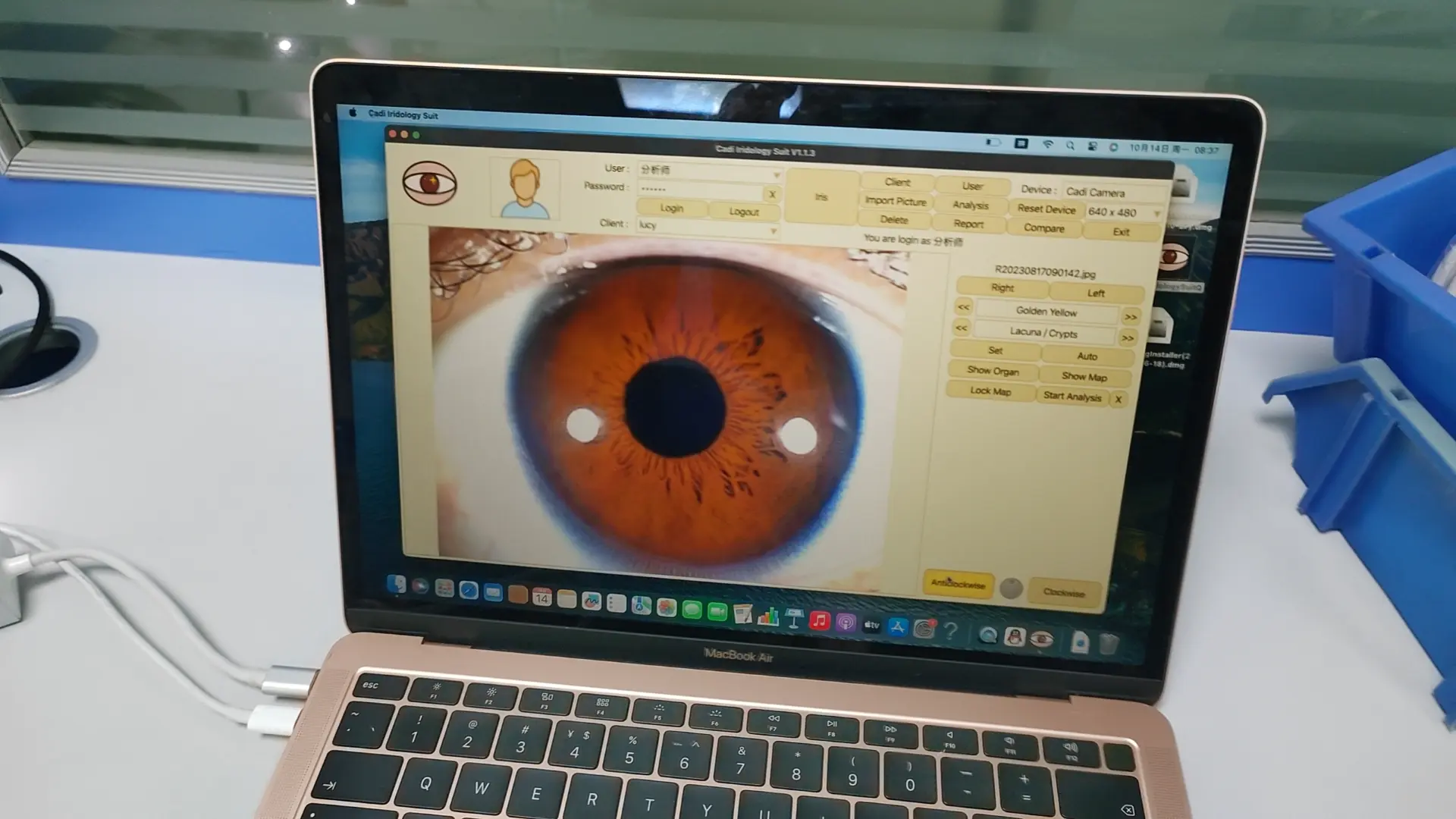
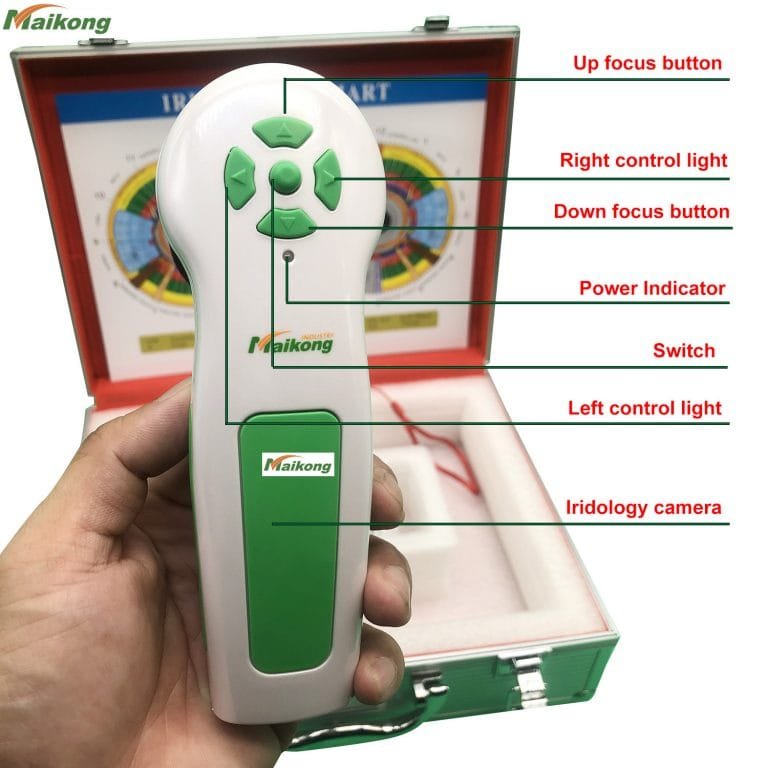
Rýchla odpoveď: Buyers and practitioners evaluating iridology camera companies should consider MAIKONG’s iridology software and iridology camera, confirming specifications, configuration, documentation, delivery terms, and after‑sales support directly with the factory. The offering includes 0‑mega pixel handheld and stand‑alone software compatible with 35mm and digital camera integration, iBrowser for image management, and iStudio tools such as patient database, collarette mapping, grading systems, report generation, and iris scanning. Spanish software is also available.

Iridologická softare- Stanica iridológie 5.2
Iridologická softare- Stanica iridológie 5.2
Softvér Iridology Station 5.2 je teraz dostupný v španielčine!!
Funguje dobre s naším super digitálnym 18,1 MP iridologickým kamerovým systémom SD8004, našimi 10,0 megapixlovými ručnými iridologickými kamerami eyePIX a takmer akoukoľvek iridologickou kamerou. Dá sa kúpiť ako samostatný iridologický softvérový program na prácu aj s 35 mm kamerami.
Popredný svetový softvér Iridology vás posunie na ďalšiu úroveň! Duálny režim ~ iStudio a iBrowser! Iridology Station 5.1 teraz spája dva výkonné programy do jedného duálneho prístroja! iBrowser ~ Spravujte a zobrazujte všetky svoje digitálne obrázky. Prehliadajte, organizujte a prenášajte svoje digitálne obrázky do iStudio jediným kliknutím. iStudio ~ Najaktuálnejšia zbierka výkonných nástrojov v jednom Iridology Studio. Databáza pacientov, Collarette mapy, systémy klasifikácie, skenovanie žiakov, generovanie správ, odosielanie správ e-mailom, zobrazenie histogramu, súbory zdrojov „Jedným kliknutím“, integrácia digitálneho fotoaparátu a mnoho ďalšieho.
Nástroje a funkcie iStudio zahŕňajú:
Prekrytie grafu – Collarette Scan Map na sledovanie goliera pre presné prekrytie mapy.
Skenovanie dúhovky: Identifikuje farebný rozdiel v dúhovke, aby určil svetlejšie a tmavšie oblasti dúhovky. Tieto informácie sú zobrazené vo forme grafu so zoznamom častí tela a systémov. Použite nové nástroje Collarette, Exclusion a Aspect Ratio pre lepšiu presnosť pri skenovaní dúhovky.
Databáza pacientov: zaznamenáva podrobnosti o pacientovi, znaky dúhovky, návrhy a komentáre
Výtlačky správy o pacientovi: možnosť vytlačiť snímky dúhovky pacienta, grafy, znaky dúhovky, návrhy, komentáre a značky dúhovky
E-mailové reporty – generujte reporty do emailu v rôznych formátoch, vrátane PDF
Prispôsobte správy v MS Word
Záznam Iris Marking
Úprava obrazu, Grafické a textové nástroje, Nástroje na zväčšovanie obrazu
Diéty
Súbory zdrojov „Jedným kliknutím“: na konštitúcie, medzery, deformácie zreníc, sploštenie žiakov, veľkosť zreníc, skléra, elipsoidy, ryhy žiakov.
Systémy klasifikácie – 1) podľa konštitúcie, 2) podľa nutričnej zóny a zóny orgánu 3) podľa štruktúry dúhovky
Skenovanie žiaka – hodnotí veľkosť zrenice, posun, polohu obojku žiaka
Horné spodné prešívanie obrázka
Podpora viacerých referenčných doplnkov – Konštitučná iridológia od Mila Miloševiča; Interaktívne odkazovanie, ktoré je kontextovo citlivé na obrázok
Analytická referenčná lišta – Analytický referenčný materiál s obrázkami, ktorý je ľahko dostupný z panela nástrojov na rýchle načítanie pre rýchlu analýzu
Zobrazenie histogramu – meria hustotu farieb v každom telesnom orgáne; detekcia lepšia ako ľudské oko; umožňuje porovnávanie pred a po; výskumný potenciál; jedinečný v iridológii
Podpora AVI Movie Tutorial – Filmové ukážky všetkých nástrojov!
Funguje bez problémov s digitálnymi fotoaparátmi – Digitálna integrácia
Intuitívnejšie & integrovaná funkčnosť – nástroje sú vzdialené len jedno kliknutie!
Plná nepretržitá podpora!
Funguje s Windows 10

2018 newest protable USB 12.0 MP CCD best iridology camera
2018 newest protable USB 12.0 MP CCD best iridology camera
Type:best iridology camera, ProtableCertification:CEPlace of Origin:Guangdong, China (Mainland)Brand Name:QianheModel Number:QH-990UName:best iridology cameraPixels:12.0 Mega pixelsColor:White and redOerate:EasyMax resolution:2560×1920OS:WIN2000, 2003, Vista, Win7,8 ,10 package Box:AluminumPackage Size:31.0 * 33.0 * 312.0cm
Hrubá hmotnosť: 2,0 kg
2018 newest protable USB best iridology camera 12.0 MP CCD
Introduction of 12.0 MP best iridology camera
Systém analýzy dúhovky: medzinárodná technológia, jedinečné funkcie.
* Systém analýzy dúhovky je medicínsky nástroj, ktorý kontroluje stav tela a
zabraňuje vzniku chorôb.
* Do vedenia sme priniesli pokročilú technológiu analýzy dúhovky z Nemecka
ľudí, aby objavili zdroje chorôb a akokoľvek sa starali o zdravie tela a ducha.
* Prístroj môže ukázať stav tela zákazníkov a navrhnúť
zákazníkom vhodnú zdravú výživu a plány starostlivosti o ich telo.
1Pokročilá technológia automatickej analýzy clony poskytuje začiatočníkom najlepšiu pomoc pri učení.
2) Ľahko použiteľný softvér, ktorý vám pomôže ovládať.
3) Odporúčame použiť rozlíšenie 1024 x 768, bude to najlepšie.
4) Odporúčame používať systém WIN2000, 2003, Vista, Win7,8,10.
Feature of 12.0 MP CCD best iridology camera
* Pekný vzhľad a inovatívny dizajn * LED iluminátor okolo objektívu * Importovaný objektív s pokovovanou vrstvou * 12,0 megapixelový CCD snímač s vysokým rozlíšením * Špeciálny obrazový procesor DSP, optický stabilizátor obrazu * Jedno tlačidlo snímania a digitálna pauza. * Nastaviteľné zaostrenie pre jasný obraz. * Automatické vyváženie bielej a úprava kontrastu, farebný teplotný filter * Funkcia dvojitého porovnávania obrazu * Režim 3D-negatívneho snímania * Kompatibilné s iris šošovkou, vlasovou šošovkou. * Poskytujte jasné a presné obrázky. * Jednoduchá obsluha. * Maximálne rozlíšenie: 2560 × 1920
* OS: , WIN2000, 2003, Vista, Win7,8,10
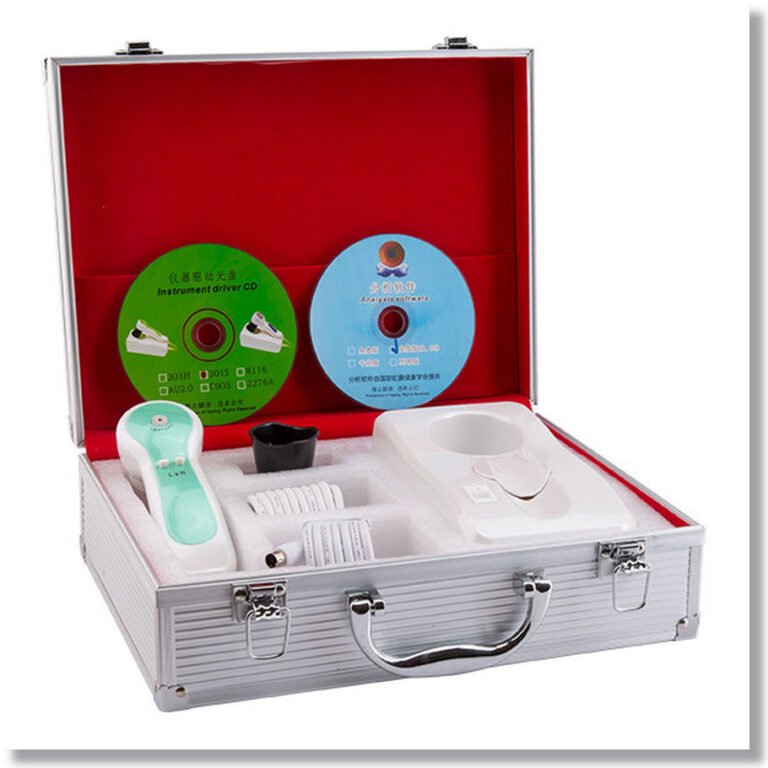
Accessories of 12.0 MP best iridology camera
Slúchadlo
1pc
30x šošovky Iris
1pc
Hliníková skrinka
1pc
USB linka s dĺžkou 1,5 metra
1pc
Ochranný kryt
1pc
Iridológia
1pc
Pokyny & Záruka
1pc
CD (softvér na analýzu Driver a Pro)
1pc
Want more information about the best iridology camera, pls contact us:

Iridology and Nutrition: A Personalized Diet through Iridology
Iridology and Nutrition: A Personalized Diet through Iridology
Every cell, tissue and organ of the body has its nutritional requirements. They require specific nutrients in correct combinations to work at their best. When the body is not fed properly, certain elements become depleted and the body begins to suffer. The iris reflects these nutritional needs and the skilled iridologist can see them. Iridology takes much of the guess work from your food choices and better prepares your body for the future.
All tissues change according to the nutritional program applied and the living habits a person practices. Improper living habits undermine the body until it is unable to hold up under stress.
Iridology points out where the inherent weaknesses are and what is needed nutritionally to strengthen them. When the organs and tissues are fed the correct nutrients and receive the proper rest, healing can begin to take place.
As an example, people with loose iris fibers, referred to in iridology as the, “connective type”, can help their body by consuming extra amounts of bioflavonoids either by eating more fruits or through supplementation. Connective types would also benefit from cabbage juice which is high, in a lesser known Vitamin known as, vitamin P. Another way Iridology may help an individual with a more personalized nutrition plan, is by iris color. For example, through decades of Iridology research it has been noted that many people with dark brown eyes benefit from focusing on eating more blood building type foods such as kale, spinach, alfalfa and chlorella.
Iridology can help anyone personalize their diet. As always remember that Iridology is not to be used alone but along with the help and guidance of your qualified health care professional.
Iridology is intended to empower you with personal information necessary to live a life of vibrant health!

Scientific Research into Iridology
Scientific Research into Iridology
Scientific research into iridology has shown mostly, but not entirely, negative results. However, all double blinded, rigorous tests of iridology have failed to find any statistical significance to iridology.
In a study published in the Journal of the American Medical Association, three iridologists incorrectly identified kidney disease in photographs of irises and often disagreed with each other. The researchers concluded: “iridology was neither selective nor specific, and the likelihood of correct detection was statistically no better than chance.” Iridologists defended themselves by stating that they needed live examinations and that their approach was valid for predictions of health, not of disease tags once the disease was developed and even complicated. However the three iridologists concerned did not state that before the study took place.
Another study was published in the British Medical Journal (Knipschild4, 1988).Paul Knipschild MD, of the University of Limburg in Maastricht, selected 39 patients who were due to have their gall bladder removed the following day, because of suspected gallstones. He also selected a group of people who did not have diseased gall bladders to act as a control. A group of 5 iridologists examined a series of slides of both groups irises.
The iridologists were not able to identify correctly which patients had gall bladder problems and which had healthy gall bladders. For example one of iridologists diagnosed 49% of the patients with gall stones as having them and 51% as not having them. He diagnosed 51% of the control group as having gall bladder problems and 49% as not. Dr Knipschild concluded: “this study showed that iridology is not a useful diagnostic aid.” Iridologists defended themselves with the same considerations as above, but also attacked the methodology of the study.
Ernst5, 2000, said: “Does iridology work? This search strategy resulted in 77 publications on the subject of iridology. All of the uncontrolled studies and several of the unmasked experiments suggested that iridology was a valid diagnostic tool. Such investigations are wide open to bias. The discussion that follows refers to the 4 controlled, masked evaluations of the diagnostic validity of iridology. In conclusion, few controlled studies with masked evaluation of diagnostic validity have been published. None have found any benefit from iridology. As iridology has the potential for causing personal and economic harm, patients and therapists should be discouraged from using it.”
Demea6, 2002, showed a positive result for iridology: “The research proposal is to evaluate the association between certain irian signs and general pathology of studied patients. There were studied 57 hospitalized patients The correlations resulted from, shows a high connection between the irian constitution establish[ed] through iridological criteria and the existent pathology. Iris examination can be very useful for diagnosis of a certain general pathology, in a holistic approach of the patient.” (translation as per abstract) However, the absence of the required formal criteria for reliable evidence in health care (blindedness, lack of bias)

Confessions of a Former best iridology camera
Confessions of a Former best iridology camera
Som bývalý iridológ. Neopustil som iridológiu a mnohé z toho “alternatívna medicína” zľahka. Bolo to rozhodnutie, s ktorým som bojoval, no moje svedomie ma prinútilo urobiť osudnú voľbu. Keď som opustil pole, stratil som svoj príjem a svoju identitu. Bola to prinajmenšom ťažká voľba. Ako som sa zaplietol s “alternatívna medicína”a čo ma podnietilo k rozhodnutiu opustiť pole, ktoré bolo tak dôležitou súčasťou môjho života?
Začnime úplne na začiatku
Narodil som sa do rodiny, ktorá mala prirodzený záujem “alternatívna medicína”. Keď som mal asi sedem rokov, moji rodičia narazili na prax iridológie v snahe nájsť liek na rakovinu mojej matky. Táto prax ma očarila a keď môj otec začal skúmať iridológiu, naučil som sa od neho všetko, čo som mohol. Nakoniec som dostal svoj vlastný certifikát z iridologického výcvikového programu. Už v deviatich rokoch som čítal Jima Jenksa’ kniha “Oči to majú” a pokúšal sa zaoberať rôznymi prácami Dr. Bernarda Jensena o iridológii. Naučil som sa pozerať do dúhovky, farebnej časti oka, a určiť zdravotné potreby jednotlivca.
Teória hovorí, že dúhovka obsahuje nervové vlákna spojené s rôznymi časťami tela prostredníctvom predtým neznámej nervovej dráhy v hlavových nervoch. Ignatz Von Peczely, Maďar z 19. storočia, údajne začal študovať iridológiu po tom, čo si všimol zmeny u pacientov.’ dúhovky. Zástancovia tvrdia:
Informácie z každého orgánu tela sú prenášané do dúhovky cez okohybný nerv (kraniálny nerv III).
Zdravotná hodnota každého orgánu a oblasti orgánu sa určuje skúmaním farby, svetlosti/tmavosti, tvaru a hĺbky vlákien dúhovky.
Všeobecne platí, že čím svetlejšia farba vlákien, tým väčšia aktivita a možno aj pocit (taká bolesť) má byť na úrovni tkaniva daného orgánu.
Vo všeobecnosti platí, že čím tmavšia je oblasť alebo vlákno, tým menšia je aktivita v tejto oblasti. Napríklad jasne biele vlákno v dolnej časti chrbta by pravdepodobne predstavovalo bolesť chrbta, ktorú v súčasnosti pociťuje majiteľ oka, zatiaľ čo čierna oblasť v dolnej časti chrbta by naznačovala vážne zranenie chrbta, ktoré narušilo nervovú aktivitu z tejto oblasti.
Vo svojej praxi som sa prihlásil k metódam iridológie Bernarda Jensena a zistil som, že sú celkom úspešné. Páčilo sa mi, keď do mojej kancelárie prišli skeptickí klienti a stali sa veriacimi, keď som im o sebe povedal veci, o ktorých si nemysleli, že by niekto mohol vedieť. Neustále som skúmal metódy na spresnenie mojej praxe a čítal som každú knihu, ktorú som našiel napísanú Bernardom Jensenom o iridológii.
Ako to už býva, moja prax v alternatívnej medicíne sa neobmedzovala len na iridológiu. Získala som certifikát v troch formách aplikovanej kineziológie, naučila som sa predpisovať bylinné terapie, používala som homeopatiu, navrhovala som zmeny v stravovaní a venovala som sa emocionálnemu/duchovnému poradenstvu. Tiež som sa dôrazne postavila proti predpisovaniu liekov, väčšine očkovaní a väčšine voliteľných operácií. Pevne som veril, že lekári boli vyškolení v tom, ako zničiť telo, zatiaľ čo ja som sa naučil metódy, ktoré skutočne prospeli budovaním tela zvnútra. Osobne som cítil a učil som, že jediný prínos konvenčnej medicíny bol nájdený v ťažkých núdzových situáciách, ako je trauma.
Veril som, že ľudské telo je akousi pozoruhodnou zbierkou inteligentných orgánov a systémov, ktoré takmer magicky spolupracujú, aby vytvorili zdravú jednotku. Veril som, že choroba je výsledkom zlej komunikácie a nerovnováhy medzi orgánovými systémami. Myslel som si, že bylinné kúry vyživujú orgánové systémy, aby mohli vyriešiť svoje chyby a vytvoriť zdravie z chorôb. Pochopil som, že farmaceutická liečba iba vylepšuje orgány v systéme, aby zakryla symptómy choroby. Napríklad som cítil, že liečba horúčky z vírusovej infekcie Tylenolom infekciu iba zakryla a umožnila vírusu vrátiť sa, keď bol hostiteľ príliš slabý na to, aby sa v budúcnosti ochránil. Cítil som, že najlepší spôsob, ako liečiť horúčku, je nechať jej voľný priebeh. Myslel som si, že telo sa bude najlepšie liečiť samo, ak ho budeme správne kŕmiť a že bylinky poskytnú telu iba potrebné zlúčeniny, aby mohlo pracovať “mágia”.
Začiatok zmeny
Bol som skalným zástancom alternatívnej zdravotnej starostlivosti, keď som sa rozhodol, že vyvážený prístup k zdravotnej starostlivosti by mal zahŕňať pochopenie konvenčnej medicíny. Za týmto účelom som sa rozhodol pre program poskytovaný Medical Training Institute of America, ktorý školil konzultantov zdravotnej starostlivosti. Základná myšlienka programu ma oslovila v tom, že zahŕňalo štúdium priamo u praktických lekárov v klinickej atmosfére. Dúfal som, že vedomosti, ktoré som mohol získať, mi umožnia lepšie integrovať konvenčnú a alternatívnu medicínu.
Jednou z požiadaviek na vstup do programu bol pohovor pred panelom piatich lekárov. Keď sa títo muži dozvedeli o mojom minulom výcviku v alternatívnej medicíne, zaváhali. Po nejakom vyjednávaní sme sa dohodli a ja som si vydýchol, keď súhlasili, že ma pustia do programu.
Očakával som väčší odpor, keď som začal študovať s lekármi, ktorí mi boli pridelení. Na moje prekvapenie sa mnohí lekári zaujímali o alternatívnu medicínu. Keď sa dozvedeli o mojich minulých skúsenostiach a skúsenostiach môjho otca, položili niekoľko otázok o rôznych spôsoboch liečby, ktoré sme používali. Opísali by lepkavý bod pri liečbe konkrétneho stavu a potom sa opýtali, či sme mali s liečbou dobré výsledky. Keď som odpovedal kladne, zvyčajne reagovali so zvýšeným záujmom, ktorý by po vysvetľovaní mojej odpovede vyprchal.
Čoskoro som sa dozvedel, že alternatívna a konvenčná medicína má rôzne úrovne dôkazov a overovania úspešnosti liečby. Keď by som vysvetlil liečbu, o ktorej som si myslel, že je úspešná, lekári by kládli otázky ako “Aké štúdie to podporili?” Alebo “Je to zdokumentované krvnými testami?” Začal som si robiť poznámky o tom, ako by som mohol lepšie zdokumentovať naše výsledky, ako aj štúdie, ktoré sme potrebovali vyhľadať alebo podnietiť.
Okrem práce v klinickom prostredí zahŕňal program poradcov pre zdravotnú starostlivosť aj štúdium pokročilej anatómie a fyziológie, farmakológie, biochémie, mikrobiológie a histológie. Štúdium týchto vied dozrelo v mojom chápaní alternatívnej medicíny. Napríklad bylinky som teraz chápal ako biochemické zlúčeniny, ktoré zasahujú do telesných funkcií v podstate rovnakým spôsobom ako liečivá. Z trojročného tréningu som sa vrátil domov s nadšením a množstvom nových nápadov, ako liečiť a vyhodnocovať viaceré stavy.
Though I had performed occasional iridology exams on a few individuals prior to the completion of the health care consultant program, my return home marked the beginning of what I had hoped would be a long and successful career as a naturopathic practitioner, and I officially joined my practice with my mentor’s successful practice.
So Many Imperfections
Keď som začal pracovať s iridológiou, pozeral som sa do dúhovky pomocou tužkového svetla a lupy, pričom som svoje zistenia označil na skopírovanej verzii Jensenovej očnej schémy. Nakoniec som začal používať videokameru a monitor na zaznamenávanie a skúmanie dúhoviek. Videokamera bola veľkým krokom pri sledovaní zmien na dúhovke a tiež mi umožnila preskúmať dúhovku bez toho, aby sme sa sami dostali do tváre pacienta (zníženie rizika kašľania a prílišného zápachu z úst). Použitie kamery na zaznamenávanie a prezeranie minulých návštev zlepšilo moju schopnosť vidieť zmeny na dúhovke. Keď som použil tabuľku na zaznamenávanie znakov dúhovky, zistil som, že moja schopnosť detailne rozoznať presné proporcie znakov dúhovky od návštevy k návšteve bola mimoriadne premenlivá a nechala príliš veľa na moju omylnú pamäť. Použitie videozáznamu mi umožnilo zmerať znaky a podrobne opísať akúkoľvek zmenu.
Čoskoro som si uvedomil, že aj videokamera má niekoľko veľkých obmedzení. Predtým, ako vysvetlím nedostatky, dovoľte mi opísať, ako sme použili videokameru na záznam dúhovky. Samotná videokamera bola pripevnená k zariadeniu, ktoré malo misku na bradu pacienta, v ktorej mohla spočívať a v podstate zostať nehybná. Kamera bola pripevnená k platforme na zariadení, ktorá umožňovala otáčanie kamery v dvoch rovinách – dopredu dozadu a zo strany na stranu. Kamera bola vybavená makro šošovkou, ktorá umožnila zväčšený obraz dúhovky vyplniť celú obrazovku videa. Každé oko bolo zaznamenané samostatne; pravá je prvá, s perom svietiacim zvonku a očami zaostrenými na nehybný predmet. Každé oko sa zaznamenávalo počas 10-15 sekúnd, pričom svetlo pera sa pohybovalo medzi dvoma bodmi, aby iridológ mohol vidieť časti dúhovky, ktoré by inak boli zakryté svetlom pera (odlesky by sa javili ako jasná biela bodka s priemerom asi 1 cm).
I soon found that structure “zmeny” could be created on the video record by changing the angle of the light to the eye. Areas that I thought were dark would suddenly show healing lines when the position of the light changed. Thick white lines would change to thin gray lines when the light moved. More than once during this period an eminent iridologist would call me to his office and show me a change he had recorded in patient’s iris minutes after doing a spinal adjustment. After closely examining his recordings, it became obvious to me that his light position and the angle of the camera to the eye had varied from time to time causing the appearance of a change in the iris.
Not only did the light placement affect the appearance of structures; the slow draining of the batteries in the penlight changed the appearance of the eye color. If the iris was recorded using two-week-old batteries it would have a slightly yellow tint. If the iris was recorded with newly opened batteries, the iris colors would almost be washed out. The lighting in the room also had an effect on the recorded color due to the contrast the camera measured. The variables were so great that I began to entirely distrust any changes that I found in the iris while using the camera.
A New Opportunity
The solution came to me while reading another iridologist’s site. He described a specialized camera that has an excellent method of defining the ideal placement for the camera to photograph the eye. I passed the information on to my friend, who purchased the camera and allowed me to use it for my clients when I was working in his office. I was ecstatic with the opportunities the new camera presented. The camera used the same flash every time which meant the lighting would keep the color constant. The flash was always in the same place, reducing the possibility of changes in shadow placement. The camera used two intersecting lines projected on the target to indicate correct placement, thus guaranteeing that the iris would always be the same size in every picture. The film was highly refined so as to show every fiber well defined. It was most certainly a superior method of recording the iris, and I was set to have strong proof of iris changes.
I was thrilled with my first “documented” iris change until I set out to measure the fibers in the iris that showed change. It soon became apparent that the changes were actually due to changes in the angle of the camera to the eye. When I corrected for this, I found very few changes in the iris, and no changes in the actual structure.
The changes I found in a few irises were actually in the color. When I experimented with changes in angles, I found that the angle of light going into the eye, and the level of lighting in the room, had an effect on pupil size. Pupil size had a direct link to fiber size, and fiber size seemed, in some cases, to be related to colors that appeared in the iris. This was more obvious in someone who had more than one color present in his or her iris. I, for example, have brown, green, yellow, and blue appearing in my iris. In different degrees of lighting my eyes have a different appearance. It is for this reason that different people have told me that my eyes are entirely brown, green, or blue.
In a smaller way pupil size affects the appearance of color in a magnified iris. Not only does light have influence on pupil size, but the autonomic nervous system also has an influence on the pupil size, thus a person’s degree of fear or alarm can change pupil size. An iridologist purports to be capable of telling a great deal about a person based on the color of single fiber. This variable became quite important for that reason. When I corrected for all these variables, I found very few iris changes. More importantly, I found very few iris changes in people who had significant health changes in the prior months. In many of the cases where the iris seemed to have changed, it had changed inappropriate to the physical changes that had been known to occur. In other words, I discovered that the iris did not reflect the level of health in the body.
But What About All Those Incredible Findings?
I have been queried by those who have read my site as to how their iridologist was able to provide information that the patient thought no one else could know. One answer is coincidence. A small percentage of iris signs that seem obvious actually do correlate to actual health conditions. When one of these correlations is found it feeds the iridologist’s sense of success and provides a believing patient. The chance for coincidence is increased by the fact that one can have multiple signs in one organ area and that most people who seek health help have commonly occuring illnesses. Another answer is the fact that the iridologist’s best tool is general questions. As an iridology student it was drilled into me that iridology cannot diagnose disease. From the holistic (alternative medicine) view this is iridology’s strength. Alternative medicine holds that diagnosis is only a method of looking at symptoms and putting a name to them. best iridology cameras teach that symptoms are late signs of disease and that iridology allows them to catch imbalance in the body before it causes disease. An iridology website states that “Iridology DOES NOT DIAGNOSE DISEASE, it merely reveals tissue weaknesses, inflammation or toxicity in organs or tissues.” https://www.herbsbylisa.com/iridology.htm (Lisa Ayala, Last modified: April 22, 2001 and accessed 10/11/02)
The beauty of not having to provide a diagnosis from the eye is that the practitioner simply uses the iris to create leading questions. Suppose I had a patient who had a mark in his lung area. My first question would be “Have you ever had a problem with your lungs? Something like asthma, pneumonia, or emphysema?” If the patient could remember something like that I was considered a genius, but if there was nothing obvious I would question further. “Perhaps you have had a cold recently?” If the answer was no and there wasn’t anything obvious the next step would be to look at the bowel, which is theorized to cause lung weakness. The bowel is represented in the eye as the area directly around the pupil and is usually darker than the rest of the iris. If the bowel was dark then the obvious answer was that the patient had an unknown lung weakness resultant from the bowel. If there was no bowel problem, the last answer was that there was a genetic lung weakness that needed to be treated to prevent future problems.
Does this process prove iridology? No, in fact, it condemns iridology. If the exam brings up a past history of lung problems, it simply identifies iridology as a cumbersome method of gathering a medical history and does not prove iridology’s ability to diagnose since the iris cannot identify the nature of the problem. If the exam shows a connection to the bowel it illustrates the fact that iridology flies in the face of recognized science and medicine for the lung-bowel connection has been investigated fruitlessly in true science.
Suppose the lung weakness seen is suspected to be a genetic weakness that has not manifested. The iridologist congratulates the patient for coming in when he did. If other tests do not indicate the suspected lung weakness, the iridologist replies with the statement that iridology can pick up weaknesses before they even grow to the point that they are discernable to other methods of examination. If the patient follows the iridologist’s treatment guidelines and never develops a lung problem, the patient is congratulated for avoiding a future problem. If the patient refuses treatment for his lung problem and never develops a problem with the lung the iridologist considers it a problem that is hanging over the head of the patient. If the patient ever develops any lung problem of any kind it is attributed to the weakness found in the lung.
The question that is brought to my mind is how do we know that the iris is indicating properly a lung weakness if the sign cannot be substantiated by any other method? Furthermore, how did that sign ever come to mean lung weakness if no reliable method was able to prove it? I believe that in the final analysis, iridology is very suspect and cannot fall into the category of science. Iridology is fraught with observations that are either unsubstantiated by reliable methods or simply based on questionable anecdotal evidence. Even good scientific studies have failed in their attempts to prove the potential of iridology to pick up on signs indicating known health conditions in patients. (which should be glaring in the iris)
Existuje veda v iridológii?
As my inquiry of iridology proceeded, the issue of science did come up. How could I prove to someone else that the iris was anatomically and physiologically equipped to indicate what I was taught to believe it could? Early in my iridology training I was taught that nerve impulses reach the brain from the tissues in the body and are routed to the iris through the optic nerve. When the nerve information reached the iris fibers it caused a restructuring in the iris to reflect the condition of the tissues of the body. As my training went on, my teachers came across the sad fact that the iris and optic nerve have little influence on each other. The theory then changed to state that the information reached the iris via the oculomotor nerve.
What evidence indicates that the iris can change fiber structure based on the information it receives via the oculomotor nerve? One iridologist has claimed, “Z výskumu pomocou elektrónových mikroskopov vieme, že každé vlákno v dúhovke je vlastne nervový obal obsahujúci viac ako 20 000 nervových vlákien. Každé z nervových vlákien putuje centrálnym nervovým systémom do každého orgánu, systému a oblasti ľudského tela. Každá oblasť dúhovky ako taká predstavuje oblasť tela.” (eGuide on iridology) Is there correlation for this evidence?
A histology text states, “Predný (predný) povrch dúhovky je nepravidelný a drsný, s drážkami a hrebeňmi. Tvorí ho nesúvislá vrstva pigmentových buniek a fibroblastov. Pod touto vrstvou je slabo vaskularizované (krvou vyživované) spojivové tkanivo s malým počtom vlákien a množstvom fibroblastov a melanocytov (farebné bunky). Ďalšia oblasť je bohatá na krvné cievy uložené v uvoľnenom spojivovom tkanive.” [Prevzaté zo strany 456 Basic Histology 8th edition od L. Carlos Junquerira, Jose Carneiro, Robert O. Kelley ISBN: 0-8385-0567-8] Inými slovami, vlákna dúhovky nie sú zväzky nervových vlákien, ale vlákna buniek, ktoré sú podobné tým v chrupavke. S týmto “mikroanatómia” in mind, where is the scientific support for the idea of a structural change to the iris via the nervous system? Unless other evidence is presented, there is no support for this idea.
The whole issue of presenting an anatomic, histologic, and physiologic basis for iridology is crucially important. Up to the point that I was finally willing to question the basic ideas of iridology, my previous studies presented only a shadow of doubt. Up to this point, I was able to question the validity and value of my conclusions against iridology because other iridologists had opposite conclusions or found nothing wrong with conclusions similar to mine. It was hard to believe that something I trusted most of my life was wrong.
Support For Color Changes?
Looking back it is amazing to me that I thought iridology had any chance scientifically. Once I took a look at the basic anatomy of the eye and nervous system I knew it was impossible to make a change structurally, but what about color? Perhaps the iris did not change itself structurally, but perhaps color changes would be possible to support scientifically. I knew, as stated above, that without special equipment it would be difficult to prove or disprove meaningful color changes in the iris. The question was if anyone had done such observation and if it was found to mean anything.
In order to understand any observations on iris color change one must understand the process of developing color in the iris of the eye. The base color of the iris is made up of very dark pigmented cells that are at the underside of the iris which reflect back visual blue light, thus giving the appearance of a blue eye. In albinos, the lack of pigment allows light to reflect off the blood vessels giving a pink reflection. It is the level of pigment in the upper (exterior) levels of the iris that give variation on eye colors from blue-green to dark brown. Just as genes are influential on the level of pigmentation of the skin, so genes have influence on eye color, and the structure of the iris.
I was taught as a young iridology student that various colors in the iris were deposits of chemicals. For example, a rust spot in the iris was a small spot of an injected chemical from a vaccine, or a brilliant yellow spot was the result of a sulfur deposit in the eye from the ingestion of a sulpha drug. The fact is that these spots are collections of melanin; similar to the substance that causes freckles in the skin. Eminent iridologists have written in their works that these spots were found to contain metals and other substances in autopsies. Unless metals or other substances were injected directly in the iris this cannot be true.
Based on the fact that iridology does not reflect true anatomy, physiology, or histology of the iris, and based on the fact that iris colors are not determined by nerve input, it became ludicrous for me to believe that iris color is any indication of health in remote organs. Some iridologists suggest that eye color and fiber structure are unchanging and are useful to indicate certain predisposition to mental and physical disorders. These iridologists once again use generalities and other useless methods to describe the usefulness of their method. They unfortunately fail in their attempts at using logic and science correctly.
What is My Next Step?
Based on what I now know I can find no argument that could persuade me to return to practicing iridology. Sadly, my interactions with practicing iridologists have failed to dissuade them from practicing what I feel is a deceptive and damaging practice. Why don’t any other iridologists see the light? I am not able to answer that question accurately, but I can state that every iridologist I have gotten to know thoroughly believes that iridology is one of the best methods available for ascertaining the health of one’s body. I am sure that there are some who practice iridology simply to dupe people and make money. Plenty of income can be made with iridology, but many, if not most, iridologists charge a relatively small fee for their services. These people honestly believe that they are helping people.
Despite the pure motives of those who practice iridology, one is forced to wonder how an iridologist can practice despite all the evidence against iridology. Several reasons come into play, and the list is much longer than can be enumerated here. When I was fully persuaded of the value of iridology, I was constantly confronted with evidence against iridology. I was not dissuaded from the practice by this evidence because I had believed the illogical answers I had been given by my own teachers. To this day I cannot explain how the spell was finally broken. I do not understand fully what made the difference, but I do know that being trained in true science was a part of the equation.
I have been asked by many if my rejection of iridology translates into a rejection of all of alternative medicine. I would answer no. Iridology fits into a category of disproved alternative health care practices. These practices have no basis in real anatomy and physiology and have failed well-done trials and studies. Practices that fall into this category include applied kinesiology, reflexology, therapeutic touch, homeopathy, and the Hulda Clark cure for all diseases (zapper, etc.). There are other aspects of alternative medicine that I cannot dismiss without more comment. These may have some scientific support, but are misused or over-used in alternative medicine. Some examples in this category are herbs and supplements. I feel that herbs are actually the same as pharmaceuticals and should be treated with the same respect. I disagree with the motto “I use herbs instead” because herbs act the same way inside the body as their counterparts behind the prescription counter.
One of my biggest problems with so-called “natural medicine” is that many practitioners advise herbs without any training of any kind in the science of pharmacology. I was counted as one of these. Master herbalists suggest herbs based on historic use, personal experience, patient reports of benefits, and some sketchy information from clinical trials. Few herb studies even exist to indicate interactions in the delicate systems of the kidneys and liver. Despite these limitations herbalists, iridologists, applied kinesiologists and others advise patients on the use of multiple herbs though there is little information in their libraries as to the effectiveness, benefit, and safety of these substances.
On top of this, these poorly trained practitioners are confidently advising their clients to take herbs along with the prescription medicine suggested by their bona fide physicians. Many of these individuals advising herb use don’t know the meaning of cytochrome p-450 let alone how the system works. I am willing to bet that many would think the term to mean some new dietary supplement.
My own practice of alternative medicine became very uncomfortable to me as I learned how little I had actually been taught. I began suggesting fewer and fewer supplements, trying to keep to those that I knew were documented as safe. I eventually became so uncomfortable that I felt physically ill and drained when I completed my sessions with patients. I ultimately decided to abandon my practice and begin the process of furthering my education. That is where I am now. My goal is to be a practioner of true health care—a medical doctor. To be honest, I am sure that our conventional Western medicine is not a perfect, flawless system, but my experience in alternative medicine convinces me that conventional, evidence-based medicine is a big step up compared to the alternative.