Čo je iridológia?
“Iris, Skléra a Zrenica oka ukazujú závoj, ktorý duša vytvorila prostredníctvom vedomia (alebo zabudnutia), ktorý odráža ilúziu, ktorá pripravuje dušu na dosiahnutie reality plného osvietenia.”
~David J. Pešek, Ph.D., september 1988
Oči boli dlho označované ako “Okná duše.” Ale len málo ľudí si uvedomuje, nakoľko je toto pozorovanie pravdivé. Presná analýza štruktúry a pigmentácie dúhovky poskytuje informácie o vás alebo vašich klientoch, ktoré je ťažké nájsť inými metódami. Tieto informácie sú také cenné, že si iridológia zaslúži, aby sa stala široko používaným hodnotiacim nástrojom v oblasti fyzického aj psychologického zdravia. Existuje množstvo faktorov, ktoré ovplyvňujú naše zdravie a osobnosť, a mnohé z týchto faktorov sa odrážajú v dúhovke. Pozrite sa pozorne na svoje oči v zrkadle a potom na dúhovky ľudí okolo vás. Uvidíte veľa rôznych vzorov vlákien dúhovky a farieb. Rovnako ako odtlačky prstov alebo tváre, žiadne dva nie sú úplne rovnaké a ani my nie! Štruktúra dúhovky je taká jedinečná; teraz sa používa na bezpečnostnú identifikáciu v bankomatoch a na letiskách. Dom budúcnosti Microsoftu použije očný skener na identifikáciu obyvateľov a odomknutie dverí.
Iridológia je založená na vedeckom štúdiu dúhovky — farebná časť oka. Podobne ako značky na mape, dúhovka odhaľuje fyziologické stavy, psychologické zdravotné riziká, výzvy a/alebo silné stránky rôznych orgánov a osobnostné črty.
Prostredníctvom iridológie môžeme získať pochopenie vášho minulého, súčasného a potenciálneho budúceho zdravotného stavu hodnotením rôznych systémov tela. Odhalia sa aj vaše zdedené sklony spojené s hromadením toxických látok v rôznych častiach vášho tela.
Veda o iridológii je založená na analógii jednej z najkomplikovanejších tkanivových štruktúr celého tela – dúhovka.
Je to metóda, pomocou ktorej môže lekár alebo zdravotník zo znakov alebo znakov na dúhovke zistiť reflexný stav rôznych orgánov a systémov tela. Tieto označenia predstavujú podrobný obraz integrity tela; ide o konštitučné potenciály, oblasti preťaženia alebo akumulácie toxických látok a inherentné výzvy a dary.
Štyri princípy, ktoré tvoria základné kamene iridológie, sú:
Stav nervov
Stav krvi a lymfatického systému
Primeraný obeh
Výživa – kvalita odpočinku, dýchanie – stav mysle
Príroda nám poskytla neoceniteľný pohľad na vitálny stav zdravia tela prenosom týchto informácií do oka.
Laboratórne testovacie postupy používané v súčasnosti, ktoré nie sú vždy potrebné, sú drahé, časovo náročné a pre pacienta často nepohodlné. S iridológiou máme jednoduchý, bezbolestný, ekonomický a neinvazívny spôsob pohľadu do tela. To neznamená, že by to malo vylúčiť iné formy analýzy. Naopak, môže sa použiť v spojení s akýmkoľvek iným systémom analýzy alebo diagnózy, ktorý chce odborník použiť. Teraz, viac ako kedykoľvek predtým v histórii, potrebujeme presné a menej zložité prostriedky na analýzu stavu pacienta.
Osemdesiat percent ochorení, ktoré sa v tejto krajine liečia, je chronického charakteru. Tkanivo nájdené u chronicky postihnutých pacientov sa dá lepšie monitorovať v očnej dúhovke ako možno akoukoľvek inou metódou analýzy.
Iridológia poskytuje základný pohľad na vývoj týchto chronických ochorení alebo na zmiernenie tohto ochorenia alebo zápalu.
Veda o iridológii je založená na analýze jednej z najkomplikovanejších tkanivových štruktúr celého tela – dúhovky. Iridológia ponúka jedinečný pohľad na koncepciu a prax preventívnej zdravotnej starostlivosti. Zahŕňa neinvazívny diagnostický postup, ktorý bežne používajú európski lekári a môže byť užitočný pri zisťovaní existujúcich stavov, ako aj dedičných genetických slabostí. Je známe, že do zrakového nervu sa dostáva približne 300 tisíc nervov z rôznych častí tela. Preto môže byť na dúhovke viditeľná projekcia systémovej aktivity.
Systém pseudodiagnostiky založený na presvedčení, že každá oblasť tela a/alebo orgán je reprezentovaný jednou zo šiestich oblastí na dúhovke; iridológovia tvrdia, že diagnostikujú nerovnováhu v tele štúdiom tvaru, farby (farby) a vlastností dúhovky. Neoficiálne správy naznačujú, že choroby môžu byť identifikované zmenami na dúhovke vrátane anémie, srdcových stavov, traumy, ochorenia pečene, dysfunkcie nadobličiek a renálneho stresu. Interpretácia pozorovaných zmien sa podľa iridológa líši: hoci všetci súhlasia s tým, že farebné zmeny sú významné, u niektorých sa verí, že belavé sfarbenie naznačuje nadmernú stimuláciu, zatiaľ čo u iných tieto isté škvrny naznačujú nahromadenie toxínov (napr. kyseliny močovej alebo cholesterolu); všetci sa zhodujú, že jasnosť dúhovky naznačuje zdravie. Po zistení defektov je možné (teoreticky) liečiť pomocou vitamínov, bylín, minerálov a iných látok.

What is 12MP iridology camera and software?
What is 12MP iridology camera and software?
Specification:
* Nice appearance and innovative design
* LED illuminator around lens
* Imported lens with plated layer
* 12.00 Mega pixels high resolution CCD sensor
* Special DSP image processor, Optical Image Stabilizer
* Tlačidlo jedného zachytenia a zachytenie digitálnej pauzy.
* Adjustable focus to give clear image.
* Auto white balance and contrast adjustment, Color Temperature Filter
* Kompatibilné s šošovkou Iris, vlasovými objektívmi.
* Deliver clear and accurate images.
* Ľahko ovládateľné.
* OS: Windows XP, WIN2000, 2003, Vista, Win7. Win8,win 10
Introduction:
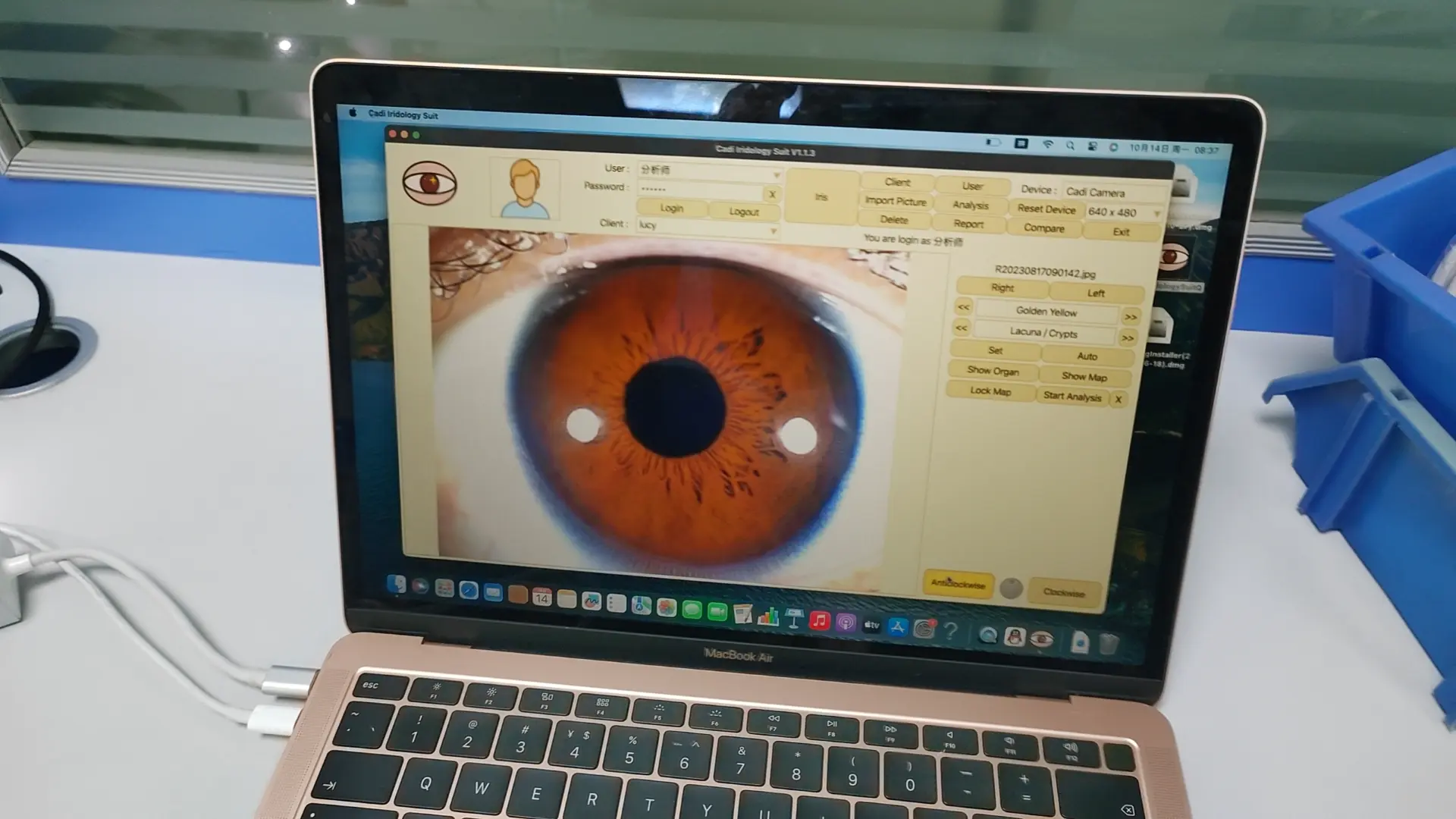
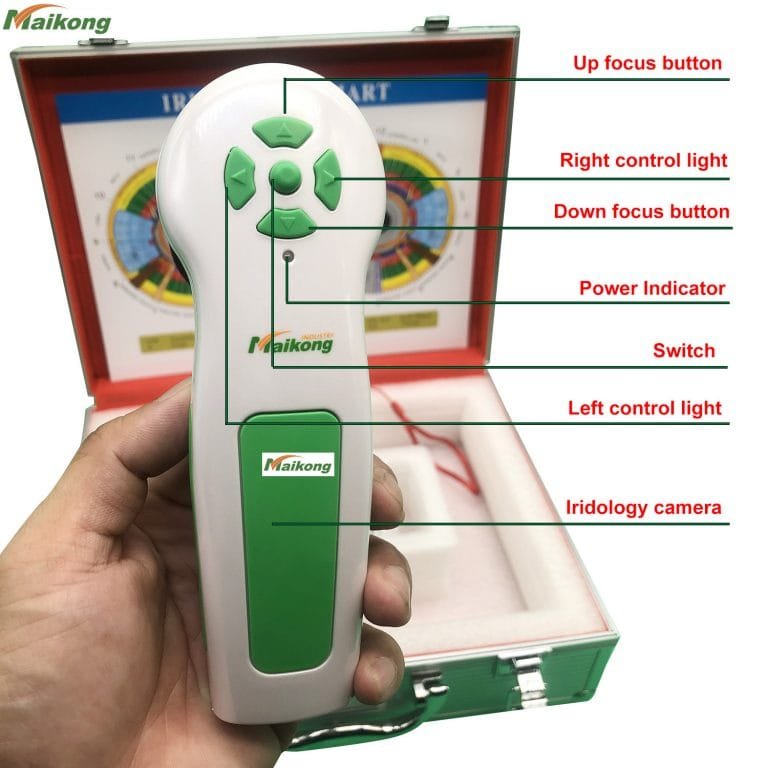
The Iriscope is easy to operate. It is plugged directly into the computer and doesn’t require an electrical power supply. Light brightness and focus can be adjusted by using the switch on the handle.
The iris scope uses its own software which can save client information and photos as well as product recommendations. Analysis reports can be printed and photos are saved according to the date and time taken.
This machine will help the client know his health condition frankly ,including the problem which you have get in the former ,now and future .and the Iridology will be your health counselor, tell you how to keep away from the illness and sub-health.
Why you choose our iriscope?
1. Software easy to use, help you to command. Advanced auto iris analysis technology to provide the best help for beginners to learn.
2. Iris analysis system: international technology, unique functions.
3. Iris analysis system is a medicinal tool that checks the body conditions and prevents diseases from occurring.
4. We brought in the advanced iris analysis technology from Germany to lead people to discover sources of illness, and care the body health and spirit in anyways.
5. The instrument can show the body conditions of customers and suggest customers the suitable health food, and the plans to care their bodies.
6. iriscope machine can edit your product in the software and show on the reports.help you promotion healthy product.
Podrobnosti o produkte:
Miesto pôvodu
Čína
Značka
MK
Osvedčenie
CEA
Číslo modelu
GY-9822U
Maximálne rozlíšenie
3840*2880
funkcia
4 LED/2 LED žiarovky
Pixely
12 MP
jazyk
Anglický / španielsky
softvér
So softvérom Pro Analy
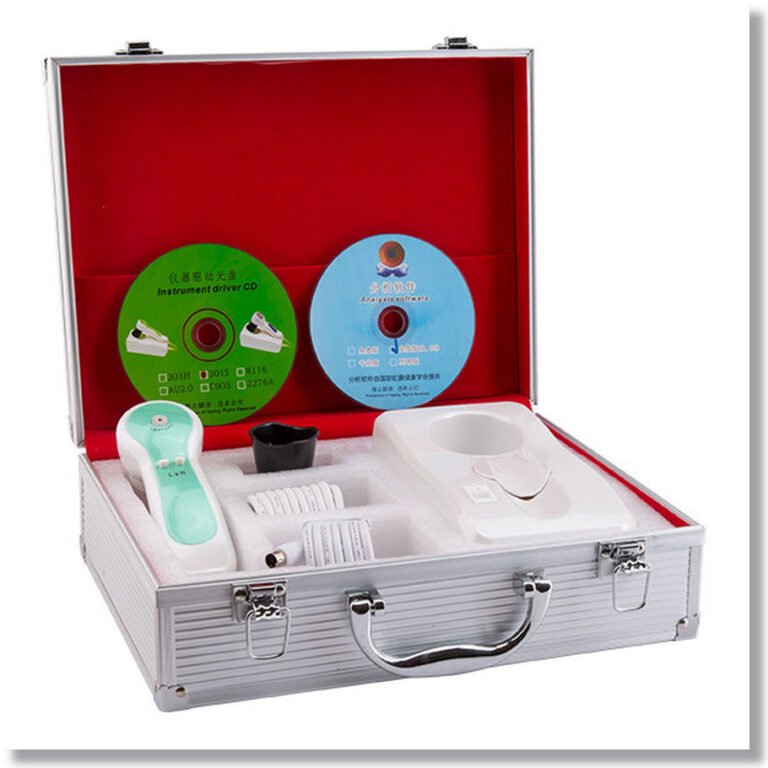
Príslušenstvo:
Slúchadlo
1pc
30x šošovky Iris
1pc
Hliníková skrinka
1pc
Ochranný kryt
1pc
Iridológia
1pc
Používateľská príručka
1pc
CD (softvér na analýzu Driver a Pro)
1pc
Softvér USB kľúč
1pc

Čo je iridológia?
Čo je iridológia?
Iridology (also known as iridodiagnosis or iridiagnosis) is an alternative medicine technique whose proponents claim that patterns, colors, and other characteristics of the iris can be examined to determine information about a patient’s systemic health. Practitioners match their observations to iris charts, which divide the iris into zones that correspond to specific parts of the human body. Iridologists see the eyes as “windows” into the body’s state of health.
Iridologists claim they can use the charts to distinguish between healthy systems and organs in the body and those that are overactive, inflamed, or distressed. Iridologists claim this information demonstrates a patient’s susceptibility towards certain illnesses, reflects past medical problems, or predicts later health problems.
As opposed to evidence-based medicine, iridology is not supported by quality research studies and is widely considered pseudoscience. The features of the iris are one of the most stable features on the human body throughout life.[disputed – discuss] The stability of iris structures is the foundation of the biometric technology which uses iris recognition for identification purposes.
In 1979, Bernard Jensen, a leading American iridologist, and two other iridology proponents failed to establish the basis of their practice when they examined photographs of the eyes of 143 patients in an attempt to determine which ones had kidney impairments. Of the patients, forty-eight had been diagnosed with kidney disease, and the rest had normal kidney function. Based on their analysis of the patients’ irises, the three iridologists could not detect which patients had kidney disease and which did not.
The iris is the greenish-yellow area surrounding the transparent pupil (showing as black). The white outer area is the sclera, the central transparent part of which is the cornea.Iridologists generally use equipment such as a flashlight and magnifying glass, cameras or slit-lamp microscopes to examine a patient’s irises for tissue changes, as well as features such as specific pigment patterns and irregular stromal architecture. The markings and patterns are compared to an iris chart that correlates zones of the iris with parts of the body. Typical charts divide the iris into approximately 80–90 zones. For example, the zone corresponding to the kidney is in the lower part of the iris, just before 6 o’clock. There are minor variations between charts’ associations between body parts and areas of the iris.
According to iridologists, details in the iris reflect changes in the tissues of the corresponding body organs. One prominent practitioner, Bernard Jensen, described it thus: “Nerve fibers in the iris respond to changes in body tissues by manifesting a reflex physiology that corresponds to specific tissue changes and locations.” This would mean that a bodily condition translates to a noticeable change in the appearance of the iris, but this has been disproven through many studies. (See section on Scientific research.) For example, acute inflammatory, chronic inflammatory and catarrhal signs may indicate involvement, maintenance, or healing of corresponding distant tissues, respectively. Other features that iridologists look for are contraction rings and Klumpenzellen, which may indicate various other health conditions.
Seven rings Iris zones/rings and accompanying body region/organ
Inner: Stomach.
Second: Small and large intestine.
Third: Circulation of blood and lymph.
Fourth: Internal organs and endocrine system.
Fifth: Musculoskeletal system.
Outer: Skin and organs of elimination.