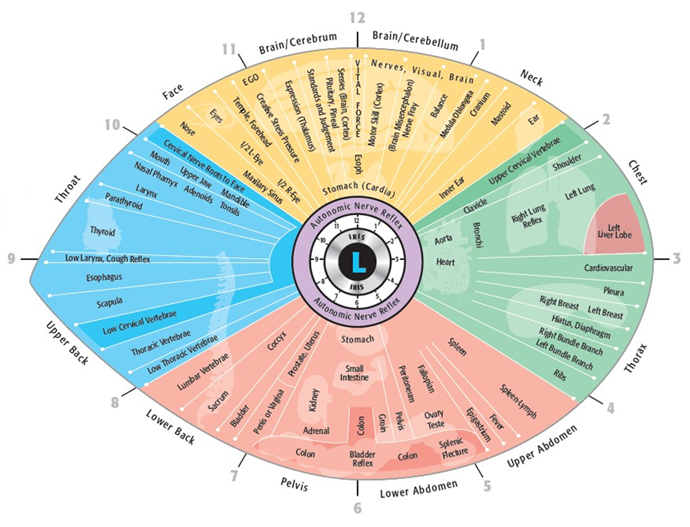
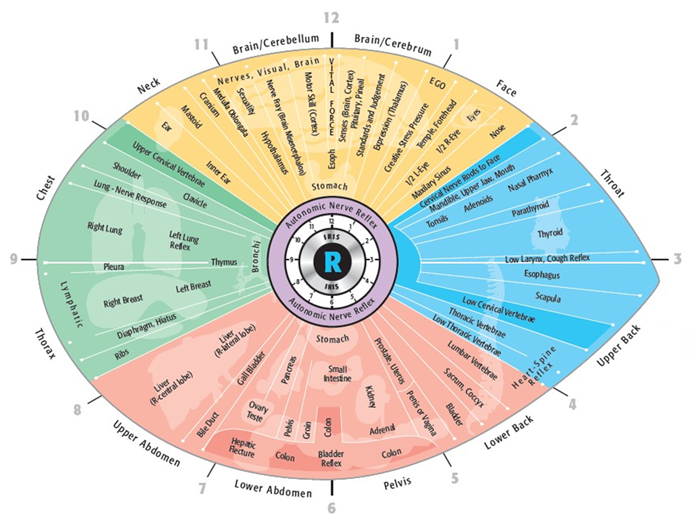
2)معنى مخطط علم القزحية
القزحية & علم التصلب
كل عين تكشف معلومات مختلفة. ترتبط القزحية اليسرى بالأعضاء والغدد والأنسجة & الهياكل الأخرى الموجودة على الجانب الأيسر من الجسم. كما يتحكم الجانب الأيسر أيضًا في الجانب الأنثوي والإبداعي والمفاهيمي & الجوانب البديهية لشخصياتنا.
وترتبط القزحية اليمنى بجميع التركيبات التشريحية في الجانب الأيمن من الجسم، كما تشير إلى الجانب الذكوري والعملي والتحليلي. & الجوانب المنطقية لوجودنا.
أكثر من مجرد الكشف عن حالة الصحة البدنية الحالية & الموقع الدقيق & في مرحلة من الحالات، سوف يكشف علم القزحية بدقة عن المشاكل المحتملة قبل عشرين عامًا أو أكثر، بالإضافة إلى التحولات الجسدية بسبب التسمم أو الضعف أو النقص & إصابات أو ظروف سابقة. عاطفي & الأنماط العقلية & المواقف & نقاط القوة الوراثية & تظهر نقاط الضعف أيضًا.

حلقة الكولسترول:
تظهر هذه العلامة على شكل هالة بيضاء حول محيط القزحية. قد يشير إلى وجود تاريخ عائلي للإصابة بأمراض القلب.
الذهاب لفحص الكولسترول.
نغمات برتقالية:
يمكن أن يكون اللون البرتقالي الغامق المحيط بالبؤبؤ علامة على اضطراب استقلاب السكر.
إذا تحولت العين إلى اللون الأحمر الداكن & لديك ألم خفقان في المقدمةقد يكون هذا التهاب القزحية أو التهاب القزحية، الجزء الملون من العين. وينجم هذا عن رد فعل مفرط للجهاز المناعي، على الرغم من أن سببه الدقيق غير معروف. يميل الاحمرار إلى البدء في وسط العين & ينتشر في حلقة حمراء حول المركز خلال 24 إلى 48 ساعة. ولا ينتشر عادة إلى العين الأخرى.
حلقة نحاسية اللون حول العين يمكن أن يكون علامة على مرض ويلسون، وهو اضطراب وراثي نادر يسبب تراكم الكثير من النحاس في الجسم. يمكن أن يؤدي عدم علاجه إلى تلف الكبد & مخ.
منعكس التلميذ:
إذا لم تنقبض حدقة العين عندما يسقط عليها ضوء ساطع، فهذا يشير إلى ردود أفعال عصبية باهتة، أو ضعف الغدد الكظرية، أو فرط تحفيز الجهاز العصبي الودي، وغالبًا ما يكون ذلك بسبب الخوف كحالة مزمنة مخفية.
تتم الإشارة إلى الإجهاد الكظري إذا بدأ التلاميذ في التوسع & تنقبض بشكل متكرر عند تعرضها للضوء الساطع لمدة 30 ثانية.
إكليل العصب:
قوي، أبيض & مخطط دائري تقريبا لمنطقة الأمعاء – اكليل العصب – يشير إلى حالة جيدة للجهاز العصبي اللاإرادي.
إذا كان هذا المخطط ضعيفًا، أو خشنًا، أو متغير اللون، أو يمتد بعيدًا نحو المحيط أو حدقة العين، فقد نفترض أن الجهاز العصبي اللاإرادي في حالة سيئة.
الوضع الطبيعي لإكليل العصب هو ثلث المسافة بين حدقة العين & المحيط؛ إذا كان الجهاز العصبي متوتراً & مفرط النشاط، اكليلا من الزهور أقرب إلى التلميذ & إذا كان الجهاز العصبي مسترخياً & غير نشط فهو أقرب إلى المحيط.
الحلقات العصبية:
دوائر بيضاء أو أقواس من الدوائر في الجزء الخارجي من القزحية. إنها تشير إلى وجود نظام عصبي متوتر ومفرط في رد الفعل ومتهيج.
تمثل مناطق القزحية الخارجية الجهاز اللمفاوي & نظام التداول & المتاخمة للصلبة والجلد.
منطقة المعدة المشوهة:
في الحالة الطبيعية تكون منطقة المعدة غير مرئية، أما إذا كانت المعدة متهيجة فإن المنطقة المجاورة لحدقة العين تكون بيضاء اللون & متميزة عن منطقة الأمعاء.
يشير تغير لون منطقة المعدة إلى اللون البني إلى وجود ضعف مزمن.
تغير لون منطقة الأمعاء:
تشير منطقة الأمعاء البيضاء إلى التهاب أو تهيج أو تقرحات.
إذا كان هناك احتقان مخاطي في الرأس، هناك تغير في اللون الأبيض أو البني في منطقة القولون المستعرض، يمتد نحو الأذن & مخ.
إذا كان الضعف مزمنًا، فستكون هذه المنطقة مظلمة.
خطوط سوداء شعاعية:
عندما يكون هناك تدهور خطير في الأمعاء، ستظهر خطوط سوداء قوية (نصف قطر سولاريس) تبدأ من حدقة العين & يشع نحو المحيط.
الأعضاء التي تمر من خلالها أنصاف الأقطار ستكون ضعيفة جدًا أيضًا.
علامات غير عادية:
قد تكون العلامات المميزة ملونة باللون البني أو الأحمر أو الأصفر. تشير الألوان غير العادية إلى رواسب المخدرات أو المواد الكيميائية الأخرى التي تستقر في الأعضاء الضعيفة.
الحلقة الخارجية البيضاء:
حلقة بيضاء ثقيلة بالقرب من الحافة الخارجية للقزحية تشير إلى الملح (الصوديوم) & رواسب الكالسيوم.
فيلم أبيض مزرق:
تشير طبقة بيضاء مزرقة تبدأ بتغطية القزحية من الحافة الخارجية إلى ضعف الدورة الدموية في هذه المنطقة & حالة فقر الدم.
غالبًا ما يظهر هذا الفيلم في منطقة الدماغ، مما يشير إلى اقتراب مرحلة الشيخوخة (قوس الشيخوخة).
الحلقة الخارجية المظلمة:
تظهر حلقة داكنة على الحافة الخارجية (حافة القشرة) أن الجلد غير نشط مع تراكم الفضلات & يحتاج إلى تحفيز متكرر ودورة دموية أفضل & تحسين الكلى & أنشطة الرئة.
المسبحة اللمفاوية:
تشير سلسلة من البقع البيضاء بالقرب من الحافة الخارجية، تسمى "المسبحة اللمفاوية"، إلى الإصابة المزمنة & احتقان الجهاز اللمفاوي. تجنب بشكل خاص اللاكتوز & منتجات حليب الأبقار (عدا الزبدة).
علم التصلب
يُعرّف علم التصلب بأنه تفسير الخطوط الحمراء في بياض العين ومعناها للتقييم الصحي & تحليل.
العلامات والعلامات والأشكال المختلفة & تسمح الألوان الموجودة في الصلبة بتقييم الحالة الصحية الحالية وكذلك الميول الموروثة & يمكن أن تظهر الأغنيات قبل ظهور الأعراض أو قبل نتائج فحص الدم (ما يصل إلى 13 شهرًا مقدمًا).
قد يُظهر علم التصلب أن وظيفة أحد الأعضاء مضطربة، ولكن ليس ما إذا كان مفرط النشاط أو غير نشط.
بشكل عام، تشير الأوعية الدموية التي تشير إلى منعكس عضو معين في القزحية إلى وجود خطأ ما في هذا العضو أو جزء من الجسم.
كلما كانت الأوعية الدموية أقوى مرئية & وكلما زاد عددهم معًا، زادت المشكلة سوءًا.
يشير اللون المزرق للصلبة إلى قلة النشاط.
قارن الخطوط بمخطط التصلب. حدد أجزاء الجسم التي تحتاج إلى الاهتمام بناءً على المعلومات الواردة في الرسم البياني.
يمكن أن تتحول الصلبة إلى اللون الأصفر عندما يكون الجسم لديه مستويات عالية من البيليروبين. يمكن أن يكون سبب ذلك أمراض الدم أو أمراض الكبد. راجع الطبيب على الفور، حيث يمكن أن يكون اليرقان علامة على العديد من المشاكل الصحية الخطيرة، بما في ذلك خلل وظائف الكبد والتهاب الكبد. & وفي حالات نادرة، سرطان البنكرياس.
عندما تتحول الصلبة إلى اللون الأزرقيمكن أن يكون علامة على وجود متلازمة تسمى تكون العظم الناقص، وهو مرض يجعل العظام هشة للغاية.
يمكن أن تكون الصلبة الزرقاء الفاتحة علامة على نقص الكالسيوم.
الفيروسات أو الالتهابات الموضعية يمكن أن تسبب العين لتحمر - تبدأ المشكلة عادة في عين واحدة، ولكنها يمكن أن تنتشر إلى كلتا العينين.
إذا كانت تبدو رمادية: ربما يكون ذلك مجرد نتيجة لعملية الشيخوخة الطبيعية، والتي يمكن أن تجعل بياض العين يتحول إلى اللون الرمادي. هناك أيضًا بعض الحالات الطبية الخطيرة التي يمكن أن تحول بياض البيض إلى اللون الرمادي، بما في ذلك التهاب المفاصل الروماتويدي & متلازمة العظام الهشة.
إذا أصبحت إحدى العينين فجأة حمراء دون أي أعراض أخرى، فمن الممكن أن يكون نزيف تحت الملتحمة - حيث يتسرب الدم في الطبقة الرقيقة من الجلد في الجزء الأمامي من مقلة العين. وهذا أمر شائع جدًا، خاصة عند كبار السن. يمكن أن يحدث ذلك بسبب نوبة سعال عنيفة أو قيء أو إذا كنت عرضة لنزيف الأنف أو الكدمات. يجب أن يختفي من تلقاء نفسه في غضون أسبوعين.
إذا بدت حمراء: على الأرجح، عينيك جافة. تلك الخطوط الحمراء التي تراها هي عبارة عن أوعية دموية صغيرة، تصبح أكثر بروزًا عندما تتهيج العين. يمكن أن يكون ذلك نتيجة للعمر، أو التحديق في الكمبيوتر، أو العوامل البيئية، مثل تكييف الهواء.
الكبد السامة.
ظهور بقع حمراء مستمرة على بياض كلتا العينين يمكن أن يكون علامة على ارتفاع ضغط الدم. يؤدي الضغط المرتفع إلى تمدد الأوعية الدموية أو حتى انفجارها، مما يترك علامات حمراء على بياض العين (ولكن ليس الجزء الملون).
ظهور عروق حمراء في بياض العين قد يكون علامة على ارتفاع ضغط الدم.
خروج إفرازات بيضاء من زاوية العين- يمكن أن تكون مشاكل في الجهاز الهضمي.
نقاط صفراء صغيرة، تشبه قطع العجين، حولها & على الجفون يمكن أن يكون علامة على ارتفاع نسبة الكولسترول في الدم أو تليف الكبد.
الجفون العلوية حمراء-التهاب المعدة.
بقعة عمياء مصحوبة بأضواء وامضة أو خطوط متموجة– الصداع النصفي العيني (قد يؤدي إلى فقدان الرؤية).
العين الدموية والصلبة بها بقع حمراء – ارتفاع ضغط الدم، واضطراب تخثر الدم
بقع بنية اللون، وهي عبارة عن نتوء بالأوعية الدموية، غالبًا ما تكون على الجفن السفلي – ورم (نمو غير طبيعي قد يكون سرطانيا).
عيون الحشرة، انتفاخ العيون مع تورم أنسجة العين - إنها علامة شائعة لمرض جريفز، المعروف أيضًا باسم فرط نشاط الغدة الدرقية. بالإضافة إلى مظهر عيون الحشرة، غالبًا ما يعاني الأشخاص المصابون بمتلازمة جريفز من فقدان الوزن والعصبية & نبض سريع أو غير منتظم.
بقع صفراء ووعرة، بقع صفراء صغيرة على الجفن - ارتفاع نسبة الكولسترول
حرقان في العين، وخز في العين، مع عدم وضوح الرؤية أثناء استخدام الكمبيوتر– متلازمة رؤية الكمبيوتر
عيون غائمة، وتغيم العدسة مع رؤية ضبابية- إعتام عدسة العين (قد يسبب العمى) - هذه الحالة، التي يمكن تصحيحها بالجراحة، هي الأكثر شيوعًا عند كبار السن. يمكن أن يكون لإعتام عدسة العين الذي يظهر عند الشباب أسباب مختلفة، بما في ذلك الأورام & مرض السكري، بالإضافة إلى الآثار الجانبية لبعض الأدوية.
ارتباك اللون، والأحمر & اللون الأخضر غير واضح -عمى الألوان
العيون المتقاطعة، حيث تتجه إحدى العينين أو كلتيهما إلى الداخل - ورم داخل العين، اضطراب عصبي
الرؤية المزدوجة، ورؤية الصور المزدوجة- السكتة الدماغية (المفاجئة)، التصلب المتعدد
العيون المتدلية، والجفون المتدلية - ورم في المخ، اضطراب عصبي عضلي
جفاف العيونوخاصة في أكثر من 40 امرأة تعاني من أمراض المناعة الذاتية & تؤثر على الفم بحيث يؤدي غياب اللعاب إلى المضغ & صعوبة البلع - متلازمة سجوجرن (الخلايا المناعية تتلف الدموع & الغدد المنتجة لللعاب).انقطاع الطمث.
حلقة بنية ذهبية أو صفراء مخضرة، حلقة ملونة على القرنية، تحيط بالقزحية- مرض ويلسون (يتجمع النحاس الزائد في الأنسجة، مما قد يؤدي إلى أمراض الكبد)
حلقة ذات لون رمادي أو أبيض حليبي على القرنية تحيط بالقزحية- والذي يسميه الأطباء قوس الشيخوخة، غالبًا ما يترافق مع ارتفاع نسبة الكوليسترول & الدهون الثلاثية & زيادة خطر الإصابة بالنوبات القلبية & سكتة دماغية. يجب على أي شخص يعاني من هذه الحالة إجراء فحص دم للتحقق من ارتفاع نسبة الدهون في الدم – وخاصة الأشخاص الذين تقل أعمارهم عن 60 عامًا.
زيادة العين- المادة اللزجة، وحواف الجفن حمراء & حكة-قشرة الرأس، حب الشباب الوردية
عين كبيرة، تظهر عين واحدة أكبر (عند الأطفال بشكل عام)– الجلوكوما (العصب البصري التالف) والورم والعدوى
دمل الجفن المستمر، كتل حمراء على الجفن، تستمر لأكثر من 3 أشهر- ورم، وربما سرطاني
العين الوردية، والصلبة لونها وردي أو أحمر فاتح -التهاب الملتحمة
أحجام التلاميذ مختلفة، وأحجام التلاميذ مختلفة & الجفون المتدلية - متلازمة هورنر (اضطراب في الجهاز العصبي)، تمدد الأوعية الدموية في الرقبة (انتفاخ مملوء بالدم في الأوعية الدموية) & ورم.
عيون حمراء وحكة، مع العطس والسعال واحتقان الجيوب الأنفية أو سيلان الأنف - رد فعل تحسسي
عدم القدرة على إغلاق العينين أو السيطرة على الدموع، وغالباً ما يكون أحد جانبي الوجه ضعيفاً & يتدلى- شلل بيل (شلل الوجه بسبب خلل في العصب القحفي السابع)
اختفاء الحواجب، حيث يختفي الجزء الخارجي من الحواجب - مرض الغدة الدرقية (تحت الغدة الدرقية النشطة)
عيون صفراء، الصلبة صفراء – أمراض الكبد مثل اليرقان والتهاب الكبد & تليف الكبد
سرطان الجلد- يمكن لسرطان الخلايا القاعدية أن يظهر في بعض الأماكن الغريبة جدًا، بما في ذلك الجفن، حيث يسبب غالبًا قرحة لا تشفى. & فقدان الرموش. وهذا ليس شيئًا يجب تجاهله. على الرغم من أن سرطانات جلد الخلايا القاعدية ليست قاتلة عادة، إلا أنها يمكن أن تسبب تشوهًا شديدًا، أو عمى، وحتى الموت إذا وصلت إلى الدماغ عبر مقبس العين.
3) مخطط علم القزحية لقزحية العين اليمنى
مخطط القزحية من قزحية العين اليمنى
يوضح مخطط القزحية على هذه الصفحة مناطق القزحية اليمنى للعين من حيث صلتها بأنسجة محددة & الأعضاء في الجسم من دراسات رسم القزحية للدكتور جينسون
مخطط القزحية يولد أدناه مناطق قزحية العين اليمنى المتعلقة بالأنسجة والأعضاء في الجسم من مخطط الدكتور برنارد جينسون لمناطق القزحية. يستخدم عالم القزحية لدينا الذي درس في عهد الدكتور جنسن مخططات القزحية لتحديد نقاط الضعف المحتملة في الأنسجة والأعضاء في الجسم.
القزحية الصحيحة

مخطط القزحية من قزحية العين اليمنى
4) تعريف علم القزحية
علم القزحية، ويسمى أيضًا تحليل القزحية أو تشخيص القزحية، هو دراسة القزحية (الجزء الملون من العين). قزحية “القراءات” يتم إجراؤها بواسطة علماء القزحية لتقييم الصورة الصحية للشخص (البدنية والعاطفية والعقلية والروحية) وتوجيههم لاتخاذ التدابير اللازمة لتحسين صحتهم.
أصول
المفهوم الأساسي لعلم القزحية موجود منذ قرون. قدمت كلية الطب بجامعة ساليرنو في إيطاليا التدريب على تشخيص القزحية. كتاب نشره فيليبوس مايرز عام 1670 بعنوان الكيروماتيكية الطبيةوأشار إلى أن العلامات الموجودة في القزحية تشير إلى الإصابة بالأمراض. ومع ذلك، يعتبر الدكتور إغناتز فون بيكزيلي أب علم القزحية، حيث تم تحديد تاريخ اكتشافه في عام 1861. وكان فون بيكزيلي طبيبًا مجريًا. عندما كان طفلاً، كسر ساق بومة عن طريق الخطأ. ولاحظ أن خطًا أسودًا قد تشكل في القزحية السفلية للبومة وقت الإصابة. بعد شفاء ساق البومة، لاحظ الشاب فون بيكزيلي أن مظهر الخط الأسود قد تغير. كطبيب، عالج مريضًا مصابًا بكسر في ساقه ولاحظ في عينه خطًا أسود في نفس مكان قزحية البومة المصابة. أصبح فون بيكزيلي مفتونًا بإمكانية وجود صلة بين الأمراض وعلامات العين. من خلال مراقبة مرضاه’ لقد أصبح مقتنعًا بهذا الارتباط وطور مخططًا يوضح الارتباطات بين القزحية والجسم. بعد عدة عقود من الدراسة المقارنة، رسم فون بيكزيلي خرائط للأعضاء عبر مناطق تم تحديدها بالساعات والدقائق على وجه الساعة متراكبًا فوق رسومات العيون. وفي عام 1881 نشر نظرياته في كتاب بعنوان الاكتشافات في مجال العلوم الطبيعية والطب: تعليمات في دراسة التشخيص من العين.
قام قس سويدي وطبيب تجانسي يُدعى نيلس ليلجيكيست أيضًا بتطوير مفهوم الارتباطات بين القزحية والجسم في نفس الوقت تقريبًا ولكن بشكل مستقل عن عمل فون بيكزيلي. وكان أول عالم القزحية الذي حدد آثار هذه الأدوية مثل اليود والكينين على القزحية. بنى ليلجيكويست ملاحظاته الأولية على التغيرات التي طرأت على قزحية عينه بعد الأمراض والإصابات، ونشر كتابات ورسومات للعين خلال أواخر القرن التاسع عشر. أحد طلابه، الدكتور هنري لان، جلب ممارسة علم القزحية إلى الولايات المتحدة. سعى مجموعة متنوعة من الممارسين، الأوروبيين في المقام الأول، إلى تعميم علم القزحية منذ هذه الأعمال المبكرة. الدكتور برنارد جنسن، معالج تقويم العظام، هو أشهر المدافع الأمريكي المعاصر عن علم القزحية.
فوائد
يدعي علماء القزحية أنه من خلال دراسة أنماط قزحية الشخص، يمكنهم تقديم معلومات مفيدة ودقيقة عن الصحة والعافية. علم القزحية هو مسعى شمولي لأنه يتناول كيان الشخص بالكامل في القراءة. يشمل نطاق المعلومات المجمعة الجوانب الجسدية والعاطفية والعقلية والروحية للصورة الصحية للشخص. بالإضافة إلى تقييم المستوى العام للصحة للشخص، يمكن أن تكشف القراءات عن بيانات أخرى، بما في ذلك حاصل الطاقة؛ المناطق الداخلية من التهيج أو الانحطاط أو الإصابة أو الالتهاب. غذائية
والاختلالات الكيميائية. تراكم السموم. تحولات الحياة؛ والتوترات اللاواعية. يؤكد علماء القزحية أن العيون تكشف معلومات حول التكوين الجسدي والعاطفي للشخص، مثل نقاط الضعف والمخاطر الموروثة التي قد يكون الشخص عرضة لها. ويمكن أيضًا الكشف عن نقاط القوة، بما في ذلك الميول العاطفية الموروثة التي يستمد منها الشخص مواهب معينة. يمكن التحقق من التطهير والشفاء من خلال التغيرات في القزحية. من خلال البحث عن علامات معينة مثل خطوط الشفاء، يحصل علماء القزحية على معلومات حول المشاكل الصحية والإصابات السابقة ويكتشفون الخطأ الذي قد حدث في ماضي الشخص.
تعكس قراءة علم القزحية أسباب المشاكل وليس الأعراض. ويزعم علماء القزحية أن هذا قد يكشف عن تعرض الأعضاء أو الأجهزة للضغط الزائد أو الاستعداد للإصابة بالمرض قبل ظهور الأعراض السريرية. ومن خلال التنبؤ بالمشاكل المستقبلية، يمكن استخدام علم القزحية كأداة وقائية. يمكن للناس استخدام المعلومات من قراءات علم القزحية لتحسين صحتهم واتخاذ خيارات سلوكية أفضل في المستقبل، وبالتالي تجنب المشاكل قبل حدوثها.
في أمريكا الشمالية، يعتبر علم القزحية بشكل عام أداة تقييم تستخدم بالتعاون مع التخصصات الصحية الأخرى. علم القزحية ليس أداة تشخيصية (على الرغم من أنه من المرجح أن يعتبره علماء القزحية الأوروبيون كذلك) ولا ينبغي استخدامه لتشخيص أو تسمية أمراض معينة. لن يمثل التشخيص تطبيقًا غير مناسب لعلم القزحية فحسب، وفقًا للعديد من علماء القزحية، كما أشارت الجمعية الدولية لأبحاث علم القزحية (IIRA)، بل يمكن أيضًا تفسيره في العديد من البلدان على أنه ممارسة الطب دون ترخيص.
وصف
يعتمد علم القزحية عمومًا على مفهوم المسارات العصبية بين الجسم والقزحية. على الرغم من أن علماء القزحية قد يختلفون حول الآلية الدقيقة، إلا أن معظمهم يؤكدون أن القزحية تعكس ما يحدث في جميع أنحاء الجسم عن طريق توصيل الأعصاب من جميع أجزاء الجسم إلى العين. يتم تقييم صحة العميل من قبل أخصائي القزحية، الذي يفسر الأنماط والأشكال والحلقات والألوان وعلامات التصبغ والألياف والهياكل والتغيرات في الحدقة والقزحية. يستخدم العديد من علماء القزحية أيضًا علم التصلب (قراءة الخطوط الموجودة في الجزء الأبيض من العين) في تقييمهم الصحي.
عادةً ما يتم إجراء قراءات علم القزحية من قبل ممارسين ذوي توجهات شمولية مثل المعالجين الطبيعيين أو مقومين العظام أو خبراء التغذية. يمكن إجراء القراءة باستخدام ضوء ساطع وعدسة مكبرة ومفكرة. قد يستخدم أخصائي القزحية أيضًا أدوات مختلفة لرؤية العين بشكل أفضل، وكاميرا خاصة لالتقاط صور للقزحية، و/أو جهاز كمبيوتر.
يقوم علماء القزحية بإجراء قراءاتهم باستخدام الرسوم البيانية التي يتم من خلالها تعيين كل منطقة من القزحية إلى نظام أو عضو محدد في الجسم. تختلف مخططات علم القزحية، حيث يوجد ما لا يقل عن 20 مخططًا مختلفًا. يتم استخدام بعض المخططات على نطاق أوسع من غيرها؛ ومع ذلك، يعتقد العديد من علماء القزحية أن هناك أكثر من خريطة صحيحة وأن كل ممارس يجب أن يتعرف على العديد من المخططات. حتى أن بعض علماء القزحية يطورون مخططاتهم الخاصة. توجد أيضًا اختلافات بين تقنيات الممارسين؛ وبين المناهج الأمريكية والأوروبية وغيرها؛ وفي تفسير علامات القزحية المحددة.
تقسم مخططات علم القزحية القزحية إلى مناطق عديدة تتوافق مع أجزاء مختلفة من الجسم. على الرغم من أن التفاصيل قد تختلف في كل مخطط، إلا أن جميعها تشترك في نمط عام. يتم تعيين العين اليسرى على الجانب الأيسر من الجسم والعين اليمنى على الجانب الأيمن. يتم تعيين الجزء العلوي من العين إلى الجزء العلوي من الجسم (على سبيل المثال، الدماغ والوجه والرقبة والصدر والقلب). يتم تعيين مركز العين للمعدة وأعضاء الجهاز الهضمي، بينما يتم تمثيل الأعضاء الأخرى بمناطق دائرية متحدة المركز تتحرك نحو الخارج نحو حافة القزحية. يتم تعيين الجزء السفلي من العين على الساقين والنصف السفلي من الجسم. يتم تعيين الأعضاء المقترنة (على سبيل المثال، الكلى) لكلتا القزحيتين.
باستخدام نهج شامل يعتبر كل عميل فردًا لديه أنماط واهتمامات وسلوكيات وتجارب صحية فريدة من نوعها، سيقوم أخصائي القزحية بفحص العيون وإجراء تقييم صحي. وبناءً على نتائج تلك القراءة، يوصي أخصائي القزحية عمومًا ببرنامج صحي مصمم خصيصًا ليناسب الوضع الجسدي والعاطفي والحياتي للفرد. قد يتضمن هذا البرنامج أنظمة مختلفة لتحسين الصحة والصيانة والوقاية. قد تشمل التوصيات الفيتامينات والمعادن والأعشاب والمكملات الغذائية و/أو النظام الغذائي تَغذِيَة ، من بين اقتراحات أخرى.
تحضير
ليست هناك حاجة إلى أي استعدادات خاصة قبل قراءة علم القزحية.
احتياطات
من غير المرجح أن تسبب قراءة القزحية أي ضرر جسدي في حد ذاتها، لأنها لا تنطوي على اتصال مباشر بالعين أو استخدام قطرات العين من أي نوع. ومع ذلك، يرى منتقدو علم القزحية أن علم القزحية يمكن أن يكون ضارًا بالصحة إذا قام شخص مريض بتأخير العلاج لحالة لا تقترحها قراءة علم القزحية؛ أو أنها يمكن أن تسبب ألمًا ونفقات غير ضرورية إذا كانت القراءة تشير إلى وجود مشكلة في حين أنها لا توجد في الواقع.
بحث & القبول العام
تقول ريتا إم هول، RN، دكتوراه، ذلك “في الطب الغربي، يعتبر علم القزحية علمًا مثيرًا للجدل في أحسن الأحوال، واحتيالًا طبيًا في أسوأ الأحوال.” يجادل أنصار علم القزحية بأن هذه الممارسة تم اختبارها عبر الزمن وحققت نتائج مثبتة. على الرغم من أن النقاد يعترفون بأن بعض أعراض الأمراض غير العينية تظهر في العين (على سبيل المثال، إصابة الدماغ)، إلا أنهم يقولون إن هناك نقصًا في الاختبارات العلمية الصارمة ولا يوجد دليل على أن علم القزحية له أي ميزة. الدراسات المنشورة في المجلة الأسترالية للبصريات، ال المجلة الطبية البريطانية، و مجلة الجمعية الطبية الأمريكية (JAMA) لقد وجدت علماء القزحية’ تقييم المرضى الذين تم تشخيصهم بأمراض خطيرة بما في ذلك أمراض الكلى والمرارة غير دقيق. يرد علماء القزحية بأن البحث نفسه كان خاطئًا، مستشهدين بمشاكل تشمل الصور ذات الجودة الرديئة؛ عدم وجود معلومات إضافية مهمة بما في ذلك القدرة على رؤية/مقابلة العميل؛ والتوقعات غير المناسبة لتشخيص أمراض معينة، وهي مهمة خارج نطاق علم القزحية. أجريت دراسة حديثة لإعادة التقييم جاما ونشرت النتائج المتعلقة بالفشل الكلوي في ممارس الصحة البديلة. مع العلم أن “الدراسة تترك عدة أسئلة دون إجابة،” أبلغ المؤلف عن أوجه التشابه والاختلاف في علماء القزحية’ قراءات وخلصت إلى أن مستوى خبرة عالم القزحية مهم للغاية أيضًا.
تمرين & شهادة
يتلقى علماء القزحية التدريب من مصادر مختلفة. قد يتعلمون تجارتهم من خلال الكتب أو الأشرطة أو دورات المراسلة أو الفصول عبر الإنترنت أو الفصول الحية. وفقا للوكالة الدولية للطاقة الذرية، “علم القزحية يعمل في منطقة رمادية في أمريكا الشمالية. بشكل عام، لا توجد قوانين تحدد أو تنظم هذه الممارسة. في أوروبا، وخاصة في ألمانيا، يعتبر علم القزحية معروفًا جيدًا ويستخدم بشكل روتيني من قبل ممارسي الطب الطبيعي.” ووفقا لـ IIRA أيضًا، “نظرًا لأن علم القزحية ليس لديه معايير رسمية للممارسة، يمكن لأي شخص أن يطلق على نفسه اسم أخصائي القزحية، وغالبًا ما يكون ذلك مع قليل من التدريب أو الخبرة. هناك أيضًا اختلافات كبيرة في معلومات علم القزحية التي يتم تدريسها، خاصة في أمريكا الشمالية.”
موارد
كتب
جاكسون، آدم ج. علم القزحية: دليل لتحليل القزحية والرعاية الصحية الوقائية. بوسطن: تشارلز ب. تاتل، 1993.
جنسن، برنارد. علم القزحية: العلم والممارسة في فنون الشفاء، المجلد. ثانيا. إسكونديدو، كاليفورنيا: ب. جنسن، 1982.
جنسن، برنارد. ما هو القزحية؟ إسكونديدو، كاليفورنيا: ب. جنسن، 1984.
جنسن وبرنارد ودونالد بودين. رؤى الصحة: فهم علم القزحية. جاردن سيتي بارك، نيويورك: دار نشر أفيري، 1992.
وورال، راسل س. “علم القزحية: تشخيص أم وهم؟” في العلم يواجه الخوارق، إد. كندريك فرايزر. بوفالو، نيويورك: كتب بروميثيوس، 1986.
المنظمات
المعهد الكندي لأبحاث البصريات العصبية. ص.ب. صندوق 29053. 4324 شارع ديودني. ريجينا، ساسكاتشوان S4T 7X3. كندا. (306) 359-7694. فاكس: (306) 525-2659. cnricontacts@cnri.edu. https://www.cnri.edu/.
الرابطة الدولية لأبحاث علم القزحية. ص.ب 1442. شاطئ سولانو، كاليفورنيا 92075-2208. (888) 682-2208. IIRAOffice@aol.com. https://www.iridologyassn.org/.


![8789304_orig[1]](https://iriscope.org/wp-content/uploads/2017/08/8789304_orig1.jpg "تعريف علم القزحية 1tion 1")