El fascinante campo de la iridología ha evolucionado gracias al trabajo dedicado de profesionales pioneros que desarrollaron sofisticados gráficos de iridología para analizar el iris. Estos visionarios establecieron las bases para el análisis moderno del iris al mapear las conexiones entre las marcas del iris y la salud física. Su trabajo innovador continúa influyendo en los profesionales de la salud holística de todo el mundo, ofreciendo información sobre posibles problemas de salud a través de un examen no invasivo de la parte coloreada del ojo.
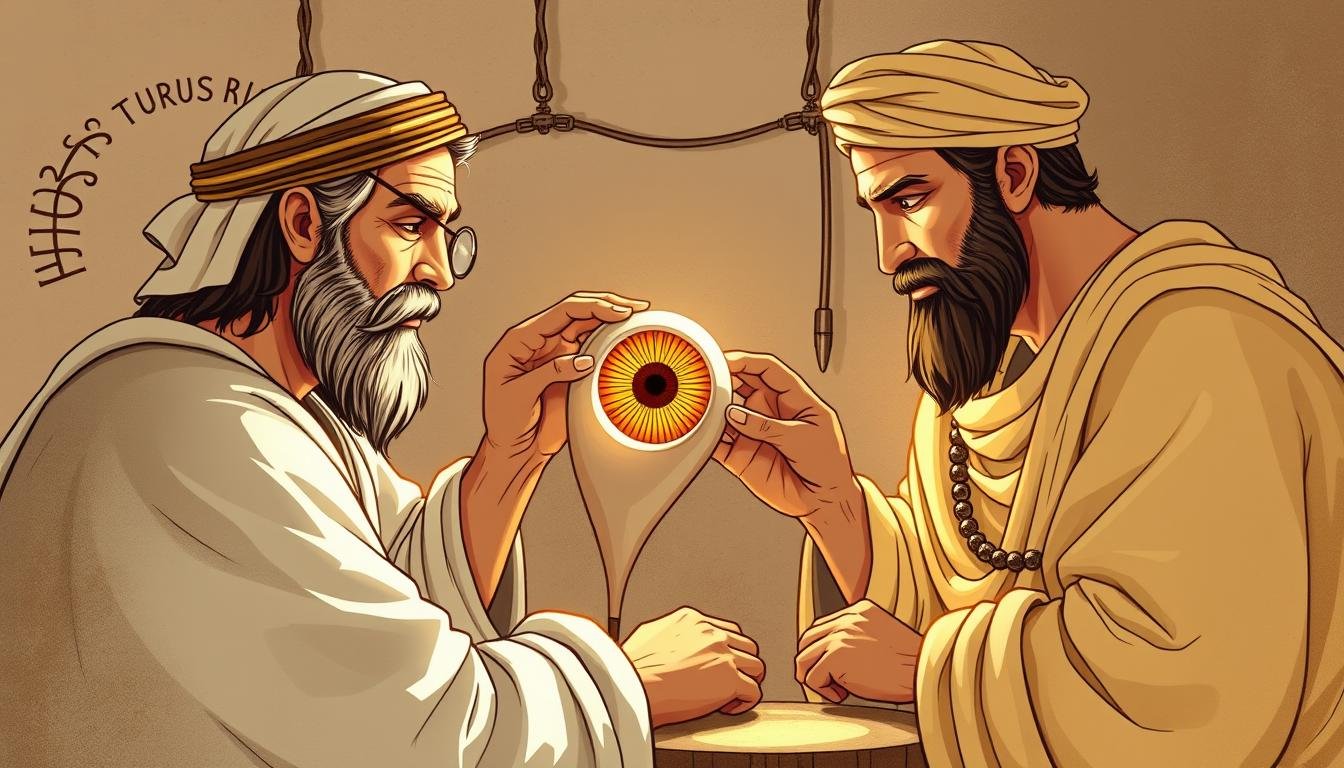
Los orígenes históricos de la Tabla de iridología
La práctica de examinar el iris en busca de información sobre la salud se remonta a miles de años, y se encuentran referencias tempranas en textos antiguos chinos y egipcios. Sin embargo, el desarrollo sistemático de la tabla de iridología tal como lo conocemos hoy comenzó en el siglo XIX con varias figuras clave que transformaron estas antiguas observaciones en un enfoque de diagnóstico estructurado.
Los primeros practicantes examinaron los patrones del iris, sentando las bases para la modernidad. gráficos de iridología
Antes del desarrollo de gráficos estandarizados, los profesionales se basaban en observaciones individuales sin puntos de referencia sistemáticos. La creación del primer sistema integral tabla de iridología marcó un punto de inflexión, estableciendo un enfoque metódico para el análisis del iris que podría ser enseñado, aprendido y perfeccionado por las generaciones posteriores de profesionales.
Ignaz von Peczely: padre de lo moderno Gráficos de iridología

Ignaz von Peczely con su revolucionario tabla de iridología desde 1881
La historia de la iridología moderna comienza con el médico húngaro Ignaz von Peczely (1826-1911), ampliamente reconocido como el padre de la iridología contemporánea. Cuando era niño, von Peczely supuestamente notó cambios en el iris de un búho después de que el pájaro sufriera una fractura en una pata. Esta observación despertó su interés de por vida en la conexión entre las marcas del iris y los traumatismos o enfermedades físicas.
En 1881, von Peczely publicó su innovador trabajo. “Descubrimientos en el campo de las ciencias naturales y la medicina: instrucción en el estudio del diagnóstico desde el ojo,” que incluyó el primer detalle tabla de iridología. Su gráfico dividió el iris en aproximadamente 80 zonas, cada una correspondiente a diferentes órganos y sistemas dentro del cuerpo.
La contribución de von Peczely a Tabla de iridología Desarrollo
- Creó el primer mapeo sistemático de las zonas del iris a los órganos del cuerpo.
- Estableció los principios fundamentales para el análisis moderno del iris.
- Correlaciones documentadas entre las marcas del iris y condiciones de salud específicas
- Desarrolló una metodología de diagnóstico que podría enseñarse a otros profesionales.
El trabajo de Von Peczely estableció el principio fundamental de que el iris podría servir como un mapa de diagnóstico de todo el cuerpo, con áreas específicas correspondientes a órganos y sistemas particulares. Este concepto sigue siendo central para todos los posteriores. gráficos de iridología.
Nils Liljequist: la contribución sueca a Gráficos de iridología

Nils Liljequist desarrolló su tabla de iridología independientemente de von Peczely
Trabajando independientemente de von Peczely, el homeópata sueco Nils Liljequist (1851-1936) desarrolló su propio tabla de iridología basado en observaciones personales. Después de sufrir intoxicación por mercurio debido a tratamientos médicos, Liljequist notó cambios en la coloración de su propio iris y comenzó a documentar estos cambios en relación con su salud.
Su publicación de 1893 “Sobre el diagnóstico de los ojos” (On Eye Diagnosis) incluía gráficos detallados del iris que enfatizaban la importancia de los cambios de color en el iris como indicadores de toxicidad química en el cuerpo. El trabajo de Liljequist fue particularmente significativo para identificar cómo los medicamentos y las toxinas podrían manifestarse como decoloraciones específicas en el iris.
Aspectos clave de Liljequist Tabla de iridología
- Centrado en los cambios de color como indicadores de toxicidad.
- Efectos químicos y medicamentos mapeados en el iris.
- Correlación establecida entre la decoloración del iris y sustancias específicas
- Desarrollado independientemente del trabajo de von Peczely.
- Desintoxicación enfatizada basada en el análisis del iris.
- Introdujo el concepto de topografía del iris.
El desarrollo simultáneo de la iridología por parte de von Peczely y Liljequist, que trabajaron de forma independiente en diferentes países, dio credibilidad al campo emergente y sugirió que los patrones observables en el análisis del iris eran lo suficientemente consistentes como para ser descubiertos de forma independiente.
Dr. Bernard Jensen: Modernizando el Tabla de iridología

El Dr. Bernard Jensen enseña a los estudiantes cómo utilizar su completo tabla de iridología
El naturópata estadounidense Dr. Bernard Jensen (1908-2001) hizo avanzar significativamente el campo de la iridología en el siglo XX al refinar y ampliar las técnicas existentes. gráficos de iridología. Después de estudiar con los principales iridólogos europeos, Jensen desarrolló lo que se convirtió en el más utilizado. tabla de iridología en América del Norte.
El gráfico de Jensen dividió el iris en más de 100 zonas, proporcionando una mayor especificidad en el análisis. Su sistema incorporó tanto el enfoque estructural de von Peczely como el análisis de color de Liljequist, creando una herramienta de diagnóstico más completa.
Las innovaciones de Jensen en Tabla de iridología Diseño
- Creó un mapeo de zonas más detallado con más de 100 áreas distintas.
- Desarrolló el concepto de iris. “signos” como indicadores de condiciones específicas
- Análisis nutricional integrado en la interpretación de la iridología.
- Correlaciones establecidas entre las marcas del iris y los estados emocionales/mentales
- Introdujo el concepto de “etapas de curación” visible en el iris
Los libros de Jensen, incluidos “La ciencia y la práctica de la iridología” (1952), popularizó la iridología en los Estados Unidos y estableció una terminología y metodología estandarizadas que continúan influyendo en la práctica moderna. Su tabla de iridología sigue siendo uno de los sistemas más completos y utilizados a nivel mundial.
Descubra lo que su iris revela sobre su salud
Descubra cómo los iridólogos profesionales utilizan estos gráficos avanzados para identificar posibles problemas de salud antes de que se conviertan en afecciones graves.
Encuentre un iridólogo cerca de usted
Josef Deck: La escuela alemana de Gráficos de iridología
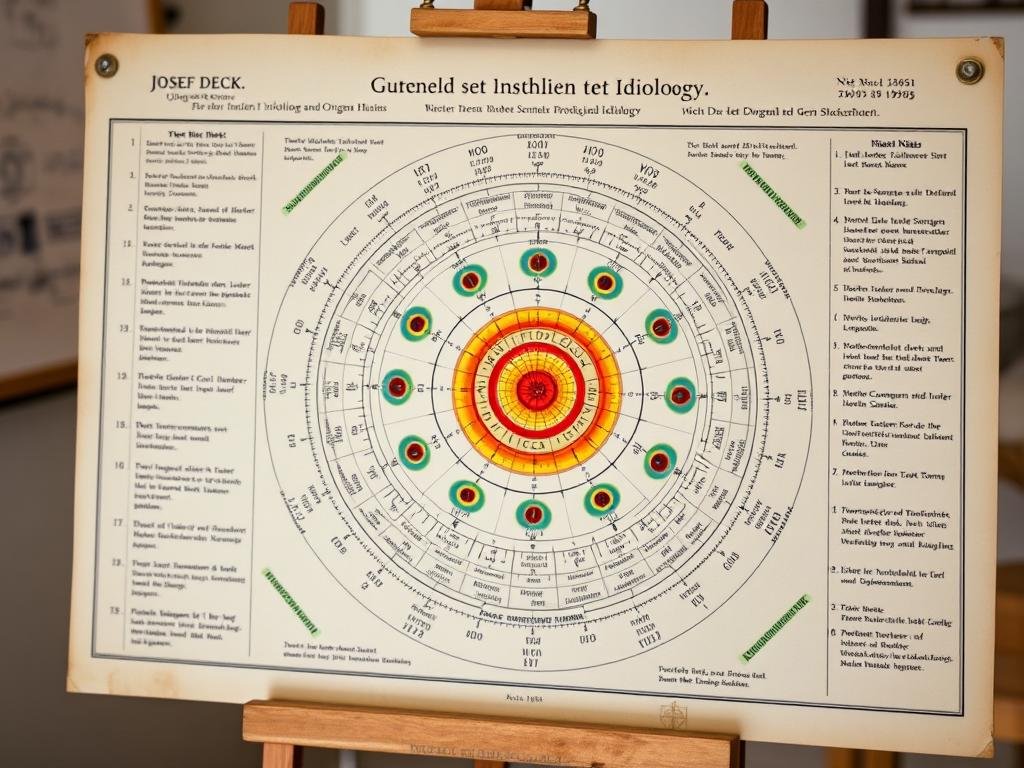
El alemán calibrado con precisión de Josef Deck tabla de iridología con correlaciones detalladas de órganos
El naturópata alemán Josef Deck (1914-1984) desarrolló un enfoque altamente sistemático de la iridología que enfatizaba la precisión y la metodología científica. Su tabla de iridología, publicado en la década de 1950, presentaba una organización distintiva que dividía el iris en sectores medidos con precisión.
La contribución de Deck fue particularmente significativa para establecer el “topográfico” enfoque para el análisis del iris, que mapeaba el cuerpo en el iris de una manera que correspondía a las relaciones anatómicas entre órganos y sistemas. Esto hizo que su gráfico fuera especialmente intuitivo para los médicos familiarizados con la anatomía humana.
Innovaciones metodológicas de Deck:
- Introdujo divisiones matemáticas precisas del iris.
- Desarrolló el concepto de “constitución” en el análisis del iris
- Se creó terminología estandarizada para los signos del iris.
Impacto en la práctica moderna:
- Influyó en la educación europea en iridología.
- Se establecieron estándares de documentación más rigurosos.
- Puente entre la iridología tradicional y la ciencia médica
El enfoque de Deck, a menudo denominado “escuela alemana” de iridología, enfatizó el análisis constitucional y la documentación precisa. Su trabajo ayudó a establecer la iridología como una disciplina más sistemática e influyó en generaciones de profesionales europeos.
Dorothy Hall: la australiana Tabla de iridología Sistema

Dorothy Hall demostrando su adaptación australiana del tabla de iridología
La naturópata australiana Dorothy Hall (1938-2016) desarrolló un enfoque único de la iridología que incorporó componentes psicológicos y emocionales al análisis físico tradicional. Su tabla de iridología El sistema, desarrollado en las décadas de 1970 y 1980, enfatizó la conexión entre los estados emocionales y la salud física.
La innovación de Hall fue mapear rasgos emocionales y psicológicos a patrones y ubicaciones específicos del iris, ampliando el alcance de la iridología más allá del diagnóstico puramente físico. Su enfoque reconoció que el bienestar emocional y los rasgos de personalidad podrían reflejarse en las estructuras del iris.
Características clave de Hall's Tabla de iridología Sistema:
- Análisis emocional y psicológico integrado con evaluación física.
- Tipificación de personalidad desarrollada basada en patrones de iris.
- Creé gráficos simplificados accesibles para principiantes.
- Se enfatizaron enfoques preventivos de salud basados en tendencias constitucionales.
- Correlaciones de medicina herbaria incorporadas con los signos del iris.
Los libros de Hall, incluidos “Iridología: cómo los ojos revelan su salud y personalidad” (1980), popularizó la iridología en Australia e introdujo su perspectiva única al público internacional. Su enfoque continúa influyendo en los profesionales holísticos que buscan abordar los componentes emocionales de la salud física.
Análisis comparativo de diferentes Tabla de iridología Sistemas
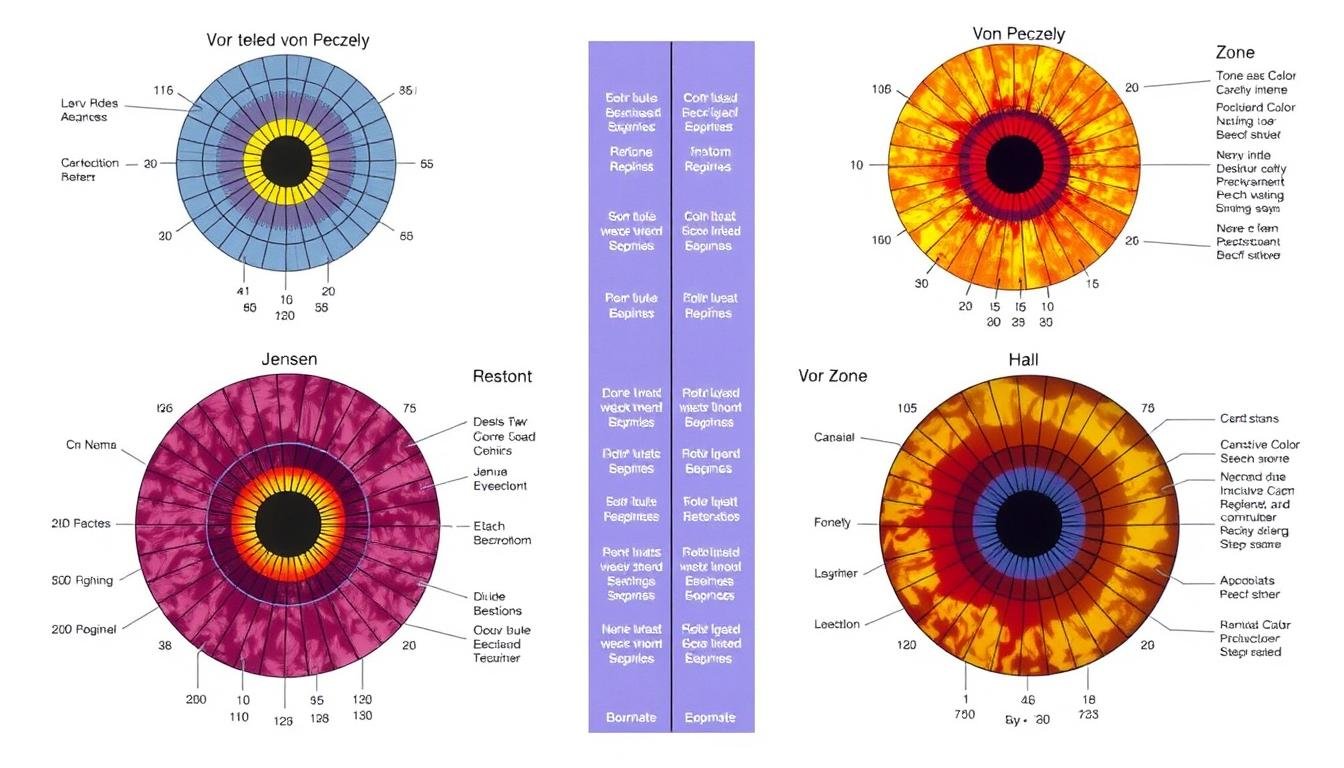
Vista comparativa de las principales. tabla de iridología sistemas que muestran diferentes enfoques para el mapeo del iris
mientras todos gráficos de iridología Aunque comparten el principio fundamental de que el iris refleja la condición de los órganos y sistemas del cuerpo, existen diferencias significativas entre los principales sistemas desarrollados por diferentes profesionales. Comprender estas variaciones ayuda a los profesionales a seleccionar el enfoque que mejor se adapta a sus necesidades.
| Sistema de gráficos |
Número de zonas |
Enfoque especial |
Características únicas |
Mejor para |
| Von Peczely |
~80 |
mapeo de órganos |
Primer enfoque sistemático |
Comprender el fundamento histórico |
| liljequist |
~60 |
Efectos de drogas/toxinas |
Análisis de color |
Evaluación de toxicidad |
| Jensen |
~100 |
Correlación nutricional |
Etapas de curación |
Análisis completo |
| Cubierta |
~90 |
Tipos constitucionales |
Medición precisa |
Practicantes sistemáticos |
| Sala |
~85 |
Patrones emocionales |
Escritura de personalidad |
Conexión holística emocional-física |
Los profesionales modernos a menudo combinan elementos de múltiples sistemas, creando enfoques integrados que aprovechan las fortalezas de cada tradición. Esta síntesis representa la evolución continua de la iridología como arte y ciencia.
Aplicaciones prácticas de la Tabla de iridología Hoy

Iridólogo contemporáneo que utiliza tecnología digital para analizar patrones de iris con modernas gráficos de iridología
Los iridólogos de hoy se benefician de avances tecnológicos que los pioneros del campo sólo podrían haber imaginado. Las cámaras digitales con capacidades macro permiten fotografías detalladas del iris, mientras que el software especializado puede mejorar y analizar las características del iris con precisión. Estas herramientas complementan, en lugar de reemplazar, las herramientas tradicionales. tabla de iridología, que sigue siendo la base conceptual de la práctica.
Aplicaciones modernas de Gráficos de iridología
Exámenes de salud preventivos
Los practicantes usan gráficos de iridología identificar posibles vulnerabilidades de salud antes de que aparezcan los síntomas, permitiendo intervenciones preventivas.
Evaluación complementaria
La iridología sirve como herramienta complementaria a otros métodos de diagnóstico, proporcionando perspectivas adicionales sobre la salud del cliente.
Análisis constitucional
Comprender las fortalezas y debilidades inherentes de un cliente a través del análisis del iris ayuda a adaptar las recomendaciones de salud a las necesidades individuales.
Si bien la medicina convencional no ha adoptado ampliamente la iridología, muchos profesionales de la salud holística encuentran valor en los conocimientos proporcionados por gráficos de iridología. La naturaleza no invasiva del análisis del iris lo convierte en una opción atractiva para el examen de salud inicial y para monitorear los cambios a lo largo del tiempo.
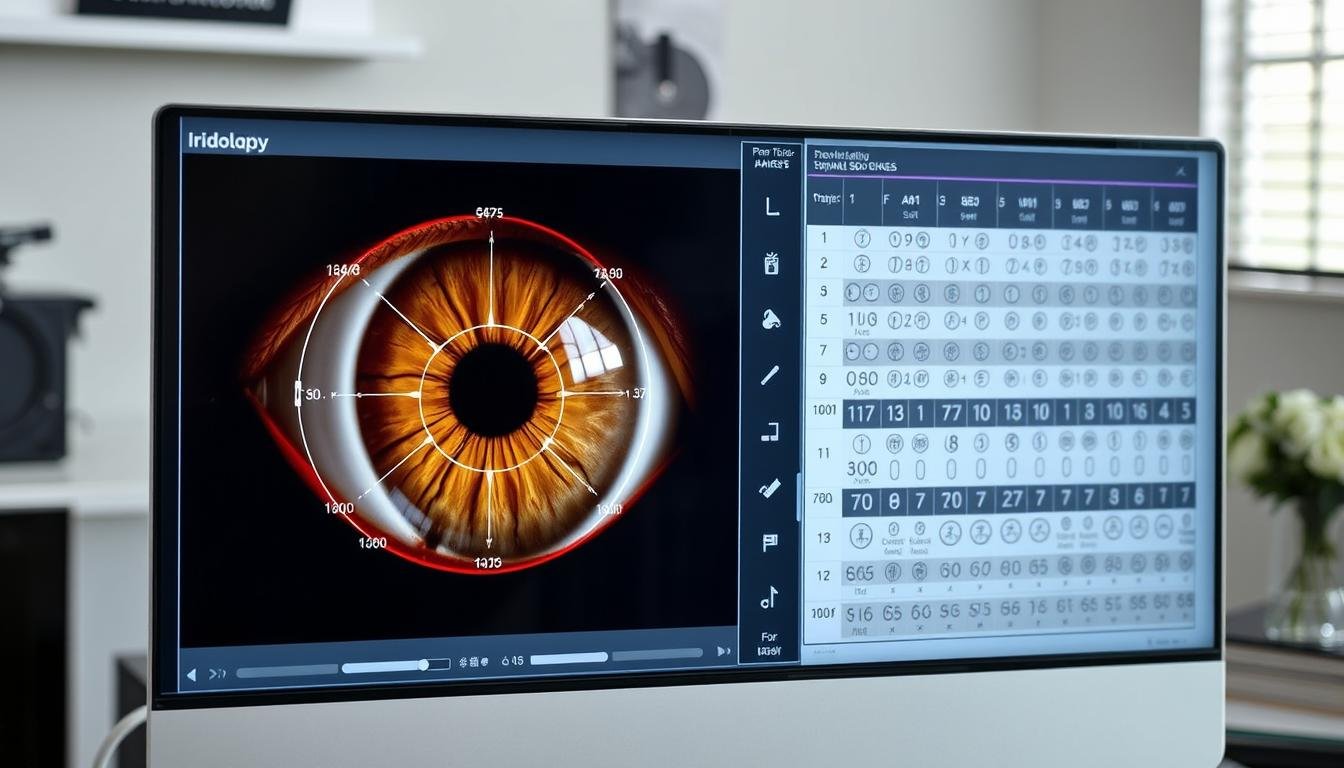
Software de iridología digital que compara fotografías del iris con fotografías estandarizadas gráficos de iridología
La integración de lo tradicional tabla de iridología El conocimiento con la tecnología moderna representa la evolución continua de este campo. Las bases de datos digitales ahora permiten a los profesionales comparar los patrones del iris de los clientes con miles de casos documentados, mejorando la precisión y utilidad del análisis del iris.
Perspectiva científica sobre Gráficos de iridología

Se están realizando investigaciones para evaluar la precisión de gráficos de iridología y análisis de iris
La comunidad científica mantiene una postura escéptica hacia la iridología, y la medicina convencional generalmente no reconoce gráficos de iridología como herramientas de diagnóstico válidas. Varios estudios controlados no han logrado demostrar que los iridólogos puedan identificar consistentemente enfermedades específicas únicamente mediante el análisis del iris.
Evidencia de apoyo
- Algunos estudios muestran correlaciones entre las características del iris y ciertas condiciones genéticas
- Los patrones del iris son únicos y estables, lo que los hace fiables para la observación.
- El iris tiene ricas conexiones nerviosas con el cerebro y el sistema nervioso autónomo.
- Los estudios de caso documentan correlaciones aparentes entre los cambios del iris y los cambios de salud
Factores limitantes
- Investigaciones limitadas revisadas por pares que respaldan correlaciones específicas entre el iris y los órganos
- Los estudios controlados muestran resultados mixtos en cuanto a la precisión del diagnóstico
- Falta de metodología estandarizada en diferentes sistemas de iridología
- Potencial de sesgo de confirmación en la interpretación
A pesar de estas limitaciones, muchos profesionales informan del éxito clínico utilizando gráficos de iridología como parte de un enfoque de evaluación holístico. El campo continúa evolucionando y algunos investigadores piden estudios más rigurosos que utilicen tecnología moderna para evaluar aspectos específicos de la teoría iridológica.
Aprender a utilizar un Tabla de iridología

Estudiante aprendiendo a interpretar los signos del iris con la ayuda de un profesional tabla de iridología
Para aquellos interesados en aprender iridología, entender cómo utilizar un tabla de iridología es el primer paso esencial. Si bien el dominio requiere estudio y práctica dedicados, los principios básicos son accesibles para la mayoría de los entusiastas de la salud.
Pasos para aprender Tabla de iridología Interpretación:
- Estudiar la anatomía básica del iris y sus estructuras.
- Conozca las divisiones de zonas fundamentales en estándar. gráficos de iridología
- Practique la identificación de los principales signos del iris (anillos, manchas, fibras, etc.)
- Compare ejemplos de tejidos sanos y comprometidos
- Comience con observaciones simples antes de intentar un análisis detallado.
- Estudie con profesionales experimentados para obtener la orientación adecuada.
Muchas escuelas y programas de certificación ofrecen capacitación en iridología, desde talleres de fin de semana hasta cursos de certificación integrales. Estos programas normalmente se centran en temas específicos. tabla de iridología sistemas, siendo los enfoques de Jensen y Deck uno de los más comúnmente enseñados.
¿Listo para explorar lo que revela tu iris?
Los iridólogos profesionales pueden ayudarle a comprender lo que indican los patrones de su iris sobre su salud utilizando técnicas avanzadas. gráficos de iridología desarrollado por estos pioneros.
Programe una consulta de iridología
Preguntas frecuentes sobre Gráficos de iridología
¿Qué es un Tabla de iridología?
Un tabla de iridología es una herramienta de diagnóstico que asigna regiones del iris (la parte coloreada del ojo) a diferentes órganos y sistemas del cuerpo. Estos gráficos sirven como guías de referencia para que los profesionales interpreten marcas, colores y patrones en el iris que pueden indicar condiciones de salud o tendencias constitucionales en las áreas correspondientes del cuerpo.
¿Qué tan precisos son? Gráficos de iridología?
La precisión de gráficos de iridología sigue siendo objeto de debate. Si bien la medicina convencional generalmente no reconoce la iridología como válida desde el punto de vista diagnóstico, muchos profesionales holísticos informan sobre el éxito clínico al utilizar estos gráficos como parte de una evaluación integral de la salud. La iridología se considera mejor como una herramienta complementaria que como un método de diagnóstico independiente.
Cual Tabla de iridología ¿El sistema es mejor para principiantes?
Bernard Jensen tabla de iridología El sistema a menudo se recomienda para principiantes debido a su naturaleza integral y la abundancia de materiales educativos disponibles. El sistema de Dorothy Hall también se considera accesible para quienes son nuevos en la iridología, con su énfasis en la interpretación simplificada y las aplicaciones prácticas.
¿Puedo realizarme iridología a mí mismo utilizando un Tabla de iridología?
Si bien es posible observar las características básicas del iris usted mismo, la iridología adecuada requiere equipo especializado para fotografías detalladas del iris e interpretación capacitada. La autoevaluación está limitada por la dificultad para obtener imágenes claras y la experiencia necesaria para interpretar los hallazgos con precisión. Se recomienda la consulta profesional para un análisis significativo utilizando un tabla de iridología.
El legado en evolución de Gráficos de iridología

digitales modernos tabla de iridología aprovechando el legado de los iridólogos pioneros
El desarrollo de la tabla de iridología Representa un viaje fascinante desde la observación intuitiva hasta la práctica sistemática. Desde los mapas iniciales de von Peczely hasta los sistemas de análisis digitales actuales, cada generación de iridólogos se ha basado y perfeccionado el trabajo de sus predecesores.
Mientras continúa el debate sobre la validez científica de la iridología, el legado perdurable de estos profesionales pioneros es evidente en los miles de profesionales de la salud holística en todo el mundo que continúan encontrando valor en el análisis del iris. El tabla de iridología, en sus diversas formas, sigue siendo un testimonio de la búsqueda continua de la humanidad por comprender las conexiones entre los diferentes aspectos de la salud y encontrar métodos no invasivos de evaluación de la salud.
Ya sea abordada con escepticismo científico o entusiasmo holístico, la historia del tabla de iridología y sus desarrolladores ofrece información valiosa sobre la evolución de las prácticas de salud alternativas y su influencia continua en los enfoques de bienestar contemporáneos.
Experimente las ideas de Gráficos de iridología De primera mano
Descubra lo que su iris revela sobre su salud con una consulta profesional basada en el trabajo pionero de estos influyentes iridólogos.
Encuentre un iridólogo certificado hoy


