El iris humano contiene patrones intrincados tan únicos como las huellas dactilares. Para los profesionales de la medicina alternativa, estos patrones representan algo más que el color de los ojos: son un mapa de su salud. Un tabla de iridología Sirve como clave para decodificar este mapa, vinculando zonas específicas de su iris con órganos y sistemas de todo su cuerpo. Ya sea que tenga curiosidad acerca de las evaluaciones de salud alternativas o busque comprender los diagramas coloridos que ha visto en las clínicas de salud natural, esta guía completa le explicará cómo gráficos de iridología su trabajo, su desarrollo histórico y el debate actual sobre su efectividad.
¿Qué es un Tabla de iridología y ¿Cómo funciona?
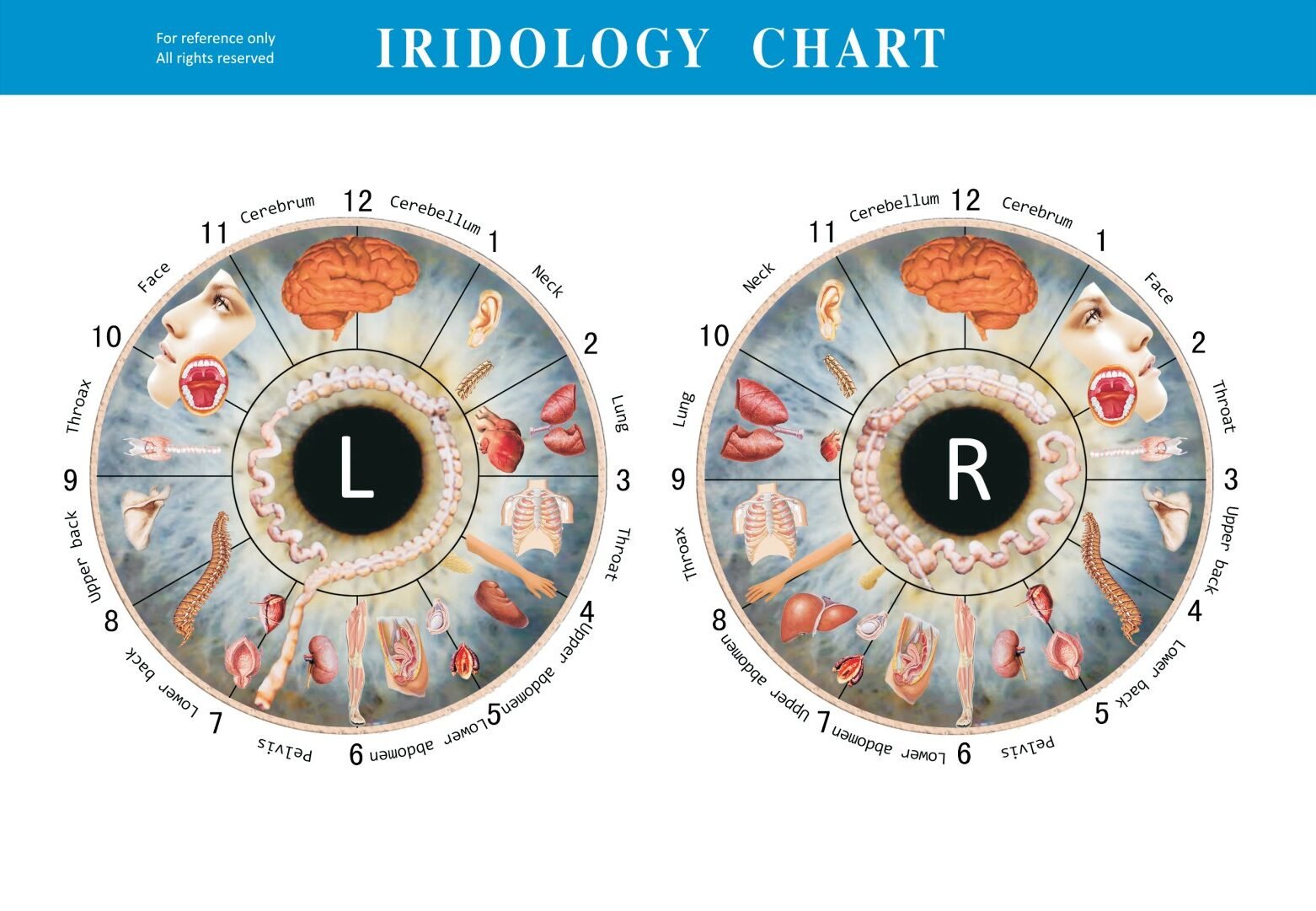
Un tabla de iridología es una herramienta de diagnóstico que divide el iris en zonas correspondientes a diferentes partes del cuerpo humano. Los iridólogos utilizan estos gráficos para examinar los patrones, colores y marcas de su iris para evaluar su estado de salud, identificar áreas problemáticas potenciales e incluso predecir problemas de salud futuros.
Un estándar tabla de iridología mapeo de zonas del iris a órganos y sistemas corporales correspondientes
Según los profesionales de la iridología, el iris se conecta con todos los órganos y tejidos a través del sistema nervioso y el cerebro. Cuando un órgano experimenta estrés o daño, aparecen los cambios correspondientes en el iris. Estos cambios pueden manifestarse como:
- Variaciones de color (manchas blancas, amarillas, marrones)
- Cambios estructurales (líneas, anillos, nubes)
- Alteraciones de textura (densidad, patrones de fibras)
- Cambios de pigmentación (oscurecimiento o aclaración)
Al consultar un tabla de iridología, los médicos afirman identificar qué sistemas del cuerpo necesitan atención, incluso antes de que aparezcan síntomas en otras partes del cuerpo.
Explore la iridología aún más
¿Tienes curiosidad por saber qué podría revelar tu iris? Descargue nuestra resolución gratuita tabla de iridología para comenzar su exploración.
Descargar la lista de iridología gratuita
El desarrollo histórico de la Tabla de iridología
La práctica de examinar los ojos en busca de información sobre la salud se remonta a miles de años, pero la actualidad gráficos de iridología tienen una historia más reciente.
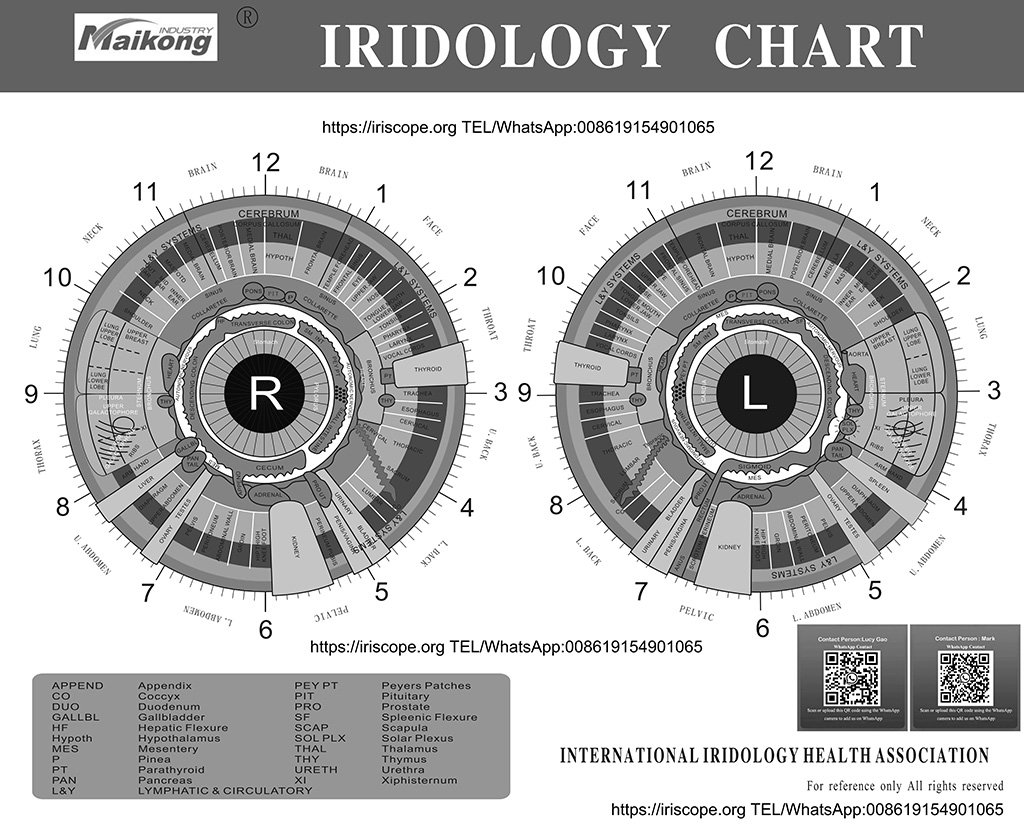
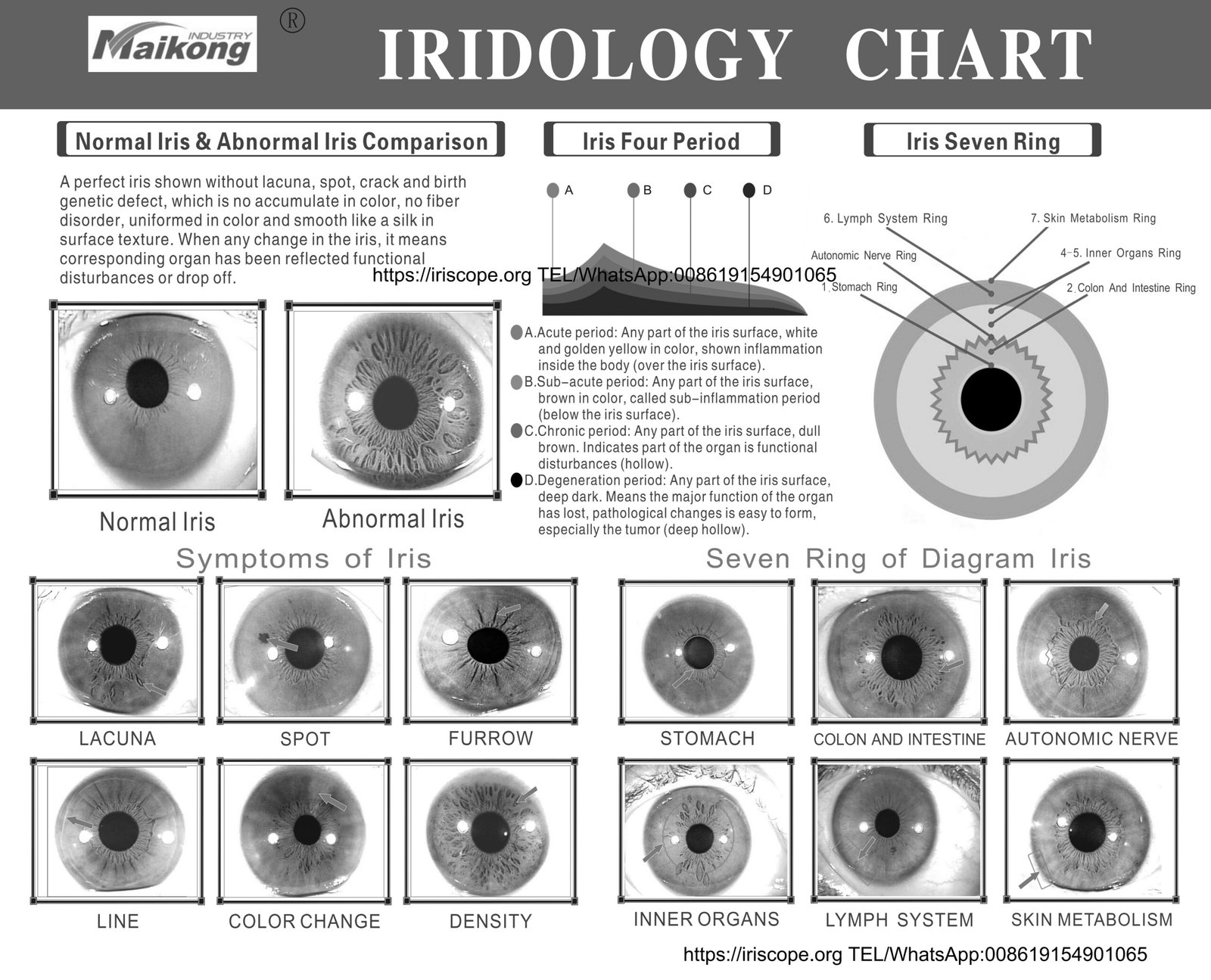

temprano tabla de iridología del siglo XIX
Cifras clave en Tabla de iridología Desarrollo
Filipo Meyeus (1670): Publicó la primera descripción explícita de los principios iridológicos en “quiromática médica,” aunque no usó el término “iridología.”
Ignaz von Peczely (década de 1860): El médico húngaro es considerado el padre fundador de la iridología moderna. La leyenda afirma que notó cambios en el iris de un búho con una pata rota, lo que inspiró su investigación. Creó el primer completo tabla de iridología.
Nils Liljequist (1893): Tras observar cambios en su propio iris tras la medicación, este homeópata sueco publicó un atlas con 258 ilustraciones en blanco y negro y 12 ilustraciones en color del iris.
Bernard Jensen (década de 1950): Popularizó la iridología en Estados Unidos a través de clases y publicaciones. Su tabla de iridología sigue siendo influyente en la práctica moderna.
Con el tiempo, gráficos de iridología han evolucionado desde simples dibujos hasta mapas detallados codificados por colores. Los gráficos modernos suelen incorporar tecnología digital para un análisis más preciso, aunque los principios fundamentales siguen siendo similares a los establecidos por los primeros pioneros.
Comprender las zonas del iris en un Tabla de iridología
Un estándar tabla de iridología Divide el iris en aproximadamente 80-90 zonas, dispuestas en círculos concéntricos alrededor de la pupila. Cada zona corresponde a diferentes partes del cuerpo.
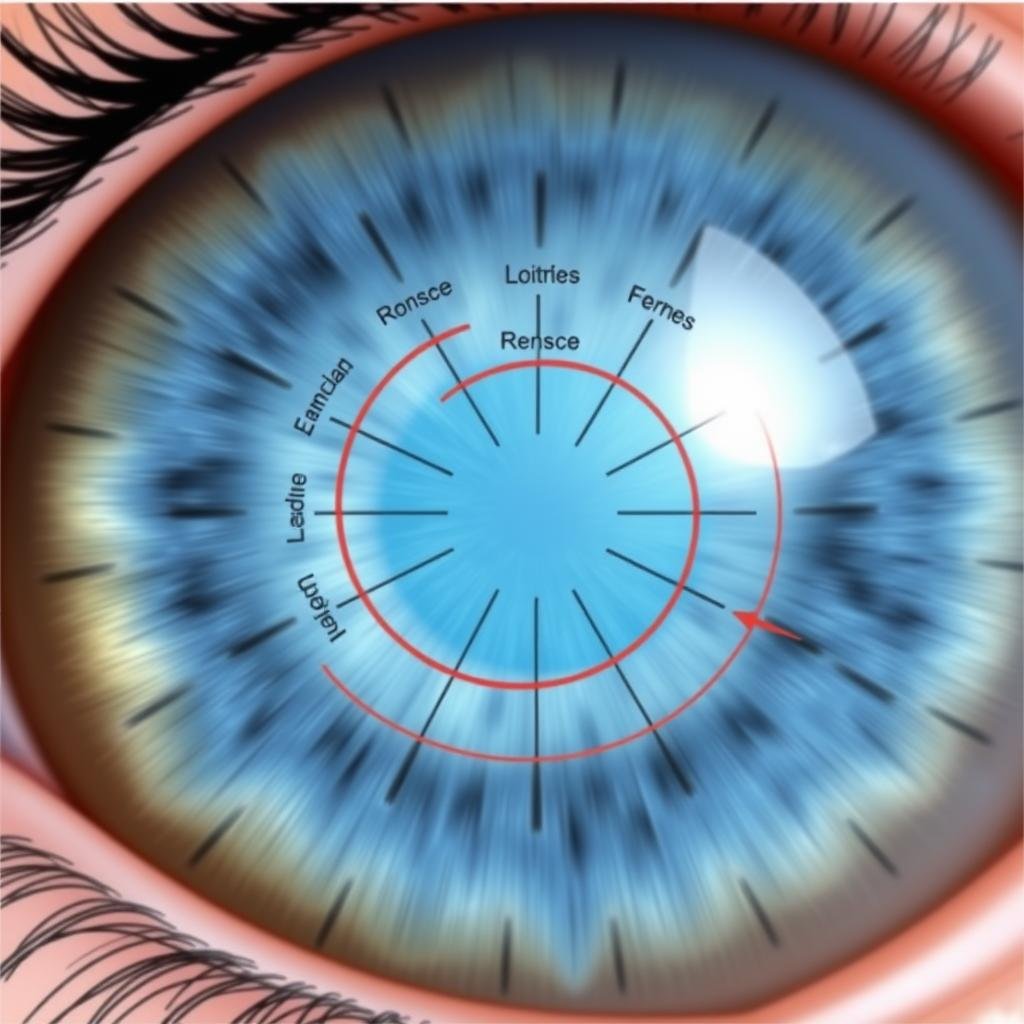
Zonas concéntricas en un tabla de iridología Representando diferentes sistemas corporales.
Zonas Principales del Tabla de iridología
Zonas de iris correctas
- Región superior: Cerebro, cabeza, senos paranasales.
- Superior derecha: Pulmones, bronquios, garganta.
- Superior izquierda: Corazón, pecho, pecho
- Centro Derecha: Hígado, vesícula biliar
- Centro izquierda: Estómago, páncreas
- Región Baja: Intestinos, órganos reproductivos.
Zonas de Iris Izquierda
- Región superior: Cerebro, circulación cerebral
- Superior derecha: Bazo, hombro izquierdo
- Superior izquierda: corazón, tiroides
- Centro Derecha: Estómago, páncreas
- Centro izquierda: suprarrenales, riñones
- Región Baja: Colon, vejiga, sistema reproductivo.
Zonas circulares
- Zona pupilar: sistema digestivo
- Zona Ciliar: Sistema muscular, circulación.
- Corona de nervio autónomo: Sistema nervioso
- Zona exterior del iris: Piel, extremidades, sistema linfático.
- Borde del iris: sistema esquelético
Los iridólogos examinan estas zonas en busca de cambios de color, marcas estructurales y otras anomalías. La posición de una marca dentro de una zona refina aún más el diagnóstico a órganos o tejidos específicos.

Comparación de patrones de iris saludables (izquierda) versus patrones que indican posibles problemas de salud (derecha) según la iridología
Órganos y sistemas mapeados en el Tabla de iridología
Un tabla de iridología asigna prácticamente todos los órganos y sistemas del cuerpo humano a ubicaciones específicas del iris. Así es como se representan algunos órganos clave:
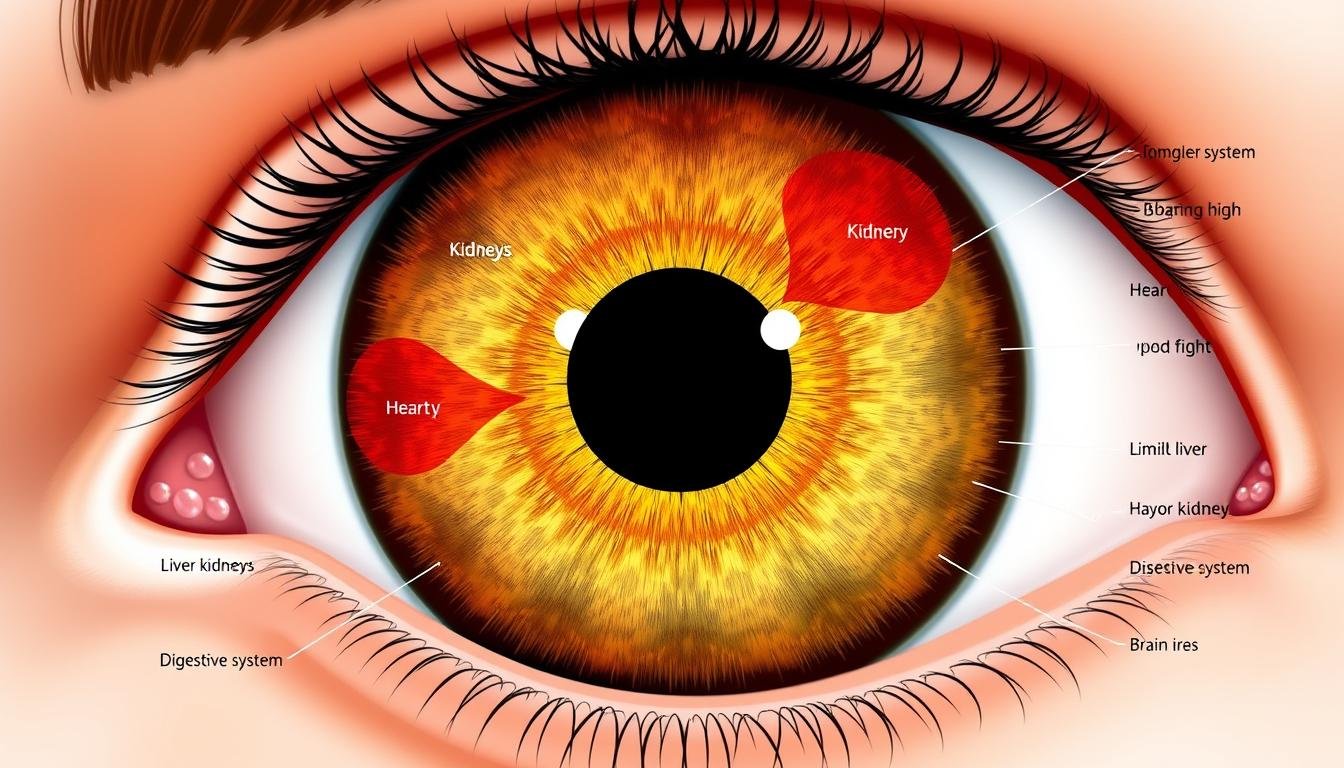
Principales sistemas de órganos mapeados en un estándar. tabla de iridología
| Órgano/Sistema |
Ubicación del iris |
Señales de posibles problemas |
| Corazón |
Iris izquierdo, cuadrante superior (7-8 en punto) |
Manchas oscuras, nubosidad blanca, líneas radiales. |
| Hígado |
Iris derecho, zona media (8-9 horas) |
Manchas marrones, decoloración amarillenta. |
| riñones |
Cuadrantes inferiores de ambos iris (5-6 en punto) |
Marcas blancas, manchas oscuras, cambios estructurales. |
| Pulmones |
Cuadrantes superiores de ambos iris (2-3 en punto) |
Nubes blancas, manchas oscuras, roturas estructurales. |
| Sistema digestivo |
Alrededor de la pupila en ambos iris. |
Decoloraciones, líneas radiales, manchas oscuras. |
| Sistema linfático |
Borde exterior de ambos iris. |
Marcas blancas, nubosidad, cambios estructurales. |
Los iridólogos creen que examinar estas áreas específicas puede revelar información sobre la función de los órganos, la inflamación, la toxicidad y el estado de salud general. La intensidad y el tipo de marcas pueden indicar la gravedad de las condiciones.
¿Interesado en aprender más?
Descubra cómo los profesionales de la iridología interpretan estos mapeos de órganos con nuestra guía completa.
Solicitar consulta gratuita
Condiciones de salud identificadas a través de un Tabla de iridología
Los defensores de la iridología afirman que se pueden detectar diversas condiciones de salud analizando los patrones del iris y comparándolos con un tabla de iridología. Si bien la validación científica sigue siendo limitada, aquí hay algunas condiciones que los iridólogos suelen buscar:

Diversas marcas del iris y sus posibles indicaciones para la salud según la iridología.
Condiciones circulatorias
- Hipertensión: Indicado por un anillo alrededor del iris, lo que sugiere un aumento de la presión arterial.
- Colesterol alto: Un anillo blanco alrededor del borde exterior del iris puede indicar colesterol excesivo o arteriosclerosis.
- Mala circulación: Se manifiesta por una falta de definición clara en las fibras del iris.
Problemas digestivos
- Daño hepático: Las manchas marrones en el área del hígado pueden indicar enfermedad hepática o toxicidad.
- Problemas de la vesícula biliar: El color amarillento en áreas específicas puede sugerir anomalías en la vesícula biliar o en los conductos biliares.
- Debilidad digestiva: Las decoloraciones alrededor de la pupila pueden indicar problemas con el sistema digestivo.
Otras condiciones
- Inflamación: Las rayas blancas o las nubes en zonas específicas pueden indicar inflamación en los órganos correspondientes.
- Sistema inmunológico debilitado: Las marcas blancas en todo el iris pueden sugerir una inmunidad comprometida.
- Desequilibrios hormonales: Las marcas específicas en zonas del sistema endocrino pueden indicar problemas de tiroides o suprarrenales.
“Si bien la iridología no puede diagnosticar enfermedades específicas, puede ayudar a identificar qué órganos y sistemas del cuerpo están bajo estrés y en riesgo de desarrollar enfermedades.”
Los iridólogos enfatizan que su práctica no tiene como objetivo diagnosticar enfermedades sino identificar áreas de debilidad o estrés en el cuerpo. A menudo recomiendan pruebas médicas adicionales para confirmar cualquier condición sospechada.
Perspectiva científica sobre la Tabla de iridología
La comunidad científica ha expresado un gran escepticismo sobre la validez de gráficos de iridología y la práctica de la iridología en general. Comprender ambos lados de este debate es importante para cualquiera que esté considerando la iridología.

Investigación científica que examina la validez de las afirmaciones de iridología.
Argumentos que apoyan la iridología
- El iris contiene miles de terminaciones nerviosas conectadas al cerebro
- Evidencia anecdótica de profesionales que informan evaluaciones exitosas
- Uso histórico prolongado en varios sistemas de medicina tradicional.
- La naturaleza no invasiva lo convierte en un enfoque complementario atractivo
- Puede fomentar medidas de salud preventivas y la autoconciencia.
Críticas científicas
- Los estudios controlados no han logrado demostrar la precisión diagnóstica
- La estructura del iris está genéticamente determinada y permanece estable durante toda la vida.
- No hay ningún mecanismo fisiológico probado sobre cómo los órganos internos afectarían la apariencia del iris
- Los profesionales a menudo muestran poca confiabilidad entre examinadores.
- Puede retrasar el diagnóstico y tratamiento médico adecuado.
Resultados clave de la investigación
Varios estudios controlados han probado la eficacia de la iridología:
- Estudio de 1979: Bernard Jensen y otros dos iridólogos no lograron identificar correctamente a los pacientes con enfermedad renal al examinar fotografías del iris.
- Estudio de la revista médica británica de la década de 1980: Los iridólogos no pudieron identificar correctamente a los pacientes con enfermedad de la vesícula biliar mediante exámenes del iris.
- Reseña de 2000 de Edzard Ernst: No se encontraron beneficios de la iridología en evaluaciones controladas y enmascaradas de validez diagnóstica.
- Estudio de detección de cáncer de 2005: La iridología concluyó que no tenía valor para diagnosticar formas comunes de cáncer.
El Departamento de Salud del gobierno australiano revisó terapias alternativas en 2015 y no encontró evidencia clara de efectividad para la iridología.
A pesar de estas críticas, muchos médicos y pacientes continúan encontrando valor en la iridología como un enfoque complementario a la evaluación de la salud, particularmente cuando se utiliza junto con la atención médica convencional en lugar de como un reemplazo.
Cómo leer un básico Tabla de iridología
Si está interesado en explorar la iridología, comprender cómo leer un tabla de iridología es el primer paso. Si bien se recomienda capacitación profesional para una interpretación precisa, estos son los conceptos básicos:
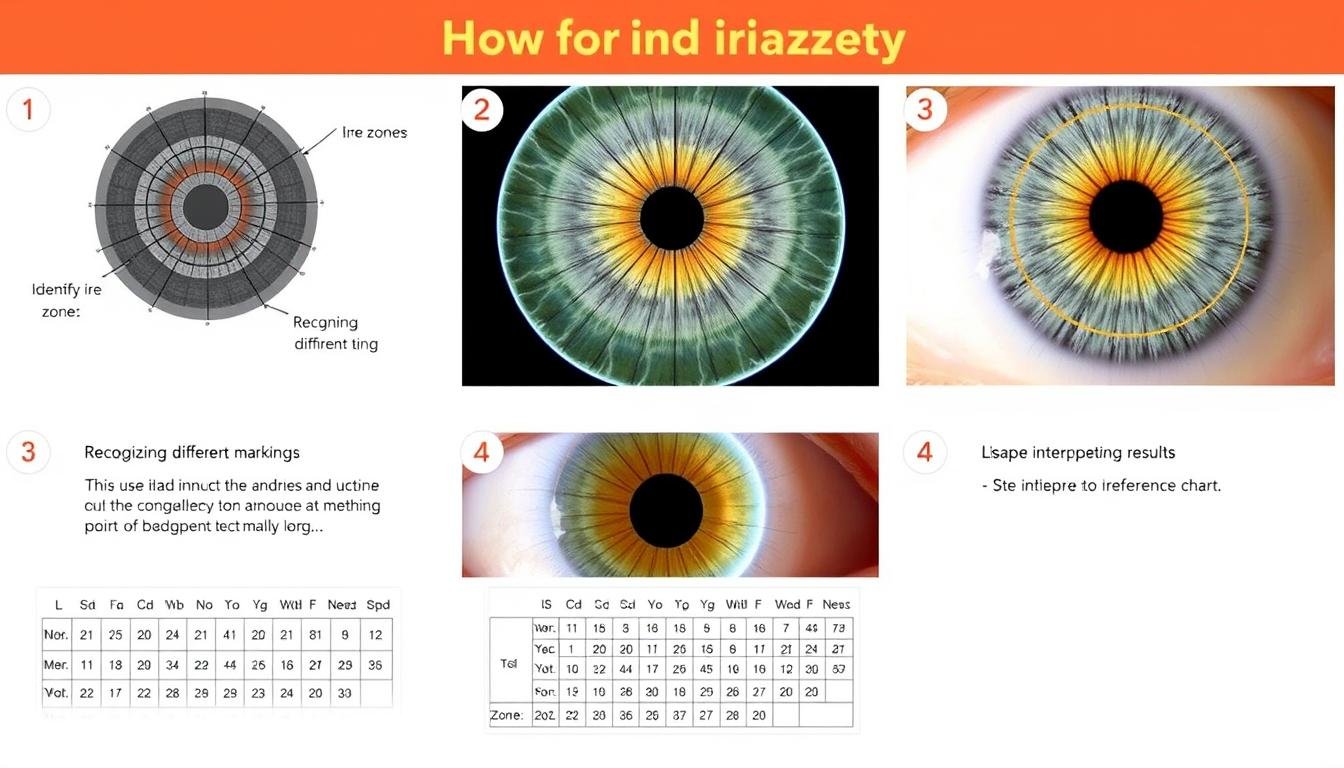
Guía paso a paso de lo básico. tabla de iridología lectura
Guía paso a paso para leer un Tabla de iridología
Paso 1: identificar el tipo de iris
Determina si estás mirando un tipo de iris azul, marrón, mixto o de otro tipo. Diferentes colores base pueden requerir interpretaciones ligeramente diferentes.
Paso 2: orientar el gráfico
Coloque el tabla de iridología correctamente: el iris derecho corresponde al lado derecho del cuerpo, el iris izquierdo al lado izquierdo.
Paso 3: localizar las zonas
Identifique las zonas principales (pupilar, ciliar, etc.) y las regiones específicas de órganos dentro de cada iris.
Paso 4: analizar las marcas
Busque cambios de color, marcas estructurales y otras anomalías en cada zona y compárelos con materiales de referencia.
Signos comunes del iris y sus significados
| signo de iris |
Apariencia |
Indicación potencial |
| Líneas radiales |
Líneas que se extienden desde la pupila hacia el borde del iris. |
Estrés nervioso o irritación en el órgano correspondiente. |
| Laguna |
Formaciones cerradas parecidas a lagos. |
Debilidad inherente o predisposición genética. |
| Criptas |
Formaciones abiertas en forma de pozo |
Potencial de acumulación de toxinas. |
| Anillo de sodio |
Anillo blanco alrededor del iris exterior. |
Posible desequilibrio sal/minerales |
| Rosario linfático |
Puntos blancos formando un círculo. |
Congestión del sistema linfático |
| Borde |
Anillo oscuro en el borde exterior del iris. |
Problemas de eliminación de la piel. |
Importante: Autodiagnóstico mediante un tabla de iridología No se recomienda. Consulte siempre con profesionales de la salud calificados ante cualquier problema de salud.

Un iridólogo profesional que examina el iris de un paciente utilizando equipo especializado.
¿Listo para explorar tu iris?
Consigue un personalizado tabla de iridología leyendo a un médico certificado para descubrir lo que sus ojos pueden revelar sobre su salud.
Encuentre un iridólogo cerca de usted
Conclusión: el valor y las limitaciones de la Tabla de iridología
El tabla de iridología representa una intersección fascinante entre la observación tradicional y la evaluación de la salud alternativa. Si bien actualmente la evidencia científica no respalda muchas de las afirmaciones de la iridología, la práctica continúa atrayendo el interés de quienes buscan enfoques holísticos de la salud.
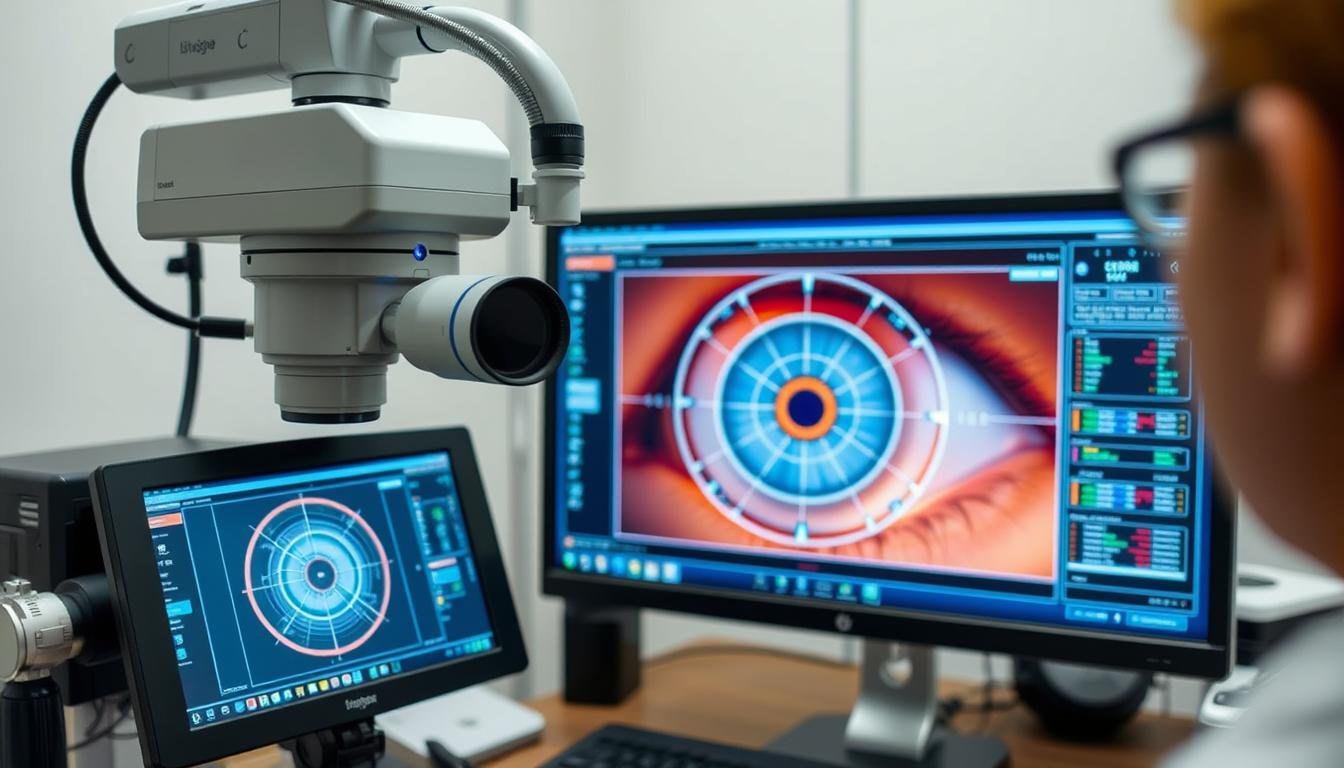
Enfoques digitales modernos para el análisis de iridología
Para aquellos interesados en la iridología, es importante abordarla con una perspectiva equilibrada:
- Considérelo una herramienta complementaria y no un sustituto del diagnóstico médico convencional.
- Consulte con profesionales calificados que tengan la capacitación adecuada.
- Mantenga un escepticismo saludable mientras permanece abierto a ideas potenciales.
- Siempre haga un seguimiento de los problemas de salud importantes con pruebas médicas adecuadas.
Ya sea que veas el tabla de iridología Como una valiosa herramienta de evaluación de la salud o un interesante artefacto histórico de la medicina alternativa, comprender sus principios y limitaciones le permite tomar decisiones informadas sobre su papel en su viaje hacia la salud.
Continúe su exploración de la iridología
Descargue nuestra guía completa para gráficos de iridología y comience su viaje hacia la comprensión de lo que sus ojos pueden revelar sobre su salud.
Obtenga su guía de iridología gratuita


