تاريخ وأساسيات مخططات علم القزحية
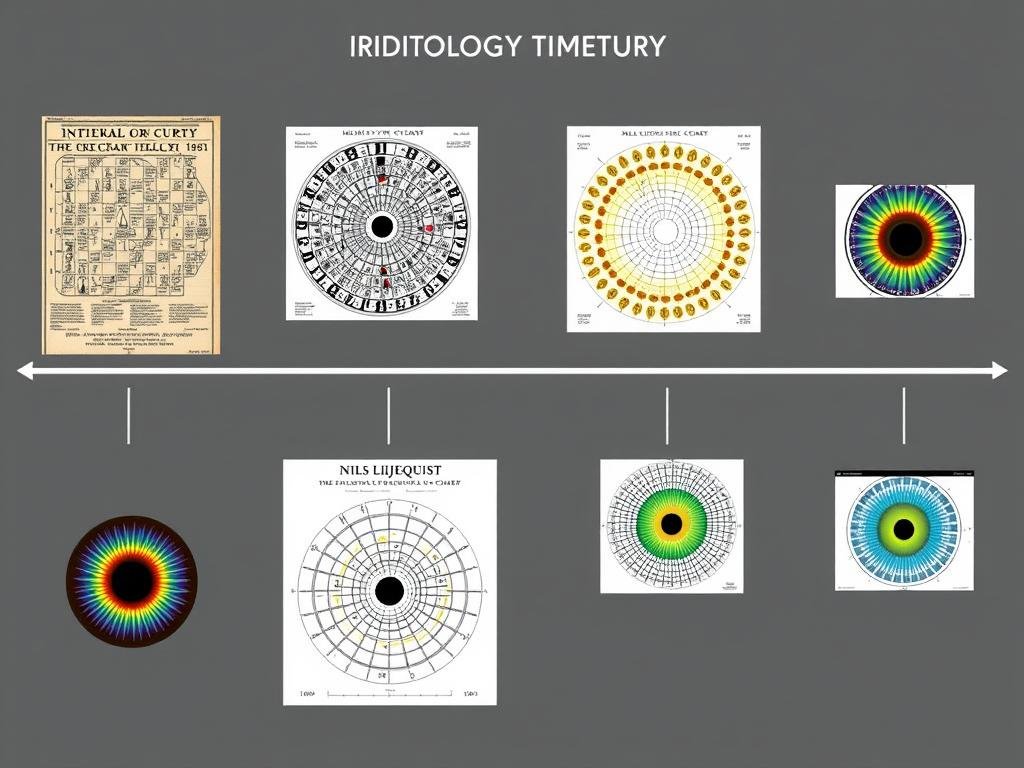
علم القزحية لها جذور تعود إلى الحضارات القديمة، ولكنها حديثة مخططات علم القزحية تم تطويرها بشكل منهجي في القرن التاسع عشر. غالبًا ما يُنسب الفضل إلى الطبيب المجري إيجناتز فون بيكزيلي في إنشاء أول مخطط تفصيلي لقزحية العين في عام 1881، بعد ملاحظة التغيرات في قزحية البومة بعد الإصابة. تم توسيع عمله لاحقًا من قبل الطبيب المثلي السويدي نيلز ليلجيكويست، الذي لاحظ تغيرات في لون القزحية بعد تناول بعض الأدوية.
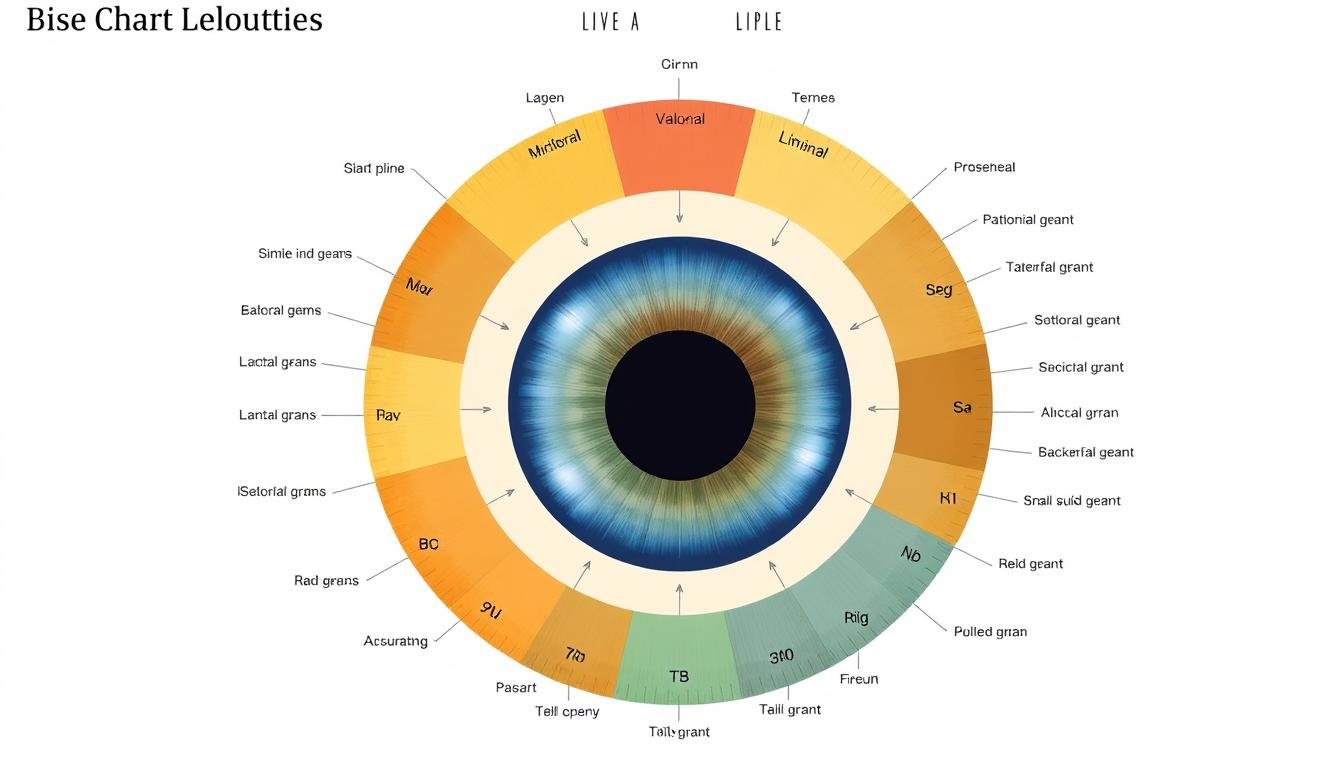
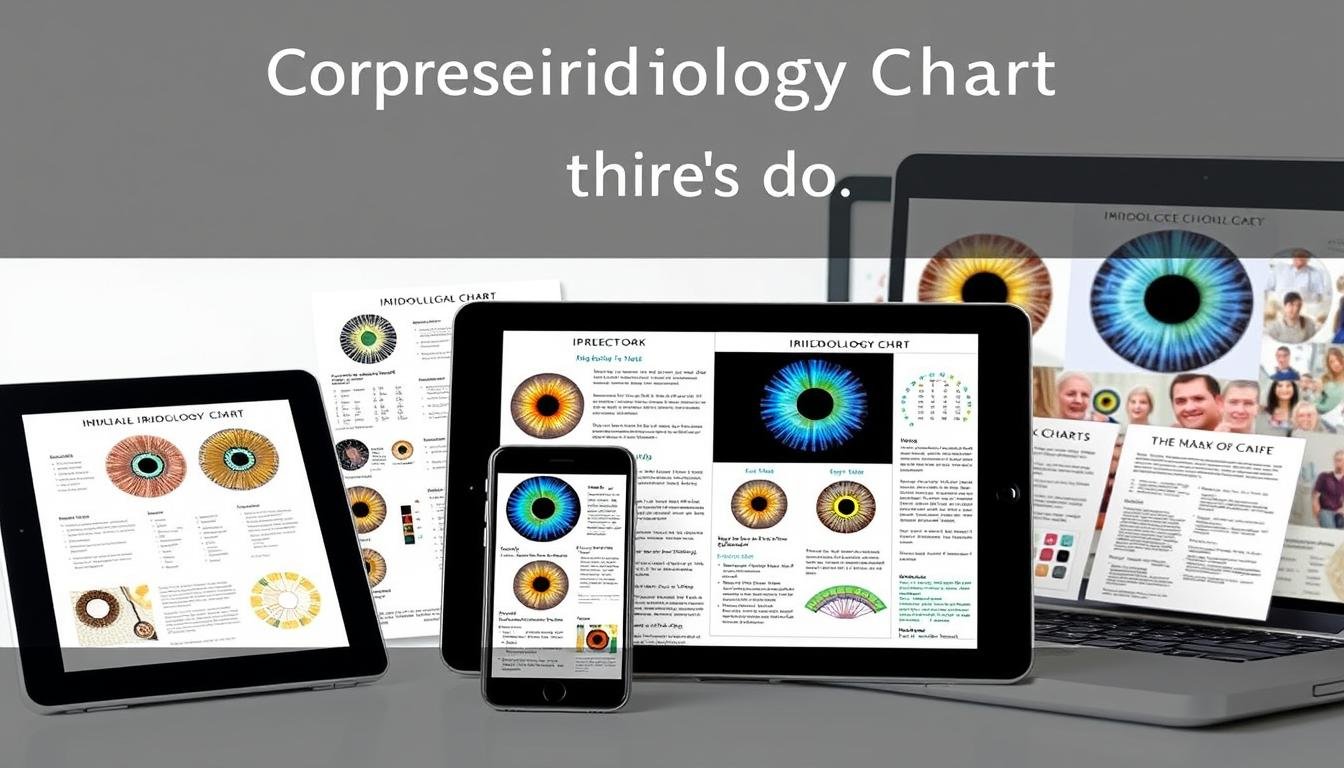
اليوم مخططات علم القزحية يمثل نظام رسم خرائط محسّن يقسم القزحية إلى مناطق تتوافق مع مختلف أعضاء وأنظمة الجسم. تعمل هذه المخططات كأدوات مرجعية يستخدمها الممارسون لتحديد المخاوف الصحية المحتملة من خلال الفحص الدقيق لأنماط القزحية وألوانها وعلاماتها.
المناطق الرئيسية في مخطط القزحية
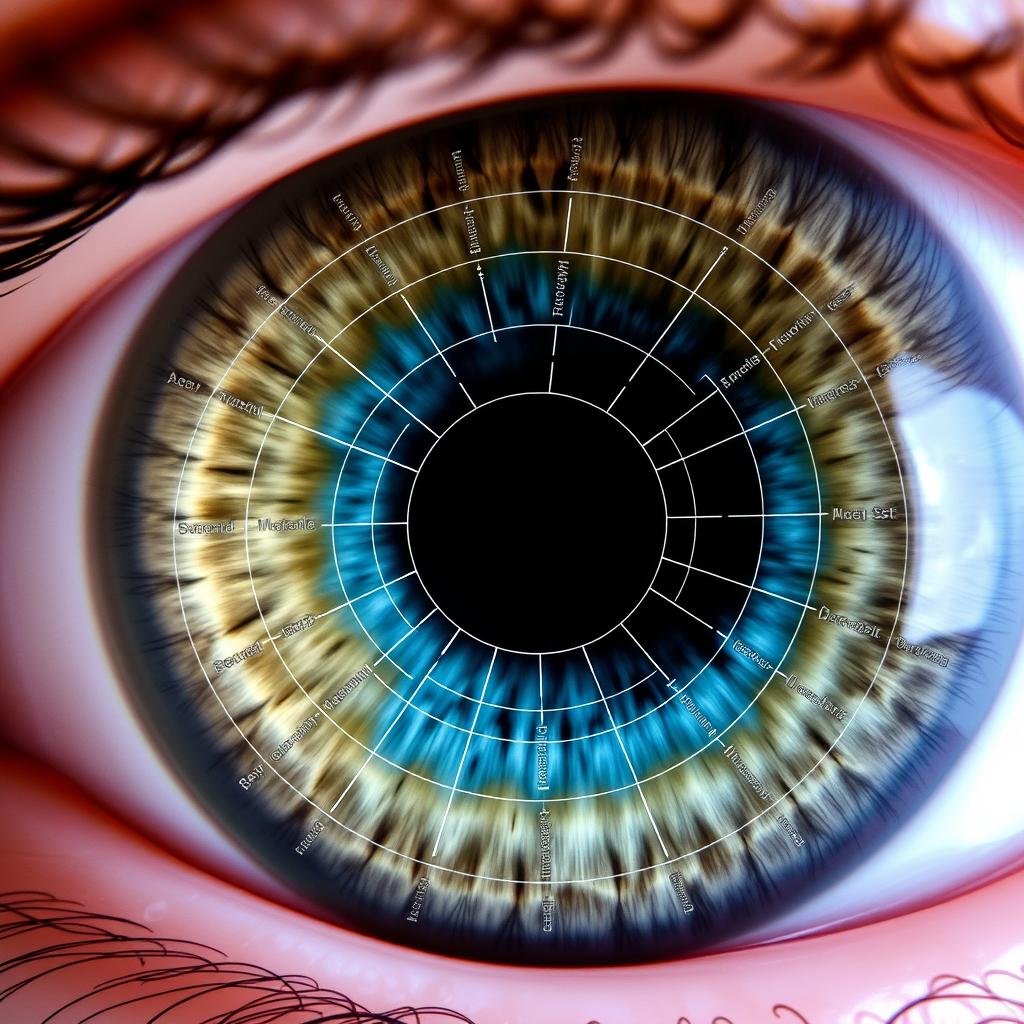
ال مخطط القزحية يقسم القزحية إلى مناطق متحدة المركز وأقسام شعاعية، كل منها يتوافق مع أجزاء مختلفة من الجسم. إن فهم هذه المناطق ضروري للتفسير الصحيح:
مناطق القزحية اليمنى
- المنطقة العلوية: الدماغ والرأس والجيوب الأنفية
- الأرباع اليمنى: الرئتين والكبد والمرارة
- المنطقة السفلية: الأمعاء، الزائدة الدودية، والساق اليمنى
- الحلقة الداخلية: المعدة والجهاز الهضمي
- الحلقة الخارجية: الجلد والدورة الدموية والجهاز اللمفاوي
مناطق القزحية اليسرى
- المنطقة العليا: الدماغ، الدورة الدموية الدماغية
- الأرباع اليسرى: القلب والطحال والبنكرياس
- المنطقة السفلية: القولون والأعضاء التناسلية والساق اليسرى
- الحلقة الداخلية: المعدة والجهاز الهضمي
- الحلقة الخارجية: الجلد والدورة الدموية والجهاز اللمفاوي
تمثل منطقة الحدقة (المنطقة المحيطة بالبؤبؤ) الجهاز الهضمي، بينما تمثل المنطقة الهدبية (القزحية الوسطى إلى الخارجية) الأعضاء والأنسجة الأخرى. وتنقسم القزحية أيضًا إلى ما يقرب من 60 قطاعًا، مما يؤدي إلى إنشاء خريطة تفصيلية يستخدمها علماء القزحية ذوي الخبرة لتحديد الاختلالات الصحية المحتملة.
كيفية تفسير مخطط القزحية
تعلم تفسير أ مخطط القزحية requires understanding both the map itself and the various markings that may appear in the iris. While comprehensive interpretation requires training and practice, here are the fundamental principles:
Basic Interpretation Steps
- Identify the iris type (blue, brown, mixed, etc.)
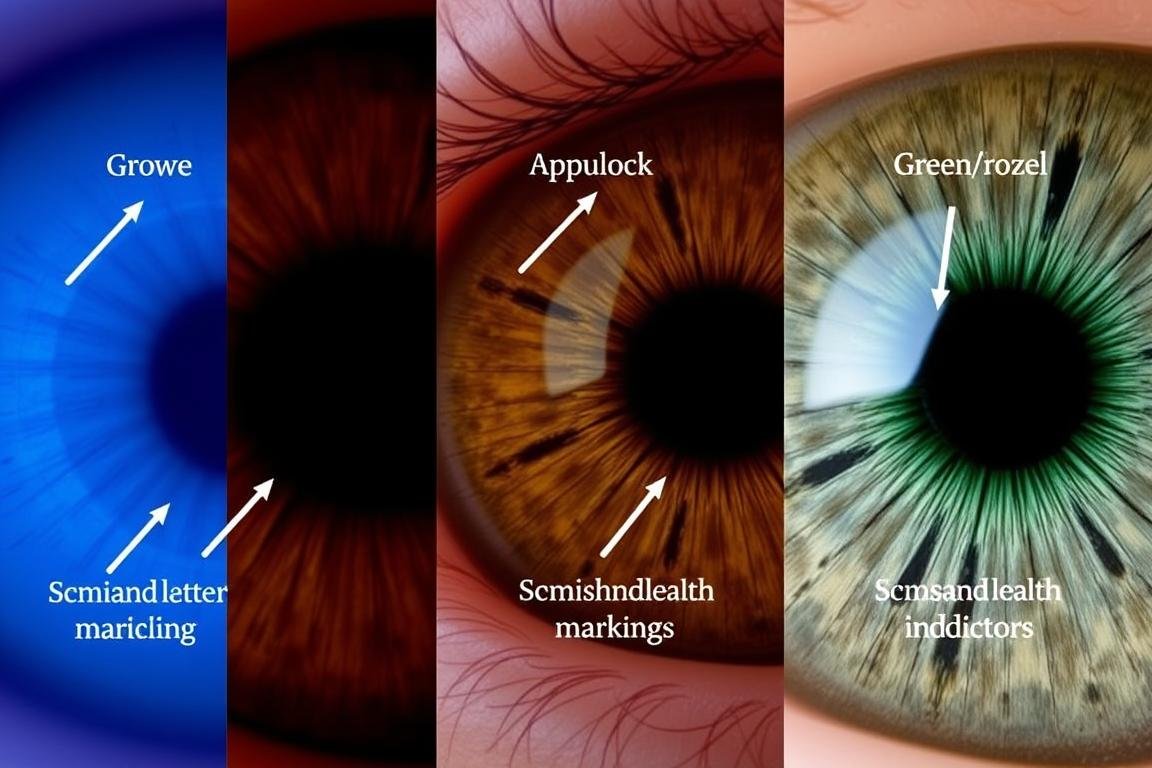
- Observe the overall iris structure and integrity
- Note any unusual markings, colors, or patterns
- Locate these markings on the مخطط القزحية
- Consider the corresponding body systems
- Look for patterns across multiple markings
- Develop a holistic assessment rather than diagnosing specific conditions
Common Markings and Their Meanings
Iridologists analyze various iris features to identify potential health concerns. Here are some common markings and their traditional interpretations:
| Marking |
مظهر |
التفسير التقليدي |
| الخطوط الشعاعية |
خطوط مستقيمة تشع من حدقة العين إلى القزحية الخارجية |
Normal iris structure; deeper lines may indicate stress in corresponding organs |
| lacunae |
مناطق مظلمة مغلقة تشبه البحيرات |
Potential inherent weakness or lesions in corresponding organs |
| الخبايا |
Small, dark, round openings |
Possible toxin accumulation or organ dysfunction |
| Rings (Nerve Rings) |
Circular lines surrounding the pupil or iris |
Nervous tension, stress, or anxiety; a ring around the iris may indicate blood pressure issues |
| White Marks |
Bright white spots or clouds |
Inflammation or acute activity in corresponding organs |
| Brown Spots |
Dark pigmentation areas |
Possible liver issues or toxin accumulation when in liver zone |
Remember that iridology is considered a complementary assessment tool rather than a diagnostic method. While many practitioners find value in these interpretations, they should be considered alongside other health information and professional medical advice.
Downloadable مخطط القزحية PDF Resources
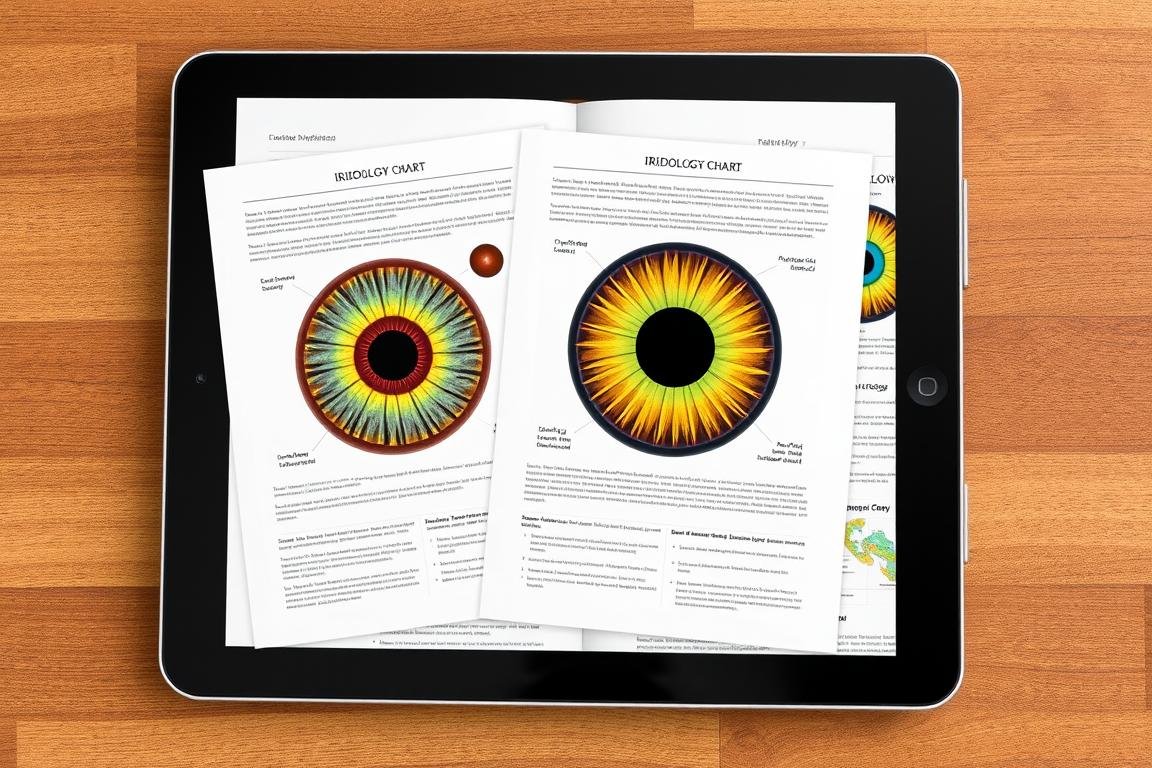
Access to quality مخطط القزحية resources is essential for both beginners and experienced practitioners. Our downloadable PDF guides provide comprehensive reference materials to support your learning journey.
Free مخطط القزحية PDF Guide
Our comprehensive beginner’s guide includes detailed iris maps, interpretation guidelines, and practice exercises to help you master the basics of iridology assessment.
Download Free Iridology Chart PDF
Free vs. Premium مخطط القزحية Guides
We offer both free and premium resources to accommodate different learning needs and levels of interest in iridology:
| ميزة |
Free PDF Guide |
Premium PDF Collection |
| Basic Iris Map |
✓ |
✓ (Enhanced) |
| Organ Correspondences |
✓ |
✓ (Detailed) |
| Marking Interpretations |
أساسي |
شامل |
| دراسات الحالة |
1 |
12+ |
| Practice Exercises |
✓ |
✓ (Advanced) |
| Color Coding System |
أساسي |
متقدم |
| Printable Reference Cards |
– |
✓ |
استخدام مخططات علم القزحية in Holistic Practice
ال مخطط القزحية serves as a valuable tool within a broader holistic health approach. Here’s how practitioners and health enthusiasts integrate these resources into their practice:
التقييم الأولي
Practitioners use مخططات علم القزحية during initial consultations to identify potential areas of concern and establish baseline observations. This helps create a comprehensive health profile that guides further investigation.
مراقبة التقدم
By documenting iris changes over time, practitioners can track how lifestyle modifications, dietary changes, and other interventions may be affecting overall health patterns reflected in the iris.
تعليم العميل
The visual nature of مخططات علم القزحية makes them excellent educational tools. Practitioners use them to help clients understand potential health imbalances and the interconnected nature of body systems.
“ال مخطط القزحية serves not as a diagnostic tool but as a map that helps us identify areas that may benefit from supportive care. It’s one piece of a comprehensive approach to understanding the body’s patterns and tendencies.”
– Dr. Bernard Jensen, Pioneering Iridologist
While iridology is not recognized by conventional medicine as a diagnostic tool, many holistic practitioners find value in using مخططات علم القزحية as part of a comprehensive assessment approach that considers multiple factors affecting health and wellbeing.
الخلاصة: قيمة مخطط القزحية موارد
The study of iris patterns through مخططات علم القزحية offers a fascinating perspective on holistic health assessment. While not a replacement for conventional medical diagnosis, these tools provide a unique lens through which to consider the body’s interconnected systems and potential imbalances.
Our downloadable PDF resources aim to make this ancient practice more accessible to modern learners, providing structured guidance for those interested in exploring the potential insights that iris analysis may offer. Whether you’re a holistic health practitioner looking to expand your assessment tools or simply curious about what your eyes might reveal about your health, our comprehensive guides provide a solid foundation for your exploration.
Begin your journey into iridology today by downloading our free مخطط القزحية PDF and discovering the fascinating world of iris interpretation.