The human iris contains intricate patterns as unique as fingerprints. For practitioners of alternative medicine, these patterns represent more than just eye color—they’re a map to your health. An مخطط القزحية serves as the key to decoding this map, linking specific zones of your iris to organs and systems throughout your body. Whether you’re curious about alternative health assessments or seeking to understand the colorful diagrams you’ve seen in natural health clinics, this comprehensive guide will explain how مخططات علم القزحية work, their historical development, and the ongoing debate about their effectiveness.
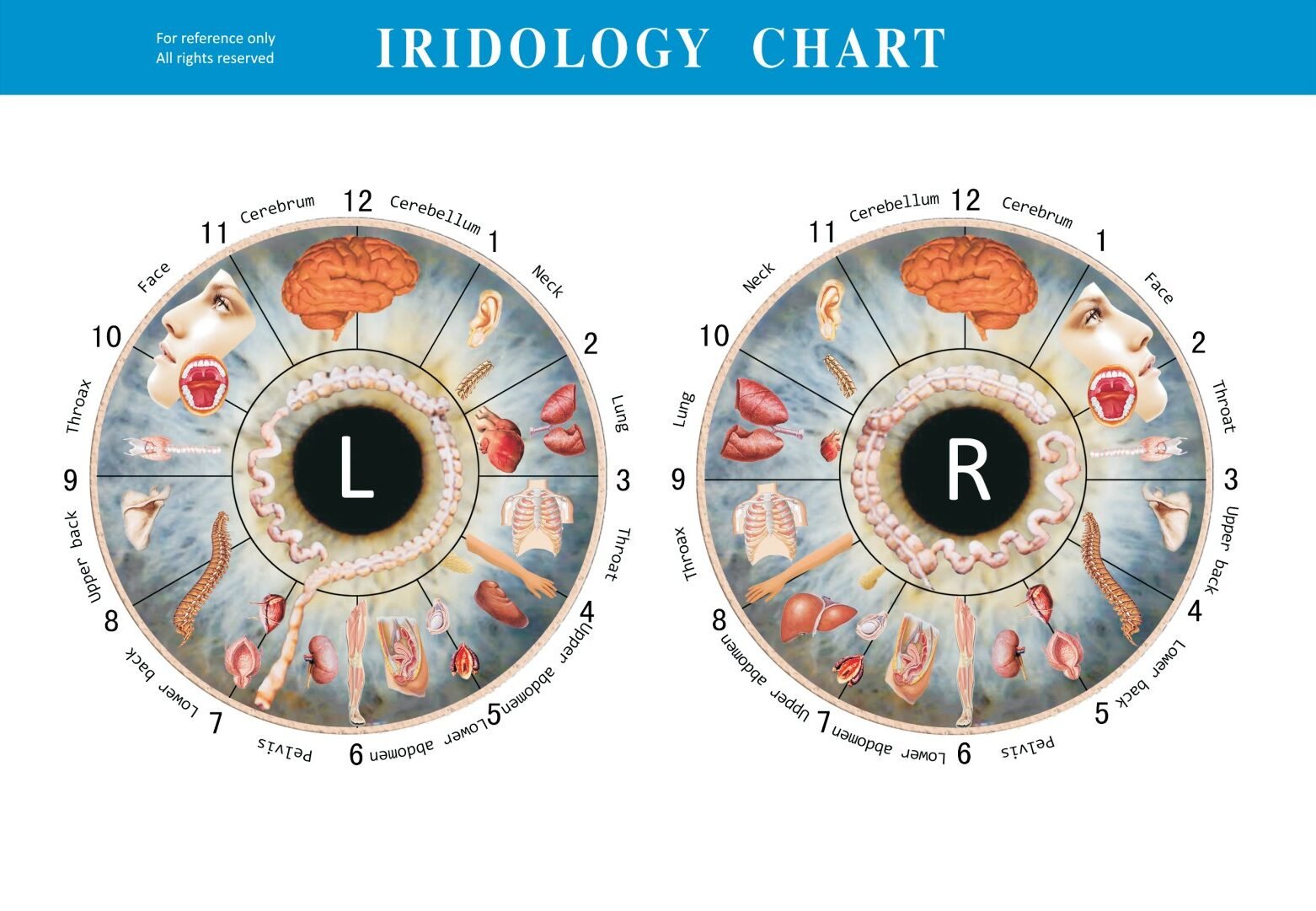
ما هو مخطط القزحية وكيف يعمل؟
و مخطط القزحية is a diagnostic tool that divides the iris into zones corresponding to different parts of the human body. Iridologists use these charts to examine the patterns, colors, and markings in your iris to assess your health status, identify potential problem areas, and even predict future health concerns.
A standard مخطط القزحية mapping iris zones to corresponding body organs and systems
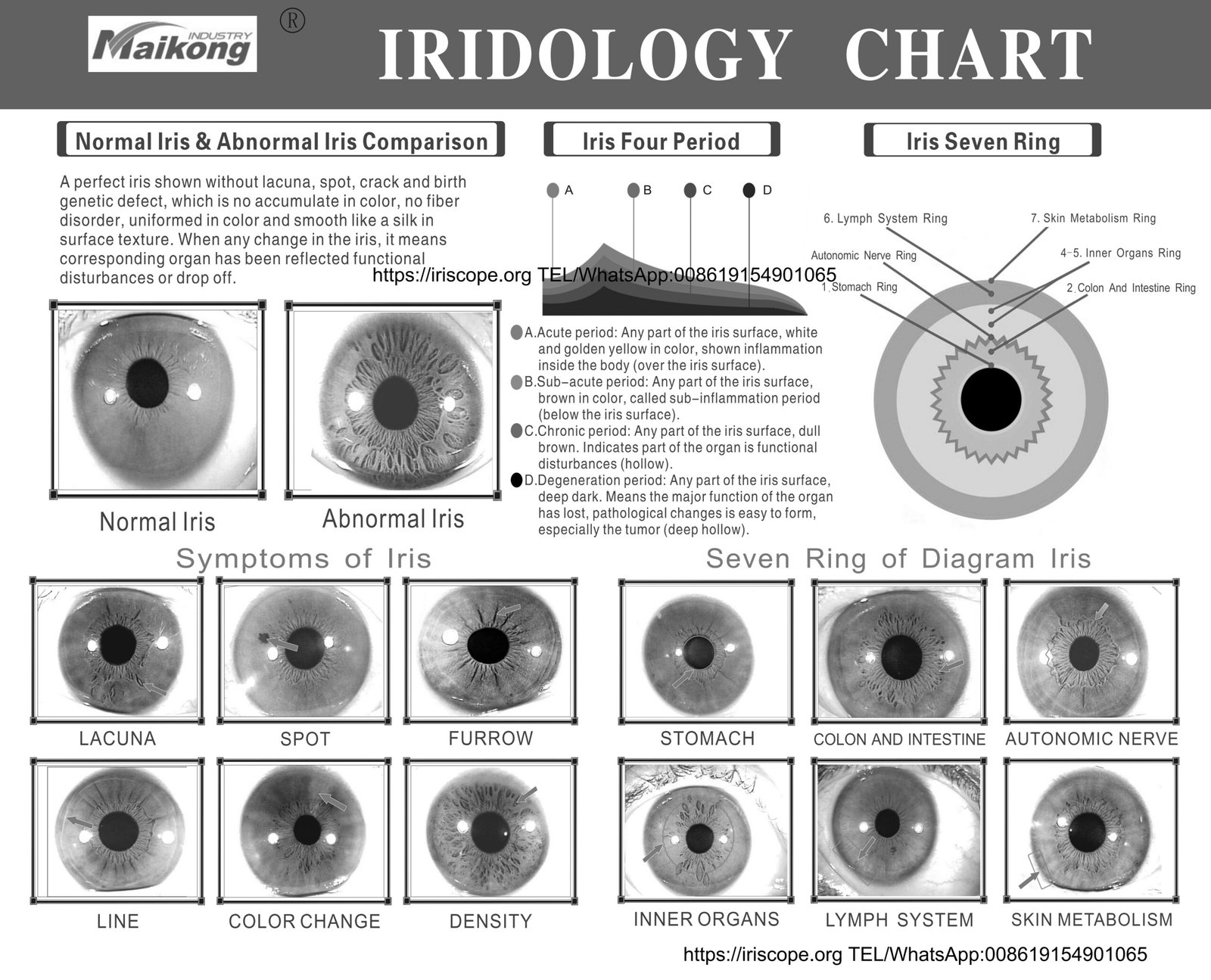
According to iridology practitioners, the iris connects to every organ and tissue via the nervous system and brain. When an organ experiences stress or damage, corresponding changes appear in the iris. These changes may manifest as:
- Color variations (white, yellow, brown spots)
- Structural changes (lines, rings, clouds)
- Texture alterations (density, fiber patterns)
- Pigmentation shifts (darkening or lightening)
By consulting an مخطط القزحية, practitioners claim to identify which body systems need attention, even before symptoms appear elsewhere in the body.
استكشاف علم القزحية بشكل أكبر
Curious about what your iris might reveal? Download our free high-resolution مخطط القزحية to begin your exploration.
قم بتنزيل مخطط علم القزحية مجانًا
The Historical Development of the مخطط القزحية
The practice of examining the eyes for health insights dates back thousands of years, but modern مخططات علم القزحية have a more recent history.
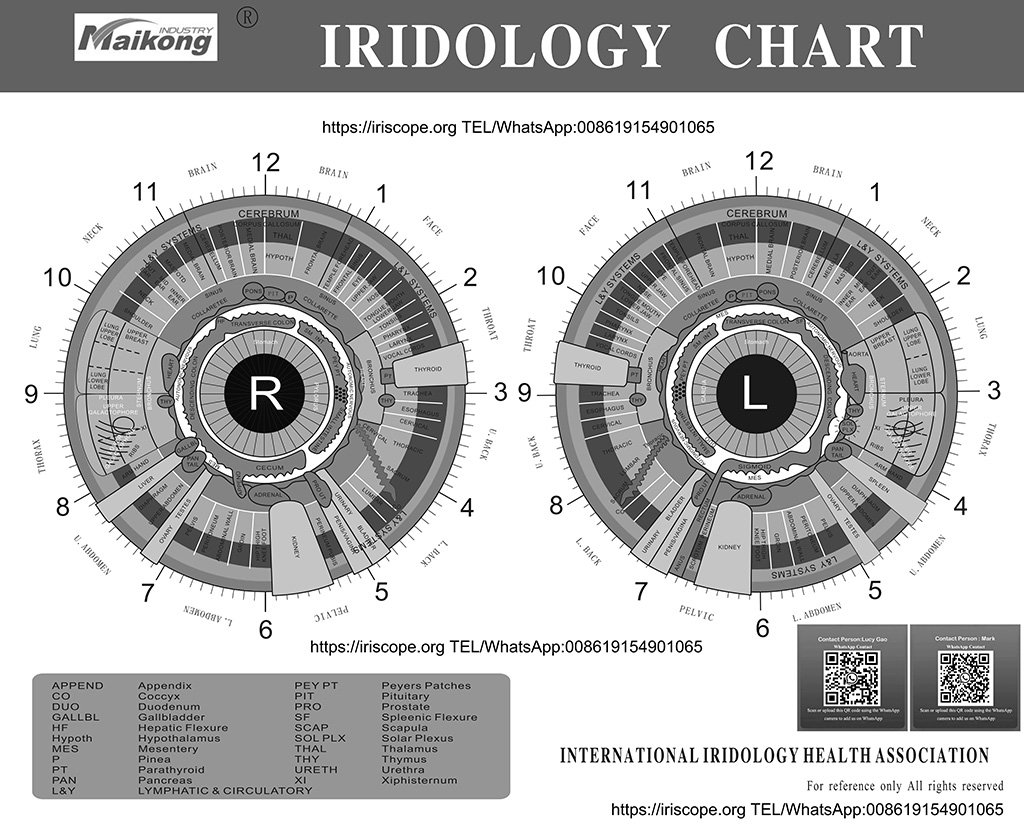

An early مخطط القزحية from the 19th century
Key Figures in مخطط القزحية تطوير
Philippus Meyeus (1670): Published the first explicit description of iridological principles in “Chiromatica Medica,” though he didn’t use the term “iridology.”
Ignaz von Peczely (1860s): The Hungarian physician is considered the founding father of modern iridology. Legend claims he noticed iris changes in an owl with a broken leg, inspiring his research. He created the first comprehensive مخطط القزحية.
Nils Liljequist (1893): After observing changes in his own iris following medication, this Swedish homeopath published an atlas with 258 black and white illustrations and 12 color illustrations of the iris.
Bernard Jensen (1950s): Popularized iridology in the United States through classes and publications. His مخطط القزحية remains influential in modern practice.
Over time, مخططات علم القزحية have evolved from simple drawings to detailed, color-coded maps. Modern charts often incorporate digital technology for more precise analysis, though the fundamental principles remain similar to those established by the early pioneers.
Understanding Iris Zones on an مخطط القزحية
A standard مخطط القزحية divides the iris into approximately 80-90 zones, arranged in concentric circles around the pupil. Each zone corresponds to different parts of the body.
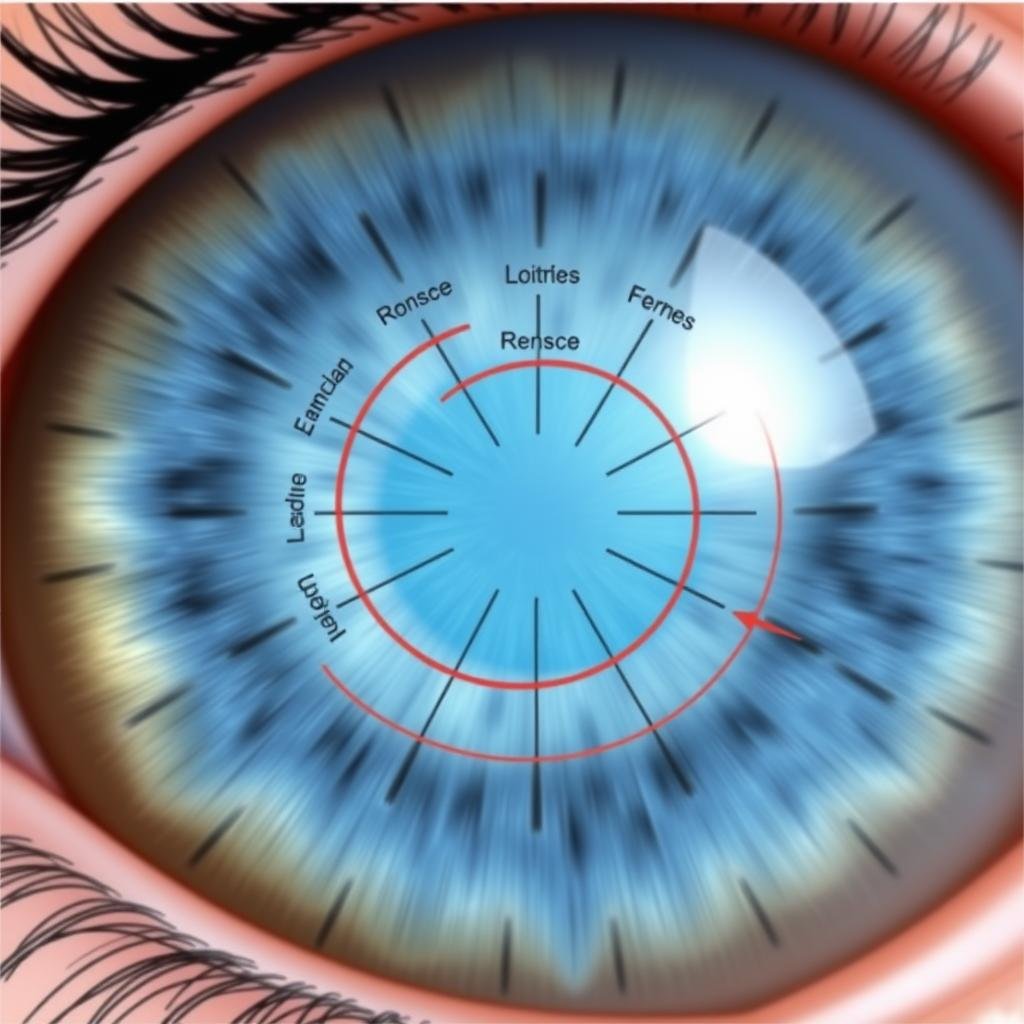
Concentric zones on an مخطط القزحية representing different body systems
Major Zones of the مخطط القزحية
مناطق القزحية اليمنى
- Top Region: Brain, head, sinuses
- Upper Right: Lungs, bronchi, throat
- Upper Left: Heart, chest, breast
- Middle Right: الكبد والمرارة
- Middle Left: Stomach, pancreas
- Lower Region: Intestines, reproductive organs
مناطق القزحية اليسرى
- Top Region: الدماغ، الدورة الدموية الدماغية
- Upper Right: Spleen, left shoulder
- Upper Left: Heart, thyroid
- Middle Right: Stomach, pancreas
- Middle Left: Adrenals, kidneys
- Lower Region: Colon, bladder, reproductive system
Circular Zones
- Pupillary Zone: الجهاز الهضمي
- Ciliary Zone: Muscular system, circulation
- Autonomic Nerve Wreath: الجهاز العصبي
- Outer Iris Zone: Skin, extremities, lymphatic system
- Iris Edge: Skeletal system
Iridologists examine these zones for color changes, structural marks, and other anomalies. The position of a mark within a zone further refines the diagnosis to specific organs or tissues.

Comparison of healthy iris patterns (left) versus patterns indicating potential health issues (right) according to iridology
Organs and Systems Mapped in the مخطط القزحية
و مخطط القزحية maps virtually every organ and system in the human body to specific locations on the iris. Here’s how some key organs are represented:
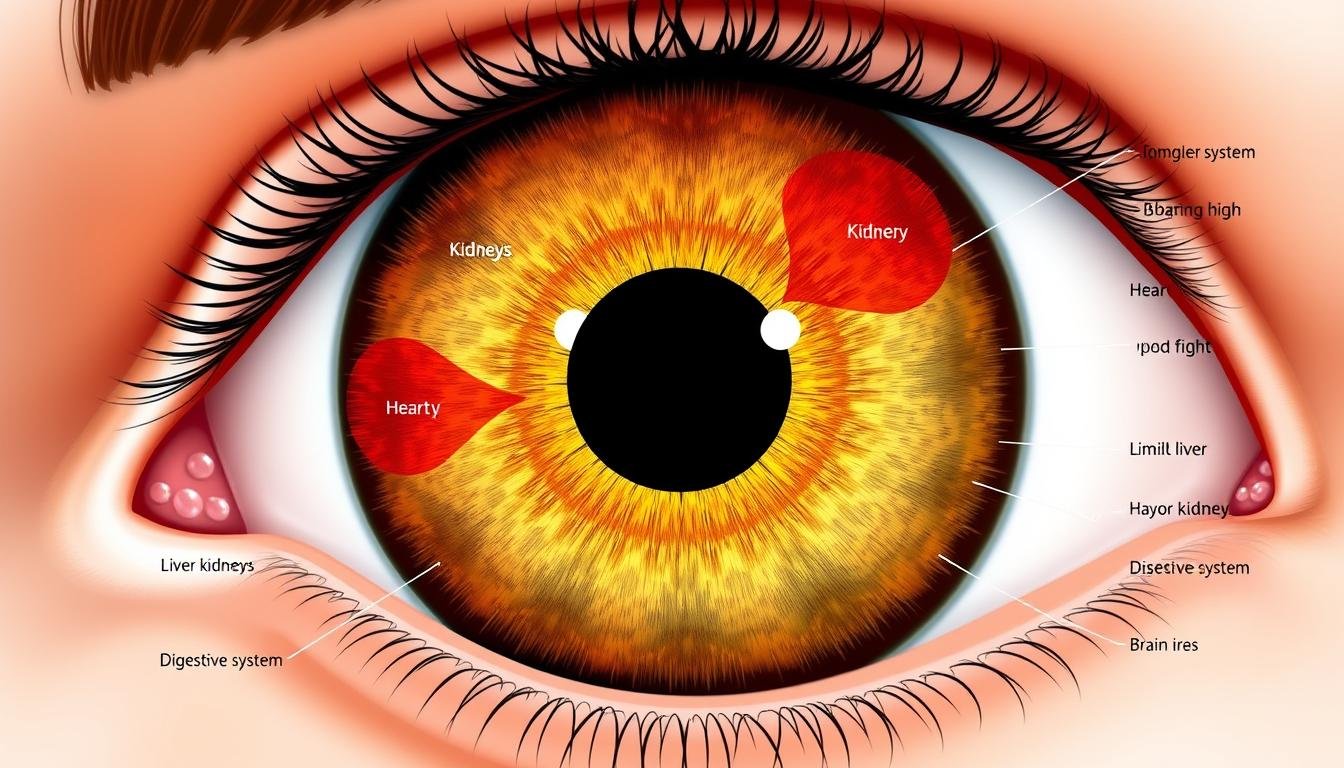
Major organ systems as mapped on a standard مخطط القزحية
| Organ/System |
Iris Location |
Signs of Potential Issues |
| قلب |
Left iris, upper quadrant (7-8 o’clock) |
Dark spots, white cloudiness, radial lines |
| الكبد |
Right iris, middle area (8-9 o’clock) |
Brown spots, yellowish discoloration |
| Kidneys |
Lower quadrants of both irises (5-6 o’clock) |
White marks, dark spots, structural changes |
| الرئتين |
Upper quadrants of both irises (2-3 o’clock) |
White clouds, dark spots, structural breaks |
| الجهاز الهضمي |
Around the pupil in both irises |
Discolorations, radial lines, dark spots |
| الجهاز اللمفاوي |
Outer edge of both irises |
White marks, cloudiness, structural changes |
Iridologists believe that examining these specific areas can reveal information about organ function, inflammation, toxicity, and overall health status. The intensity and type of markings may indicate the severity of conditions.
Interested in Learning More?
Discover how iridology practitioners interpret these organ mappings with our comprehensive guide.
طلب استشارة مجانية
Health Conditions Identified Through an مخطط القزحية
Proponents of iridology claim that various health conditions can be detected by analyzing iris patterns and comparing them to an مخطط القزحية. While scientific validation remains limited, here are some conditions that iridologists commonly look for:

Various iris markings and their potential health indications according to iridology
Circulatory Conditions
- Hypertension: Indicated by a ring around the iris, suggesting increased blood pressure.
- High Cholesterol: A white ring around the outer edge of the iris may indicate excessive cholesterol or arteriosclerosis.
- Poor Circulation: Shown by a lack of clear definition in iris fibers.
مشاكل في الجهاز الهضمي
- Liver Damage: Brown spots in the liver area may indicate liver disease or toxicity.
- Gallbladder Problems: Yellowing in specific areas may suggest gallbladder or bile duct abnormalities.
- Digestive Weakness: Discolorations around the pupil can indicate problems with the digestive system.
Other Conditions
- Inflammation: White streaks or clouds in specific zones may indicate inflammation in corresponding organs.
- Weakened Immune System: White marks throughout the iris may suggest compromised immunity.
- Hormonal Imbalances: Specific markings in endocrine system zones may indicate thyroid or adrenal issues.
“While iridology cannot diagnose specific diseases, it may help identify which organs and systems in the body are under stress and at risk of developing conditions.”
Iridologists emphasize that their practice is not meant to diagnose diseases but rather to identify areas of weakness or stress in the body. They often recommend further medical testing to confirm any suspected conditions.
Scientific Perspective on the مخطط القزحية
The scientific community has expressed significant skepticism about the validity of مخططات علم القزحية and the practice of iridology in general. Understanding both sides of this debate is important for anyone considering iridology.

البحث العلمي الذي يدرس صحة مطالبات القزحية
Arguments Supporting Iridology
- يحتوي القزحية على الآلاف من النهايات العصبية المتصلة بالدماغ
- Anecdotal evidence from practitioners reporting successful assessments
- Long historical use in various traditional medicine systems
- Non-invasive nature makes it an appealing complementary approach
- May encourage preventative health measures and self-awareness
الانتقادات العلمية
- Controlled studies have failed to demonstrate diagnostic accuracy
- Iris structure is genetically determined and remains stable throughout life
- No proven physiological mechanism for how internal organs would affect iris appearance
- Practitioners often show poor inter-examiner reliability
- May delay proper medical diagnosis and treatment
Key Research Findings
Several controlled studies have tested iridology’s effectiveness:
- 1979 Study: Bernard Jensen and two other iridologists failed to correctly identify patients with kidney disease by examining iris photographs.
- 1980s British Medical Journal Study: Iridologists could not correctly identify patients with gallbladder disease from iris examinations.
- 2000 Review by Edzard Ernst: Found no benefit from iridology in controlled, masked evaluations of diagnostic validity.
- 2005 Cancer Detection Study: Concluded iridology was of no value in diagnosing common forms of cancer.
The Australian Government’s Department of Health reviewed alternative therapies in 2015 and found no clear evidence of effectiveness for iridology.
Despite these criticisms, many practitioners and patients continue to find value in iridology as a complementary approach to health assessment, particularly when used alongside conventional medical care rather than as a replacement.
How to Read a Basic مخطط القزحية
If you’re interested in exploring iridology, understanding how to read an مخطط القزحية is the first step. While professional training is recommended for accurate interpretation, here are the basics:
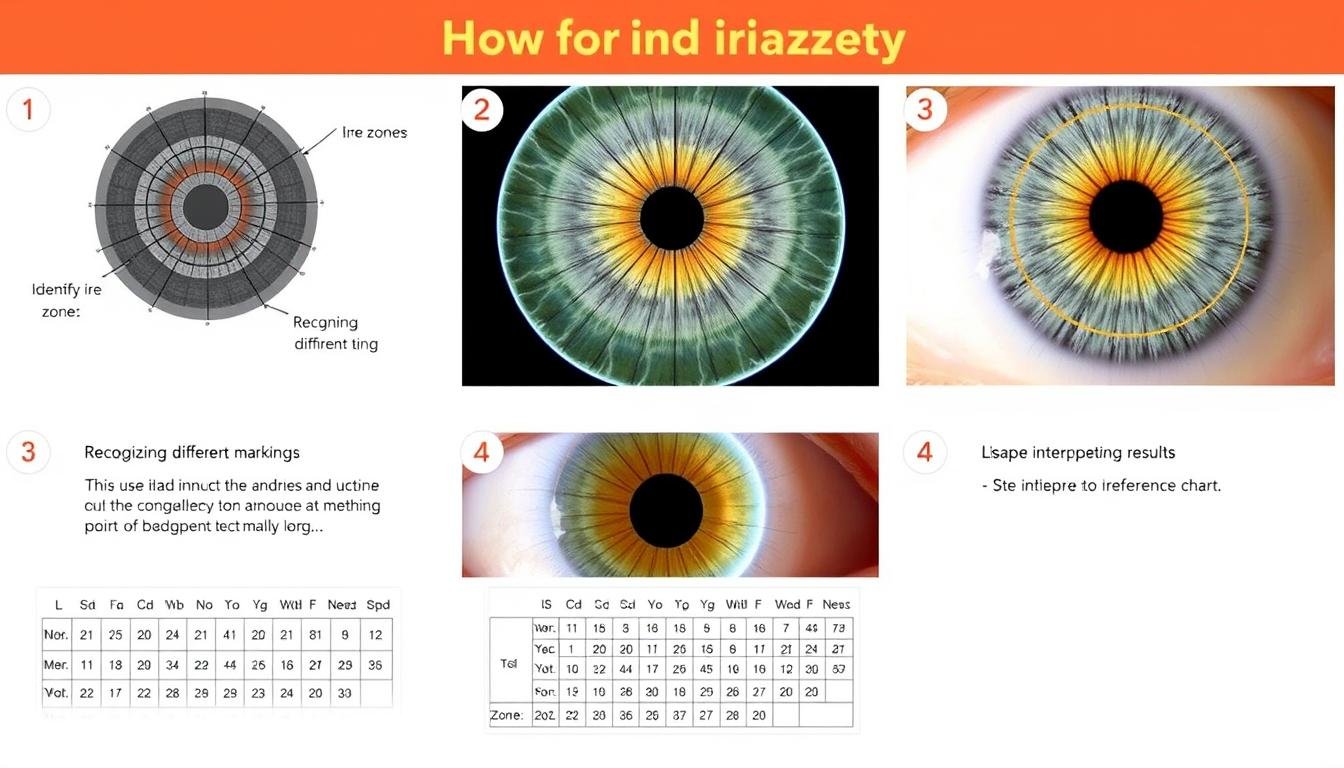
Step-by-step guide to basic مخطط القزحية reading
Step-by-Step Guide to Reading an مخطط القزحية
Step 1: Identify the Iris Type
Determine whether you’re looking at a blue, brown, mixed, or other iris type. Different base colors may require slightly different interpretations.
Step 2: Orient the Chart
Position the مخطط القزحية correctly—right iris corresponds to the right side of the body, left iris to the left side.
Step 3: Locate the Zones
Identify the major zones (pupillary, ciliary, etc.) and the organ-specific regions within each iris.
Step 4: Analyze Markings
Look for color changes, structural marks, and other anomalies in each zone and compare to reference materials.
علامات القزحية المشتركة ومعانيها
| علامة القزحية |
مظهر |
إشارة محتملة |
| الخطوط الشعاعية |
Lines extending from pupil toward iris edge |
Nerve stress or irritation in corresponding organ |
| ثغرة |
Closed, lake-like formations |
Inherent weakness or genetic predisposition |
| الخبايا |
Open, pit-like formations |
Potential for toxin accumulation |
| حلقة الصوديوم |
White ring around outer iris |
Possible salt/mineral imbalance |
| الوردية اللمفاوية |
White dots forming a circle |
احتقان نظام اللمفاوية |
| حافة سكور |
Dark ring at outer edge of iris |
مشاكل التخلص من الجلد |
مهم: Self-diagnosis using an مخطط القزحية is not recommended. Always consult with qualified health professionals for any health concerns.

A professional iridologist examining a patient’s iris using specialized equipment
Ready to Explore Your Iris?
Get a personalized مخطط القزحية reading from a certified practitioner to discover what your eyes may reveal about your health.
ابحث عن أخصائي القزحية بالقرب منك
Conclusion: The Value and Limitations of the مخطط القزحية
ال مخطط القزحية represents a fascinating intersection of traditional observation and alternative health assessment. While scientific evidence does not currently support many of iridology’s claims, the practice continues to attract interest from those seeking holistic approaches to health.
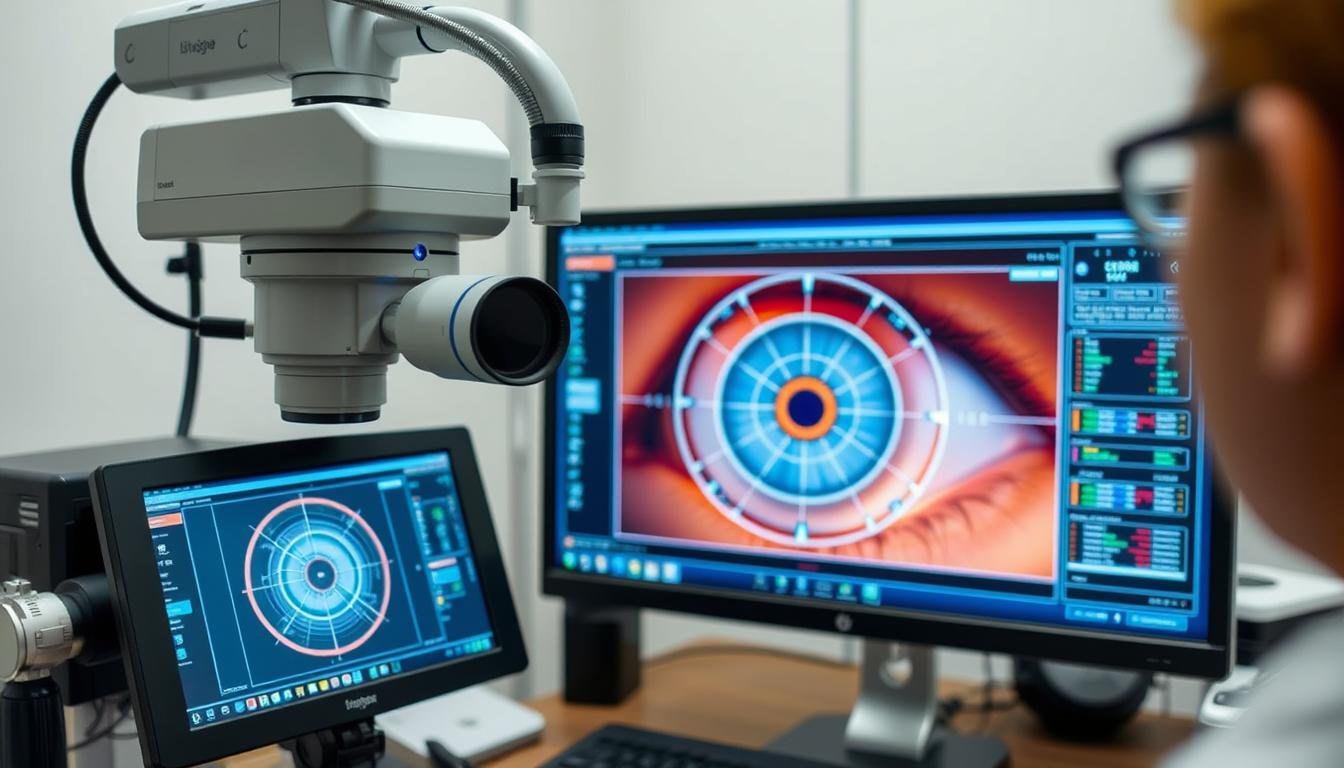
Modern digital approaches to iridology analysis
For those interested in iridology, it’s important to approach it with a balanced perspective:
- Consider it a complementary tool rather than a replacement for conventional medical diagnosis
- Consult with qualified practitioners who have proper training
- Maintain healthy skepticism while remaining open to potential insights
- Always follow up on significant health concerns with appropriate medical testing
Whether you view the مخطط القزحية as a valuable health assessment tool or an interesting historical artifact of alternative medicine, understanding its principles and limitations allows you to make informed decisions about its role in your health journey.
Continue Your Iridology Exploration
Download our comprehensive guide to مخططات علم القزحية and begin your journey into understanding what your eyes may reveal about your health.
Get Your Free Iridology Guide


