História e Noções Básicas de Gráficos de Iridologia
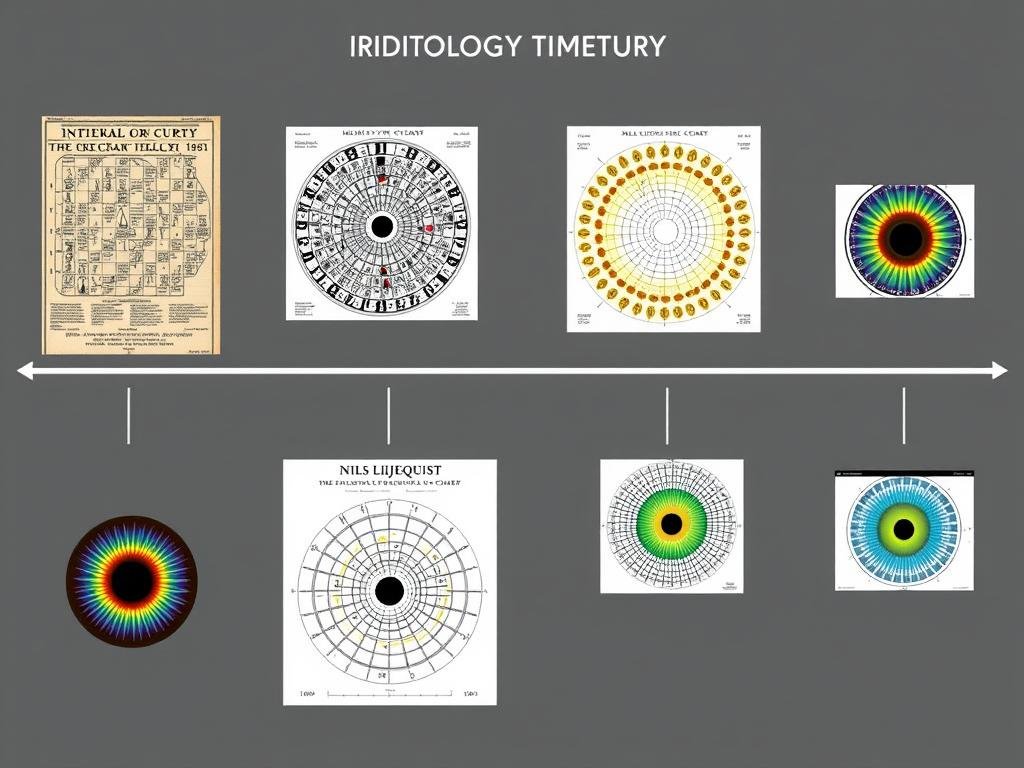
Iridologia tem raízes que remontam a civilizações antigas, mas modernas gráficos de iridologia foram sistematicamente desenvolvidos no século XIX. O médico húngaro Ignatz von Peczely é frequentemente creditado por criar o primeiro gráfico detalhado da íris em 1881, depois de observar mudanças na íris de uma coruja após uma lesão. Seu trabalho foi posteriormente ampliado pelo homeopata sueco Nils Liljequist, que notou mudanças na cor da íris após tomar certos medicamentos.
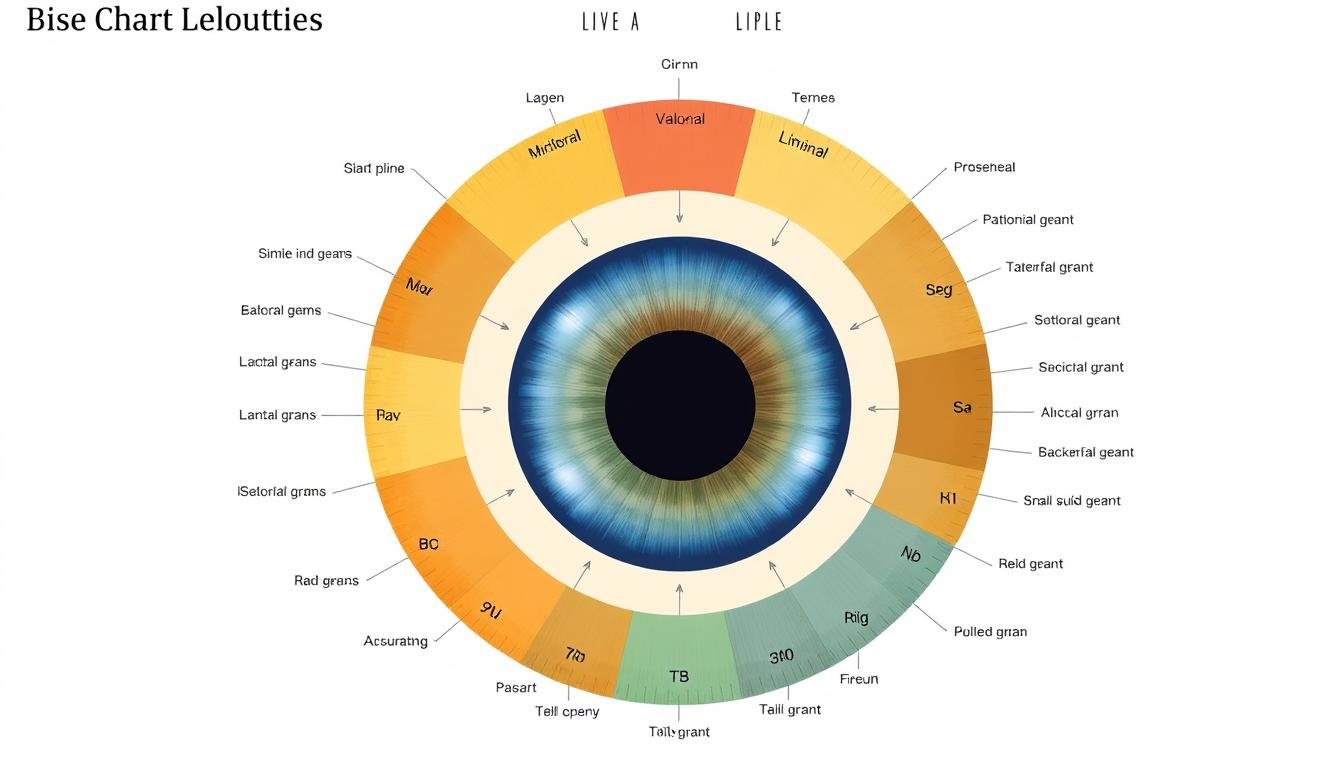
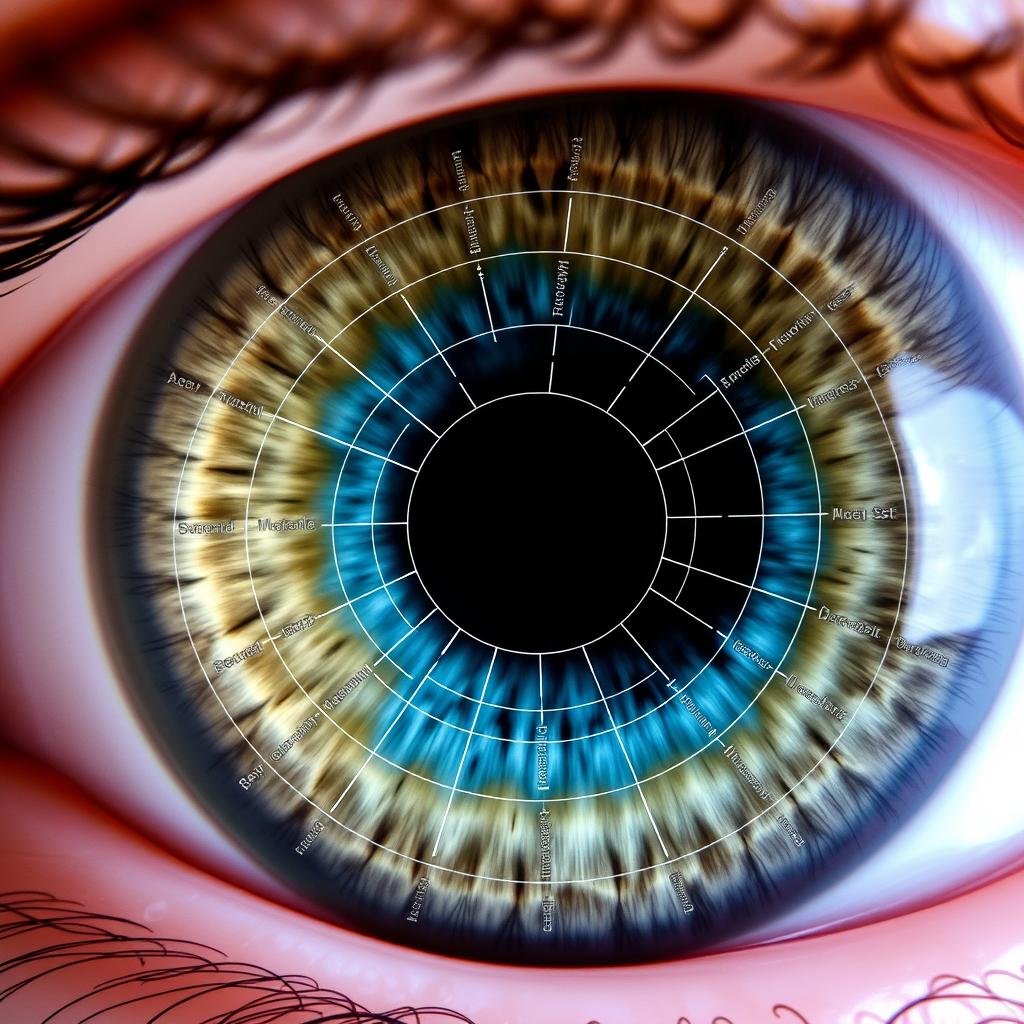
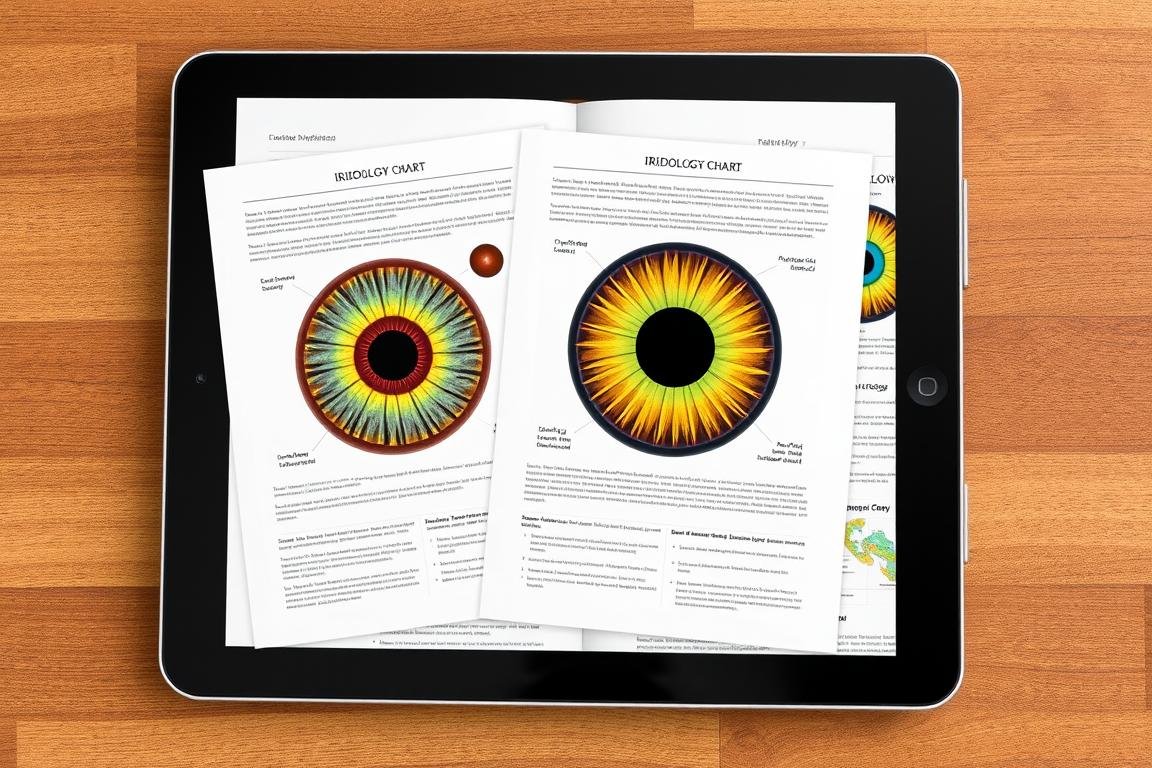
Hoje gráficos de iridologia representam um sistema de mapeamento refinado que divide a íris em zonas correspondentes a diferentes órgãos e sistemas corporais. Esses gráficos servem como ferramentas de referência que os profissionais usam para identificar possíveis problemas de saúde por meio do exame cuidadoso dos padrões, cores e marcas da íris.
Zonas-chave em um Gráfico de Iridologia
O gráfico de iridologia divide a íris em zonas concêntricas e seções radiais, cada uma correspondendo a diferentes partes do corpo. Compreender essas zonas é essencial para uma interpretação adequada:
Zonas de íris certas
- Região superior: cérebro, cabeça e seios da face
- Quadrantes direitos: pulmões, fígado e vesícula biliar
- Região inferior: intestinos, apêndice e perna direita
- Anel interno: Estômago e órgãos digestivos
- Anel externo: Pele, circulação e sistema linfático
Deixou zonas de íris
- Região superior: Cérebro, circulação cerebral
- Quadrantes esquerdos: Coração, baço e pâncreas
- Região inferior: cólon, órgãos reprodutivos e perna esquerda
- Anel interno: Estômago e órgãos digestivos
- Anel externo: Pele, circulação e sistema linfático
A zona pupilar (área ao redor da pupila) representa o sistema digestivo, enquanto a zona ciliar (íris intermediária a externa) corresponde a outros órgãos e tecidos. A íris é ainda dividida em aproximadamente 60 setores, criando um mapa detalhado que iridologistas experientes usam para identificar potenciais desequilíbrios de saúde.
Como interpretar um Gráfico de Iridologia
Aprendendo a interpretar um gráfico de iridologia requer a compreensão do mapa em si e das diversas marcações que podem aparecer na íris. Embora a interpretação abrangente exija treinamento e prática, aqui estão os princípios fundamentais:
Etapas básicas de interpretação
- Identifique o tipo de íris (azul, marrom, mista, etc.)
- Observe a estrutura e integridade geral da íris
- Observe quaisquer marcas, cores ou padrões incomuns
- Localize essas marcações no gráfico de iridologia
- Considere os sistemas corporais correspondentes
- Procure padrões em várias marcações
- Desenvolva uma avaliação holística em vez de diagnosticar condições específicas
Marcações comuns e seus significados
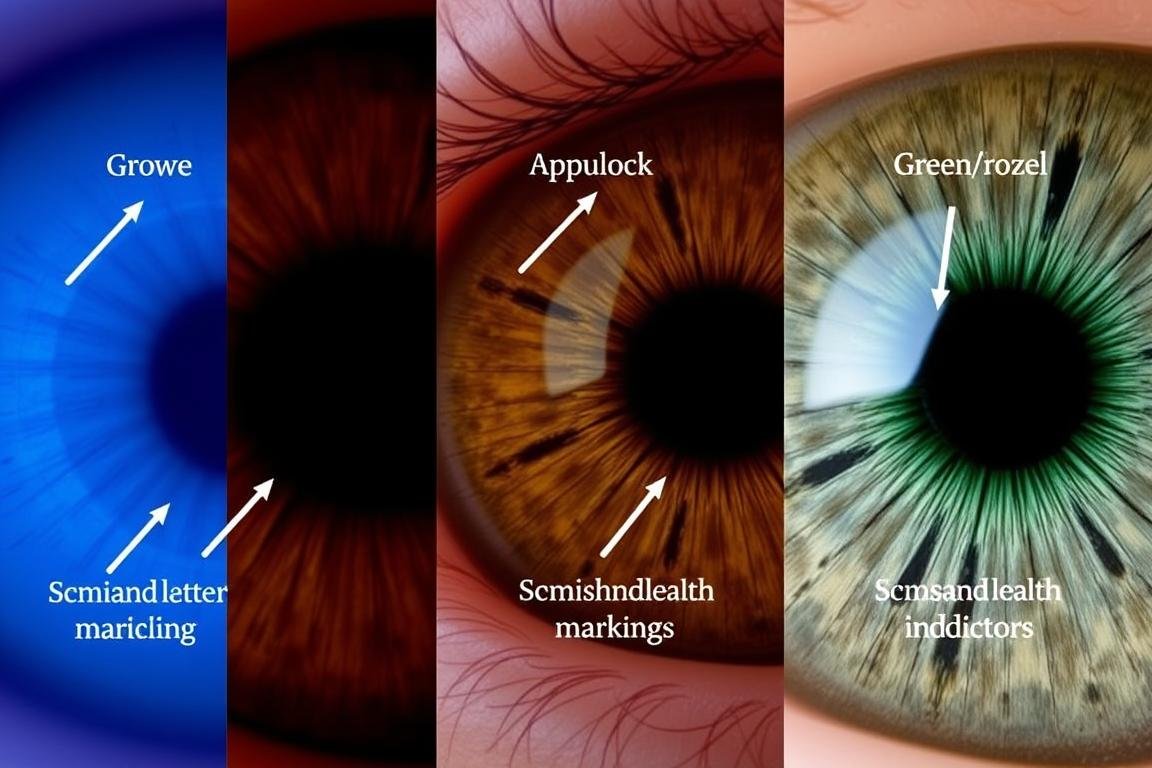
Os iridologistas analisam várias características da íris para identificar possíveis problemas de saúde. Aqui estão algumas marcações comuns e suas interpretações tradicionais:
| Marcação |
Aparência |
Interpretação tradicional |
| Linhas Radiais |
Linhas retas irradiando da pupila para a parte externa da íris |
Estrutura normal da íris; linhas mais profundas podem indicar estresse nos órgãos correspondentes |
| Lacunas |
Áreas escuras fechadas que lembram lagos |
Potencial fraqueza ou lesões inerentes nos órgãos correspondentes |
| Criptas |
Aberturas pequenas, escuras e redondas |
Possível acúmulo de toxinas ou disfunção orgânica |
| Anéis (anéis nervosos) |
Linhas circulares ao redor da pupila ou íris |
Tensão nervosa, estresse ou ansiedade; um anel ao redor da íris pode indicar problemas de pressão arterial |
| Marcas Brancas |
Manchas ou nuvens brancas brilhantes |
Inflamação ou atividade aguda nos órgãos correspondentes |
| Manchas marrons |
Áreas de pigmentação escura |
Possíveis problemas hepáticos ou acúmulo de toxinas quando na zona hepática |

Lembre-se que a iridologia é considerada uma ferramenta complementar de avaliação e não um método diagnóstico. Embora muitos profissionais encontrem valor nestas interpretações, elas devem ser consideradas juntamente com outras informações de saúde e aconselhamento médico profissional.
Para download Gráfico de Iridologia Recursos em PDF
Acesso à qualidade gráfico de iridologia recursos são essenciais para iniciantes e profissionais experientes. Nossos guias em PDF para download fornecem materiais de referência abrangentes para apoiar sua jornada de aprendizado.
Livre Gráfico de Iridologia Guia PDF
Nosso guia abrangente para iniciantes inclui mapas detalhados da íris, diretrizes de interpretação e exercícios práticos para ajudá-lo a dominar os fundamentos da avaliação iridológica.
Baixe gratuitamente o gráfico de iridologia em PDF
Grátis x Premium Gráfico de Iridologia Guias
Oferecemos recursos gratuitos e premium para acomodar diferentes necessidades de aprendizagem e níveis de interesse em iridologia:
| Recurso |
Guia PDF Gratuito |
Coleção de PDFs Premium |
| Mapa básico da íris |
✓ |
✓ (Aprimorado) |
| Correspondências de Órgãos |
✓ |
✓ (Detalhado) |
| Marcando Interpretações |
Básico |
Abrangente |
| Estudos de caso |
1 |
12+ |
| Pratique exercícios |
✓ |
✓ (Avançado) |
| Sistema de codificação de cores |
Básico |
Avançado |
| Cartões de referência para impressão |
– |
✓ |
Usando Gráficos de Iridologia na Prática Holística
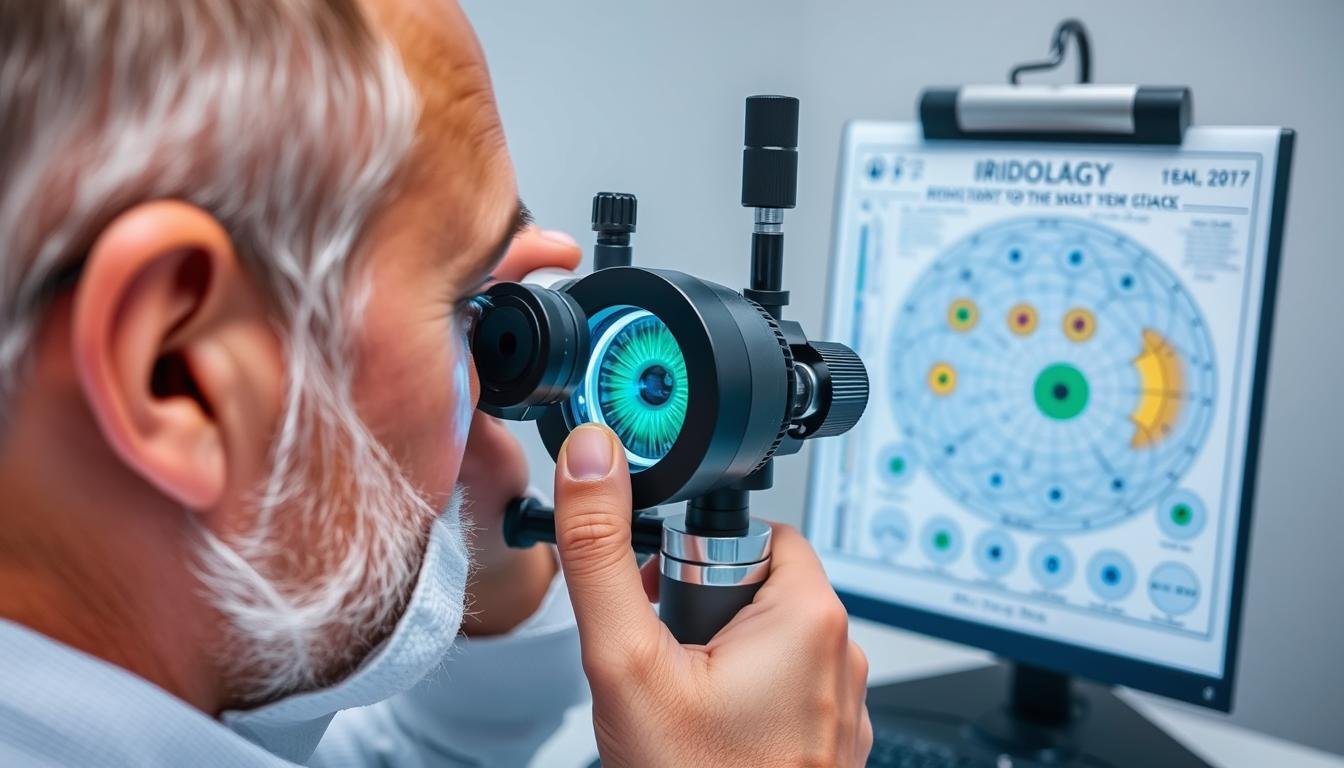
O gráfico de iridologia serve como uma ferramenta valiosa dentro de uma abordagem holística de saúde mais ampla. Veja como os profissionais e entusiastas da saúde integram esses recursos em suas práticas:
Avaliação inicial
Os praticantes usam gráficos de iridologia durante as consultas iniciais para identificar potenciais áreas de preocupação e estabelecer observações de base. Isso ajuda a criar um perfil de saúde abrangente que orienta investigações futuras.
Monitoramento de progresso
Ao documentar as alterações da íris ao longo do tempo, os profissionais podem acompanhar como as modificações no estilo de vida, as mudanças na dieta e outras intervenções podem estar afetando os padrões gerais de saúde refletidos na íris.
Educação do cliente
A natureza visual do gráficos de iridologia torna-os excelentes ferramentas educacionais. Os profissionais os utilizam para ajudar os clientes a compreender potenciais desequilíbrios de saúde e a natureza interconectada dos sistemas corporais.
“O gráfico de iridologia serve não como uma ferramenta de diagnóstico, mas como um mapa que nos ajuda a identificar áreas que podem beneficiar de cuidados de suporte. É parte de uma abordagem abrangente para compreender os padrões e tendências do corpo.”
– Dr. Bernard Jensen, iridologista pioneiro
Embora a iridologia não seja reconhecida pela medicina convencional como uma ferramenta de diagnóstico, muitos profissionais holísticos consideram útil usar gráficos de iridologia como parte de uma abordagem de avaliação abrangente que considera múltiplos factores que afectam a saúde e o bem-estar.
Conclusão: o valor de Gráfico de Iridologia Recursos
O estudo dos padrões da íris através gráficos de iridologia oferece uma perspectiva fascinante sobre avaliação holística da saúde. Embora não substituam o diagnóstico médico convencional, estas ferramentas fornecem uma lente única através da qual se podem considerar os sistemas interligados do corpo e os potenciais desequilíbrios.
Nossos recursos em PDF para download visam tornar esta prática antiga mais acessível aos alunos modernos, fornecendo orientação estruturada para aqueles interessados em explorar os insights potenciais que a análise da íris pode oferecer. Quer você seja um profissional de saúde holístico que deseja expandir suas ferramentas de avaliação ou simplesmente esteja curioso sobre o que seus olhos podem revelar sobre sua saúde, nossos guias abrangentes fornecem uma base sólida para sua exploração.
Comece sua jornada pela iridologia hoje baixando nosso software gratuito gráfico de iridologia PDF e descobrindo o fascinante mundo da interpretação da íris.