The ancient wisdom that eyes are windows to the soul extends further into holistic health practices through iridology and sclerology. These complementary assessment techniques analyze different parts of the eye to reveal insights about physical health, genetic predispositions, and current bodily conditions. While iridology examines the colored iris patterns, sclerology studies the white sclera’s red lines and markings. Together, they offer practitioners a comprehensive view of a person’s health landscape without invasive procedures.
Iridologie: The Study of Iris Patterns


Detailed iris patterns reveal genetic health predispositions in iridology analysis
Iridology is the assessment of health through examining the iris—the colored portion of the eye. This practice is based on the principle that the iris contains a vast network of nerve fibers connected to organs and tissues throughout the body via the nervous system. These connections create a unique “Karte” that reflects genetic predispositions and inherited traits spanning up to three generations.
The iris serves as a long-term recorder, with patterns that remain relatively stable throughout life. An Iridologe examines these patterns, colors, and structures to identify inherent strengths and susceptibilities within the body. While iridology doesn’t diagnose specific diseases, it highlights areas of potential weakness, stress, or congestion—often before conventional medical tests detect changes.
What Can Iridologie Reveal?
- Inherited genetic predispositions
- Verfassungsmäßige Stärken und Schwächen
- Potential organ stress patterns
- Verstopfung des Lymphsystems
- Digestive system efficiency
- Nervous system resilience
- Circulatory health indicators
- Inflammatory tendencies
- Tissue integrity concerns
- Elimination system efficiency
- Hormonal balance indicators
- Overall vitality assessment
Erkunden Sklerologie: Reading the White of the Eye

Red lines and markings in the sclera indicate current health conditions in sclerology
Sclerology is the study of the white portion of the eye (sclera) and its visible red lines, colorations, and markings. Unlike the iris, which reflects genetic tendencies, the sclera serves as a short-term recorder, showing what’s actively happening in the body right now. This makes sclerology an excellent complementary tool to iridology.
The sclera is an extension of the dura mater of the brain and provides real-time feedback about current stress, inflammation, congestion, and energetic imbalances across body systems. A trained sclerologist can identify patterns that indicate active health challenges, making it valuable for monitoring healing progress and current bodily conditions.
What Can Sklerologie Reveal?
- Current areas of inflammation
- Active viral or bacterial presence
- Organ stress and overload
- Circulatory and lymphatic congestion
- Current digestive disturbances
- Toxicity and environmental burden
- Emotional and energetic stress
- Healing progress indicators
- Tissue irritation and damage
- System communication issues
Iridologie und Sklerologie: Complementary Assessment Tools
| Aspekt |
Iridologie |
Sklerologie |
| Eye Area Examined |
Colored iris (blue, brown, hazel, etc.) |
White sclera and visible red lines |
| Time Frame Reflected |
Long-term genetic tendencies |
Current, active conditions |
| What It Shows |
Inherited weaknesses and strengths |
Active inflammation and stress |
| Changes Over Time |
Minimal changes throughout life |
Rapid changes reflecting current health |
| Primary Value |
Prevention and constitutional understanding |
Current condition assessment and monitoring |
When used together, iridology and sclerology provide practitioners with both a long-term constitutional map and a current health status report. This comprehensive approach allows for more targeted and effective health recommendations, as practitioners can identify both genetic predispositions and active manifestations of health imbalances.
Verfassungsarten in Iridologie

The three primary constitutional types in iridology: Lymphatic (blue), Biliary (mixed), and Hematogenic (brown)
In iridology, practitioners recognize three primary constitutional types based on iris color. Each type has distinct predispositions to specific health challenges and strengths:
Lymphatic Constitution (Blue Eyes)
People with blue or blue-gray irises tend toward lymphatic congestion and overactive immune function. They’re prone to respiratory conditions, allergies, sinus issues, and inflammatory responses. Cold, damp environments may aggravate their health challenges.
Biliary Constitution (Mixed/Hazel Eyes)
Those with mixed brown or hazel eyes often experience liver and gallbladder insufficiencies, digestive challenges, and metabolic issues. They may struggle with fat digestion, blood sugar regulation, and gastrointestinal discomfort.
Hematogenic Constitution (Brown Eyes)
People with pure brown irises are predisposed to blood abnormalities, mineral absorption difficulties, and circulatory challenges. They may experience digestive sensitivities, glandular weaknesses, and issues with blood circulation.
Understanding one’s constitutional type helps practitioners develop more targeted health support strategies based on inherent tendencies. This personalized approach is a key benefit of Iridologische Analyse.
Historical Development of Eye Analysis
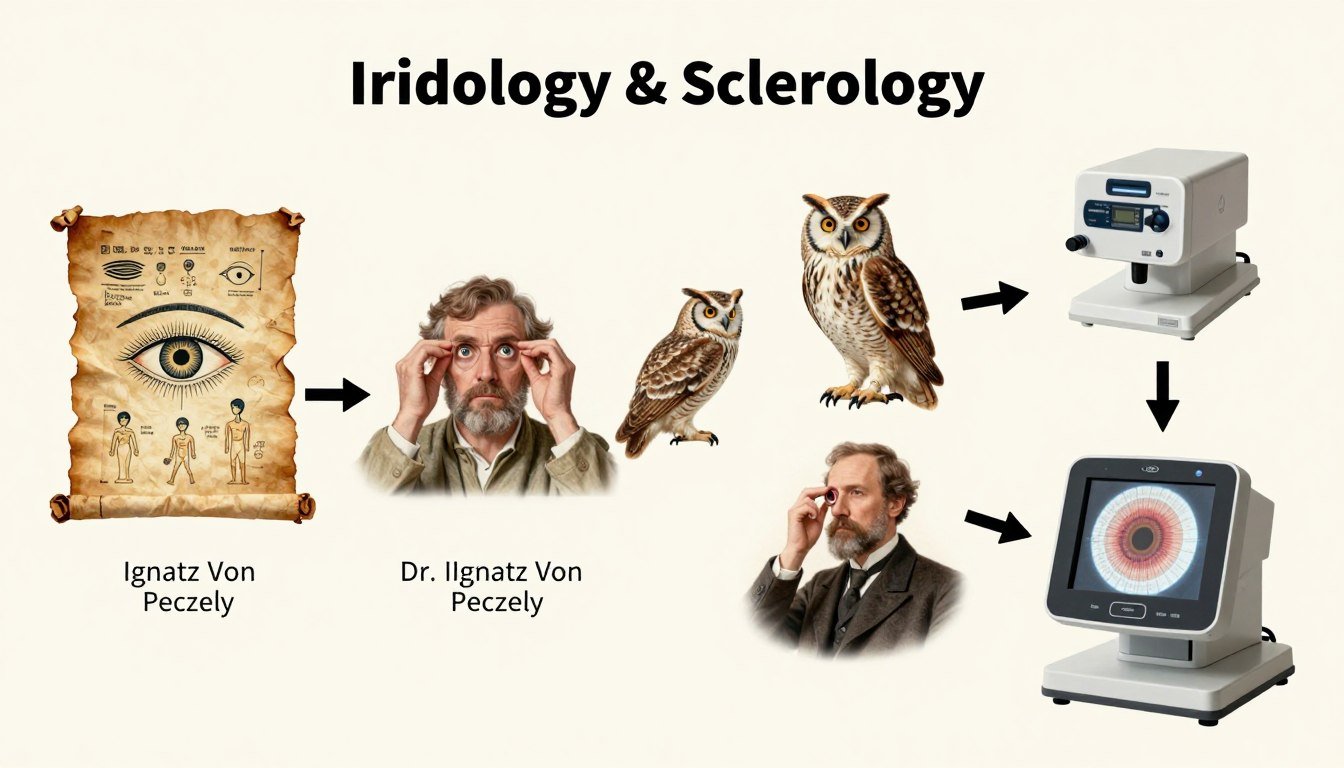
The evolution of iridology and sclerology from ancient practices to modern analysis
The practice of examining eyes to assess health has ancient roots across multiple cultures:
Iridology Origins
- Ancient civilizations including Egyptians and Greeks documented connections between eye markings and health
- Dr. Ignatz Von Peczely (1826-1911) from Hungary is credited with developing modern iridology after observing changes in an owl’s iris following injury
- Pastor Nils Liljequist independently created similar iris charts in Sweden after noticing changes in his own iris following medication
- Dr. Bernard Jensen popularized iridology in the United States during the 20th century, developing comprehensive iris charts still used today
Sclerology Development
- Chinese medicine has included sclera examination as part of diagnosis for thousands of years
- Native American healing traditions incorporated observations of the eye’s white portion
- Russian medical schools integrated sclerology into their curriculum as a non-invasive assessment tool
- Modern sclerology has been systematized over the past century as complementary to iridology
Today, these practices continue to evolve with advanced technology allowing for more precise documentation and analysis of eye markings. Digital photography and specialized software have significantly enhanced practitioners’ ability to detect subtle patterns in both the iris and sclera.
Professionelle Ausrüstung für Iridologie und Sklerologie
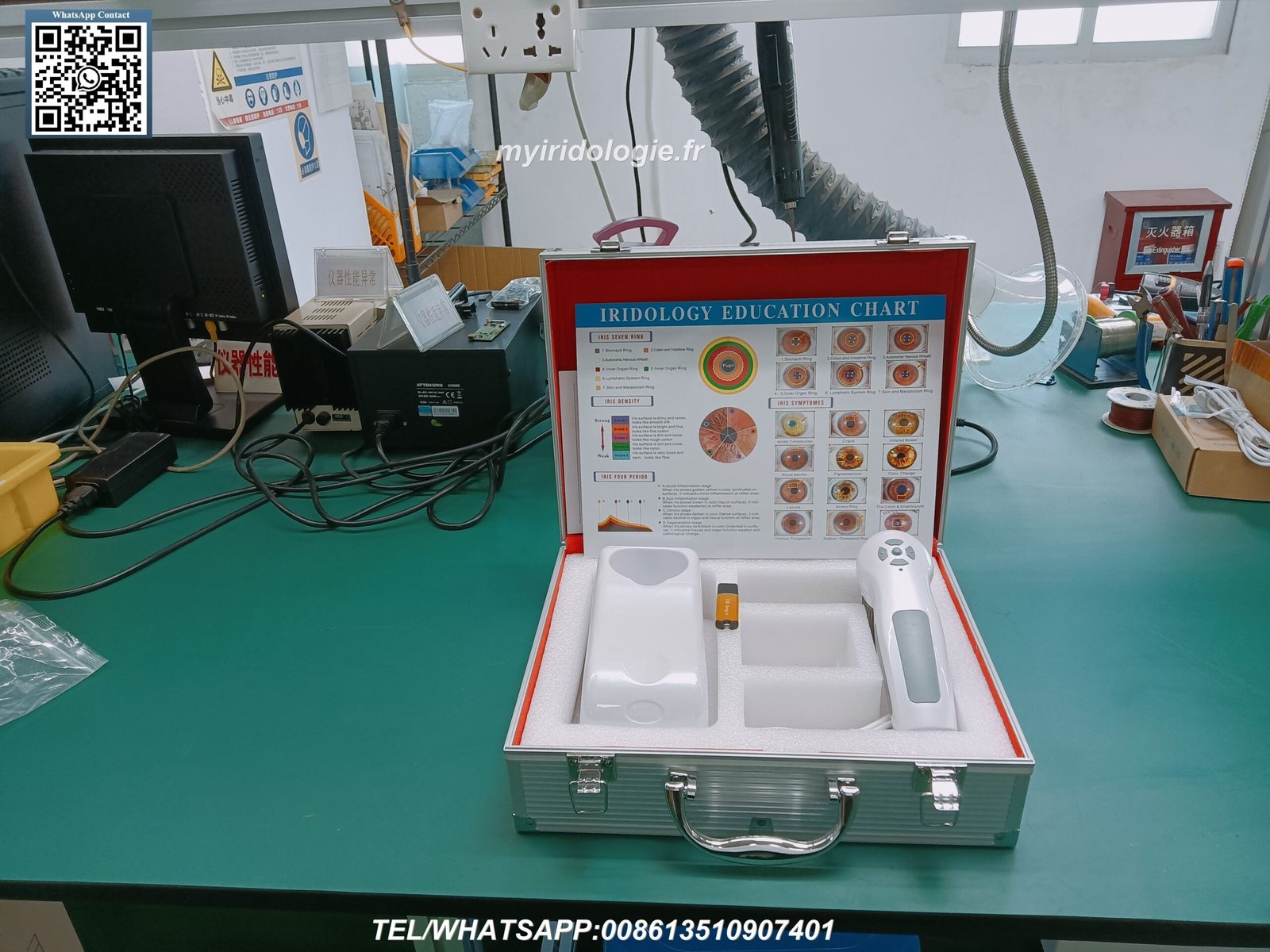
MAIKONG professional iridology camera with digital analysis capabilities
Genau iridology and sclerology analysis requires specialized equipment to capture detailed images of the iris and sclera. The quality of this equipment directly impacts a practitioner’s ability to identify subtle markings and patterns essential for comprehensive assessment.
Unverzichtbare Werkzeuge für Praktiker
Iridologische Kameras
High-resolution digital Iridologische Kameras with specialized optics are the foundation of professional practice. These cameras feature macro capabilities, proper illumination, and positioning systems to capture consistent, detailed images of the iris without distortion or reflection.
Iriskope
Ein Iriskop combines optical magnification with illumination systems specifically designed for eye examination. Modern digital iriscopes include image capture capabilities and may connect directly to computer systems for immediate analysis.
Analysesoftware
Spezialisiert Iridologie-Software helps practitioners analyze captured images, overlay iris charts, document findings, and track changes over time. Advanced software may include comparison tools, reporting features, and client management systems.
MAIKONG Professional Equipment
With over 20 years of research and development experience, MAIKONG has established itself as a leading manufacturer of professional iridology and sclerology equipment. Our products combine optical precision with user-friendly digital interfaces to support practitioners in delivering accurate analyses.
Entdecken Sie unsere Iridologiekameras
Iridology Charts: Mapping the Body Through the Eyes
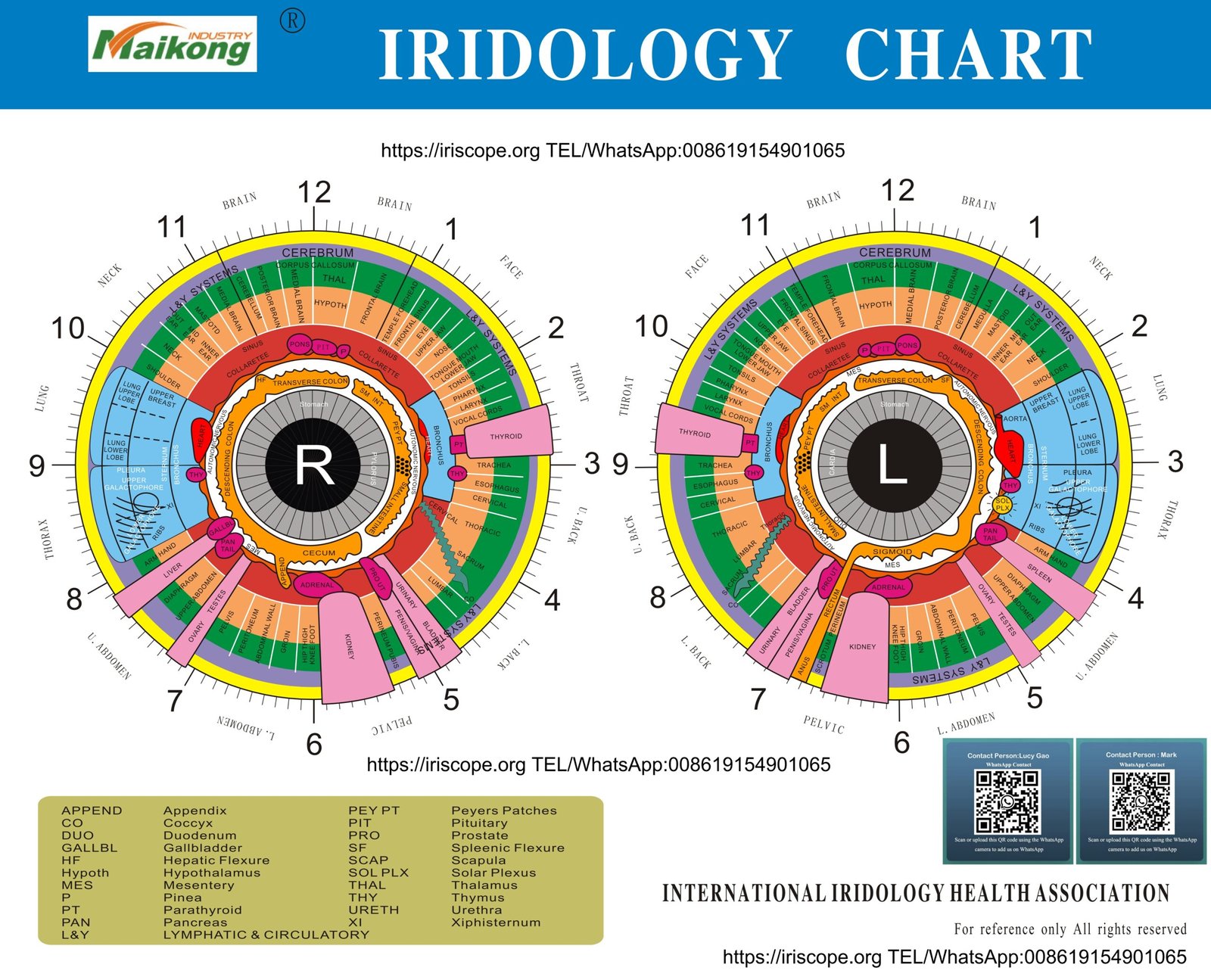
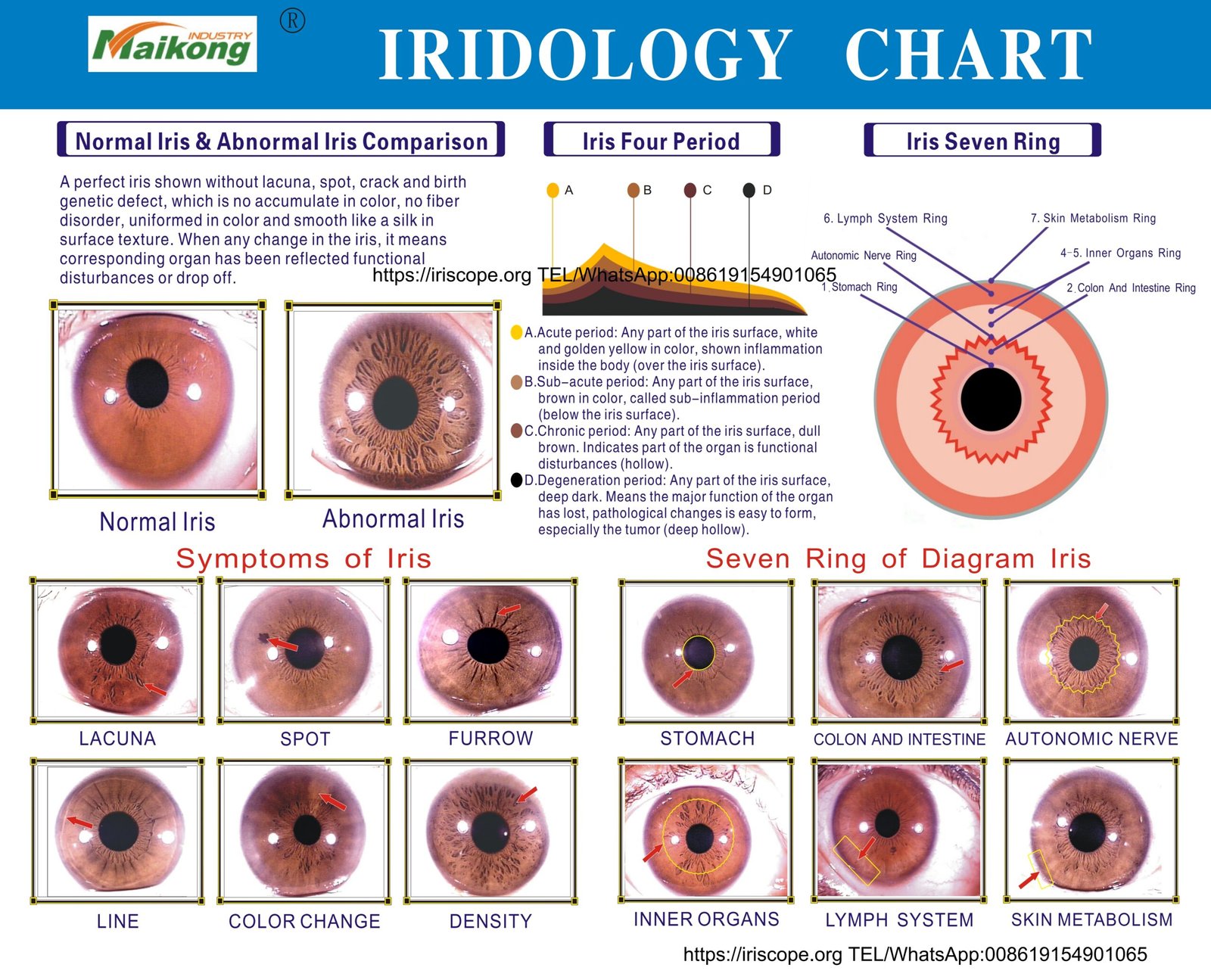
Comprehensive iridology chart mapping body systems to specific iris zones
Iridology charts serve as essential reference tools that map specific areas of the iris to corresponding organs and body systems. These charts allow practitioners to systematically analyze the iris and correlate markings with potential health concerns.
Types of Iridology Charts
Diagramm für das rechte Auge
Der Diagramm zur Iridologie des rechten Auges maps the right side of the body. It typically shows stronger correlations with the liver, gallbladder, and right-side organs. The right iris often reflects more about physical structure and function.
Linke Sehtafel
Der Diagramm zur Iridologie des linken Auges corresponds to the left side of the body and typically shows stronger correlations with the heart, spleen, and left-side organs. The left iris may reflect more about emotional and psychological aspects.
Modern Iridologie-Diagramme have evolved from the original European models but maintain the core principle that the iris mirrors the body in a circular mapping. The head is typically represented at the top (12 o’clock position), while the feet correspond to the bottom (6 o’clock position). Various zones between these points correlate to different organs and systems.
For Spanish-speaking practitioners, Iridologische Karte resources provide comprehensive guidance in understanding these correlations and applying them in practice.
Professionelle Schulung und Zertifizierung

Professional iridology certification training provides essential skills for practitioners
Für diejenigen, die am Üben interessiert sind iridology and sclerology professionally, proper training and certification are essential. These educational pathways provide the knowledge, skills, and ethical framework necessary for competent practice.
Becoming a Certified Practitioner
Professional Iridologische Zertifizierung umfasst typischerweise:
- Foundational anatomy and physiology education
- Detailed study of iris and sclera structures
- Training in constitutional types and their health implications
- Practical experience in analyzing iris and sclera markings
- Equipment operation and maintenance instruction
- Client communication and ethical practice guidelines
- Complementary natural health approaches
Many practitioners begin with iridology training and later expand their skills to include sclerology, creating a more comprehensive assessment approach. Organizations like the International Iridology Practitioners Association (IIPA) provide standards for education and practice in the field.
As an Iridologe, ongoing education is important to stay current with evolving understanding and techniques in the field. Many practitioners also study related disciplines such as nutrition, herbology, or other natural health modalities to provide more comprehensive support to clients.
Scientific Perspective and Considerations
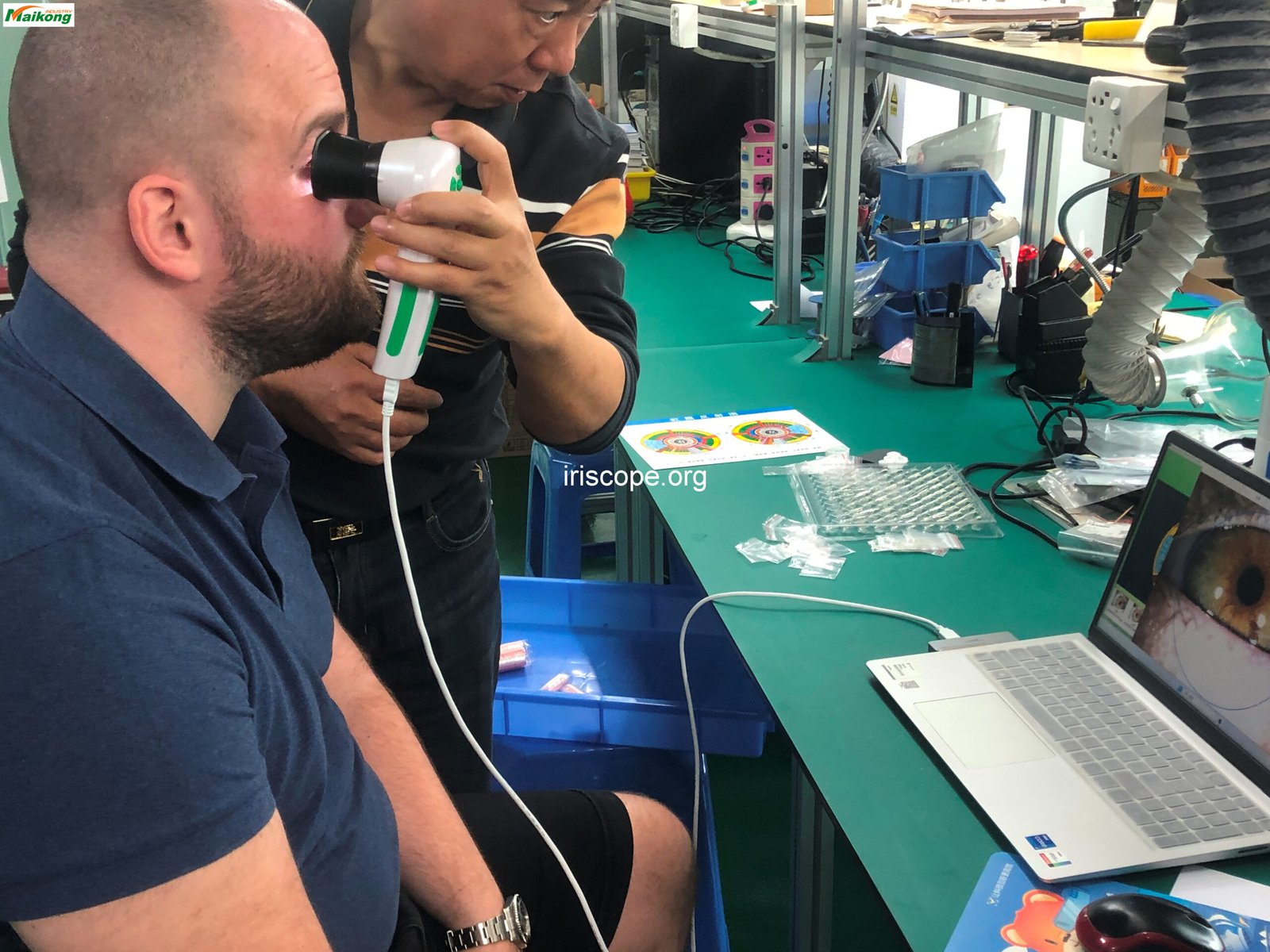
Traditional iridology practices alongside conventional medical eye examination
The scientific community maintains varying perspectives on iridology and sclerology. While conventional medicine generally considers these practices as complementary or alternative approaches rather than diagnostic tools, many holistic practitioners find value in the insights they provide.
Unterstützende Perspektiven
- Non-invasive nature makes these practices completely safe
- Can identify potential areas of concern before symptoms manifest
- Provides a holistic view of interconnected body systems
- Empowers preventative health approaches
- Complements other assessment methods effectively
Einschränkungen und Überlegungen
- Nicht beabsichtigt, bestimmte Krankheiten zu diagnostizieren
- Should complement, not replace, conventional medical care
- Practitioner skill and equipment quality significantly impact accuracy
- Research studies show mixed results regarding efficacy
- Best used as part of a comprehensive health assessment approach
Es ist wichtig, das zu verstehen iridology and sclerology are most effectively used as screening tools that can identify areas needing attention rather than as definitive diagnostic methods. They excel at revealing patterns and tendencies that may inform more targeted health approaches.
Practical Applications in Holistic Health

Holistic health practitioner conducting an iridology assessment using professional equipment
Iridology and sclerology find practical applications across various holistic health settings, providing valuable insights that inform personalized wellness approaches:
Vorsorgeuntersuchungen
By identifying constitutional weaknesses before symptoms manifest, practitioners can recommend targeted preventative measures. This might include specific nutritional support, lifestyle modifications, or stress management techniques designed to strengthen vulnerable areas.
Komplementäre Bewertung
Many practitioners use these eye analysis techniques alongside other assessment methods such as health history, symptom analysis, and functional testing. This integrated approach provides a more comprehensive understanding of client health patterns.
Fortschrittsüberwachung
Particularly with sclerology, practitioners can track changes in the eyes that reflect healing progress or increased stress. This visual feedback helps practitioners adjust recommendations and provides clients with visible evidence of change.
These applications demonstrate how iridology and sclerology serve as valuable tools within a holistic health framework, supporting practitioners in delivering more personalized and effective care.
MAIKONG Distributor Opportunity
Become a MAIKONG Distributor in the United States
MAIKONG is actively seeking distributors and agents across the United States to represent our premium line of iridology and sclerology equipment. With over two decades of manufacturing expertise, we offer reliable, high-quality products that meet the needs of professional practitioners.
Explore Distributor Opportunities
Why Partner with MAIKONG?
- 20+ years of research and development experience
- Comprehensive product range including Iriskope, Iridologische Kameras, Und Iriskop models
- Factory-direct pricing advantages
- Dedicated distributor support and training
- Marketing materials and technical documentation
- Growing market demand for holistic health equipment
- Exclusive territorial opportunities available
- OEM capabilities for customized solutions
- Umfassend Werkszertifizierungen and quality assurance
- Ongoing product innovation and development
Our distributors benefit from representing a trusted manufacturer with established credentials in the field. MAIKONG equipment is designed to meet the needs of both beginning practitioners and experienced professionals seeking reliable, precision tools for their practice.
Die Weisheit annehmen von Iridologie und Sklerologie
The complementary practices of iridology and sclerology offer valuable perspectives on health through non-invasive eye analysis. By examining both the iris and sclera, practitioners gain insights into both genetic predispositions and current conditions, creating a more complete picture of a person’s health landscape.
Whether you’re a practitioner seeking quality equipment for your practice or a business interested in distribution opportunities, MAIKONG offers professional solutions backed by decades of manufacturing expertise. Our commitment to quality and innovation continues to support the growing field of holistic eye analysis worldwide.