Die menschliche Iris mit ihren komplizierten Mustern und ihrer einzigartigen Färbung fasziniert seit langem sowohl Mediziner als auch Heilpraktiker. Einige glauben, dass die Iris über die Bestimmung Ihrer Augenfarbe hinaus wertvolle Informationen über Ihre allgemeine Gesundheit enthält. Iridologie weist darauf hin, dass bestimmte Markierungen, Farben und Muster in Ihrer Iris Informationen über den Gesundheitszustand Ihres Körpers in der Vergangenheit, Gegenwart und möglicherweise in der Zukunft verraten können. Diese Praxis hat als nicht-invasive Methode zur Gesundheitsbeurteilung an Aufmerksamkeit gewonnen, obwohl sie in schulmedizinischen Kreisen weiterhin umstritten ist.
In diesem umfassenden Leitfaden erkunden wir die wissenschaftlichen Grundlagen von IridologieDabei werden sowohl historische Perspektiven als auch moderne Forschung untersucht. Wir werden uns damit befassen, wie Praktiker Irismuster Organsystemen zuordnen, die Anatomie hinter diesen Verbindungen und die anhaltende Debatte über ihre Gültigkeit als Diagnoseinstrument. Ganz gleich, ob Sie ein medizinisches Fachpersonal oder ein Heilpraktiker für alternative Medizin sind oder sich einfach nur für ganzheitliche Ansätze zur Gesundheitsbewertung interessieren, dieser Artikel bietet eine evidenzbasierte Untersuchung davon IridologiePrinzipien und Anwendungen.
Was ist Iridologie? Eine historische und moderne Perspektive
Iridologie ist eine alternative medizinische Praxis, bei der die Muster, Farben und anderen Merkmale der Iris untersucht werden, um den allgemeinen Gesundheitszustand einer Person zu beurteilen. Praktiker von Iridologie, sogenannte Iridologen, glauben, dass jeder Bereich der Iris einem bestimmten Organ oder Körpersystem entspricht und dass Veränderungen in diesen Bereichen Veränderungen im Gesundheitszustand der entsprechenden Körperteile widerspiegeln können.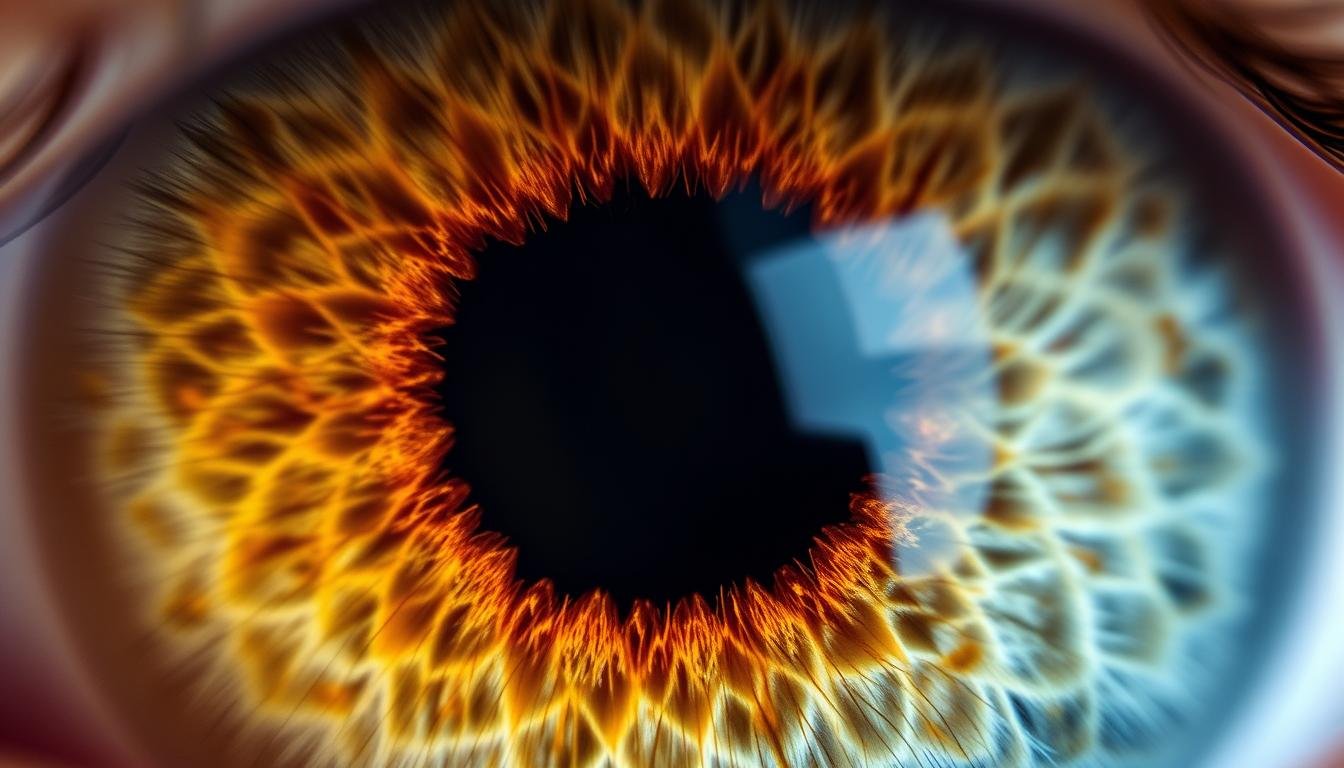
Die komplizierten Muster der menschlichen Iris, die Iridologen zur Gesundheitsbeurteilung analysieren
Die Kernprämisse von Iridologie ist, dass die Iris als dient “Karte” des Körpers, mit verschiedenen Zonen, die verschiedenen Organen und Systemen entsprechen. Dieser Theorie zufolge kommt es zu entsprechenden Veränderungen in der Iris, wenn ein Organ oder System Stress, Entzündungen oder anderen gesundheitlichen Problemen ausgesetzt ist. Zu diesen Veränderungen können Flecken, Linien, Verfärbungen oder strukturelle Veränderungen gehören, die ein Iridologe interpretiert, um Ihren Gesundheitszustand zu beurteilen.
Historische Entwicklung von Iridologie
Während einige Befürworter behaupten, dass Formen der Irisuntersuchung auf alte Zivilisationen in Ägypten, China und Indien zurückgehen, gibt es moderne Iridologie wie wir es heute kennen, nahm im 19. Jahrhundert Gestalt an.

Ignaz von Peczely, der ungarische Arzt, gilt als Vater der modernen Iridologie
Die Grundlagen der Moderne Iridologie werden oft Ignaz von Peczely zugeschrieben, einem ungarischen Arzt im 19. Jahrhundert. Laut populären Berichten bemerkte von Peczely als Kind einen dunklen Streifen in der Iris einer Eule, deren Bein er versehentlich gebrochen hatte. Diese Beobachtung weckte seine Neugier und er entwickelte später die Theorie, dass Veränderungen in der Iris Verletzungen oder Krankheiten in entsprechenden Körperteilen widerspiegeln könnten.
1881 veröffentlichte von Peczely sein erstes Buch zu diesem Thema: “Entdeckungen auf dem Gebiet der Naturwissenschaften und der Medizin: Anleitung zum Studium der Augendiagnose,” Dazu gehörte auch die erste bekannte Iriskarte, die verschiedene Bereiche der Iris verschiedenen Körperteilen zuordnete.
Eine weitere bedeutende Figur in der Entwicklung von Iridologie war Nils Liljequist, ein schwedischer Homöopath, der etwa zur gleichen Zeit unabhängig ähnliche Theorien entwickelte. Liljequist behauptete, nach der Einnahme von Medikamenten wie Chinin und Jod Veränderungen in seiner eigenen Iris beobachtet zu haben, was ihn dazu veranlasste, seine eigenen Irisdiagramme zu erstellen.
In den Vereinigten Staaten, Iridologie erlangte in den 1950er Jahren durch die Arbeit von Bernard Jensen, einem amerikanischen Chiropraktiker, Popularität, der seine eigene Methode der Irisanalyse entwickelte und detaillierte Irisdiagramme erstellte, die auch heute noch von vielen Praktikern verwendet werden. Jensens Arbeit trug zur Popularisierung bei Iridologie als Teil der breiteren Bewegung für natürliche Gesundheit in Amerika.
Die Wissenschaft dahinter Iridologie: Zuordnung von Irismustern zu Organsystemen
Die Praxis von Iridologie basiert auf der Annahme, dass die Iris eine Fülle von Informationen über die Gesundheit des Körpers enthält. Das Verständnis der von Iridologen verwendeten Methoden und Werkzeuge ermöglicht einen Einblick in die Art und Weise, wie diese Praxis durchgeführt wird, und in die wissenschaftlichen Prinzipien, denen sie angeblich folgt.
Irisanatomie und ihre Relevanz für Iridologie
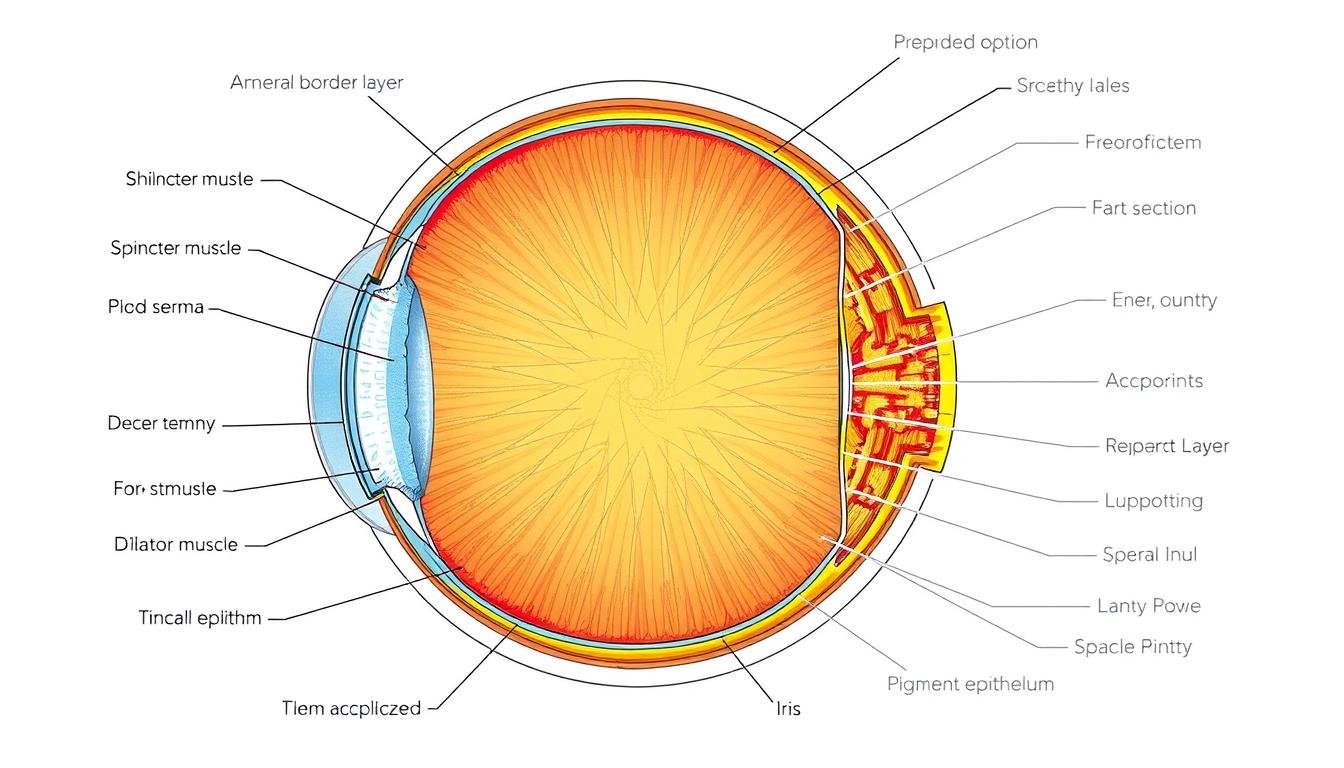
Anatomische Struktur der Iris mit Darstellung der verschiedenen Schichten, die in der Iridologie untersucht werden
Die Iris ist eine komplexe Struktur, die aus mehreren Schichten und Merkmalen besteht:
- Die vordere Randschicht (die bei der Untersuchung sichtbare Vorderfläche)
- Das Stroma (Bindegewebe mit Blutgefäßen, Nerven und Muskelfasern)
- Die Schließ- und Dilatationsmuskeln (kontrollieren die Pupillengröße)
- Das hintere Epithel (enthält Pigment, das der Iris ihre Farbe verleiht)
Iridologen glauben, dass die komplexe Struktur der Iris mit ihren Tausenden von Nervenenden, mikroskopisch kleinen Blutgefäßen und Muskelfasern über das Nervensystem eine einzigartige Verbindung zum Rest des Körpers herstellt. Entsprechend Iridologie Theorie zufolge ermöglicht diese neurologische Verbindung der Iris, Veränderungen in entfernten Organen und Geweben widerzuspiegeln.
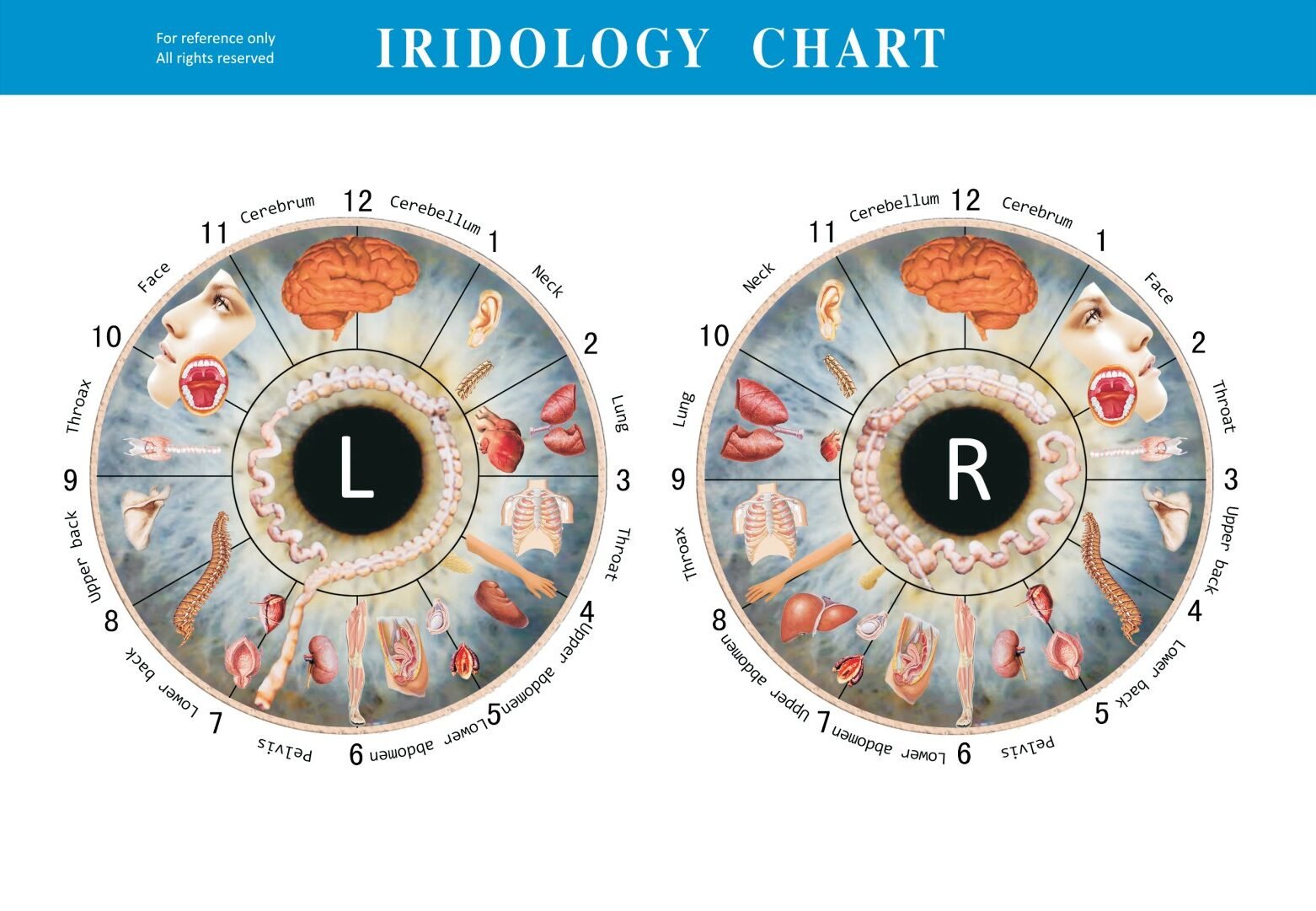
Der Iridologie Diagramm: Kartierung des Körpers
Der Grundstein von Iridologie Praxis ist das Irisdiagramm, das die Iris in etwa 60 Zonen unterteilt, die jeweils einem anderen Teil des menschlichen Körpers entsprechen. Diese Diagramme folgen in der Regel einigen Grundprinzipien:
Strukturelle Organisation
- Die rechte Iris entspricht im Allgemeinen der rechten Körperseite
- Die linke Iris entspricht im Allgemeinen der linken Körperseite
- Die Iris ist in konzentrische Zonen unterteilt, die verschiedene Körpersysteme darstellen
- Das Diagramm ist oft wie ein Zifferblatt aufgebaut, wobei Organe und Systeme an bestimmten Stellen positioniert sind “Std.”
Interpretationselemente
- Farbvariationen und Pigmentveränderungen
- Strukturmerkmale wie Fasern, Ringe und Krypten
- Läsionen, Flecken und andere Markierungen
- Schülereigenschaften und Reaktionen
Verbessern Sie Ihr Verständnis der Irisanalyse
Laden Sie unsere umfassende Iridologie-Tabelle und den Leitfaden für Anfänger herunter, um zu lernen, wie Sie wichtige Irismuster und ihre potenziellen gesundheitlichen Zusammenhänge identifizieren.
Laden Sie das kostenlose Iridologie-Diagramm herunter
Untersuchungswerkzeuge und -techniken
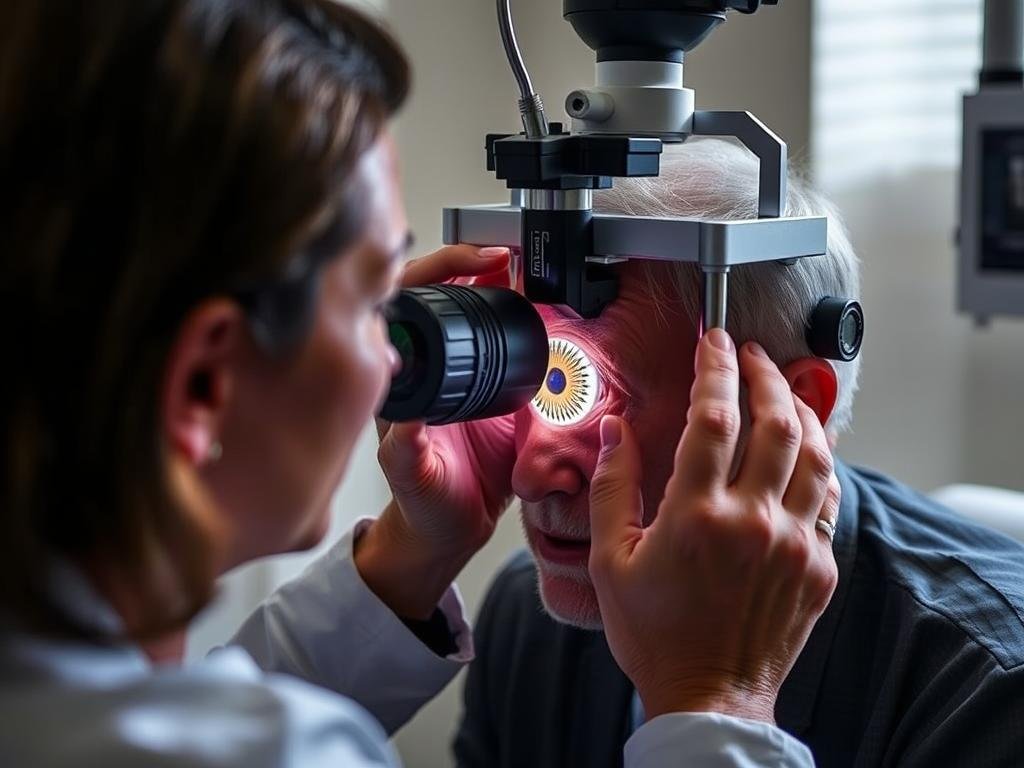
Ein Iridologe führt eine Untersuchung mit Spezialgeräten durch
Moderne Iridologen verwenden typischerweise mehrere Instrumente zur Durchführung ihrer Untersuchungen:
- Stift- oder Taschenlampe zur Beleuchtung der Iris
- Lupe oder Lupe zur genaueren Betrachtung
- Digitalkameras mit Makroobjektiven für detaillierte Fotografie
- Spezielle Iriskameras, die speziell für die Iridologie entwickelt wurden
- Computersoftware zur Analyse von Irisfotos
Bei einer Untersuchung wirft der Iridologe zunächst einen detaillierten Blick auf beide Iris und notiert dabei deren Gesamtfarbe, Struktur und etwaige sichtbare Markierungen. Sie können Fotos machen, um sie später zu analysieren, oder Computersoftware verwenden, die hilft, Muster zu erkennen und sie mit etablierten Iridologie-Diagrammen zu vergleichen.
Durch identifizierte Gesundheitszustände Iridologie
Praktiker von Iridologie behaupten, dass sie durch die Untersuchung der Iris ein breites Spektrum an Gesundheitszuständen und Veranlagungen erkennen können. Auch wenn diese Behauptungen in der Schulmedizin nicht wissenschaftlich fundiert sind, hilft das Verständnis dessen, was Iridologen glauben, erkennen zu können, die Attraktivität der Praxis für diejenigen, die an ganzheitlichen Gesundheitsansätzen interessiert sind.
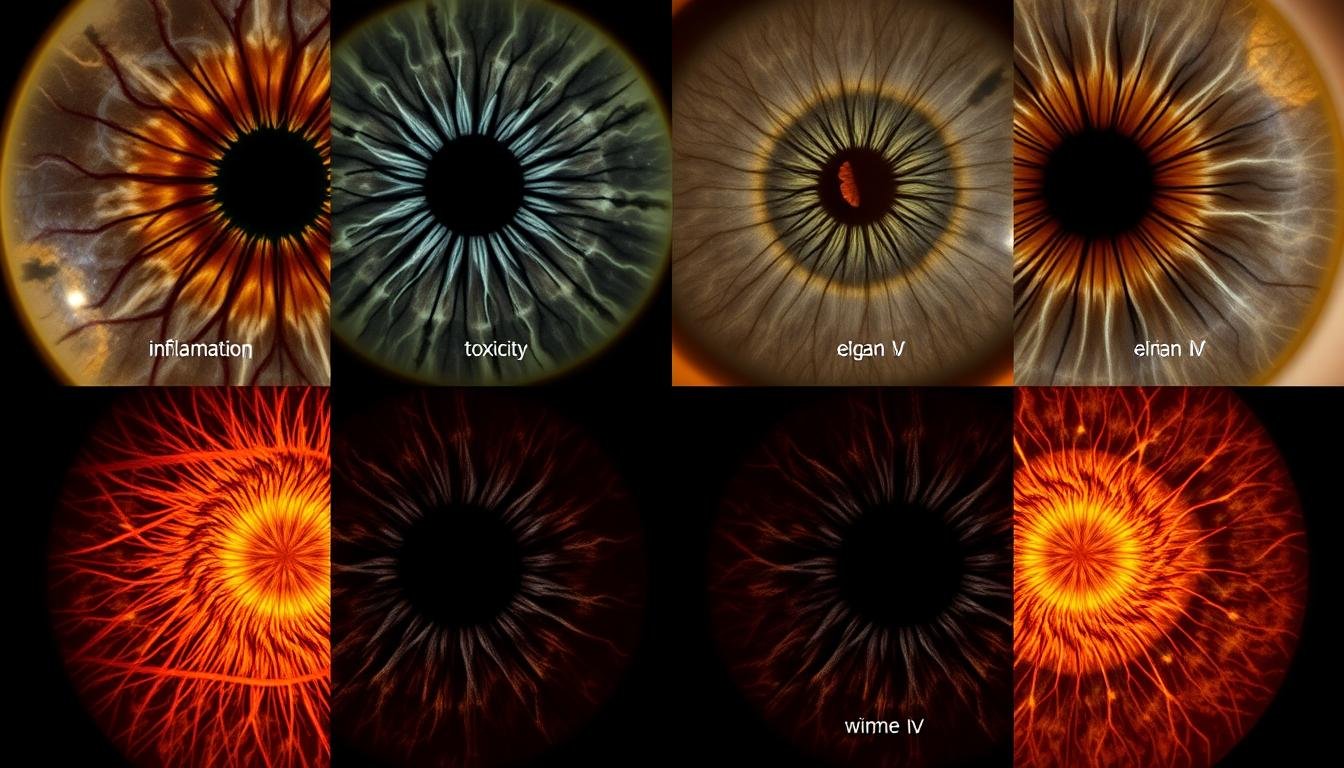
Vergleich der Irismuster, der zeigt, was Iridologen als Indikatoren für den Gesundheitszustand interpretieren
Häufige Gesundheitsprobleme sollen durch aufgedeckt werden Iridologie
Organfunktion
- Leberfunktionsstörung
- Nierenstress
- Verdauungsstörungen
- Herzschwäche
- Lungenerkrankungen
Systemische Erkrankungen
- Entzündung im ganzen Körper
- Ansammlung von Toxinen
- Verstopfung des Lymphsystems
- Kreislaufprobleme
- Hormonelle Ungleichgewichte
Allgemeine Gesundheitsindikatoren
- Mangelernährung
- Stresslevel und Standort
- Genetische Veranlagungen
- Vergangene Verletzungen oder Traumata
- Gesamtkonstitutionelle Stärke
Iridologen behaupten außerdem, dass sie gesundheitliche Probleme erkennen können, bevor Symptome auftreten, was darauf hindeutet, dass Veränderungen in der Iris der Entwicklung körperlicher Symptome vorausgehen. Dieser Anspruch der Früherkennung ist besonders für diejenigen interessant, die sich für präventive Gesundheitsansätze interessieren.
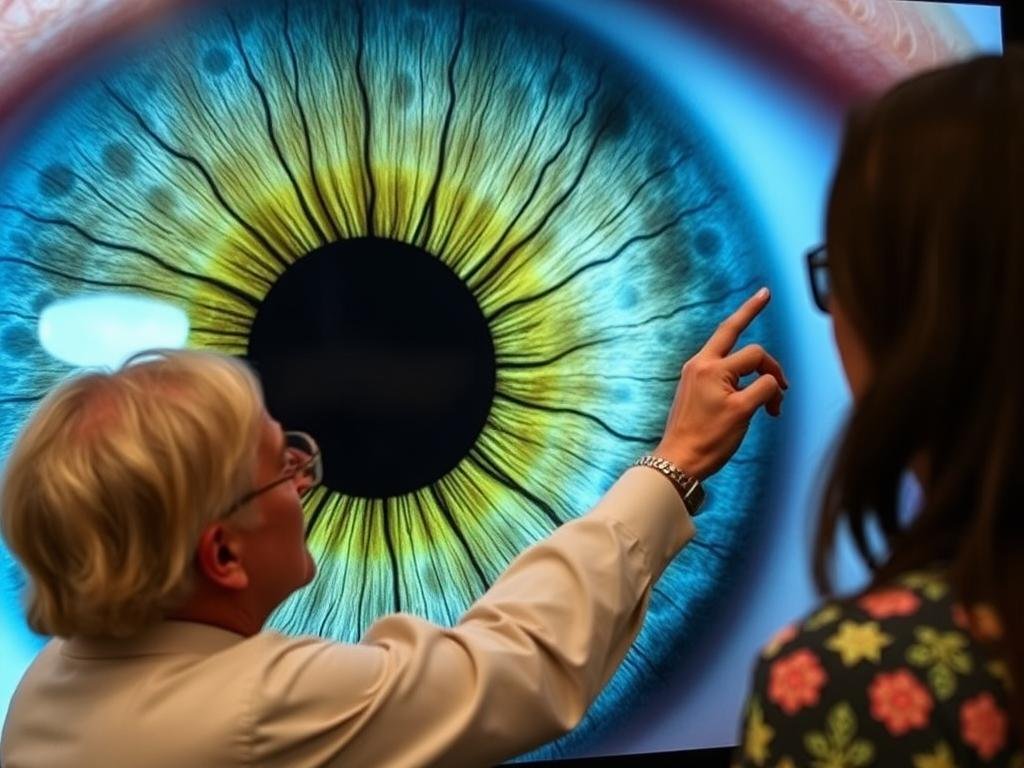
Ein Iridologe identifiziert spezifische Irismarkierungen und erklärt deren Interpretation
Es ist wichtig anzumerken, dass Iridologen zwar diese Behauptungen aufstellen, die Fähigkeit, bestimmte Gesundheitszustände durch eine Irisuntersuchung zu diagnostizieren, jedoch nicht durch wissenschaftliche Forschung bestätigt wurde, wie wir im nächsten Abschnitt untersuchen werden.
Entdecken Sie, was Ihre Iris über Ihre Gesundheit aussagen kann
Sind Sie neugierig, was Ihre Irismuster anzeigen könnten? Vereinbaren Sie einen Beratungstermin mit einem zertifizierten Iridologen für eine individuelle Beurteilung und Gesundheitseinblicke.
Finden Sie einen zertifizierten Iridologen
Kritik und Kontroversen rund um Iridologie
Trotz seiner langen Geschichte und fortgesetzten Praxis Iridologie wurde einer wissenschaftlichen Prüfung unterzogen, wobei die meisten Forschungsergebnisse ihre grundlegenden Behauptungen nicht stützen konnten. Das Verständnis der wissenschaftlichen Perspektive trägt dazu bei, eine ausgewogene Sicht auf diese alternative Praxis zu erhalten.

Wissenschaftliche Forschung zur Prüfung der Gültigkeit iridologischer Behauptungen
Forschungsstudien und ihre Ergebnisse
Mehrere kontrollierte Studien haben die diagnostische Genauigkeit von untersucht Iridologie:
- Eine systematische Übersicht, die 1999 in der Zeitschrift veröffentlicht wurde Forsch Komplementärmed untersuchte vier Fall-Kontroll-Studien und kam zu dem Schluss, dass die Wirksamkeit der Iridologie nicht durch wissenschaftliche Bewertungen gestützt wurde.
- Eine im Jahr 2000 in der veröffentlichten Studie Archiv für Augenheilkunde fanden heraus, dass Iridologen eine Nierenerkrankung durch eine Irisuntersuchung nicht konsequent erkennen konnten.
- Forschung veröffentlicht in der Zeitschrift für Alternativ- und Komplementärmedizin konnte keinen Beweis dafür finden, dass Iridologen durch die Untersuchung der Iris eine Gallenblasenerkrankung genau diagnostizieren könnten.
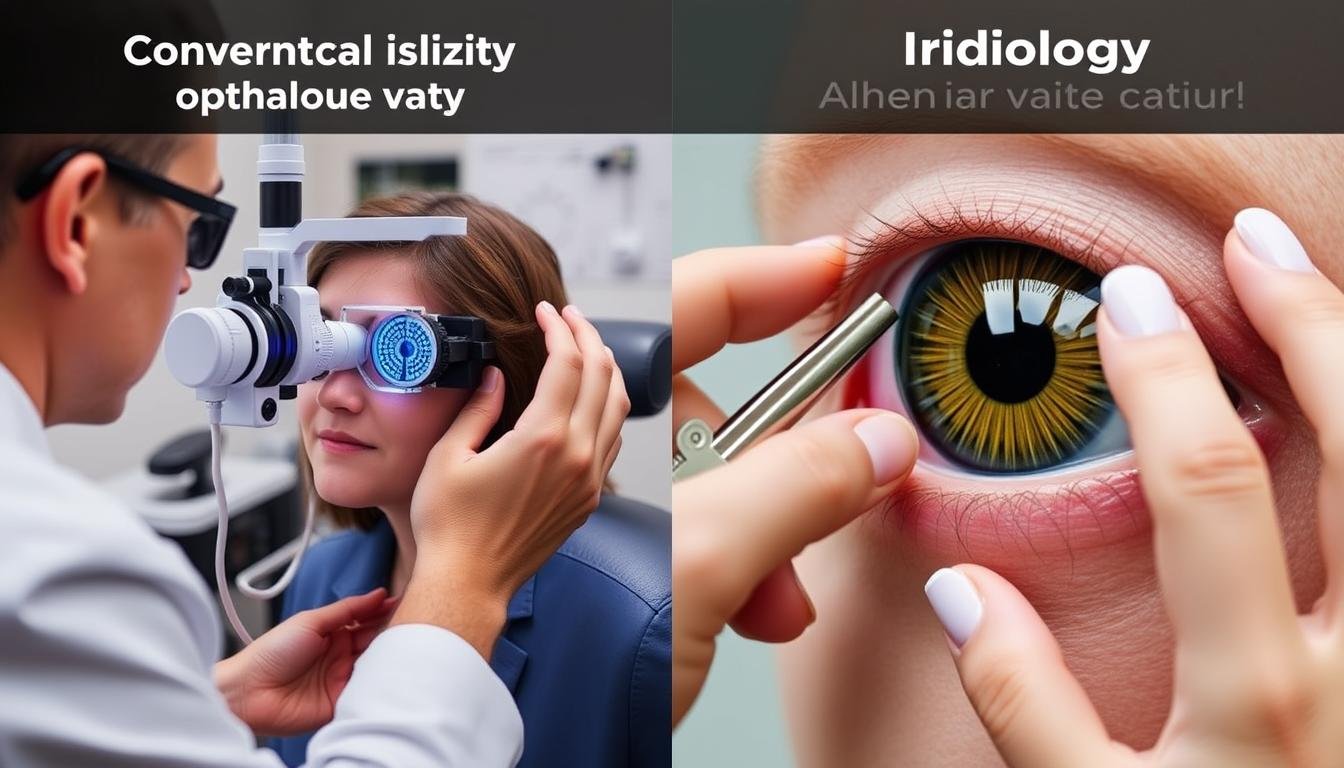
Vergleich zwischen konventioneller medizinischer Augenuntersuchung und iridologischer Beurteilung
Die meisten wissenschaftlichen Studien kommen zu diesem Schluss Iridologie hat bei Tests unter kontrollierten Bedingungen wenig bis gar keinen diagnostischen Wert gezeigt. Forscher haben immer wieder herausgefunden, dass Iridologen Menschen mit bestimmten Krankheiten nicht zuverlässig anhand der Untersuchung ihrer Iris identifizieren können.
Medizinische Gemeinschaft Perspektive
Die allgemeine medizinische Gemeinschaft unterstützt dies im Allgemeinen nicht Iridologie als Diagnosewerkzeug aus mehreren Gründen:
Wissenschaftliche Bedenken zur Iridologie
- Fehlende anatomische Verbindung zwischen der Iris und den meisten Körperorganen
- Fehlen eines physiologischen Mechanismus zur Erklärung, wie sich innere Organzustände auf das Erscheinungsbild der Iris auswirken würden
- Inkonsistente Ergebnisse, wenn mehrere Iridologen denselben Patienten untersuchen
- In kontrollierten Studien konnte die diagnostische Genauigkeit nicht nachgewiesen werden
- Die Struktur der Iris ist weitgehend genetisch bedingt und bleibt ein Leben lang relativ stabil
Mediziner äußern Bedenken hinsichtlich der Abhängigkeit von Iridologie zur Diagnose könnte möglicherweise zu einer verzögerten Behandlung schwerwiegender Erkrankungen führen, wenn Patienten zugunsten einer iridologischen Untersuchung auf eine konventionelle medizinische Diagnose verzichten.
Während der wissenschaftliche Konsens dies nicht unterstützt Iridologie Als Diagnosemethode schlagen einige Forscher vor, dass weitere Studien mit verbesserter Methodik wertvoll sein könnten, um mögliche Zusammenhänge zwischen Irismerkmalen und Gesundheitszuständen vollständig zu bewerten.
Moderne Anwendungen von Iridologie in ganzheitlicher Gesundheit
Trotz des Mangels an wissenschaftlicher Validierung Iridologie wird weiterhin in verschiedenen Teilen der Welt praktiziert, insbesondere in ganzheitlichen und alternativen Gesundheitsgemeinschaften. Das Verständnis seiner zeitgenössischen Anwendungen gibt Aufschluss darüber, warum manche Menschen diese Praxis immer noch nutzen.

Moderne Iridologie-Praxis in einem modernen, ganzheitlichen Gesundheitsumfeld
Integration mit ganzheitlichen Gesundheitspraktiken
In der heutigen Wellness-Landschaft Iridologie wird oft mit anderen alternativen und komplementären Gesundheitsansätzen integriert:
- Im Rahmen naturheilkundlicher Untersuchungen zur Orientierung bei Behandlungsempfehlungen
- In Verbindung mit einer Ernährungsberatung, um Ernährungsumstellungen vorzuschlagen
- Neben Kräutermedizin zur Information über Kräuterrezepte
- Im Rahmen ganzheitlicher Gesundheitsbewertungen, die mehrere Bewertungsmethoden umfassen
- Als ergänzendes Hilfsmittel in einigen Praxen der integrativen Medizin
Praktizierende, die verwenden Iridologie Heutzutage betrachten sie es oft als ein Instrument unter vielen zur Beurteilung allgemeiner Gesundheitsmuster und nicht als definitive Diagnosemethode für bestimmte Krankheiten.
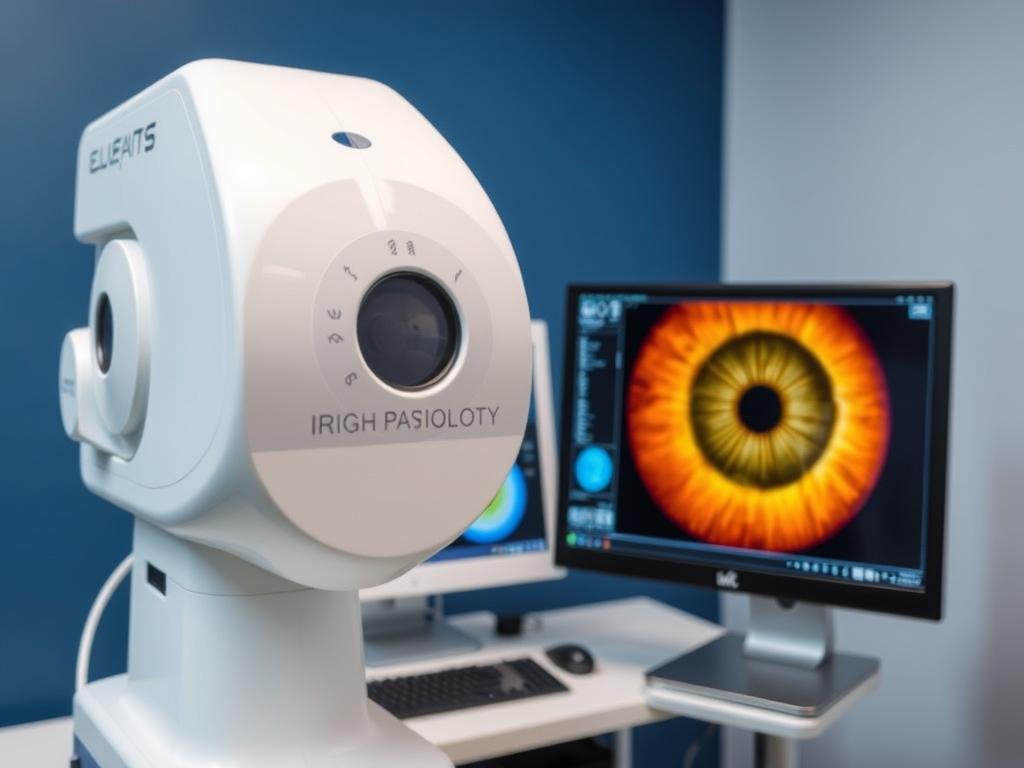
Moderne digitale Technologie, die in der zeitgenössischen Iridologie-Praxis eingesetzt wird
Technologische Fortschritte
Die Technologie hat beeinflusst, wie Iridologie wird im 21. Jahrhundert praktiziert:
- Hochauflösende Digitalkameras erfassen detaillierte Irisbilder
- Spezielle Softwareprogramme analysieren Irismuster und -markierungen
- Online-Plattformen bieten Fernberatungen zur Iridologie an
- Mobile Anwendungen ermöglichen eine vorläufige Irisanalyse
Diese technologischen Fortschritte haben gemacht Iridologie zugänglicher, hat aber nach wissenschaftlichen Standards nicht unbedingt die diagnostische Genauigkeit erhöht.
Verbessern Sie Ihre ganzheitliche Gesundheitspraxis
Für Heilpraktiker, die daran interessiert sind, ihre Fähigkeiten durch Iridologie zu erweitern, bietet unser umfassendes Zertifizierungsprogramm die Schulungen und Tools, die Sie benötigen.
Entdecken Sie Zertifizierungsprogramme
Fallstudien: Iridologie in der Praxis
Während die wissenschaftliche Validierung begrenzt bleibt, sind Befürworter von Iridologie Häufig werden Fallstudien angeführt, um den potenziellen Wert dieser Methode für die Gesundheitsbewertung zu veranschaulichen. Diese Beispiele geben einen Einblick, wie Praktiker die Prinzipien der Iridologie in realen Szenarien anwenden.
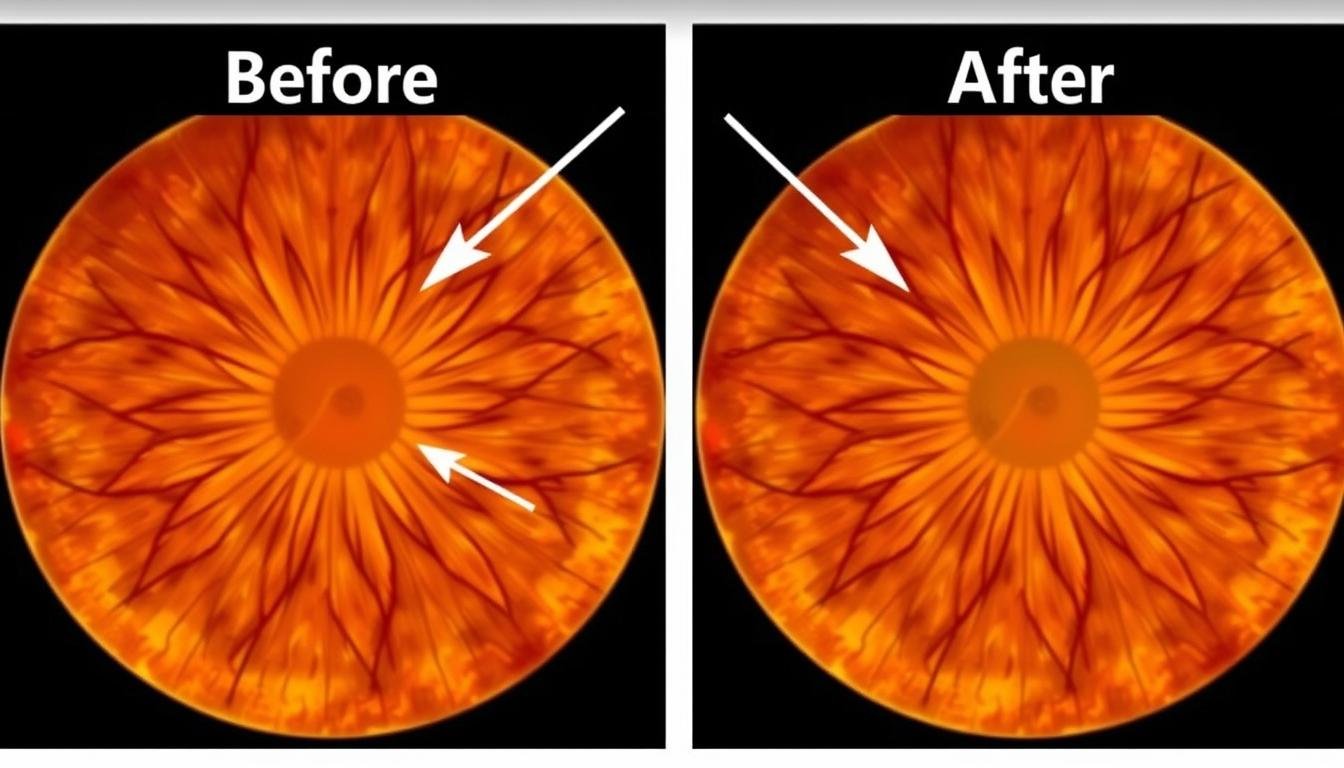
Vorher- und Nachher-Bilder der Iris, die laut Iridologen Veränderungen nach gesundheitlichen Eingriffen zeigen
Fallstudie 1: Beurteilung des Verdauungssystems
Eine 42-jährige Frau konsultierte einen Iridologen, nachdem sie chronische Verdauungsprobleme hatte, die mit herkömmlichen Tests nicht vollständig geklärt werden konnten. Der Iridologe bemerkte spezifische Markierungen im Verdauungsbereich ihrer Iris, die auf eine Entzündung und mögliche Nahrungsmittelunverträglichkeiten hindeuteten. Aufgrund dieser Beobachtungen empfahl der Arzt eine Eliminationsdiät und spezielle Kräuterzusätze.
Die Klientin berichtete von einer Verbesserung ihrer Symptome, nachdem sie die Empfehlungen drei Monate lang befolgt hatte. Dieses Ergebnis lässt sich zwar nicht eindeutig auf die Genauigkeit der iridologischen Beurteilung zurückführen, stellt jedoch die Art von anekdotischen Beweisen dar, die von Ärzten häufig angeführt werden.
Fallstudie 2: Ansprüche zur Früherkennung

Irisfoto mit Markierungen, die laut iridologischer Interpretation auf potenzielle Gesundheitsbedenken hinweisen
Ein 55-jähriger Mann unterzog sich im Rahmen eines ganzheitlichen Gesundheitschecks einem routinemäßigen iridologischen Screening. Der Iridologe identifizierte Markierungen in dem Bereich, der dem Herz-Kreislauf-System entspricht, und vermutete, dass der Klient möglicherweise unter frühem Herz-Kreislauf-Stress litt, obwohl er keine Symptome hatte. Der Klient führte anschließend eine schulmedizinische Untersuchung durch, bei der ein mäßig erhöhter Blutdruck und Cholesterinspiegel festgestellt wurden, die zuvor nicht diagnostiziert worden waren.
Während herkömmliche Screenings diese Probleme wahrscheinlich irgendwann entdeckt hätten, schlagen Befürworter vor, dass dieser Fall zeigt, wie das geht Iridologie könnte die traditionelle Gesundheitsversorgung durch die Förderung präventiver Tests ergänzen.
Es ist wichtig zu beachten, dass diese Fallstudien eher anekdotische Beweise als kontrollierte wissenschaftliche Forschung darstellen. Die positiven Ergebnisse könnten auf verschiedene Faktoren zurückgeführt werden, darunter der Placeboeffekt, Änderungen des Lebensstils, die zusammen mit der iridologischen Beurteilung empfohlen werden, oder ein zufälliger Zeitpunkt.
Häufig gestellte Fragen zu Iridologie
Ist die Iridologie dasselbe wie eine normale Augenuntersuchung?
NEIN, Iridologie unterscheidet sich grundlegend von einer herkömmlichen Augenuntersuchung. Eine regelmäßige Augenuntersuchung durch einen Optiker oder Augenarzt konzentriert sich auf die Beurteilung des Sehvermögens und die Erkennung von Augenkrankheiten wie Glaukom, Katarakt oder Makuladegeneration. Diese Fachleute verwenden standardisierte, wissenschaftlich validierte Methoden zur Beurteilung der Augengesundheit und des Sehvermögens.
IridologieIm Gegensatz dazu geht es um die Untersuchung der Iris, um angeblich den Gesundheitszustand anderer Organe und Systeme im Körper festzustellen – und nicht um Augenerkrankungen selbst zu diagnostizieren. Während sich eine herkömmliche Augenuntersuchung als diagnostisch wertvoll erwiesen hat und ein wesentlicher Bestandteil der Gesundheitsversorgung ist, Iridologie Es mangelt an wissenschaftlicher Bestätigung für seine Behauptungen zur Diagnose nicht-okularer Gesundheitszustände.
Kann die Iridologie schwere Krankheiten wie Krebs erkennen?
Es gibt keine wissenschaftlichen Beweise, die diese Behauptung stützen Iridologie kann Krebs oder andere schwere Krankheiten erkennen. In mehreren kontrollierten Studien konnte nicht nachgewiesen werden, dass Iridologen durch die Untersuchung der Iris bestimmte Krankheiten zuverlässig identifizieren können.
Bei schwerwiegenden Erkrankungen wie Krebs ist es von entscheidender Bedeutung, sich auf evidenzbasierte medizinische Diagnosemethoden wie bildgebende Untersuchungen, Biopsien, Bluttests und körperliche Untersuchungen durch qualifiziertes medizinisches Fachpersonal zu verlassen. Verzögerung der konventionellen medizinischen Diagnose und Behandlung, während man sich darauf verlässt Iridologie könnte möglicherweise zu schlechteren Gesundheitsergebnissen bei schwerwiegenden Erkrankungen führen.
Welche Qualifikationen haben Iridologen typischerweise?
Die Qualifikationen von Iridologen sind sehr unterschiedlich, da es keine standardisierte, allgemein anerkannte Zertifizierung oder Lizenz speziell dafür gibt Iridologie in den meisten Ländern. Einige Praktiker haben möglicherweise Kurse oder Zertifizierungsprogramme in abgeschlossen Iridologie angeboten von verschiedenen Schulen oder Organisationen, die sich der Alternativmedizin widmen. Diese Programme können von kurzen Wochenendkursen bis hin zu umfangreicheren Schulungsprogrammen reichen.
Bei einigen Iridologen handelt es sich möglicherweise auch um zugelassene Heilpraktiker, beispielsweise Naturheilärzte, Chiropraktiker oder Akupunkturisten, die zusätzlich ausgebildet sind Iridologie zu ihrer Praxis. Andere haben möglicherweise überhaupt keine formelle Ausbildung im Gesundheitswesen. Wenn Sie erwägen, einen Iridologen zu konsultieren, ist es ratsam, sich nach dessen spezifischer Ausbildung und Vorgehensweise zu erkundigen und ob er eine Empfehlung ausspricht Iridologie als Ergänzung und nicht als Ersatz für die konventionelle medizinische Versorgung.
Wie viel kostet eine iridologische Beratung normalerweise?
Die Kosten für eine Iridologie Die Beratung variiert stark je nach Erfahrung des Arztes, Standort und davon, ob die Sitzung zusätzliche Dienstleistungen wie Ernährungsberatung oder Nahrungsergänzungsmittelempfehlungen umfasst. Im Allgemeinen liegen die Preise für eine Erstberatung, die in der Regel 30–90 Minuten dauert, zwischen 0 und 0 %.
Folgesitzungen sind in der Regel günstiger und liegen zwischen 0 und 0. Einige Ärzte bieten möglicherweise Pauschalangebote an, die die Erstberatung, Nachuntersuchungen und personalisierte Gesundheitspläne umfassen. Es ist wichtig, das zu beachten Iridologie Konsultationen werden selten von der Krankenversicherung übernommen, daher handelt es sich bei diesen Kosten in der Regel um Selbstbeteiligungen.

Ein ausgewogener Gesundheitsansatz verbindet konventionelle Pflege mit ganzheitlichem Bewusstsein
Fazit: Der Ort von Iridologie in modernen Gesundheitspraktiken
Iridologie präsentiert ein faszinierendes Konzept – dass die Iris als Fenster zu unserer allgemeinen Gesundheit dienen könnte. Obwohl die Praxis auf eine lange Geschichte zurückblickt und vor allem in ganzheitlichen Gesundheitsgemeinschaften weiterhin Interesse weckt, ist es wichtig, mit einer fundierten Perspektive an sie heranzugehen.
Die wissenschaftlichen Beweise unterstützen dies derzeit nicht Iridologie als zuverlässige Diagnosemethode. Mehrere kontrollierte Studien konnten nicht nachweisen, dass Iridologen bestimmte Gesundheitszustände durch eine Irisuntersuchung konsistent identifizieren können. Die medizinische Gemeinschaft ist im Allgemeinen der Meinung Iridologie als mangelhaft an wissenschaftlicher Grundlage und möglicherweise problematisch, wenn es dazu führt, dass Menschen bei schwerwiegenden Erkrankungen die Inanspruchnahme konventioneller medizinischer Versorgung hinauszögern.
Für diejenigen, die sich jedoch für ganzheitliche Gesundheitsansätze interessieren, Iridologie könnte eher als eines von vielen Instrumenten zur allgemeinen Gesundheitsbeurteilung denn als definitive Diagnosetechnik angesehen werden. Einige finden Wert in der ganzheitlichen Perspektive, die es bietet, auch wenn bestimmte diagnostische Behauptungen noch unbewiesen sind.
Wenn Sie neugierig sind IridologieBeachten Sie diese ausgewogenen Empfehlungen:
- Ansatz Iridologie als ergänzendes Instrument und nicht als Ersatz für die konventionelle medizinische Diagnose
- Führen Sie regelmäßige Kontrolluntersuchungen bei qualifizierten Gesundheitsdienstleistern durch
- Seien Sie skeptisch gegenüber definitiven Gesundheitsdiagnosen, die ausschließlich durch eine Irisuntersuchung gestellt werden
- Informieren Sie sich über die Qualifikationen und den Ansatz jedes Iridologen, den Sie konsultieren möchten
- Berücksichtigen Sie den potenziellen Wert eines ganzheitlichen Gesundheitsgesprächs, das sich aus einer Iridologie-Sitzung ergeben kann, auch wenn bestimmte diagnostische Aussagen kritisch betrachtet werden
Letztendlich verdient Ihre Gesundheit einen umfassenden Ansatz, der evidenzbasierte Praktiken berücksichtigt und gleichzeitig offen für die potenziellen Erkenntnisse bleibt, die verschiedene Perspektiven bieten könnten. Die Augen sind in der Tat bemerkenswerte Organe – sie verdienen Pflege, Schutz und vielleicht sogar ein wenig Staunen – unabhängig von der Sichtweise Iridologie.
Erforschen Sie die Iridologie weiter
Ganz gleich, ob Sie im Gesundheitswesen tätig sind und Ihr Wissen erweitern möchten oder sich für ganzheitliche Gesundheitsansätze interessieren, wir bieten Ressourcen zur Vertiefung Ihres Verständnisses der Iridologie.