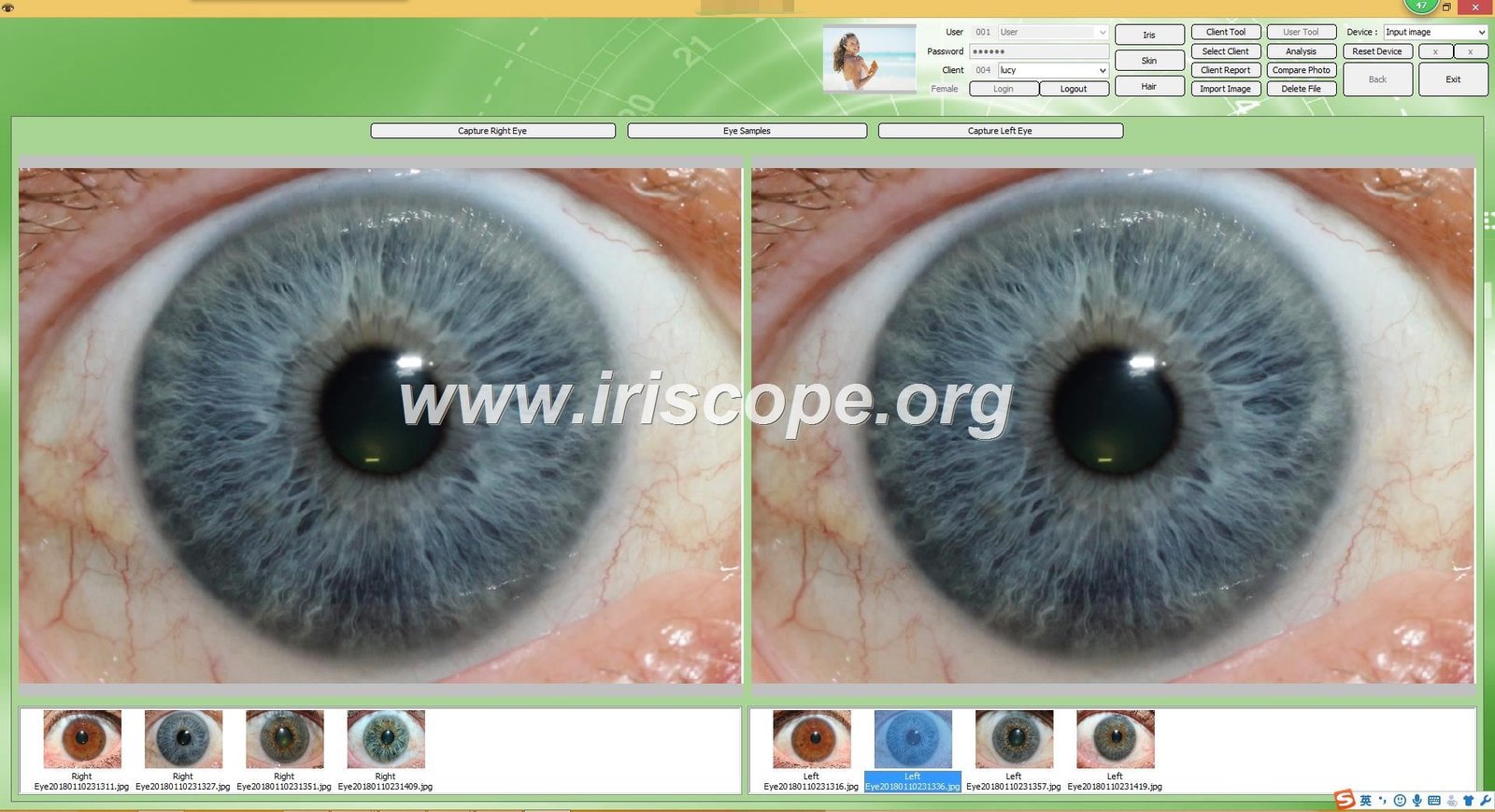
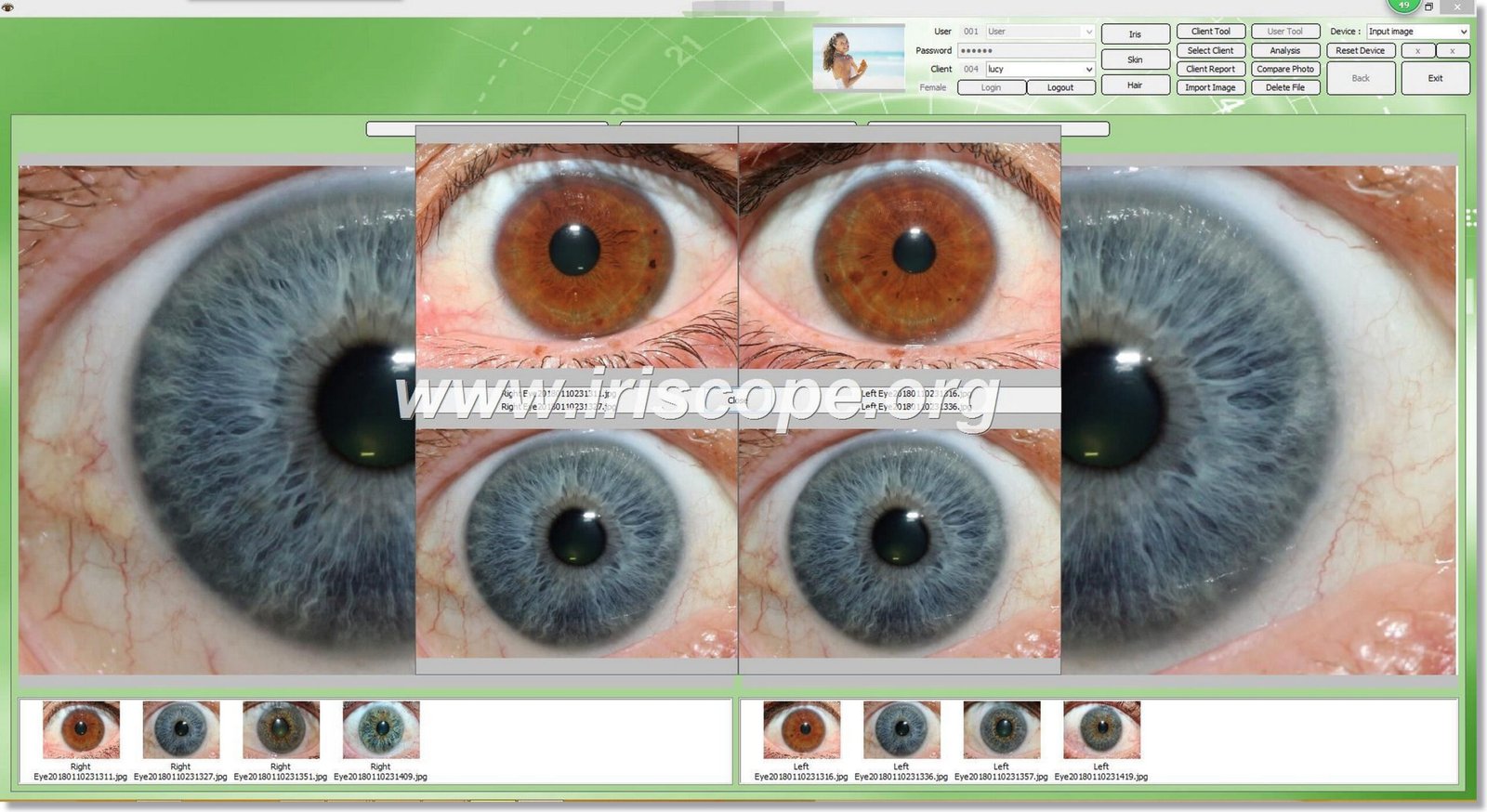
Welcome to MAIKONG’s comprehensive guide to iridology basics. Iridology is the fascinating study of iris patterns and structures as they relate to health conditions in the body. This ancient practice has evolved into a modern complementary health assessment method used by practitioners worldwide. As a leading manufacturer with over 20 years of experience in iridology equipment, we’re excited to share our knowledge about this insightful practice.Whether you’re a healthcare professional looking to expand your diagnostic toolkit, a student beginning your journey into natural health, or simply curious about what your eyes might reveal about your wellbeing, this guide will provide you with a solid foundation in iridology basics.
What Is Iridology Basics: An Introduction

A detailed iris photograph showing various markings studied in iridology basics
Iridology basics start with understanding that the iris—the colored part of the eye—contains thousands of nerve endings connected to various parts of the body through the brain and nervous system. According to iridology theory, these connections create a detailed map that reflects the condition of organs and systems throughout the body.
Iridology is based on the scientific study of the iris. Like markings on a map, the iris reveals physiological conditions, psychological health risks, challenges, and strengths of various organs and personality traits. Through iridology basics, practitioners aim to understand past, present, and potential future health conditions by assessing various body systems.
Moderne Iridologen verwenden spezialisierte Iridologische Kameras oder Iriskope to capture high-resolution images of the iris. These tools allow for detailed examination of iris structures that might not be visible to the naked eye. The images are then analyzed using Iridologie-Diagramme that map different areas of the iris to corresponding body parts and systems.
Explore MAIKONG Professional Iridology Equipment
With over 20 years of R&D and manufacturing experience, MAIKONG offers state-of-the-art iridology cameras and software for practitioners and enthusiasts.
View Our Iridology Cameras
The Historical Foundations of Iridology Basics
The practice of examining the iris for health insights dates back centuries, with the formal study of iridology basics beginning in the late 1600s. Understanding this rich history helps appreciate how the practice has evolved into its modern form.
Frühe Ursprünge
The earliest recorded observations of iris-health connections come from ancient civilizations. However, the systematic study of iridology basics is often attributed to Philippus Meyens, who published “Medizinische Chiromatik” in 1670, describing the connection between iris markings and body organs.
The practice gained significant momentum in the 19th century when Hungarian physician Ignaz von Peczely published his observations on iris patterns and their correlation to health conditions. As a child, von Peczely noticed changes in an owl’s iris after the bird suffered a broken leg, which sparked his lifelong study of iris-body connections.
Moderne Entwicklung
In the 20th century, Dr. Bernard Jensen significantly advanced iridology basics in the United States, developing comprehensive iris charts and training many practitioners. His work helped standardize iridology practices and brought greater recognition to the field.
Today, modern technology has revolutionized iridology practice. High-definition digital Iridologische Kameras and sophisticated analysis Software have made iris examination more precise and accessible than ever before, allowing for more detailed study of iridology basics.
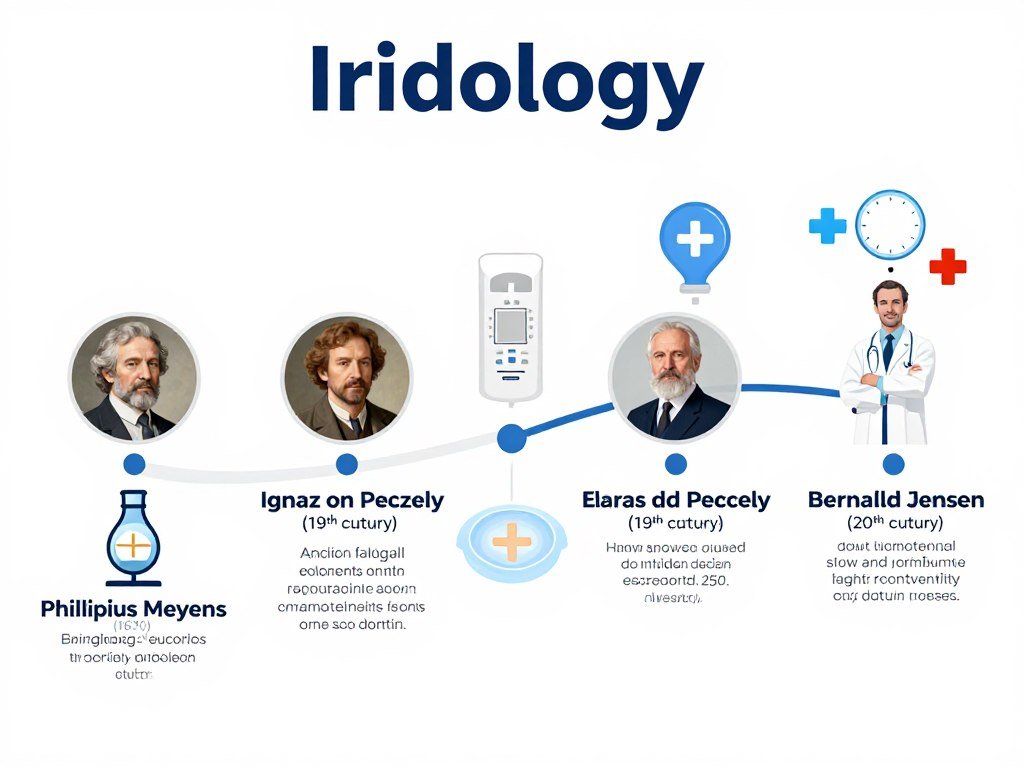
Timeline showing the evolution of iridology basics through history
Core Principles of Iridology Basics
Understanding the fundamental principles that form the foundation of iridology basics is essential for anyone interested in this practice. These principles explain how and why iridology works as a health assessment tool.

The four cornerstones of iridology basics
The four principles that form the cornerstones of iridology basics are:
- Der Zustand der Nerven
- Der Zustand des Blut- und Lymphsystems
- Ausreichende Durchblutung
- Ernährung, Ruhequalität, Atmung und Geisteszustand
Proponents of iridology basics appreciate its non-invasive nature, which contrasts with many conventional diagnostic procedures that can be expensive, time-consuming, and sometimes uncomfortable. However, it’s important to note that iridology is typically used as a complementary assessment tool rather than a replacement for conventional medical diagnosis.
“The eye is the window to the body’s health, revealing patterns and signs that help us understand the whole person, not just isolated symptoms.”
– Principle of holistic assessment in iridology
At MAIKONG, our Iridologische Kameras Und Software are designed with these principles in mind, providing practitioners with the tools they need to apply iridology basics effectively in their practice.
Iris Zones and Mapping: Essential Iridology Basics
A fundamental aspect of iridology basics is understanding how the iris is mapped to correspond with different organs and body systems. These maps serve as reference guides for practitioners when analyzing iris patterns and their meanings.
Main Zones in Iridology Basics
Pupillenzone (innerer Ring)
Der Bereich, der der Pupille am nächsten liegt, entspricht dem Verdauungssystem und den inneren Organen. Veränderungen in diesem Bereich können auf Erkrankungen im Zusammenhang mit dem Magen, dem Darm und den zentralen Verdauungsfunktionen hinweisen.
Ziliarzone (mittlerer Ring)
Dieser mittlere Abschnitt stellt die Stoffwechselsysteme dar, einschließlich des Atmungs-, Kreislauf-, Muskel- und Skelettsystems. Die meisten chronischen Gesundheitszustände spiegeln sich in diesem Bereich wider.
Autonomer Nervenkranz
Dies erscheint als gezackte oder gezackte Grenze zwischen der Pupillen- und der Ziliarzone. Es repräsentiert das autonome Nervensystem und die Darmwand. Seine Integrität kann auf die Gesundheit des Nervensystems hinweisen.
Peripheriezone (äußerer Ring)
Der äußerste Bereich der Iris entspricht der Haut, dem Lymphsystem und den Extremitäten. Anzeichen in dieser Region beziehen sich häufig auf körpereigene Ausscheidungsprozesse und äußere Strukturen.
Additionally, the iris is divided into clock-like sectors, with each section corresponding to specific organs or body parts. For example, the liver typically appears between 7 and 8 o’clock in the rechtes Auge, while the heart is represented between 2 and 3 o’clock in the linkes Auge.
Wussten Sie? Makongs Iridologie-Software includes detailed iris maps for both the right Und left eyes, making it easier for practitioners to apply iridology basics in their practice.
Common Iris Markings in Iridology Basics
Learning to recognize and interpret common iris markings is a crucial part of iridology basics. These markings can appear as spots, lines, discolorations, or structural variations within the iris, each with its own significance in iridology analysis.

Various iris markings commonly analyzed in iridology basics
Strukturelle Markierungen
Lacunae
Diese erscheinen als ovale oder rautenförmige Bereiche mit spärlichen Fasern. Unterschiedliche Lückenformen weisen auf unterschiedliche Zustände hin:
- Geschlossene Lücken: Abgekapselte Bereiche deuten auf chronische Erkrankungen hin
- Offene Lücken: Bereiche, in denen noch Stoffwechselaktivität stattfindet
- Torpedo-Lagune: Assoziiert mit Drüsentumoren
Sonnenstrahlen
These spoke-like lines radiate from the pupil or autonomic nerve wreath toward the outer iris. They resemble bicycle spokes and may indicate toxic conditions in corresponding organs.
Ringe und kreisförmige Markierungen
Nervenringe (Stressringe)
These appear as circular concentric rings or depressions in the iris stroma. They indicate nervous tension and anxiety levels. Learn more about Stress klingelt in den Augen.
Cholesterinring (Natriumring)
A white, opaque ring appearing around the outer edge of the iris. It suggests chemical imbalances related to sodium excess and potential cholesterol issues.
Farb- und Pigmentmarkierungen
Pigmentflecken
Diese farbigen Flecken treten an verschiedenen Stellen der Iris auf und können nach Farbe klassifiziert werden:
- Psorische Flecken: Rötlich-braune Verfärbungen weisen auf Giftablagerungen hin
- Melaninflecken: Braune oder schwarze Pigmente weisen auf degenerative Tendenzen hin
- Dach: Rötliche Pigmente im Zusammenhang mit Leber- und Bauchspeicheldrüsenerkrankungen
Lymphatischer Rosenkranz
A series of white dots forming a ring pattern in the iris, indicating lymphatic system congestion.
Pupil indicators in iridology basics
Schülerindikatoren
Der Schüler selbst liefert wertvolle Informationen in der iridologischen Analyse:
- Vergrößerte Pupille: Kann auf Nebennierenschwäche oder Medikamentenwirkung hinweisen
- Kleiner Schüler: Deutet oft auf inneren Stress oder Medikamenteneinfluss hin
- Unregelmäßige Pupille: Kann auf Wirbelsäulen- oder Rückenprobleme hinweisen
- Abgeflachter Pupillenrand: Kann sich auf bestimmte Wirbelsäulenprobleme beziehen
Practical Application of Iridology Basics
Applying iridology basics in practice involves several key steps, from proper image capture to analysis and interpretation. This section covers the practical aspects of conducting an iridology assessment.
Equipment for Iridology Basics
Essential Equipment
- Iridologiekamera: A specialized camera with macro capabilities for capturing detailed iris images
- Iriskop: An integrated device that combines camera and illumination for optimal iris imaging
- Iridologische Software: Programs that assist in analyzing iris images and applying iridology charts
- Iridologie-Diagramme: Reference maps showing the correspondence between iris zones and body systems
Image Capture Technique
Proper image capture is crucial for accurate iridology basics application:
- Position the subject in a comfortable, well-lit environment
- Ensure proper lighting to avoid pupil constriction or glare
- Capture both eyes separately for comprehensive analysis
- Take multiple images to ensure clarity and detail
- Store images properly for comparison over time
Analysis Process in Iridology Basics
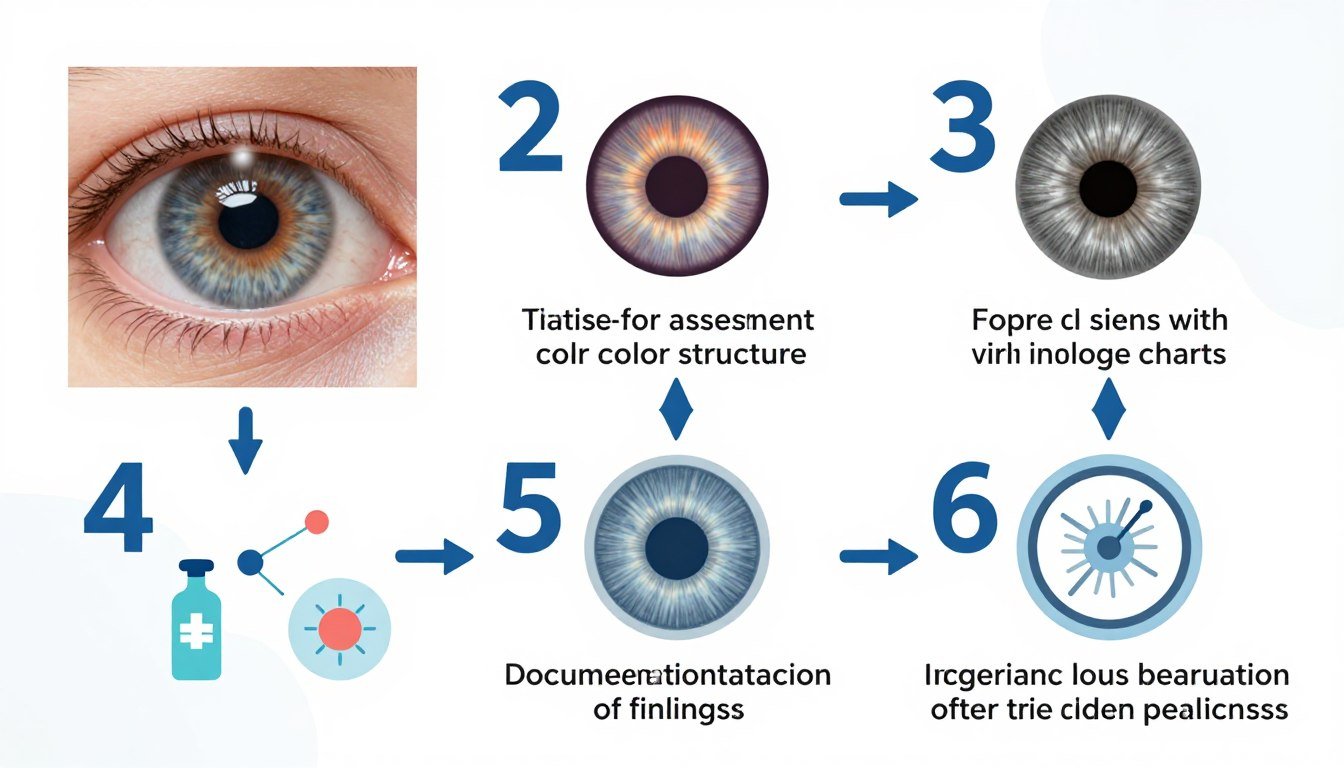
Step-by-step iridology analysis process
A systematic approach to iris analysis includes:
- Initial assessment: Observe the overall iris color, structure, and integrity
- Zone examination: Systematically analyze each iris zone (pupillary, ciliary, peripheral)
- Marking identification: Identify specific markings (lacunae, pigments, rings, etc.)
- Diagrammvergleich: Compare findings with standard Iridologie-Diagramme
- Dokumentation: Record observations for future reference and comparison
- Interpretation: Develop a holistic understanding of the findings
Professioneller Tipp: Makongs Iridologie-Software includes automated analysis features that help practitioners apply iridology basics more efficiently, with tools for marking identification and chart overlay.
Benefits and Limitations of Iridology Basics
Understanding both the potential benefits and limitations of iridology basics is essential for a balanced perspective on this practice. This knowledge helps practitioners and clients maintain realistic expectations about what iridology can and cannot offer.
Vorteile der Iridologie
- Nicht-invasive Beurteilung: Erfordert nur Fotos der Iris ohne körperliche Beschwerden
- Präventiver Ansatz: Kann Tendenzen erkennen, bevor sich Symptome entwickeln
- Ganzheitliche Perspektive: Berücksichtigt die Vernetzung von Körpersystemen
- Historischer Grundstein: Basierend auf jahrhundertelanger Beobachtungspraxis
- Ergänzendes Tool: Kann neben konventionellen medizinischen Ansätzen eingesetzt werden
Einschränkungen zu berücksichtigen
- Begrenzte wissenschaftliche Validierung: Nur wenige kontrollierte Studien stützen diagnostische Behauptungen
- Interpretive variations: Verschiedene Praktiker können zu unterschiedlichen Schlussfolgerungen kommen
- Not a replacement: Should complement, not replace, conventional medical care
- Genetische Faktoren: Viele Merkmale der Iris werden eher vererbt als entwickelt
- Standardization challenges: Unterschiedliche Ausbildungs- und Zertifizierungsstandards
The scientific community generally views iridology with varying degrees of acceptance. While some studies have questioned its diagnostic precision, many practitioners find value in using iridology basics as one component of a comprehensive health assessment, alongside other methods such as case history, physical examination, and laboratory testing when appropriate.

Professional iridology assessment using MAIKONG equipment
“Iridology is best understood as an assessment of constitutional tendencies and bodily terrain rather than as a diagnostic tool for specific diseases.”
– Modern perspective on iridology practice
Getting Started with Iridology Basics
For those interested in exploring iridology basics, whether as a practitioner or for personal knowledge, there are several pathways to begin your journey. This section provides guidance on education, certification, and equipment needs.
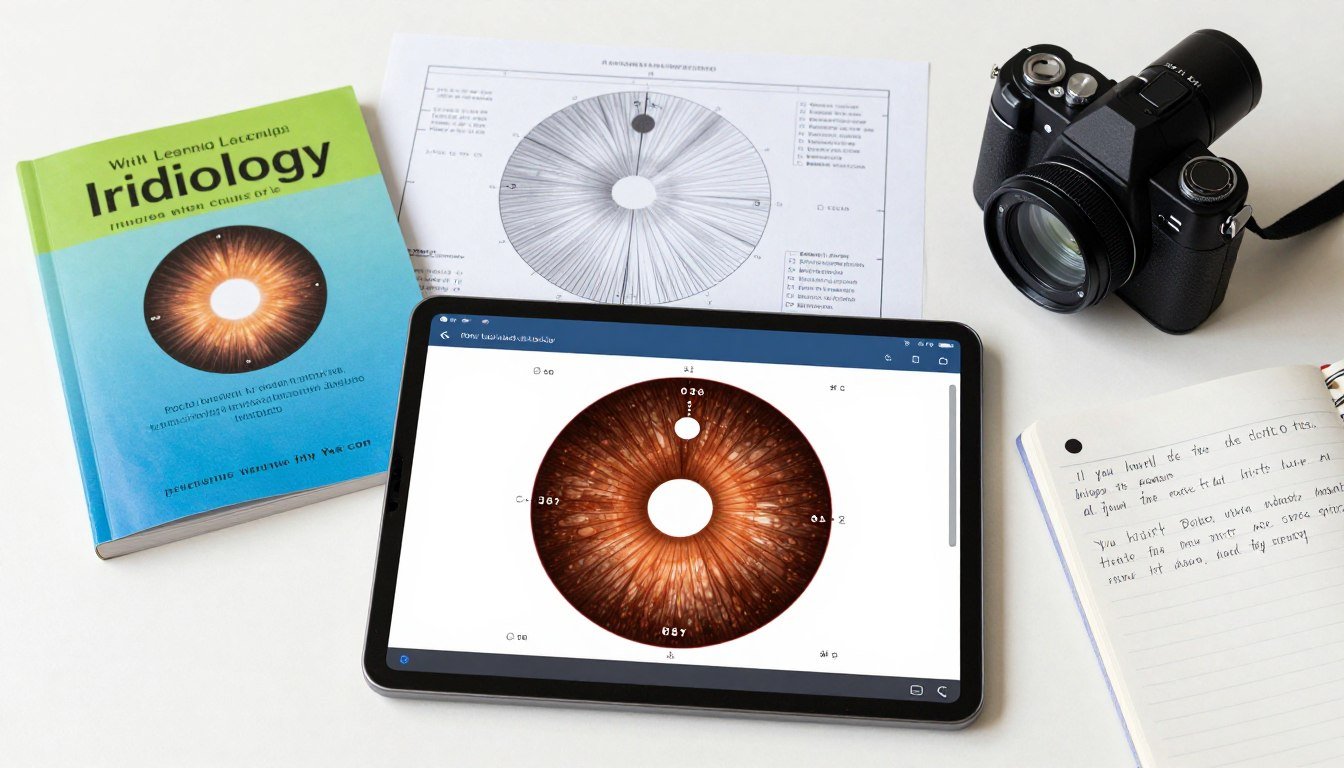
Educational resources for learning iridology basics
Education and Certification
Building a strong foundation in iridology basics typically involves:
- Formal education: Courses in iridology fundamentals, anatomy, and physiology
- Practical training: Hands-on experience with iris analysis under supervision
- Zertifizierung: Obtaining Iridologische Zertifizierung from recognized organizations
- Continuing education: Staying updated with the latest research and techniques
Essential Equipment for Practitioners
To effectively apply iridology basics in practice, certain equipment is necessary:
Iridologische Kameras
Professional Iridologische Kameras provide the high-resolution images needed for accurate analysis. MAIKONG offers a range of cameras suitable for both beginners and experienced practitioners.
Iriskope
Ein Iriskop combines camera functionality with proper illumination for optimal iris imaging. Our models are designed for ease of use and image clarity.
Analysesoftware
Makongs Iridologie-Software enhances analysis capabilities with features like chart overlay, comparison tools, and client record management.
Werden Sie Maikong-Händler
Are you interested in representing MAIKONG’s premium iridology equipment in the US market? We’re seeking distributors and agents for our professional-grade products.
Learn About Distributorship
Conclusion: Embracing Iridology Basics for Health Insights
Iridology basics offer a fascinating window into the body’s health through the detailed examination of iris patterns and markings. This practice combines ancient observational wisdom with modern imaging technology to provide a unique perspective on health assessment. The intricate patterns, colors, and markings visible in the iris create a map that, according to iridology principles, reflects the condition of various organs and systems throughout the body.
As you continue your journey into iridology, remember that quality equipment makes a significant difference in the accuracy and effectiveness of your practice. MAIKONG’s 20+ years of experience in manufacturing professional iridology equipment ensures that practitioners have access to the best tools for applying iridology basics in their work.
Whether you’re a healthcare professional looking to expand your toolkit, a student beginning your iridology journey, or interested in distributing quality iridology equipment, we invite you to connect with MAIKONG and discover how our expertise and products can support your goals.
Beginnen Sie Ihre iridologische Reise mit Maikong
Explore our range of professional iridology equipment and take your practice to the next level.
Besuchen Sie unsere Website